
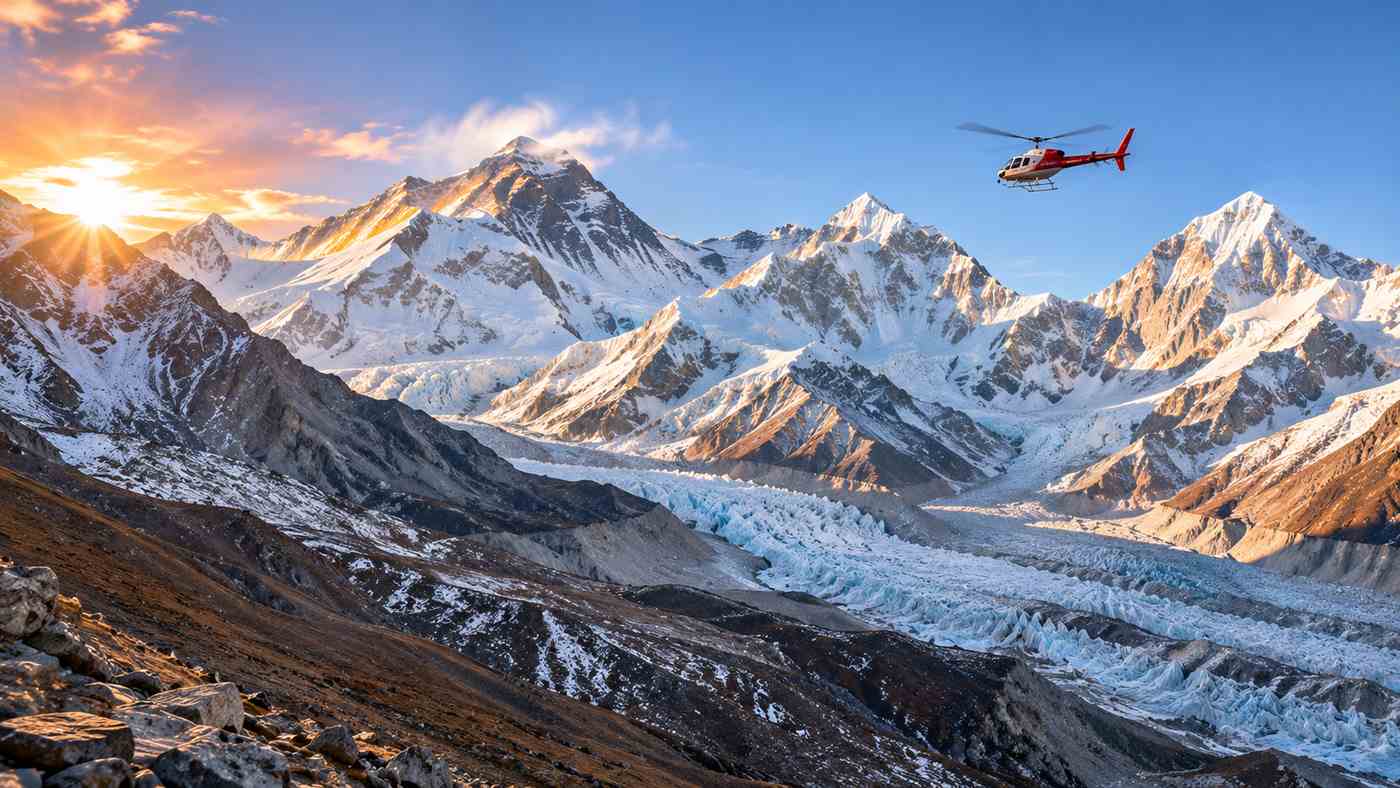
Seeing Mount Everest is a dream for travelers around the world. Its towering snow-covered summit, surrounding Himalayan peaks, and enormous glaciers create one of the most extraordinary mountain landscapes on Earth. Traditionally, experiencing the Everest Base Camp region involves a demanding trek through high-altitude terrain, but helicopter sightseeing offers another way to appreciate the scenery.
An Everest Base Camp helicopter tour allows travelers to explore Nepal’s famous Khumbu region from the air, providing views of Himalayan valleys, mountain villages, glaciers, and some of the world’s highest peaks within a relatively short period.
Instead of spending nearly two weeks trekking to the base camp area and returning, visitors can experience selected highlights during a single-day excursion from Kathmandu.
However, these tours require careful planning.
Mountain weather can change rapidly, helicopter performance is affected by altitude, and landing permissions may vary according to aviation regulations and local restrictions.
Travelers should also understand an important distinction: a tour advertised as an Everest Base Camp helicopter experience does not necessarily include landing at Everest Base Camp itself.
Most sightseeing itineraries feature an aerial view of the base camp area, while permitted ground stops may take place at other locations.
This guide explains how Everest helicopter tours work, what travelers can expect, seven important booking considerations, costs, safety requirements, and practical tips for planning an unforgettable Himalayan adventure.
What Is an Everest Base Camp Helicopter Tour?
An Everest Base Camp helicopter tour is a scenic aviation experience that takes travelers into Nepal’s Mount Everest region without requiring the full trekking journey.
Most tours begin in Kathmandu and travel toward the Khumbu Valley.
Depending on the itinerary, passengers may see famous landmarks such as Lukla, Namche Bazaar, Ama Dablam, the Khumbu Glacier, Everest Base Camp, and Kala Patthar.
Some packages include a stop near Hotel Everest View, where visitors can enjoy the mountain scenery.
The exact flight route and landing arrangements depend on the operator, aircraft, aviation permissions, weather, and safety considerations.
Why Choose a Helicopter Tour Instead of Trekking?
The traditional Everest Base Camp trek involves several days of walking through mountainous terrain.
Travelers generally need sufficient time for acclimatization, overnight accommodation, and the return journey.
A helicopter experience significantly reduces the time required to see the region.
This can make it attractive to travelers with limited vacation time.
However, helicopter sightseeing and trekking are fundamentally different experiences.
Trekking provides greater opportunities for cultural interaction, walking through local communities, and gradual immersion in the Himalayan environment.
A helicopter tour emphasizes aerial scenery and convenient access.
Neither option is universally better.
How Long Does the Tour Take?
Many Everest sightseeing helicopter excursions are advertised as half-day experiences.
Radiant Helicopter Tour describes a typical duration of approximately five to six hours, including ground stops and relevant transfers.
However, flight duration may change because of weather, air traffic, refueling, operational decisions, or aircraft availability.
Travelers should avoid making tightly scheduled onward travel arrangements immediately after the tour.
What Can You See During the Everest Helicopter Flight?
The Everest region offers extraordinary scenery that changes as the aircraft gains altitude.
Kathmandu Valley
The journey usually begins in Kathmandu, Nepal’s capital.
As the helicopter leaves the valley, passengers may see green hills, agricultural terraces, rivers, and scattered settlements.
The scenery gradually becomes more mountainous as the aircraft travels eastward.
Lukla and the Khumbu Valley
Lukla is widely recognized as an important gateway to the Everest trekking region.
Its Tenzing-Hillary Airport serves travelers beginning or ending journeys in the Khumbu.
Some helicopter itineraries include a brief stop in Lukla for refueling or operational purposes.
Beyond Lukla, the valley becomes increasingly dramatic.
Steep mountainsides, river gorges, and distant snowy peaks dominate the landscape.
Namche Bazaar and Sherpa Settlements
Namche Bazaar is an important commercial and cultural center in the Everest region.
The surrounding landscape contains villages, trekking routes, monasteries, and mountainous terrain associated with local Sherpa communities.
Depending on the route and visibility, passengers may see these settlements from above.
Ama Dablam and Surrounding Peaks
Ama Dablam is one of the most recognizable mountains in the region.
Its distinctive shape makes it a favorite subject for photographers.
Other major mountains visible under suitable conditions may include Lhotse, Nuptse, Pumori, and Mount Everest.
Khumbu Glacier and Everest Base Camp
The Khumbu Glacier is one of the region’s defining natural features.
An aerial view can reveal its immense scale, rugged surface, and surrounding mountains.
Everest Base Camp is situated in the glacier environment at approximately 5,364 meters above sea level.
During climbing seasons, expedition activity may be visible from the air.
However, visibility depends on the route, weather, and flight conditions.
Kala Patthar
Kala Patthar is a famous viewpoint near Everest Base Camp, often associated with excellent views of Mount Everest’s summit.
Its altitude is commonly described as approximately 5,545 meters, although published elevations vary according to the exact viewpoint.
Some helicopter itineraries advertise a short stop here.
However, high-altitude landing arrangements are subject to current regulations and pilot approval.
7 Smart Tips for Planning an Everest Base Camp Helicopter Tour
A well-planned Himalayan helicopter experience begins long before boarding the aircraft.
The following seven tips can help travelers understand their options and prepare responsibly.
1. Understand the Difference Between a Flyover and a Landing Tour
One of the most important booking decisions is understanding precisely what the tour includes.
The names used by travel companies can be confusing.
For example, a package may be advertised as an Everest Base Camp helicopter tour with landing, but that does not necessarily mean the helicopter will land at the actual base camp.
Everest Base Camp Flyover
A flyover tour focuses on sightseeing from the helicopter.
Depending on the itinerary, passengers may see the base camp, glacier, and surrounding mountains without stepping onto high-altitude terrain near the base camp.
A flyover can provide dramatic photographic opportunities.
However, it should not be described as physically visiting the camp.
Kala Patthar Landing
Some itineraries advertise a short landing near Kala Patthar.
The viewpoint is known for its spectacular mountain scenery.
Nevertheless, the availability of these landings has changed amid local restrictions and environmental concerns.
Even where landings are permitted, a pilot may decide against landing because of wind, visibility, altitude, aircraft performance, or other safety factors.
Hotel Everest View Stop
Some tours include a stop near Hotel Everest View in the Syangboche area.
The hotel is situated at approximately 3,880 meters above sea level.
It offers views of Everest and other mountains under suitable conditions.
A breakfast stop may be included in the itinerary, but the meal itself is not necessarily included in the package price.
What to Confirm Before Booking
Ask the operator to explain the exact flight route and scheduled stops.
Also confirm which stops are guaranteed as part of the purchased package, which depend on permission or weather, and what happens if a planned landing cannot take place.
A written itinerary is more useful than relying on a promotional headline.
2. Choose a Qualified Helicopter Operator
Aviation safety should be the first priority when selecting a helicopter experience.
Mountain flying involves challenges different from those encountered during ordinary low-altitude flights.
Verify the Operating Airline
A travel agency may arrange bookings through a separate helicopter company.
Before confirming a reservation, ask which airline will operate the flight.
The relevant operator should hold the required approvals from Nepal’s aviation authority.
Understand High-Altitude Aviation
Helicopter performance changes as altitude increases.
Reduced air density affects lift and engine performance.
Pilots must consider aircraft limitations, passenger weight, weather, and available landing areas.
High-altitude operations require appropriate procedures and experienced personnel.
Review Passenger Briefings
Passengers should receive instructions about seatbelts, headsets, boarding, disembarking, and emergency procedures.
Follow crew directions at all times.
Never approach a helicopter without the crew’s permission.
Consider Recent Aviation Safety Developments
Helicopter operations in the Everest region carry real risks.
On November 3, 2026, two helicopters operated by separate airlines collided while attempting to land near Pheriche. The incident caused a fatality and injuries, and Nepal’s aviation authority began an investigation.
The event highlights the importance of proper operating procedures and independent safety oversight.
It should not be interpreted as an incident involving every tour provider.
Travelers should confirm current operating conditions and relevant aviation advisories before booking.
Avoid Unrealistic Safety Promises
No aviation company can guarantee that every flight will be completely risk-free.
A responsible operator should prioritize appropriate flight decisions and explain possible delays or cancellations.
3. Choose the Best Season for Everest Helicopter Sightseeing
Weather plays a major role in determining whether passengers can enjoy clear mountain views.
The Himalayas experience seasonal changes that affect visibility, precipitation, and flying conditions.
Spring: March to May
Spring is generally considered a popular period for visiting the Everest region.
Daytime conditions may become milder, and the wider landscape can display seasonal vegetation.
The period also overlaps with important mountaineering activity.
However, clouds and changing weather remain possible.
Autumn: October to November
Autumn is another popular season for mountain sightseeing.
Following the main summer monsoon, some days offer clear views of the Himalayan peaks.
However, good visibility should never be guaranteed for a particular date.
Snowfall, wind, and localized cloud formations can still affect operations.
Winter: December to February
Winter can bring clear skies on some days.
However, low temperatures, snowfall, and weather-related operational restrictions require consideration.
Passengers should prepare for cold conditions.
Monsoon: June to September
Nepal receives much of its annual rainfall during the summer monsoon.
Cloud cover, rain, and reduced visibility can affect aviation schedules.
Travelers planning a helicopter tour during this period should expect greater uncertainty.
Why Early Departures Are Popular
Many operators schedule morning departures because mountain weather may become less favorable later in the day.
However, early flights are not automatically safe or clear.
The final decision must reflect actual conditions.
4. Prepare for High Altitude and Rapid Elevation Changes
An Everest helicopter tour involves rapid changes in altitude.
Kathmandu lies at approximately 1,300–1,400 meters, while some advertised sightseeing points exceed 5,000 meters.
This substantial change can expose travelers to reduced oxygen availability.
Understand Altitude Illness
Altitude illness can occur when the body has insufficient time to adjust to lower oxygen levels.
Possible symptoms include headache, nausea, dizziness, fatigue, and unusual breathlessness.
Rapid ascent is an important risk factor.
A short high-altitude visit may be less physiologically stressful than spending a night at the same elevation, but brief exposure is not risk-free.
Know When to Seek Medical Advice
People with relevant heart or lung conditions, previous severe altitude illness, or other medical concerns should seek advice from a qualified clinician familiar with high-altitude travel before booking.
Travelers should also discuss any individual health risks rather than relying only on general tour descriptions.
Follow the Pilot’s Instructions
If a landing is permitted at high elevation, the crew may limit the time passengers can remain outside.
Do not wander away from the aircraft or exert yourself unnecessarily.
Report concerning symptoms immediately.
Do Not Assume Physical Fitness Prevents Altitude Illness
Physical fitness does not eliminate the risk of acute mountain sickness.
Even healthy, experienced travelers can experience problems with rapid altitude changes.
Avoid Self-Medicating Without Guidance
Some travelers consider medications to reduce altitude-related risks.
Medication decisions should be made with appropriate medical advice.
A helicopter tour’s short duration does not make altitude precautions irrelevant.
5. Decide Between Shared and Private Helicopter Tours
Shared and private flights offer different advantages.
The best option depends on budget, group size, scheduling needs, and availability.
Shared Helicopter Tours
Shared flights allow travelers to divide certain charter costs across a group.
This may make the experience more accessible for individuals, couples, or small parties.
However, departure times and passenger arrangements depend on group coordination.
Private Helicopter Tours
A private charter provides an aircraft arrangement for a particular booking group.
This may offer greater scheduling flexibility.
Nevertheless, private charters remain subject to the same aviation, weather, and operating limitations.
Paying more does not guarantee access to a restricted landing location.
Why Passenger Weight Matters
Helicopters have strict operating weight limits.
At higher elevations, performance limitations may require smaller passenger groups.
For example, an aircraft carrying several passengers in the lower valley may need to transport passengers in smaller rotations for a high-altitude sightseeing segment.
These arrangements depend on the aircraft and actual flight conditions.
Confirm the Group Arrangement
Before paying, ask whether your booking is shared or private.
Clarify the number of passengers, possible transfers, seat allocation, and whether separate shuttle rotations are expected.
6. Understand Prices, Inclusions and Cancellation Policies
Everest helicopter sightseeing is a premium travel experience.
However, prices vary considerably.
What Affects Helicopter Tour Costs?
Important factors include aircraft charter expenses, fuel, route distance, passenger count, altitude restrictions, and the number of required flight segments.
Private flights usually involve a different pricing structure from shared departures.
Compare Like-for-Like Packages
A basic flyover may not include the same activities as a tour advertising an additional landing.
Likewise, two packages with similar names may have different transfer arrangements.
Before comparing prices, examine the actual services.
Check Whether Meals Are Included
Some tours advertise breakfast at Hotel Everest View.
However, the restaurant bill may be a separate expense.
Radiant Helicopter Tour’s published package information lists meals and drinks among its exclusions.
Do not assume breakfast is included simply because it appears in the itinerary.
Review Other Charges
Relevant expenses may include park or local entry fees, aviation-related charges, transfers, insurance, and other permitted fees.
The exact package inclusions should be confirmed in writing.
Understand Weather Cancellations
Mountain flights may be delayed, postponed, or cancelled.
Ask what happens if weather prevents departure.
Also clarify the policy if a flight departs but cannot complete a scheduled sightseeing segment.
Refund conditions can vary by operator and booking agreement.
Review Travel Insurance
Travel insurance may provide protection for certain trip disruptions or medical emergencies.
However, not every travel insurance policy covers helicopter sightseeing, high-altitude activities, or aviation-related incidents.
Read the actual policy terms.
7. Bring the Right Clothing and Photography Equipment
The Everest region offers exceptional opportunities for photography.
However, conditions can differ substantially from those in Kathmandu.
Wear Layers
Temperatures can change with elevation and weather.
A warm jacket, suitable trousers, and comfortable closed footwear are practical choices.
Choose clothing that is easy to adjust.
Carry Sunglasses
Snow and bright mountain light can produce strong glare.
Sunglasses with appropriate ultraviolet protection may improve comfort.
Protect Your Camera
A smartphone or compact camera can capture excellent mountain photographs.
Make sure the device is charged before departure.
Cold conditions can reduce battery performance.
Avoid Excessive Luggage
Helicopters have weight limitations, and available baggage allowances may be small.
Ask the operator about permitted luggage before packing.
Follow Photography Instructions
Keep cameras and personal items secured while boarding or leaving the aircraft.
Do not open doors, interfere with equipment, or move around the helicopter without permission.
Be Prepared for Window Reflections
Reflections can affect aerial photographs.
A useful technique is to photograph through a clean section of the window without interfering with the aircraft.
Avoid pressing equipment against sensitive surfaces.
Enjoy the Experience Beyond the Camera
Photographs are valuable, but the scenery deserves attention beyond the screen.
Take time to observe the mountains, valleys, and glacier formations.
Typical Everest Helicopter Tour Itinerary From Kathmandu
A standard itinerary provides a useful understanding of what the journey may involve.
However, no single route applies to every operator or every flight.
Stage 1: Kathmandu Departure
The journey usually begins with an early morning transfer to the appropriate airport or heliport.
Passengers complete the relevant check-in procedures, and the crew provides a safety briefing.
The aircraft then departs toward eastern Nepal.
Stage 2: Lukla and the Khumbu Region
Some flights stop at Lukla for operational purposes.
Passengers may see mountain settlements, deep valleys, and surrounding peaks.
Stage 3: Everest Base Camp Scenic Flight
The aircraft may continue into the upper Khumbu region for aerial views of Everest Base Camp, the glacier, and surrounding mountains.
Weather and operational conditions determine the exact route.
Stage 4: Permitted Ground Stop
Depending on the package and current permissions, the tour may include a stop at an authorized viewpoint or near Hotel Everest View.
High-altitude stops are not guaranteed merely because they appear in a published itinerary.
Stage 5: Return to Kathmandu
The helicopter returns through the mountain region toward Kathmandu.
The overall excursion may take much of the morning, although delays can extend the schedule.
Exploring Radiant Helicopter Tour’s Everest Experience
Travelers researching an Everest Base Camp helicopter tour can explore the sightseeing experiences described by Radiant Helicopter Tour.
The company’s official website advertises helicopter excursions covering the Everest region and other destinations in Nepal.
Its Everest tour page presents both a high-altitude landing-oriented itinerary and an alternative flyover arrangement.
Kathmandu-Based Tour Arrangements
Radiant describes early departures from Kathmandu.
Its published itinerary includes a transfer to the airport, passenger briefing, and helicopter flight toward Lukla.
Scenic Himalayan Routes
The company highlights views of famous Everest-region mountains and landscapes.
Depending on the route, these may include Ama Dablam, Lhotse, Nuptse, the Khumbu Glacier, and Everest Base Camp.
Kala Patthar and Flyover Options
Radiant’s website describes a tour option involving Kala Patthar and another focusing on an aerial sightseeing route.
However, because landing permissions and operating conditions can change, customers should confirm which itinerary is actually available on their intended travel date.
Hotel Everest View
The published route includes a stop near Hotel Everest View.
This can provide an opportunity to appreciate the mountain scenery from the hotel area when conditions allow.
Meals and drinks are listed as exclusions from the company’s published package.
Small-Group Arrangements
Radiant describes small-group flights with possible passenger rotations at higher elevations.
The final arrangement depends on aircraft performance and load limitations.
Safety and Operational Considerations
The company describes safety briefings, experienced Himalayan pilots, and weather-dependent departures.
Travelers should independently confirm the actual operating airline, relevant approvals, flight details, and contractual protections before booking.
Comparing Available Packages
A suitable package should clearly explain what is included and what is conditional.
Ask about the final flight route, landing permissions, actual operating company, insurance exclusions, weather cancellation policy, and total price.
This is particularly important when booking a tour advertised with a high-altitude landing.
How Much Does an Everest Base Camp Helicopter Tour Cost in 2026?
Everest helicopter tour prices are influenced by the type of aircraft arrangement and the selected itinerary.
Shared flights may divide the charter cost among several travelers.
Private flights generally involve a greater total expense.
Some publicly advertised 2026 shared-tour packages fall around the US$1,000–$1,500 per-person range, depending on inclusions and the operator.
However, this is only an indicative range from selected published offers, not a verified quote from Radiant Helicopter Tour.
Additional expenses may apply.
The most reliable approach is to request an itemized quotation for your actual travel date.
Avoid relying on old promotional prices or assuming that every tour with a similar name includes the same landing arrangements.
Everest Helicopter Tour vs. Everest Base Camp Trek
Both experiences provide access to the Everest region, but they offer different opportunities.
Helicopter Tour
A helicopter tour emphasizes aerial views and shorter travel time.
It can be suitable for travelers with limited time who want to see the mountain environment without completing a multi-day trek.
However, it involves aviation risks, limited time in the region, and potentially significant expense.
Traditional Base Camp Trek
The classic trek provides a gradual journey through settlements, forests, valleys, and mountain trails.
It offers more opportunities to experience local culture and the mountain environment on foot.
However, it requires physical preparation, appropriate acclimatization, more time, and careful risk management.
Which Experience Should You Choose?
The helicopter option may suit travelers whose primary goal is aerial sightseeing.
Trekking may appeal to those who value walking, cultural experiences, and a longer mountain journey.
A combined trek-and-helicopter itinerary may also be available through qualified operators.
The best choice depends on time, health, personal interests, and environmental considerations.
Environmental and Responsible Tourism Considerations
The Everest region is environmentally sensitive.
Helicopter operations can generate noise, emissions, and disturbance.
Local communities and conservation authorities have raised concerns about the impact of frequent flights.
Travelers should consider these issues when choosing how to visit the area.
Respect National Park Requirements
Sagarmatha National Park protects important Himalayan landscapes and biodiversity.
Follow applicable regulations and the instructions of authorized personnel.
Respect Local Communities
The Khumbu region is home to communities with established traditions and livelihoods connected to trekking and mountain tourism.
Treat local people and cultural landmarks respectfully.
Avoid Unnecessary Waste
Do not leave rubbish at landing sites or viewpoints.
Keep personal belongings secured.
Choose Responsible Operators
Consider providers that respect environmental rules, safety requirements, and local operating restrictions.
A responsible travel experience values the destination beyond its photographic appeal.
Common Everest Helicopter Tour Mistakes to Avoid
One common mistake is assuming that the helicopter will land at Everest Base Camp.
Another is booking without reviewing the actual operator’s flight permissions and cancellation conditions.
Travelers may also underestimate the risks associated with rapid ascent, pack too much luggage, or schedule an international departure immediately after the tour.
Some people assume that spring or autumn automatically guarantees clear weather.
Others may choose an unusually cheap offer without understanding the services included.
A practical approach is to confirm the operator, flight plan, approved landing points, payment terms, insurance coverage, and appropriate contingency arrangements before departure.
Frequently Asked Questions
1. How long does an Everest Base Camp helicopter tour take?
Many tours are advertised as approximately five to six hours from Kathmandu, including sightseeing and ground stops. Weather and operational conditions can change the total duration.
2. Can a helicopter land at Everest Base Camp?
Commercial sightseeing tours generally fly over Everest Base Camp rather than land on the glacier. Kala Patthar or other nearby stops may be available depending on current permissions, weather, and pilot decisions.
3. What is the best season for an Everest helicopter tour?
Spring, generally March to May, and autumn, particularly October to November, are popular periods. However, visibility and flight safety depend on actual weather conditions.
4. Is an Everest helicopter tour suitable for everyone?
Not necessarily. Rapid altitude changes and high-altitude aviation involve risks. Travelers with relevant medical conditions should seek professional advice, and every passenger must meet the operator’s safety requirements.
Conclusion
An Everest Base Camp helicopter tour offers an extraordinary opportunity to experience Nepal’s Himalayan scenery from the air. Snow-covered peaks, deep valleys, glaciers, and famous mountain viewpoints can make the journey memorable for travelers with limited time.
However, careful planning remains essential. Understanding landing restrictions, choosing qualified operators, preparing for altitude, and reviewing weather and cancellation policies can help travelers make informed decisions.
By approaching the experience with realistic expectations and respect for the mountain environment, visitors can appreciate the remarkable beauty of the Everest region while prioritizing safety and responsible travel.
