
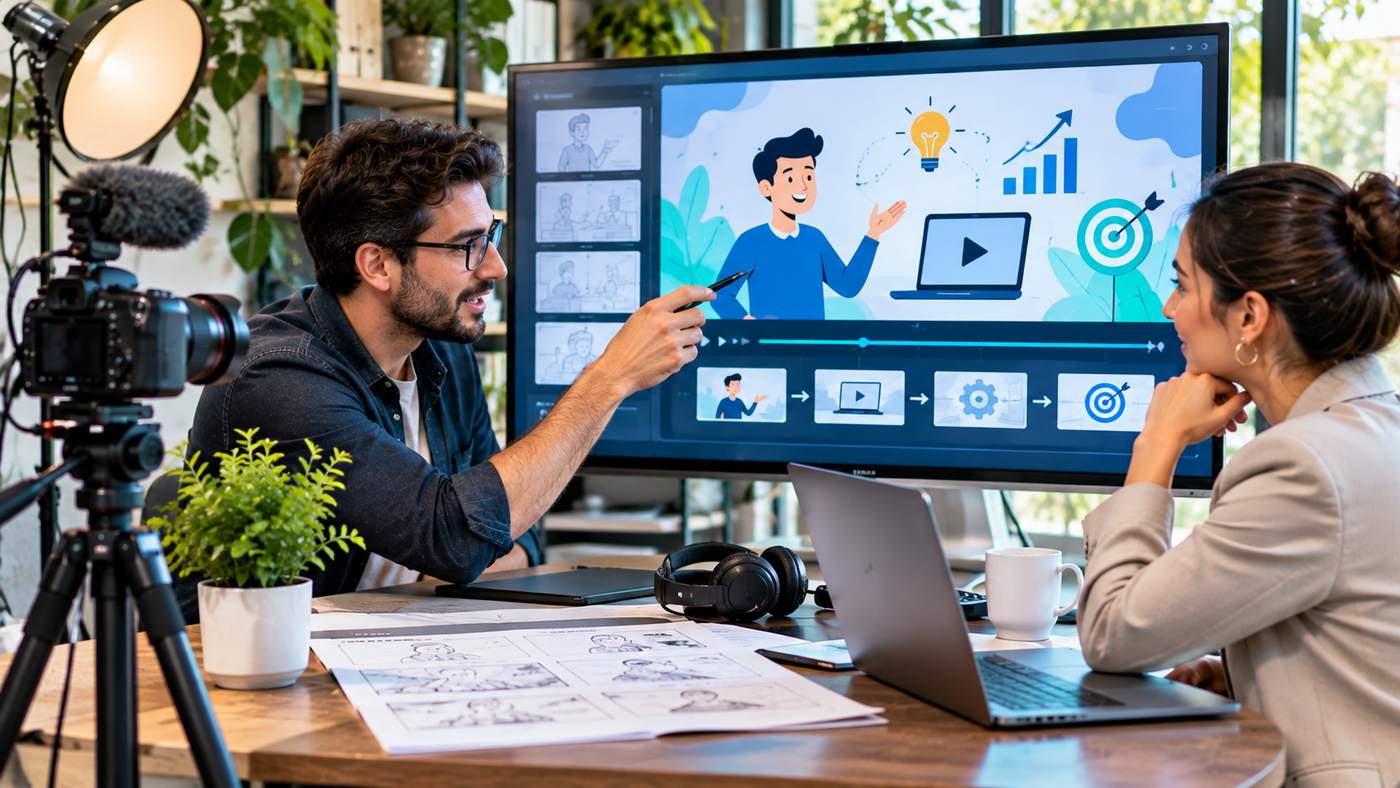
Choosing the right explainer video company can make a significant difference in how effectively your business communicates with potential customers. Whether you need to introduce a new software platform, explain a complicated service, demonstrate a product, or strengthen brand awareness, a professionally produced video can simplify information that might otherwise be difficult to understand. However, not every production studio offers the same creative skills, strategic guidance, communication standards, or pricing structure. A visually attractive video is only useful when it delivers the right message to the right audience. This guide explores nine essential considerations for selecting a reliable production partner, understanding the creative process, and developing business videos that support meaningful marketing goals in 2026.
Why Professional Explainer Videos Matter for Modern Businesses
An explainer video introduces a product, service, process, or idea through a combination of visuals, narration, sound, and storytelling.
Businesses commonly use these videos on homepages, landing pages, product pages, social media channels, sales presentations, and customer onboarding platforms.
For example, a software company might use animation to explain how its platform automates repetitive tasks. A healthcare technology provider might demonstrate a patient registration process through a carefully scripted visual walkthrough.
The purpose is not simply to entertain viewers. An effective video helps people understand what the business offers, why it matters, and what action they can take next.
A professional explainer video company should therefore understand marketing objectives as well as production techniques.
According to Wistia’s video-length research, educational videos between one and five minutes can work well for explaining products and processes, although the ideal duration depends on the audience and distribution channel. Wistia
The strongest approach prioritizes clarity and audience needs rather than choosing a video length or animation style solely because it is fashionable.
9 Essential Tips for Choosing the Right Video Production Partner
1. Define Your Audience and Business Objective
Before contacting an explainer video company, decide exactly what viewers should understand after watching. Do you want qualified visitors to request a demonstration, help new users complete onboarding, or introduce an unfamiliar service? These are different objectives and require different scripts.
Create a brief identifying the target audience, its main problem, the proposed solution, and one desired next step. A cybersecurity provider might explain how its platform detects threats, whereas a local service business may focus on how customers book appointments. A strong explainer video company should ask about these objectives before proposing an animation package. Without a clear purpose, even a beautifully produced video can miss the mark.
2. Review the Portfolio for Relevant Work
An explainer video company’s portfolio is more informative than its promotional claims. Watch several completed projects, including examples involving products or audiences similar to yours. Assess whether each video makes an unfamiliar subject understandable without relying on excessive jargon.
Pay attention to pacing, visual consistency, voiceover quality, and whether the viewer understands the value proposition early. Ask the explainer video company who actually produced the work displayed and which parts were handled by external contractors. Industry experience matters, but the ability to explain complex ideas accurately is equally important. Requesting a relevant case study can reveal how the agency approached challenges, feedback, and final delivery.
3. Match the Creative Style to the Message
Different video formats solve different communication problems. Two-dimensional animation can illustrate abstract services, while 3D animation may be useful for showing technical equipment or product construction. Live-action footage can introduce real employees, locations, and customer experiences. Motion graphics are particularly effective for data, interfaces, and processes.
The best explainer video company will recommend a format based on your audience, budget, and distribution goals rather than automatically selecting its most expensive offering. A blended approach can also work when both human trust and technical explanation matter. Ask for examples showing how the chosen style makes difficult information easier to understand, not merely more decorative.
4. Examine Scriptwriting and Storyboarding Skills
A clear script is the foundation of a useful explainer. The opening should identify a recognizable problem, followed by a straightforward explanation of the solution and a relevant next action. Avoid trying to describe every feature in one short video.
Before production, a storyboard should show how narration, scenes, labels, and transitions fit together. This makes it possible to correct confusing explanations before expensive animation begins. Ask your explainer video company whether scriptwriting and storyboarding are included in the proposal, and who approves each milestone. A collaborative review involving marketing and product specialists can help prevent technically inaccurate statements from reaching the finished video.
5. Understand the Complete Production Workflow
A reliable production process usually includes discovery, creative direction, scripting, storyboard approval, production, audio, revisions, and final delivery. Each stage should have a clear owner and decision deadline.
For example, a business might approve the script before the studio develops visual assets, then sign off on the storyboard before full animation begins. This reduces the chance of major late-stage changes. An experienced explainer video company should explain its review process and identify the person responsible for communicating updates. Ask whether voiceover, music licensing, illustration, and editing will be managed internally or with specialist partners. Both approaches can work when accountability is clear.
6. Compare Pricing and Realistic Delivery Times
A low initial quotation does not necessarily represent the lowest total project cost. Compare proposals using the same brief and ask what is included in the quoted fee. Important items include scripting, custom artwork, filming, voice talent, soundtrack licensing, revisions, captions, and alternate video formats.
Production complexity influences both cost and schedule. A straightforward motion-graphics video may require less work than a detailed 3D animation or live-action production across several locations. A trustworthy explainer video company should identify assumptions, additional charges, and payment milestones in writing. Build in time for stakeholder approvals, especially when legal, product, and marketing teams must review the content.
7. Clarify Revisions, Ownership, and Accessibility
One of the most useful questions concerns what happens when you request changes. Confirm how many revision rounds are included, which stages allow structural changes, and what additional edits cost after approval. Minor wording corrections are different from rewriting an entire concept.
Ask the explainer video company who will own the finished video, whether editable project files are included, and which rights apply to footage, images, fonts, voiceovers, and music. Also request accurate captions and an accessible transcript. The W3C’s accessibility guidance calls for captions for prerecorded synchronized media with audio under WCAG success criterion 1.2.2. W3C Clear ownership and accessibility terms help avoid expensive problems after launch.
8. Plan Distribution and a Clear Call to Action
Production is only one part of the investment. Decide where the video will appear before approving its format. A homepage explainer may need a different opening from a social advertisement, sales presentation, or customer help-centre video.
Ask the explainer video company about horizontal, square, and vertical exports; subtitle files; thumbnail images; and shorter edits. On your website, place the video near information that helps visitors take the next step. A relevant call to action might invite viewers to start a trial, schedule a consultation, or explore product details. Avoid autoplay with intrusive sound, and provide surrounding text that explains the video’s subject for accessibility and search discovery.
9. Establish How Results Will Be Measured
A successful video should be evaluated against its original business objective. Useful indicators may include playback starts, meaningful watch time, click-throughs, qualified inquiries, product registrations, or fewer repeated support questions. The correct metric depends on the video’s purpose.
For a landing-page explainer, compare conversion performance before and after publication while accounting for other website changes. For onboarding, look at task completion and customer feedback. An explainer video company may help configure hosting and reporting, but it cannot credibly guarantee a particular revenue increase. Request a practical measurement plan and discuss whether future revisions or alternate cuts may be needed once viewers’ behaviour becomes clearer.
What Makes Levitate Media a Relevant Example?
Businesses comparing production partners can explore the explainer video company services described by Levitate Media. Its official service page lists custom 2D and 3D animation, live-action videos, script development, storyboarding, animation, and delivery. The company also describes an iterative process in which clients review creative work before final completion. Levitate Media
These published offerings make Levitate Media one potential provider to evaluate, not an automatic best choice for every project. Request examples relevant to your industry, check current availability, and compare a written proposal with other qualified studios. Any explainer video company should be evaluated on its actual work, contractual terms, and fit with your project rather than marketing descriptions alone.
Common Mistakes That Increase Costs
Businesses sometimes hire an explainer video company without agreeing on the audience or message, resulting in revisions that could have been avoided. Others choose an explainer video company based entirely on a polished showreel without checking whether its team understands the industry.
Another mistake is approving a script before technical experts review product claims. Missing captions, unclear licensing, unrealistic launch dates, and too many competing calls to action can also reduce the usefulness of the finished asset. Establish one primary project owner and a written approval process so feedback stays consistent.
Frequently Asked Questions
1. What does an explainer video production studio do?
It develops short videos that clarify products, services, or processes. Services may include strategy, scripting, storyboards, animation or filming, editing, voiceover, and final exports.
2. How much does a professional explainer video cost?
Costs vary with duration, animation style, filming requirements, custom artwork, voice talent, and revision scope. Request an itemized quote rather than relying on a universal price estimate.
3. How long should a business explainer video be?
Many promotional explainers are around 60–90 seconds, but educational videos may need more time. Choose a length based on the message and where viewers will encounter it.
4. Is animation better than live-action video?
Neither is universally better. Animation suits abstract concepts and processes, while live action can help present real people, products, and working environments.
5. How long does production usually take?
A straightforward video may take several weeks, while complex 3D or live-action projects can take longer. The number of review rounds and approval speed also affect delivery.
6. What should I ask before hiring a video agency?
Request relevant portfolio examples, a production timeline, an itemized estimate, revision terms, ownership details, accessibility deliverables, and a clear explanation of how success will be measured.
Conclusion
Choosing an explainer video company requires balancing creative quality with clear communication, transparent pricing, and measurable goals. A thoughtful partner will understand your audience, develop an accurate script, and deliver assets suited to the channels where your customers spend time. Review portfolios, confirm rights and revisions, and plan distribution before production starts. With the right preparation, an explainer video can become a useful long-term resource for education, marketing, and customer engagement.
