
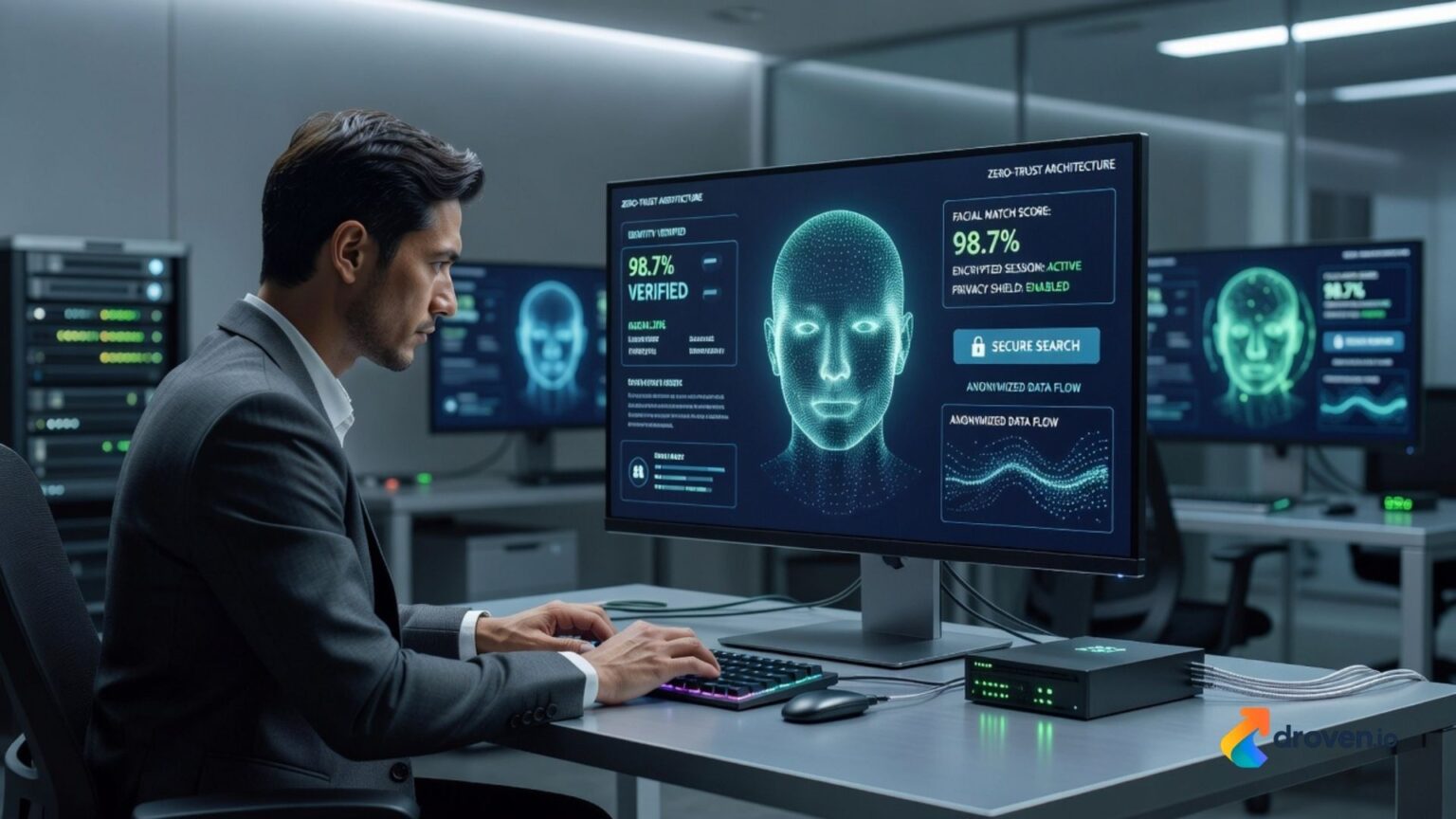
As digital interactions continue to grow across social media, professional networking platforms, e-commerce websites, and online communities, verifying the authenticity of online profiles has become increasingly important. A face lookup tool helps users perform reverse image searches using facial photographs to determine whether the same image appears elsewhere online. These tools are commonly used for identity verification, duplicate image detection, copyright protection, and identifying fake or impersonated profiles, while their capabilities depend on the provider and available public data.
Modern face-lookup technologies combine artificial intelligence, computer vision, facial feature analysis, and reverse image search techniques to compare uploaded images against indexed or authorized datasets. Businesses, journalists, researchers, content creators, and everyday internet users may use these tools to verify profile authenticity, investigate image misuse, or protect intellectual property. At the same time, responsible use is essential to respect privacy, applicable laws, and platform policies.
This guide explains how this technology works, its legitimate applications, available technologies, privacy considerations, limitations, and best practices for safe and ethical use.
What Is Face Lookup?
A technology that analyzes facial features within an image and compares them with images available in searchable sources or authorized databases, depending on the service being used. Unlike traditional keyword searches, this image search tool relies on visual characteristics rather than text-based information.
Depending on the platform, a face-lookup may help users:
- Find duplicate images online.
- Detect fake social media profiles.
- Identify unauthorized use of photographs.
- Verify professional profile pictures.
- Support digital investigations using publicly available information.
- Locate higher-quality versions of an image.
- Assist copyright monitoring.
- Improve online trust and transparency.
The specific results and data sources vary between providers, and many services limit searches to publicly available or user-authorized content.
How Face-Lookup Technology Works
Modern this image search tool systems use artificial intelligence and computer vision to extract distinguishable facial characteristics from an uploaded image. Instead of matching an entire photograph pixel by pixel, algorithms analyze facial landmarks and visual patterns.
The process generally includes:
Column 1: Upload Image
Column 2: User submits a clear facial photograph.
Column 1: Facial Detection
Column 2: AI identifies the face within the image.
Column 1: Feature Extraction
Column 2: The system analyzes facial geometry and unique visual characteristics.
Column 1: Image Comparison
Column 2: The extracted features are compared against searchable image collections or authorized databases.
Column 1: Search Results
Column 2: Potential visual matches are presented, depending on available indexed content.
Because providers use different datasets and technologies, two face lookup services may return different results for the same image.
Artificial Intelligence Behind Face-Lookup
Artificial intelligence plays a significant role in improving this image search tool accuracy. Machine learning models are trained to recognize facial structures under varying conditions, including:
- Different lighting.
- Facial expressions.
- Camera angles.
- Partial obstructions.
- Image resolution.
- Background variations.
Continuous model improvements help reduce false matches while improving recognition performance within the limits of the available data.
Common Uses of Face-Lookup
Facial recognition platform has several legitimate applications across both personal and professional environments.
Identity Verification
Organizations may use face-lookup alongside other verification methods to help confirm that profile images are authentic and consistent across authorized systems. It should not be relied upon as the sole method of identity verification.
Fake Profile Detection
Online impersonation remains a common issue across social media platforms.
This facial recognition platform may help users determine whether a profile picture appears elsewhere on the internet, which can sometimes indicate that an image has been copied without permission.
Copyright Protection
Photographers, designers, journalists, and content creators often monitor how their images are used online.
Face-lookup tools can assist by helping locate publicly available instances where an image may have been republished, supporting copyright management and attribution efforts.
Journalism and Open-Source Research
Investigative journalists and open-source intelligence (OSINT) researchers sometimes use reverse image search techniques as one element of broader verification workflows. Results should always be corroborated with additional evidence rather than treated as definitive proof.
Face Lookup for Online Safety
Online scams increasingly rely on stolen profile photographs to create convincing fake identities.
This platform can contribute to safer online interactions by helping users:
- Check profile authenticity.
- Detect reused profile photos.
- Verify business representatives.
- Review public image history where available.
- Reduce exposure to impersonation scams.
- Support due diligence before online transactions.
While useful, face lookup should be combined with other verification methods such as reviewing account history, confirming contact information, and evaluating overall credibility.
Technologies Used in Face Lookup
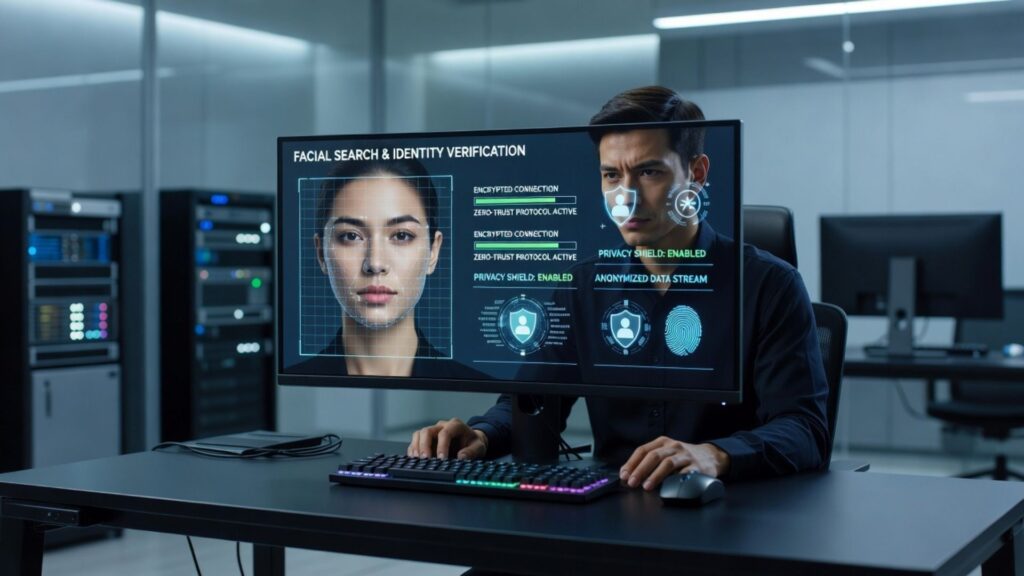
Modern this technology platforms often combine multiple technologies.
These may include:
- Artificial intelligence.
- Machine learning.
- Computer vision.
- Reverse image search.
- Facial landmark detection.
- Image similarity algorithms.
- Cloud computing.
- Large-scale image indexing.
Together, these technologies improve image analysis while enabling faster search performance across extensive datasets.
Benefits of Face-Lookup
When used responsibly and in accordance with applicable laws, this technology provides several advantages.
These include:
- Improved identity verification.
- Detection of duplicate images.
- Support for copyright protection.
- Identification of impersonation attempts.
- Faster online research.
- Enhanced digital safety.
- Better content verification.
- Assistance with image source discovery.
Each benefit depends on the quality of the uploaded image, the provider’s indexed content, and the scope of available public information.
Limitations of Face Lookup
Although face lookup technology has advanced significantly, it has important limitations.
Users should understand that:
- Not every image is publicly indexed.
- Search results vary by provider.
- Similar-looking individuals may produce visually similar results.
- Image quality affects accuracy.
- Privacy laws may restrict available data.
- Results should not be treated as conclusive identification.
Responsible interpretation of search results is essential, particularly when making decisions that could affect another person.
Face Lookup and Privacy Considerations
As face lookup technology becomes more widely available, privacy remains one of the most important considerations. Facial images are personal information in many jurisdictions, and the collection, storage, and processing of biometric data may be regulated by applicable privacy laws.
Responsible face lookup services generally emphasize:
- Transparent privacy policies.
- Secure data processing.
- User consent where required.
- Limited data retention.
- Compliance with applicable regulations.
- Secure transmission of uploaded images.
- Protection against unauthorized access.
- Clear explanations of how search results are generated.
Before uploading any image, users should review the provider’s privacy practices and terms of service.
Responsible Use of Face Lookup
Face lookup should be used responsibly and only for legitimate purposes.
Appropriate uses include:
- Verifying publicly available profile images.
- Checking for unauthorized image use.
- Supporting copyright investigations.
- Conducting open-source research within legal boundaries.
- Confirming professional identities when appropriate.
Users should avoid using face lookup in ways that violate privacy rights, applicable laws, or platform policies.
Face Lookup for Businesses
Businesses increasingly rely on digital identity verification to reduce fraud and improve trust across online platforms.
A face lookup may support organizations by helping with:
- Brand protection.
- Fraud awareness.
- Identity verification workflows.
- Copyright monitoring.
- Social media monitoring.
- Public image verification.
- Reputation management.
- Digital risk assessment.
Businesses should combine face lookup with additional verification methods rather than relying solely on image-based analysis.
Face Lookup in Customer Verification
Some organizations integrate face lookup into broader identity verification processes.
These systems may include:
- Government-issued ID verification.
- Multi-factor authentication.
- Liveness detection.
- Document verification.
- Device authentication.
- Account history analysis.
Using multiple verification methods helps improve accuracy while reducing the risk of fraud.
Face Lookup and Artificial Intelligence
Artificial intelligence continues to improve the capabilities of face lookup technology by increasing image recognition accuracy and search efficiency.
Modern AI systems assist with:
- Facial landmark detection.
- Image enhancement.
- Pattern recognition.
- Similarity scoring.
- Feature extraction.
- Duplicate image detection.
- Visual classification.
- Automated indexing.
Advances in AI enable face lookup tools to analyze large image collections more efficiently while adapting to variations in lighting, pose, and image quality.
Machine Learning and Face Lookup
Machine learning models continuously improve by analyzing large datasets during training.
This enables face lookup systems to better recognize:
- Different facial expressions.
- Aging effects.
- Lighting changes.
- Partial facial visibility.
- Camera angle variations.
- Low-resolution images.
Performance varies depending on the provider, training data, and available image sources.
Face Lookup for Digital Investigations

Researchers, cybersecurity professionals, and journalists sometimes include face lookup as one component of broader investigative workflows.
Possible applications include:
- Verifying publicly available images.
- Investigating impersonation attempts.
- Supporting open-source intelligence research.
- Locating duplicate media.
- Identifying image misuse.
- Confirming image publication history.
Search results should always be verified using independent sources before drawing conclusions.
Face Lookup and Cybersecurity
Cybercriminals frequently use stolen profile photographs to create fake accounts or impersonate legitimate individuals.
Face lookup can contribute to cybersecurity efforts by helping identify:
- Duplicate profile images.
- Fake social media accounts.
- Romance scam profiles.
- Business impersonation.
- Fraudulent online identities.
- Unauthorized image distribution.
Combining face lookup with account verification, communication history, and other investigative methods provides a more complete assessment.
Best Practices for Using Face Lookup
Following recommended practices helps users obtain more reliable search results.
Suggestions include:
- Upload clear, high-quality images.
- Use recent photographs when appropriate.
- Compare results across multiple reputable services.
- Review privacy policies before uploading images.
- Verify findings with additional sources.
- Respect copyright and privacy laws.
- Avoid making assumptions based solely on visual similarity.
- Use face lookup only for lawful and ethical purposes.
Responsible use improves both accuracy and trustworthiness.
Limitations and Ethical Considerations
Although face lookup provides valuable capabilities, it should never be viewed as infallible.
Important limitations include:
- Search results depend on available indexed content.
- Similar facial features can produce comparable matches.
- Images may be outdated.
- Some providers search only limited datasets.
- Publicly unavailable images cannot typically be searched.
- Local privacy regulations may restrict data availability.
Ethical use requires understanding these limitations and avoiding misuse or unwarranted conclusions.
Accuracy Depends on Multiple Factors
Search accuracy may be influenced by:
- Image resolution.
- Lighting conditions.
- Facial orientation.
- Facial obstructions.
- Image age.
- Provider technology.
- Dataset coverage.
- Compression quality.
No face lookup service can guarantee complete or perfect identification.
Choosing a Face Lookup Service
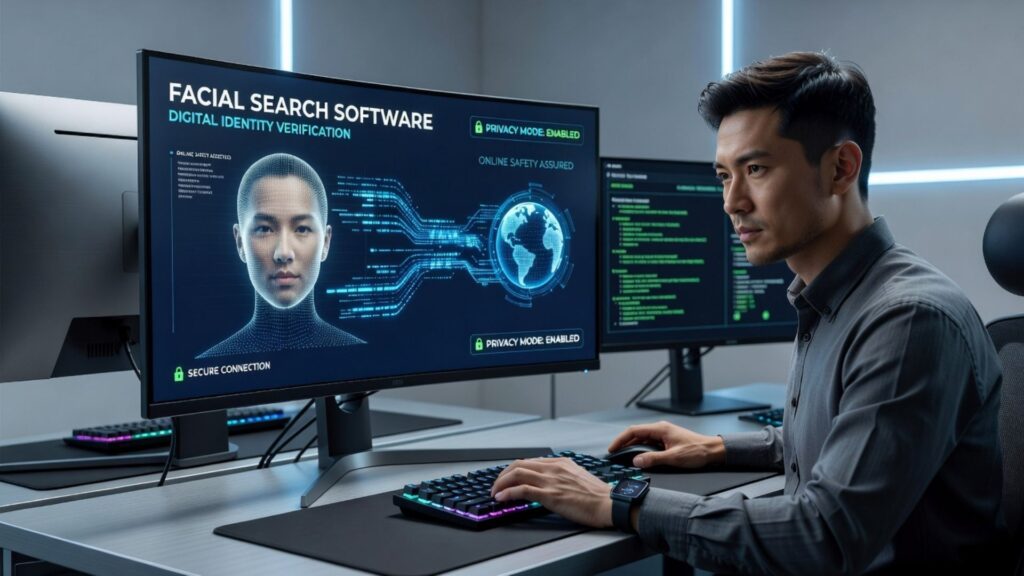
Different face lookup platforms offer different capabilities, data sources, and privacy protections.
When evaluating a service, consider:
- Privacy policy.
- Security measures.
- Data retention practices.
- Search coverage.
- AI capabilities.
- Ease of use.
- Result transparency.
- Customer support.
Selecting a provider with clear privacy practices and transparent information helps support responsible use.
Future of Face Lookup Technology
Face lookup technology continues to evolve alongside advancements in artificial intelligence and computer vision.
Future developments may include:
- Improved facial recognition algorithms.
- Enhanced privacy controls.
- Better image quality restoration.
- Faster search performance.
- More accurate similarity analysis.
- Expanded multilingual support.
- Stronger data security measures.
- Greater transparency regarding search methods.
As technology advances, balancing innovation with privacy and ethical standards will remain an important priority.
Why Face Lookup Matters in Today’s Digital World
Digital identity has become increasingly important across personal, professional, and commercial environments.
A face lookup can contribute to:
- Improved online trust.
- Better identity verification.
- Enhanced fraud awareness.
- Stronger copyright protection.
- Safer digital interactions.
- More informed online research.
When combined with responsible practices and additional verification methods, face lookup provides a valuable tool for navigating today’s online environment.
Frequently Asked Questions
What is face lookup?
Face lookup is a reverse image search technology that analyzes facial features to find visually similar images in searchable or authorized image collections, depending on the service.
Is face lookup accurate?
Accuracy depends on image quality, available indexed content, and the technology used by the provider. Results should be treated as indicators rather than definitive identification.
Can face lookup identify fake social media profiles?
Face lookup may help detect reused profile images that appear elsewhere online, but additional investigation is necessary before concluding that a profile is fraudulent.
Is face-lookup legal?
The legality of this technology depends on local laws, how the technology is used, and the provider’s handling of personal information. Users should comply with applicable privacy regulations.
How does artificial intelligence improve face lookup?
Artificial intelligence enhances face-lookup by analyzing facial features, recognizing visual patterns, and comparing images more efficiently across large datasets.
What are the best practices when using face lookup?
Use clear images, review privacy policies, verify search results with additional sources, respect copyright and privacy laws, and use face lookup only for legitimate purposes.
Conclusion
Face lookup has become an increasingly valuable technology for reverse image search, online identity verification, copyright monitoring, and digital safety. By combining artificial intelligence, computer vision, and image similarity analysis, face lookup enables users to locate visually similar images and identify potential cases of impersonation or unauthorized image use. However, search results should always be interpreted carefully, as accuracy depends on image quality, available indexed content, and the capabilities of the chosen platform.
Responsible use of face lookup requires respecting privacy rights, complying with applicable laws, and confirming findings through additional sources whenever important decisions are involved. As AI and image recognition technologies continue to advance, face lookup is likely to remain an important tool for improving trust, transparency, and security across the digital landscape.
