
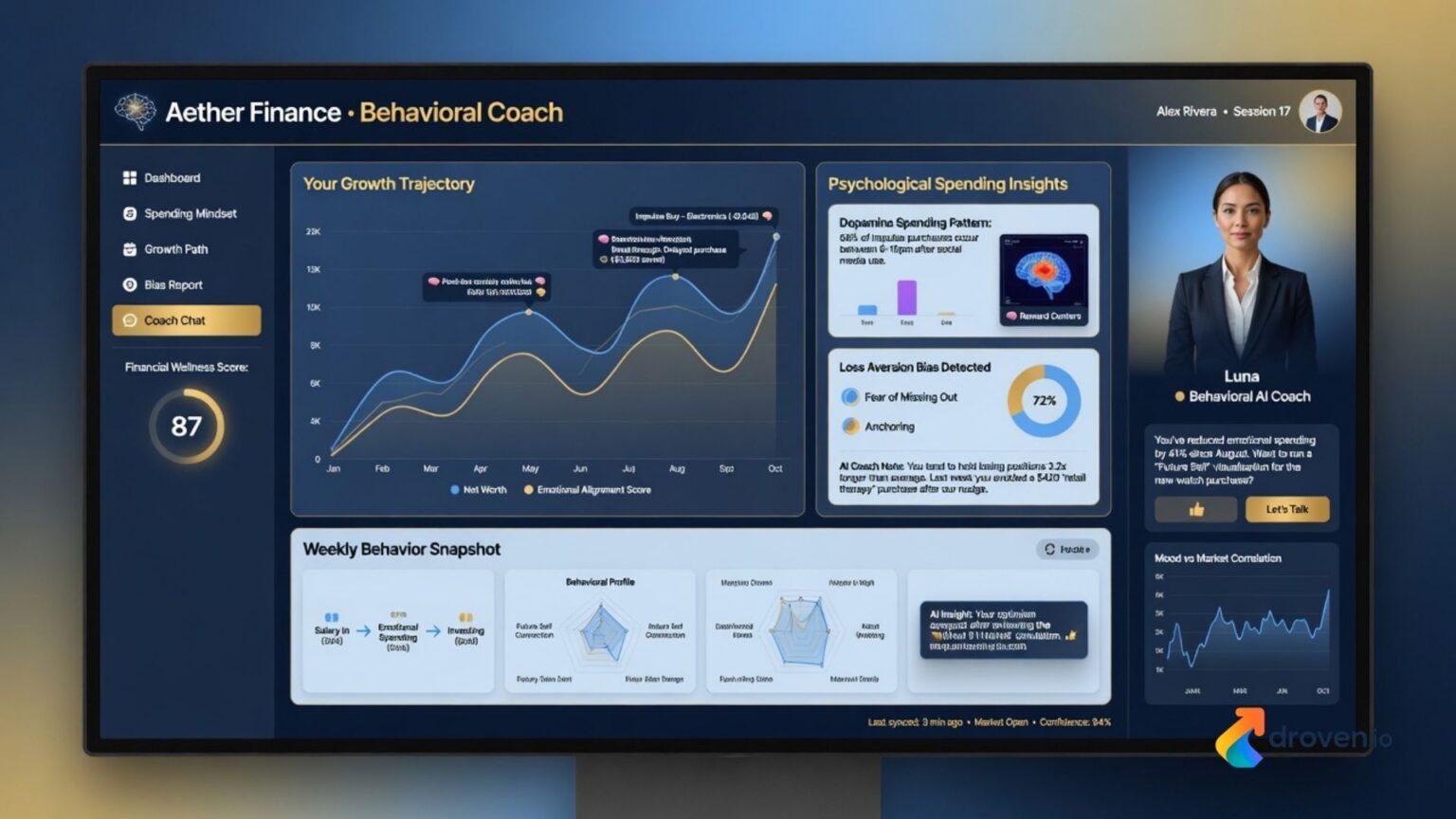
Managing personal wealth effectively requires more than basic budgeting spreadsheets or passive expense tracking applications. Modern behavioral economics demonstrates that human emotions, cognitive biases, and psychological triggers heavily influence daily spending habits. To bridge the gap between financial literacy and actual human behavior, PsyFi introduced an artificial intelligence platform designed to deliver personalized behavioral finance coaching. By analyzing user transaction history, emotional spending triggers, and long-term personal goals, the platform guides users toward smarter financial choices during routine purchase decisions.
Rather than merely categorizing past transactions, PsyFi provides real-time interventions that reframe how individuals perceive money, budget constraints, and capital accumulation. This comprehensive analysis explores how PsyFi’s behavioral intelligence engine optimizes consumer decision-making and reshapes digital wealth management.
The Evolution of Behavioral Financial Analytics in AI Platforms
Traditional banking applications focus primarily on static historical tracking. For instance, basic budgeting tools log transactions after purchases occur, offering limited opportunity to modify real-time behavior. In contrast, behavioral financial platforms combine predictive machine learning with cognitive psychology to intervene before impulse spending happens.
| Operational Model | Traditional Personal Finance Apps | PsyFi Behavioral AI Coaching Engine |
|---|---|---|
| Data Interaction Focus | Historical expense logging and categorization | Predictive behavioral analysis and intervention |
| User Engagement Trigger | Periodic end-of-month budget reviews | Real-time context-aware purchase guidance |
| Core Analytic Method | Basic mathematical summation | Natural language processing & psychological profiling |
| Primary Goal Outcome | Passive spending awareness | Active cognitive reframing and long-term habits |
By studying individual decision-making patterns, artificial intelligence identifies psychological vulnerabilities such as emotional retail therapy, loss aversion panic, or lifestyle inflation. Consequently, platforms like PsyFi turn passive bank data into active financial coaching.
Core Capabilities of PsyFi in Daily Financial Management
The PsyFi platform operates by pairing open banking application programming interfaces (APIs) with proprietary machine learning models. Consequently, the software monitors account activity to detect behavioral anomalies in real time.
Real-Time Behavioral Interventions for Financial Choices
When users navigate e-commerce websites or approach high-friction spending environments, the platform evaluates the proposed purchase against the user’s broader economic goals. Rather than issuing restrictive budget warnings that trigger user fatigue, the platform delivers subtle cognitive nudges. For example, if a user attempts an impulsive purchase during late-night hours, the software calculates the exact work hours required to offset that expense.
Algorithmic Nudges and Long-Term Financial Planning
Long-term wealth building requires consistent micro-decisions sustained over extended periods. PsyFi automates positive habit loops by aligning daily saving goals with real-time psychological rewards.
| Functional Feature | Algorithmic Mechanism | Target Behavioral Result |
|---|---|---|
| Impulse Friction Delays | Introduces timed reflection windows on high-value items | Reduces emotional retail spending |
| Opportunity Cost Calculators | Translates cart values into retirement growth potential | Encourages long-term investment priorities |
| Mood-Spending Correlation | Cross-references calendar events with spending spikes | Builds awareness around stress purchases |
| Automated Micro-Savings | Redirects impulse savings into high-yield accounts | Accelerates capital accumulation |
Consequently, replacing rigid financial rules with flexible cognitive guidance helps users build sustainable money management habits without feeling deprived.
7 Strategic Advantages of AI-Driven Financial Coaching
Deploying artificial intelligence to guide personal capital management offers distinct structural advantages over traditional wealth management approaches.
| Strategic Advantage | Technical Implementation | Practical Consumer Benefit |
|---|---|---|
| 1. Hyper-Personalization | Evaluates individual risk profile and emotional triggers | Delivers custom coaching unique to user personality |
| 2. Continuous Monitoring | Scans multi-account data streams continuously | Provides immediate feedback without manual logging |
| 3. Reduced Cognitive Load | Automates budget calculations and habit adjustments | Eliminates decision fatigue around daily purchases |
| 4. Cognitive Bias Neutralization | Flags emotional spending before checkout confirmation | Protects savings against impulse purchase traps |
| 5. Contextual Education | Delivers bite-sized financial lessons during choices | Improves practical financial literacy naturally |
| 6. Dynamic Goal Adjustment | Recalibrates savings targets based on income shifts | Maintains achievable financial progression plans |
| 7. Integrated Wealth Tracking | Aggregates debt, credit, and investment accounts | Delivers holistic visibility across net worth |
Through these seven core advantages, behavioral coaching platforms turn complex money management principles into accessible, actionable guidance for everyday consumers.
Integrating Psychology into Modern Financial Decision Engines
Human decision-making is naturally prone to systemic cognitive errors. Behavioral economics categorizes these errors into predictable mental patterns that software algorithms can detect and correct.
Mitigating Emotional Impulsivity in Financial Spending
Hyperbolic discounting causes individuals to choose immediate small rewards over significantly larger future gains. PsyFi mitigates this tendency by visualizing future financial freedom directly within the purchasing interface.
| Psychological Bias | Behavioral Manifestation | PsyFi AI Intervention Strategy |
|---|---|---|
| Hyperbolic Discounting | Prioritizing instant gratification over long-term savings | Displays future compound interest loss in real time |
| Mental Accounting | Treating bonus income differently than base salary | Automatically routes windfall capital to high-priority debt |
| Loss Aversion | Panic-selling assets during temporary market downturns | Delivers calm, historical context messaging during volatility |
| Anchor Bias | Overvaluing discounted sale items regardless of necessity | Highlights true post-tax utility value of purchases |
Addressing these psychological vulnerabilities allows software tools to protect users from self-defeating economic behaviors.
Enhancing Risk Tolerance Calibration for Financial Growth
Investing requires balancing risk exposure against long-term growth targets. Many retail investors struggle to assess their true risk tolerance accurately during market swings. By evaluating user responses to simulated market events, PsyFi builds dynamic risk profiles. As a result, users receive tailored asset allocation suggestions that align with their actual psychological resilience.
Data Security and Privacy Standards in Financial AI Systems
Handling sensitive personal banking data requires enterprise-grade security protocols. Consumers must feel confident that their confidential data remains secure from unauthorized access.
| Security Layer | Technical Architecture Standard | Regulatory Compliance Target |
|---|---|---|
| Data Encryption | AES-256 bits at rest and TLS 1.3 in transit | Prevents unauthorized network data interception |
| Access Controls | Multi-factor authentication & biometric verification | Restricts platform access strictly to account owners |
| API Integration | OAuth 2.0 read-only open banking protocol | Eliminates need to store raw bank login credentials |
| Data Governance | Anonymized user telemetry data models | Ensures compliance with GDPR, CCPA, and SOC2 |
By applying robust encryption standards and read-only API access protocols, behavioral platforms protect user data while delivering real-time coaching insights.
Strategic Industry Outlook for AI Financial Tools
The consumer fintech landscape continues to transition away from static ledger applications toward interactive, intelligent coaching platforms. As artificial intelligence models incorporate predictive analytics, personal coaching tools will anticipate major life events seamlessly. Future platform iterations will likely coordinate daily budgeting, tax optimization, and automated retirement investing into a single automated engine. Consequently, tools like PsyFi represent the beginning of a broader shift toward completely personalized, autonomous financial management.
Conclusion:
Integrating behavioral economics into artificial intelligence platforms represents a major step forward for digital personal finance. As demonstrated by platforms like PsyFi, overcoming irrational spending habits requires addressing the underlying psychological triggers that drive consumer behavior. By delivering context-aware nudges, reducing cognitive fatigue, and neutralizing emotional biases, behavioral coaching software enables users to align daily spending with long-term wealth goals. Furthermore, pairing real-time interventions with robust data encryption ensures consumers can optimize their portfolios safely. Ultimately, adopting AI-driven behavioral coaching empowers individuals to make smarter financial decisions, turn daily savings into lasting wealth, and build long-term economic resilience.
Frequently Asked Questions (FAQs)
What is PsyFi behavioral financial coaching?
PsyFi is an AI-powered platform that analyzes consumer spending psychology to provide real-time coaching for everyday money decisions.
How does behavioral finance differ from traditional budgeting?
Traditional budgeting tracks historical expenses passively, whereas behavioral finance identifies emotional triggers to prevent impulse spending before it occurs.
Is my bank account data secure with PsyFi?
Yes, the platform uses read-only OAuth 2.0 open banking APIs and AES-256 bit encryption to ensure full data privacy and security.
How does the AI prevent impulse purchases online?
The software introduces reflection windows, calculates the work-hour cost of cart items, and highlights lost compound interest potential in real time.
Can behavioral AI coaching help with long-term investing?
Yes, it assesses risk tolerance dynamically and neutralizes loss-aversion panic during market downturns to keep long-term investment strategies on track.
Does the application store my online banking passwords?
No, read-only open banking integrations connect securely through official bank portals without storing raw account passwords or login credentials.
