

The conversation around Financial Privacy in the Digital Age has become increasingly important as digital payments, cryptocurrencies, and blockchain technologies reshape the global financial system. Every online transaction leaves a digital footprint, raising important questions about how financial information is collected, stored, analyzed, and protected. As the digital asset ecosystem continues to mature, businesses, regulators, researchers, and users are paying closer attention to the balance between transparency, compliance, and individual privacy.
Industry research from cryptocurrency companies and technology organizations frequently explores how users view financial privacy, regulatory compliance, and the future of digital assets. While different reports may reach different conclusions depending on their methodology and scope, one common theme continues to emerge: users increasingly expect greater control over their financial information while operating within secure and compliant ecosystems.
Whether using cryptocurrencies for investment, payments, decentralized finance (DeFi), or cross-border transfers, understanding financial privacy has become an essential part of responsible digital asset management. This guide explains why financial privacy matters, how blockchain technology influences transparency, what privacy tools are available, and how individuals and businesses can better protect sensitive financial information in the digital age.
What Is Financial Privacy in the Digital Age?
Financial Privacy in the Digital Age refers to an individual’s ability to control how financial information is collected, shared, stored, and used across digital platforms. It includes protecting sensitive financial data from unauthorized access while ensuring legitimate financial activities remain secure and compliant with applicable laws.
Financial privacy extends beyond cryptocurrencies and includes:
- Online banking
- Digital payment platforms
- Mobile wallets
- Investment accounts
- Cryptocurrency transactions
- Financial applications
- Cross-border payment services
As financial services become increasingly digital, maintaining appropriate privacy protections has become more important than ever.
Why Financial Privacy Matters
Financial information can reveal significant details about an individual’s personal life, purchasing habits, investments, and economic activities.
Protecting financial privacy helps support:
- Personal security
- Identity protection
- Fraud prevention
- Business confidentiality
- Consumer trust
- Data protection
Privacy does not necessarily mean anonymity. In many regulated financial systems, privacy and compliance coexist through secure handling of customer information while meeting legal obligations.
How Blockchain Changes Financial Privacy
Blockchain technology introduces a different approach to recording financial transactions.
Unlike traditional banking systems, many public blockchains maintain transparent ledgers that allow transactions to be viewed publicly.
However, transparency does not automatically reveal a person’s real-world identity.
Instead, public blockchains typically display:
- Wallet addresses
- Transaction amounts
- Time stamps
- Transaction history
If wallet addresses become linked to identifiable individuals through exchanges or other services, transaction activity may become easier to analyze.
Understanding this distinction is central to discussions about Financial Privacy in the Digital Age.
Transparency vs Privacy
One of the most interesting aspects of blockchain technology is its balance between transparency and privacy.
Public Transparency
Many blockchain networks publish transaction records that anyone can verify.
This transparency supports:
- Network security
- Transaction verification
- Public auditing
- Decentralization
Personal Privacy
Although blockchain transactions may be publicly visible, users often seek ways to reduce unnecessary exposure of personal financial information.
Financial privacy focuses on protecting sensitive user information while allowing legitimate financial systems to operate securely.
Financial Privacy in Digital Assets
Digital assets have expanded the discussion around financial privacy because they combine decentralized technologies with evolving regulatory frameworks.
Users often value:
- Control over digital assets
- Secure transactions
- Protection of personal information
- Transparent network operation
- Responsible regulatory compliance
Organizations across the cryptocurrency industry continue researching how users perceive privacy and what features they expect from modern financial services.
Common Privacy Risks
As digital finance grows, several privacy challenges continue to emerge.
Data Breaches
Financial platforms may become targets for cybercriminals seeking sensitive customer information.
Strong cybersecurity practices help reduce these risks.
Identity Theft
Compromised financial data may be used in attempts to impersonate individuals or access financial accounts.
Blockchain Analysis
Specialized analytical tools can examine public blockchain data to identify transaction patterns.
The extent to which activity can be associated with specific individuals depends on multiple factors.
Phishing Attacks
Fraudulent websites and communications attempt to obtain login credentials or wallet information.
Users should always verify website authenticity before entering sensitive information.
Best Practices for Protecting Financial Privacy
Individuals can take several practical steps to strengthen their financial privacy.
Use Strong Authentication
Enable two-factor authentication whenever available.
Strong passwords combined with multi-factor authentication improve account security.
Protect Wallet Information
Never share private keys or recovery phrases.
Store backup information securely using trusted methods.
Verify Websites
Always access cryptocurrency exchanges, wallets, and financial platforms through official websites or verified applications.
Keep Software Updated
Regular software updates help protect against known security vulnerabilities.
Monitor Financial Activity
Review account activity regularly to identify unusual transactions promptly.
Regulatory Considerations
Financial privacy exists alongside legal compliance.
Many cryptocurrency service providers follow regulations designed to address:
- Anti-money laundering (AML)
- Know Your Customer (KYC)
- Financial crime prevention
- Consumer protection
- Data privacy requirements
Regulatory requirements differ by jurisdiction, making it important for users and businesses to understand the rules that apply in their region.
The Role of Research in Financial Privacy
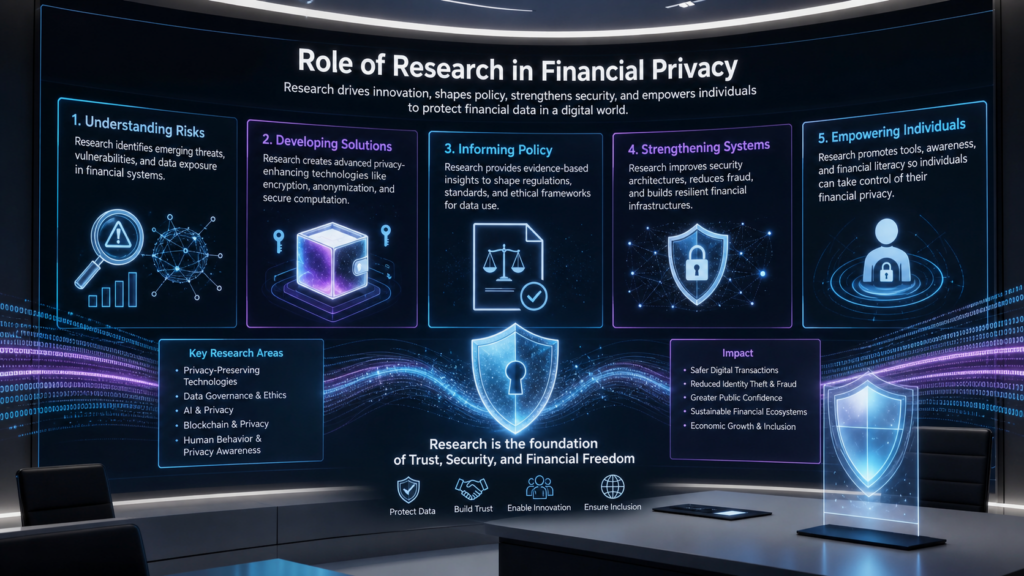
Research conducted by cryptocurrency companies, academic institutions, cybersecurity organizations, and financial technology firms contributes to ongoing discussions about Financial Privacy in the Digital Age.
These studies often examine:
- User attitudes toward privacy
- Security expectations
- Regulatory developments
- Blockchain adoption
- Digital payment trends
- Financial technology innovation
Because research methodologies differ, readers should evaluate reports carefully and consider their scope, data sources, and limitations before drawing conclusions.
Privacy Technologies Supporting Digital Assets
Several technologies help improve privacy within digital financial ecosystems.
Encryption
Encryption protects sensitive information during storage and transmission.
Secure Wallets
Modern cryptocurrency wallets include multiple security features designed to protect digital assets.
Multi-Signature Wallets
Multi-signature technology requires approval from multiple authorized parties before certain transactions can proceed.
Privacy-Focused Infrastructure
Some blockchain projects develop technologies intended to strengthen user privacy while remaining compatible with applicable legal frameworks.
The effectiveness and legal considerations of these technologies vary depending on jurisdiction and implementation.
Financial Privacy for Businesses
Organizations managing digital assets also prioritize financial privacy.
Business considerations often include:
- Customer data protection
- Transaction security
- Secure payment infrastructure
- Regulatory compliance
- Cybersecurity policies
- Vendor risk management
Strong governance practices help organizations protect financial information while maintaining operational efficiency.
Technology Trends Shaping Financial Privacy
Several emerging technologies continue influencing Financial Privacy in the Digital Age.
Artificial Intelligence
Artificial intelligence assists financial institutions by:
- Detecting fraud
- Identifying unusual transaction patterns
- Strengthening cybersecurity
- Supporting compliance monitoring
AI can improve security while also increasing discussions about responsible data use and transparency.
Zero-Knowledge Technologies
Zero-knowledge cryptographic techniques continue attracting interest because they allow certain information to be verified without revealing unnecessary underlying data.
Their use depends on specific blockchain implementations and regulatory considerations.
Decentralized Identity
Decentralized identity solutions aim to give users greater control over personal information while reducing unnecessary data sharing.
These technologies continue developing across multiple blockchain ecosystems.
Challenges Facing Financial Privacy
Several challenges remain as digital finance evolves.
Balancing Privacy and Compliance
Governments and financial institutions seek to reduce financial crime while protecting individual rights.
Finding an appropriate balance continues to be an important policy discussion.
Cross-Border Regulation
Digital assets operate globally, while financial regulations remain largely national.
This creates additional complexity for international businesses and users.
Cybersecurity Threats
Sophisticated cyberattacks continue targeting financial organizations and cryptocurrency platforms.
Strong security practices remain essential.
The Future of Financial Privacy in the Digital Age
Financial privacy will likely remain a central issue as digital payments, blockchain technology, artificial intelligence, and decentralized finance continue expanding.
Future developments may include:
- Enhanced encryption methods
- Smarter fraud prevention
- Improved identity management
- Greater user control over personal information
- More advanced cybersecurity tools
- Continued regulatory evolution
Organizations developing financial technologies are expected to continue investing in solutions that strengthen both privacy and security while supporting regulatory obligations.
Conclusion
Financial Privacy in the Digital Age has become one of the defining challenges of modern financial technology. As cryptocurrencies, blockchain networks, and digital payment systems continue expanding, individuals and organizations must balance transparency, security, compliance, and personal privacy. Research across the digital asset industry continues to highlight the importance of protecting financial information while maintaining trust in evolving financial ecosystems. By understanding how blockchain works, adopting strong security practices, staying informed about regulatory developments, and using trusted financial services responsibly, users can better protect their financial information in an increasingly connected world.
FAQs
What is Financial Privacy in the Digital Age?
Financial Privacy in the Digital Age refers to protecting personal financial information while using digital banking, payment systems, cryptocurrencies, and other online financial services.
Does blockchain provide complete privacy?
Not necessarily. Many public blockchains are transparent, allowing transaction records to be viewed publicly, although wallet addresses do not automatically reveal real-world identities.
Why is financial privacy important?
Financial privacy helps protect sensitive information, reduce fraud risks, support personal security, and strengthen consumer trust in digital financial services.
How can I improve my financial privacy?
Use strong passwords, enable two-factor authentication, protect wallet credentials, verify official websites, keep software updated, and monitor financial accounts regularly.
How does artificial intelligence affect financial privacy?
AI can improve fraud detection and cybersecurity while also raising important questions about responsible data collection, transparency, and privacy protection.
Why is research on financial privacy important?
Research helps organizations, policymakers, and users better understand changing privacy expectations, technology trends, regulatory developments, and the future of digital financial ecosystems.
