
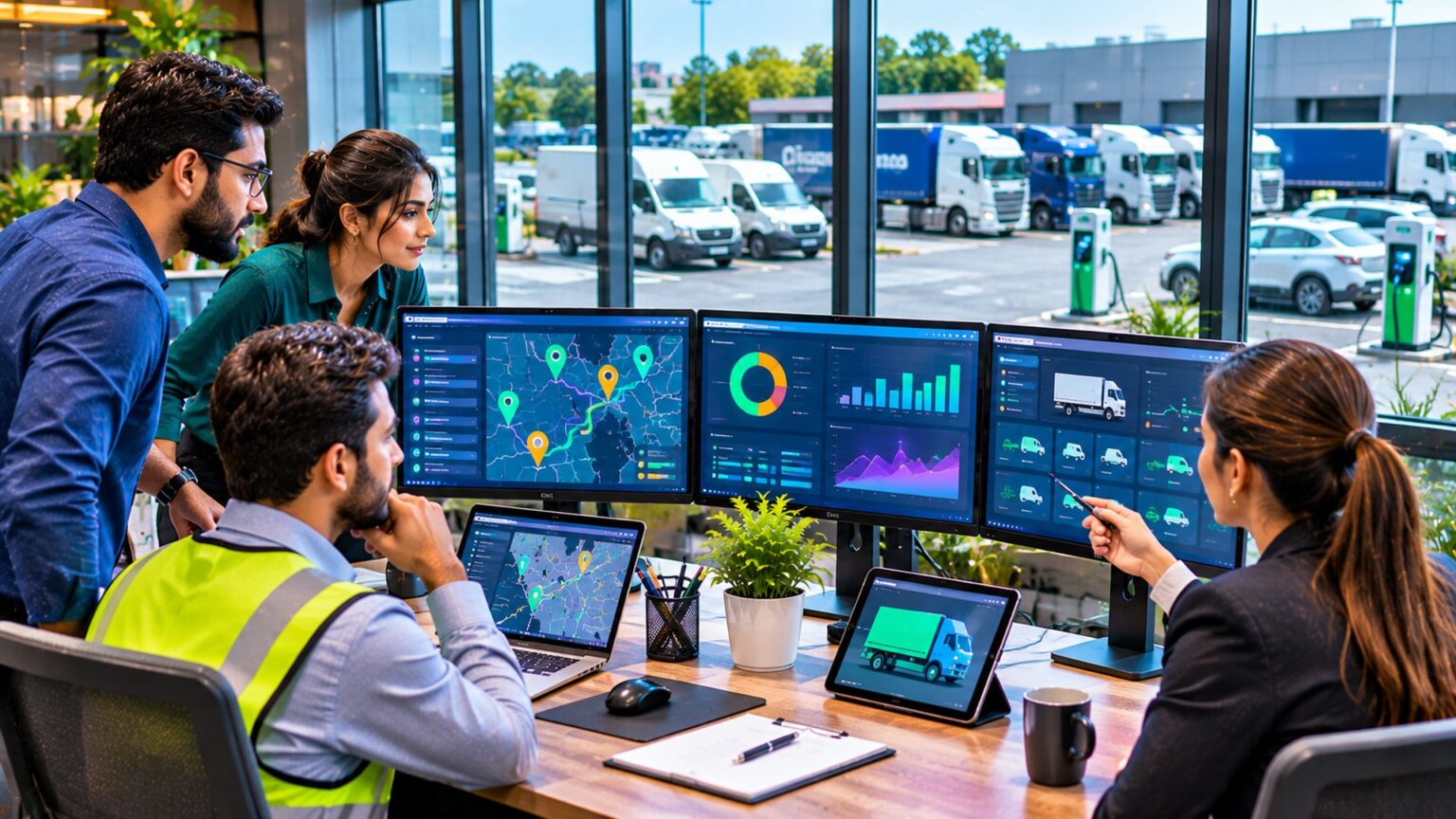
Businesses that depend on commercial vehicles face numerous challenges involving transportation costs, vehicle maintenance, driver safety, and operational productivity. Effective Fleet management provides organizations with a structured approach to monitoring vehicles, managing transportation resources, reducing unnecessary expenses, and maintaining dependable business operations.
Traditional vehicle management methods often rely on spreadsheets, manual inspections, telephone communication, and disconnected maintenance records. These approaches can become difficult to maintain as businesses expand their transportation networks.
Modern fleet technology combines GPS tracking, vehicle telematics, automated maintenance scheduling, route optimization, and intelligent data analysis to provide greater visibility into transportation activities.
Whether a business operates delivery vans, commercial trucks, company cars, or specialized industrial vehicles, implementing appropriate management strategies can support long-term operational efficiency.
This comprehensive guide explores thirty practical ways businesses can improve fleet operations, strengthen driver safety, and manage transportation expenses.
What Is Fleet Management?
Fleet management refers to the processes, technologies, and administrative activities involved in organizing, monitoring, and maintaining a company’s vehicles.
Its primary objective is to ensure that transportation resources remain safe, reliable, available, and financially sustainable.
Fleet managers are responsible for coordinating vehicle usage, maintenance activities, driver assignments, fuel consumption, regulatory documentation, and transportation planning.
Essential Components of Fleet Operations
A comprehensive vehicle management strategy may include:
- GPS vehicle tracking
- Fleet telematics
- Preventive maintenance
- Fuel consumption monitoring
- Driver safety management
- Route planning and optimization
- Vehicle acquisition and replacement
- Transportation compliance
- Operating cost analysis
- Asset utilization monitoring
These activities work together to support reliable transportation and effective resource management.
1. Establish Clear Fleet Management Objectives
Successful fleet operations begin with clearly defined business objectives.
Organizations should identify the transportation challenges they need to address before investing in new vehicles, software, or monitoring equipment.
Define Measurable Operational Goals
Common objectives include reducing fuel consumption, minimizing vehicle downtime, improving delivery reliability, and maintaining appropriate safety standards.
Establish baseline measurements so that future improvements can be evaluated using consistent information.
2. Create a Comprehensive Vehicle Inventory
Maintaining accurate vehicle information provides the foundation for effective fleet administration.
A centralized inventory helps organizations understand which vehicles are available, how they are being used, and when maintenance or replacement may become necessary.
Record Essential Vehicle Information
Maintain records of vehicle identification numbers, registration details, mileage, acquisition dates, insurance policies, maintenance histories, and assigned drivers.
Update these records whenever vehicles are purchased, reassigned, repaired, or removed from service.
3. Implement GPS Vehicle Tracking
GPS tracking allows fleet managers to monitor the geographic location of connected vehicles.
This technology can provide valuable information about transportation activities and help dispatchers coordinate available resources.
Improve Transportation Visibility
GPS monitoring can help businesses identify vehicle locations, review completed journeys, and provide more accurate delivery estimates.
Location information should be collected for legitimate operational purposes and managed according to appropriate employee privacy policies.
4. Use Fleet Telematics Technology
Fleet telematics combines vehicle data collection, telecommunications, and information processing to provide insights into transportation performance.
Connected devices can transmit information from vehicles to compatible management platforms.
Monitor Important Vehicle Information
Depending on the equipment used, telematics may provide information about vehicle speed, mileage, engine hours, fuel consumption, diagnostic faults, and location.
Convert Information Into Practical Decisions
Collecting vehicle data is useful only when organizations use it to improve maintenance planning, transportation efficiency, and operational safety.
5. Optimize Delivery Routes
Inefficient transportation routes can increase fuel consumption, operating expenses, and delivery delays.
Route optimization tools help businesses evaluate different transportation arrangements according to operational requirements.
Consider Realistic Transportation Conditions
Effective route planning should account for traffic congestion, delivery windows, vehicle capacity, road restrictions, and customer locations.
The shortest route is not always the most efficient or appropriate option, particularly for large commercial vehicles.
6. Improve Vehicle Fuel Efficiency
Fuel represents a significant recurring expense for many commercial fleets.
Monitoring fuel usage can help businesses identify inefficient vehicles, unnecessary journeys, and avoidable consumption.
Compare Fuel Consumption Across Vehicles
Review fuel economy according to vehicle type, operating conditions, cargo weight, and travel requirements.
Comparing a heavily loaded truck with a lightweight delivery van may produce misleading conclusions.
Use comparable operating conditions when evaluating vehicle efficiency.
7. Reduce Unnecessary Engine Idling
Excessive engine idling can consume fuel without contributing to productive transportation activities.
It may also increase certain maintenance requirements and vehicle emissions.
Monitor Idle Time
Compatible telematics systems can help identify extended periods of engine idling.
Businesses should establish reasonable policies that account for weather conditions, equipment operation, driver welfare, and manufacturer requirements.
Avoid restricting idling when it is necessary for safe vehicle operation.
8. Establish Preventive Maintenance Programs
Preventive maintenance helps businesses address vehicle servicing requirements before mechanical problems become more serious.
A structured maintenance schedule can reduce avoidable breakdowns and support dependable vehicle availability.
Follow Manufacturer Maintenance Recommendations
Schedule servicing according to applicable mileage intervals, operating hours, time periods, and vehicle usage conditions.
Maintenance requirements may differ between commercial trucks, passenger vehicles, and specialized equipment.
Document Completed Maintenance
Maintain accurate records of servicing, inspections, repairs, and replacement parts to support future maintenance decisions.
9. Explore Predictive Maintenance Technology
Predictive maintenance uses available equipment information and analytical models to identify potential maintenance requirements.
Some fleet management platforms provide alerts based on diagnostic information and historical vehicle performance.
Identify Emerging Mechanical Problems
Unusual temperature readings, recurring diagnostic faults, or changing component performance may indicate developing problems.
Predictive alerts should be reviewed by qualified technicians rather than treated as definitive mechanical diagnoses.
10. Conduct Regular Vehicle Safety Inspections
Vehicle inspections help identify mechanical issues that could affect transportation safety.
Businesses should establish appropriate inspection procedures based on vehicle characteristics and applicable legal requirements.
Check Essential Vehicle Components
Inspection activities may cover braking systems, tires, lighting equipment, mirrors, steering components, fluid levels, and other relevant safety systems.
Vehicles with serious safety defects should not remain in service until appropriate corrective action has been completed.
11. Maintain Proper Tire Management
Tire condition influences vehicle handling, fuel consumption, braking performance, and transportation safety.
Commercial fleets should establish consistent tire inspection and replacement procedures.
Monitor Tire Pressure and Wear
Follow manufacturer recommendations concerning inflation pressure, tire specifications, and replacement requirements.
Investigate uneven wear patterns because they may indicate alignment, suspension, or other mechanical problems.
Proper tire management can support safer and more efficient vehicle operation.
12. Strengthen Driver Safety Programs
Drivers play an essential role in maintaining reliable transportation operations.
Organizations should provide appropriate training and establish clear expectations concerning responsible driving behaviour.
Promote Safe Driving Practices
Training may address defensive driving, safe following distances, vehicle inspections, distraction avoidance, and appropriate responses to changing road conditions.
Safety policies should prioritize driver and public welfare rather than encouraging unrealistic delivery targets.
13. Monitor Driver Performance Responsibly
Vehicle monitoring systems can provide information about driving patterns that may require additional review.
Relevant measurements may include speeding events, harsh braking, rapid acceleration, and seat belt usage where supported.
Use Monitoring for Constructive Coaching
Driver performance information should support training and safety improvements.
Individual events require context because sudden braking, for example, may be necessary to avoid a collision.
Maintain transparent monitoring policies and appropriate human oversight.
14. Manage Driver Fatigue and Working Hours
Fatigue can reduce concentration, reaction time, and driving performance.
Fleet operators should establish realistic schedules that allow drivers to receive appropriate rest.
Follow Applicable Driving Regulations
Commercial transportation rules vary between jurisdictions and vehicle categories.
For example, covered commercial drivers in the United States may be subject to federal hours-of-service requirements.
Electronic logging devices may assist eligible operations with recording required information, but businesses must verify which regulations apply.
15. Improve Vehicle Dispatching
Effective dispatching involves assigning suitable vehicles and drivers to transportation activities.
Centralized dispatch tools can help businesses coordinate available resources and respond to operational changes.
Match Vehicles With Transportation Requirements
Consider vehicle capacity, location, maintenance status, driver qualifications, and delivery commitments before assigning jobs.
Suitable dispatch decisions can reduce unnecessary journeys and help prevent inappropriate vehicle usage.
16. Increase Fleet Asset Utilization
Underutilized vehicles can create unnecessary expenses through insurance, depreciation, financing, and maintenance.
Monitoring vehicle usage helps businesses determine whether their existing fleet matches operational requirements.
Identify Underused Vehicles
Review mileage, operating hours, job assignments, and seasonal demand.
Where appropriate, reassign vehicles to different departments or consider alternative arrangements.
Removing genuinely unnecessary vehicles may reduce expenses without compromising essential transportation services.
17. Calculate Total Cost of Ownership
The purchase price of a vehicle represents only one part of its overall financial impact.
Total cost of ownership, commonly known as TCO, provides a broader understanding of vehicle expenses throughout its operating lifecycle.
Include All Relevant Operating Costs
Typical expenses include:
- Vehicle acquisition or leasing
- Fuel and electricity
- Maintenance and repairs
- Insurance premiums
- Registration expenses
- Financing charges
- Depreciation
- Vehicle downtime
- Management software
For example, a vehicle with annual ownership expenses of $15,000 and annual travel of 30,000 miles has an illustrative cost of $0.50 per mile.
Use consistent assumptions when comparing vehicles.
18. Compare Vehicle Leasing and Purchasing
Businesses can acquire commercial vehicles through direct purchases, financing arrangements, or leasing agreements.
Each approach introduces different financial and administrative responsibilities.
Evaluate Long-Term Financial Requirements
Purchasing may provide greater ownership flexibility, while leasing can help businesses manage initial capital expenses.
Review mileage restrictions, maintenance responsibilities, early termination conditions, financing costs, and expected resale values before making a decision.
19. Establish Vehicle Replacement Schedules
Older vehicles may experience increasing maintenance requirements, declining reliability, and reduced operational suitability.
However, replacing vehicles prematurely can also create unnecessary capital expenses.
Use Evidence-Based Replacement Decisions
Evaluate vehicle age, mileage, maintenance costs, downtime, fuel efficiency, and expected future requirements.
A structured replacement strategy helps businesses balance ongoing operating expenses against the financial cost of acquiring newer vehicles.
20. Improve Fuel Card Management
Commercial fuel cards provide a convenient method for managing authorized vehicle refuelling expenses.
When integrated with fleet software, transaction information can help organizations understand fuel purchasing patterns.
Monitor Fuel Transactions
Review purchase dates, fuel quantities, vehicle assignments, and transaction locations.
Investigate unusual expenses before drawing conclusions about inappropriate activity.
Establish reasonable purchasing controls and reconcile fuel transactions against available vehicle information.
21. Strengthen Commercial Vehicle Security
Fleet vehicles and transported equipment represent valuable business assets.
Appropriate security measures can reduce exposure to unauthorized vehicle use, theft, and information loss.
Establish Practical Asset Protection
Use secure parking arrangements, controlled access procedures, authorized vehicle tracking, and suitable key management practices.
GPS alerts may help identify unexpected vehicle movement, although they cannot guarantee theft prevention or successful vehicle recovery.
22. Use Geofencing for Operational Monitoring
Geofencing creates a virtual geographic boundary around a selected location.
Compatible fleet management systems can generate notifications when tracked vehicles enter or leave these areas.
Support Transportation Coordination
Businesses may use geofencing to monitor depot arrivals, customer delivery locations, and authorized operating areas.
Configure notifications according to legitimate business requirements and avoid unnecessary monitoring outside authorized working arrangements.
23. Integrate Fleet Management Software
Dedicated fleet software provides a centralized environment for managing transportation information, vehicle records, maintenance schedules, and operating expenses.
Integration with existing business systems can reduce duplicated administrative work.
Connect Relevant Business Applications
Useful integrations may include accounting software, enterprise resource planning systems, inventory platforms, dispatch tools, and fuel card services.
Verify information accuracy and compatibility before relying on automated data transfers.
24. Evaluate Cloud-Based Fleet Solutions
Cloud-based platforms allow authorized employees to access fleet information through compatible internet-connected devices.
These systems may support organizations operating across multiple locations.
Review Cloud Platform Requirements
Consider software availability, mobile accessibility, data ownership, security controls, subscription costs, and technical support.
Businesses should also understand how essential transportation activities will continue during internet outages or service interruptions.
25. Explore Artificial Intelligence in Fleet Operations
Artificial intelligence can support transportation management through automated information analysis, maintenance forecasting, and route planning assistance.
Its effectiveness depends on available data and suitable implementation.
Apply AI to Relevant Operational Problems
AI-assisted tools may help identify inefficient vehicle usage, organize maintenance priorities, and analyze transportation demand.
Maintain Professional Oversight
Automated recommendations can contain inaccuracies or overlook important operational circumstances.
Fleet managers should verify significant decisions before implementing changes that affect vehicle safety, employees, or business operations.
26. Transition Toward Sustainable Fleet Operations
Environmental considerations are becoming increasingly relevant to transportation planning.
Businesses can evaluate strategies for reducing fuel consumption and improving overall energy efficiency.
Explore Electric and Hybrid Vehicles
Electric vehicles may be suitable for predictable routes with dependable charging access.
Hybrid vehicles may provide an alternative for certain operations requiring greater travel flexibility.
Evaluate vehicle range, payload capacity, charging requirements, energy costs, and total ownership expenses before changing fleet composition.
27. Establish Effective Fleet Data Security
Modern vehicle management platforms collect operational information, location records, employee details, and maintenance data.
These resources require appropriate cybersecurity protection.
Protect Administrative Access
Use strong authentication, role-based permissions, secure integrations, and supported software.
Review access permissions regularly and remove unnecessary accounts.
Businesses should also establish clear data retention policies and inform employees about relevant monitoring practices.
28. Measure Fleet Performance Through KPIs
Key performance indicators, commonly called KPIs, help organizations evaluate transportation efficiency and operational reliability.
A structured measurement process supports more informed business decisions.
Track Meaningful Fleet Metrics
Useful indicators include:
- Cost per mile or kilometre
- Fuel consumption
- Vehicle utilization rates
- Maintenance expenses
- Vehicle downtime
- On-time delivery performance
- Preventable incident frequency
- Driver safety indicators
Review measurements together because improving one metric may create disadvantages elsewhere.
29. Choose the Right Fleet Management Provider
Numerous software providers offer vehicle tracking, telematics, maintenance management, and transportation analytics.
Selecting an appropriate provider requires evaluating functionality against genuine business requirements.
Compare Essential Software Capabilities
Consider supported vehicle types, hardware compatibility, GPS accuracy, reporting tools, integration options, customer support, and contract conditions.
Request a demonstration or conduct a controlled pilot using representative fleet vehicles before committing to a large-scale implementation.
30. Establish a Continuous Fleet Improvement Strategy
Effective fleet management requires regular evaluation as transportation requirements, vehicle technologies, and business conditions change.
A successful strategy combines appropriate software with experienced employees and clearly defined operational procedures.
Review Performance Regularly
Conduct periodic reviews covering vehicle expenses, maintenance requirements, driver safety, utilization, and customer service.
Identify practical improvement opportunities and establish measurable objectives for subsequent review periods.
Continuous evaluation helps organizations maintain a fleet that remains appropriate for their evolving business requirements.
Popular Fleet Management Software Solutions
Several established providers offer commercial vehicle monitoring and transportation management capabilities.
Geotab
Geotab provides connected vehicle technology, telematics, maintenance scheduling, transportation analytics, and routing capabilities.
Its solutions can support different commercial vehicle categories, depending on hardware compatibility and selected software plans.
Businesses should compare Geotab and other fleet platforms using their own operational requirements rather than relying exclusively on advertised capabilities.
Industries That Benefit From Fleet Management
Transportation management technologies support organizations across numerous commercial and industrial sectors.
Logistics and Transportation
Logistics companies can use fleet systems to coordinate shipments, monitor commercial vehicles, and improve delivery planning.
Ecommerce and Retail
Online retailers and delivery businesses can benefit from vehicle tracking, dispatch management, and customer delivery notifications.
Construction and Industrial Services
Construction businesses may use fleet technology to monitor commercial vehicles, heavy equipment, operating hours, and maintenance requirements.
Healthcare and Emergency Services
Healthcare organizations can use transportation management tools to coordinate eligible medical transportation and vehicle availability while maintaining applicable confidentiality and safety requirements.
Government and Public Services
Public organizations can use fleet management systems to monitor asset utilization, transportation expenses, maintenance activities, and service availability.
Major Benefits of Fleet Management
A well-implemented fleet strategy can provide several operational advantages:
- Lower avoidable transportation expenses
- Improved vehicle availability
- Better maintenance planning
- Greater operational visibility
- Enhanced driver safety management
- More efficient transportation scheduling
- Improved vehicle utilization
- More accurate operating cost analysis
- Stronger customer service coordination
Actual results depend on implementation quality, vehicle characteristics, employee cooperation, and existing business conditions.
Common Fleet Management Mistakes to Avoid
Organizations sometimes invest in advanced vehicle technology without establishing clear operational objectives.
Other common mistakes include postponing preventive maintenance, ignoring driver feedback, purchasing unnecessary vehicles, and failing to monitor complete operating expenses.
Businesses should also avoid interpreting automated safety alerts without considering the surrounding circumstances.
Successful transportation management requires a balanced approach that prioritizes efficiency, safety, financial sustainability, and employee welfare.
How Much Does Fleet Management Software Cost?
Fleet software expenses vary according to vehicle numbers, tracking hardware, subscription features, data requirements, integrations, and technical support.
Some platforms charge monthly fees for each connected vehicle, while others provide customized enterprise arrangements.
Businesses should account for hardware installation, employee training, software integration, and potential contract termination expenses.
Request detailed quotations and compare the complete financial impact before selecting a solution.
The Future of Fleet Management Technology
Transportation management continues to evolve through advancements in connected vehicles, artificial intelligence, electric mobility, predictive maintenance, and automated data analysis.
Future fleet systems may provide more sophisticated insights into energy consumption, vehicle reliability, transportation demand, and operational efficiency.
However, organizations must continue prioritizing reliable maintenance, responsible data management, appropriate driver training, and public safety.
Technology should complement sound transportation management practices rather than replace professional judgment.
Frequently Asked Questions
What is fleet management?
Fleet management involves organizing, monitoring, maintaining, and optimizing commercial vehicles to support safe, reliable, and efficient transportation operations.
How does fleet management reduce operating costs?
It can reduce unnecessary fuel consumption, improve maintenance scheduling, optimize transportation routes, and identify underutilized vehicles.
What is the difference between GPS tracking and fleet telematics?
GPS tracking primarily identifies vehicle locations, while telematics can additionally collect information about vehicle performance, diagnostics, fuel usage, and driving behaviour.
Is fleet management software suitable for small businesses?
Yes. Small businesses can benefit from affordable vehicle tracking, maintenance scheduling, expense monitoring, and transportation coordination tools.
Can artificial intelligence improve fleet operations?
AI can support route planning, maintenance forecasting, vehicle data analysis, and operational recommendations when combined with reliable information and human oversight.
How do I choose the best fleet management software?
Evaluate vehicle compatibility, tracking capabilities, maintenance features, reporting tools, security, integrations, customer support, and total operating costs.
Conclusion
Fleet management provides businesses with a structured approach to controlling transportation expenses, maintaining vehicle reliability, and improving operational efficiency. Combining intelligent tracking technology with preventive maintenance, responsible driver management, and accurate financial analysis can support more dependable fleet operations. By investing in continuous improvement and suitable transportation infrastructure, organizations can build sustainable and cost-effective commercial fleets.
