
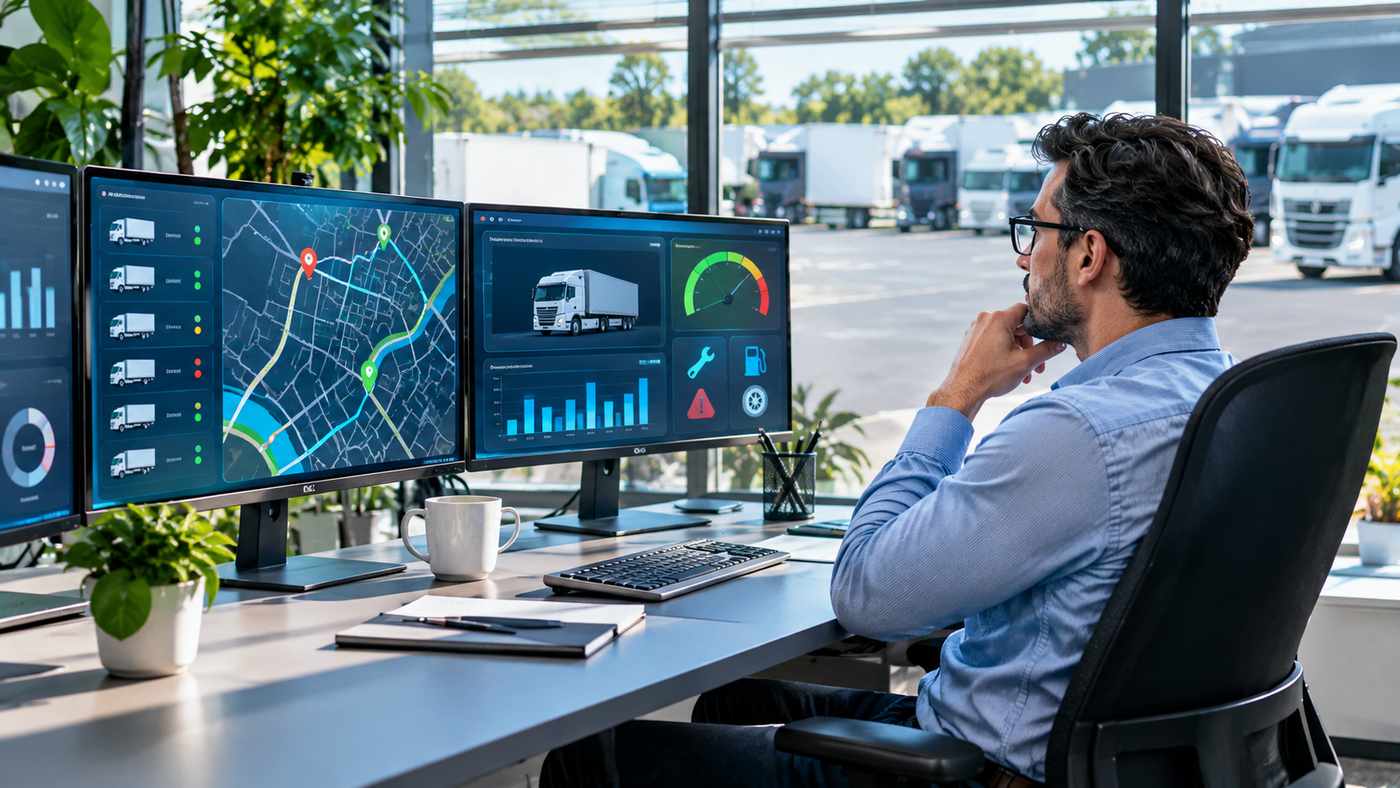
Managing business vehicles is becoming increasingly challenging as transportation demands continue to grow. Companies must handle rising fuel expenses, vehicle maintenance, driver safety, delivery schedules, and customer expectations while keeping operational costs under control.
Whether a business operates five delivery vans or hundreds of commercial trucks, maintaining visibility across its vehicles is essential for smooth daily operations.
This is where fleet management plays an important role.
Modern fleet management combines transportation planning, vehicle monitoring, maintenance scheduling, and digital technology to improve operational efficiency. It helps businesses make informed decisions, reduce unnecessary expenses, and deliver better services.
With technologies such as GPS tracking, telematics, and real-time analytics, fleet managers can monitor vehicle activities and respond to potential problems before they become expensive disruptions.
In this guide, we explore how fleet management works, its major benefits, important software features, and nine practical strategies businesses can use to improve fleet performance.
What Is Fleet Management?
Fleet management is the process of organizing, monitoring, maintaining, and optimizing a company’s vehicles and transportation operations.
It includes managing commercial vehicles such as trucks, delivery vans, company cars, buses, and specialized service vehicles.
The primary goal is to ensure that vehicles operate safely, efficiently, and cost-effectively while supporting business objectives.
Fleet management covers several responsibilities, including vehicle acquisition, driver supervision, fuel consumption monitoring, route planning, maintenance scheduling, and regulatory compliance.
For example, a delivery company operating 50 vehicles needs to know where its drivers are, whether deliveries are running on schedule, and which vehicles require maintenance.
Without proper management, coordinating these activities becomes difficult.
Businesses looking to understand the complete process can explore this guide to fleet management, which explains the responsibilities, operational components, and benefits of managing commercial vehicle fleets.
How Does Fleet Management Work?
Fleet management works by combining operational planning, vehicle information, and performance monitoring into a coordinated system.
Fleet managers collect information about vehicle locations, driver activities, maintenance requirements, and fuel consumption.
This information helps them make informed decisions about daily transportation operations.
Vehicle Monitoring
GPS tracking systems provide location information for connected vehicles.
Fleet managers can use this data to monitor route progress, identify unexpected stops, and improve scheduling.
Location updates depend on connectivity, device configurations, and the tracking system being used.
Driver Management
Fleet managers supervise driver assignments, performance, training, and safety practices.
Telematics solutions may help identify driving behaviors such as speeding, harsh braking, and excessive idling.
These insights can support targeted driver coaching.
Maintenance Scheduling
Fleet management systems help companies schedule inspections and preventive maintenance.
Regular servicing can reduce avoidable mechanical problems and improve vehicle availability.
Data Analysis and Reporting
Modern software platforms organize fleet information into dashboards and reports.
Managers can review operational costs, vehicle utilization, fuel consumption, and other important performance indicators.
These insights support better planning and more consistent decisions.
Why Is Fleet Management Important for Businesses?
Transportation plays an important role in industries such as logistics, construction, retail, manufacturing, and field services.
When vehicles are poorly managed, businesses may experience delivery delays, unnecessary fuel consumption, unexpected breakdowns, and increased operating expenses.
Effective vehicle fleet management helps companies address these challenges.
It also creates greater visibility across transportation activities.
For example, a business with multiple delivery vehicles can use tracking information to identify delays and communicate more accurate updates to customers.
Preventive maintenance can help reduce unexpected vehicle downtime, while route optimization may decrease unnecessary driving.
Fleet management also supports safety by helping businesses review driver behavior and maintain vehicles in suitable operating condition.
Ultimately, the objective is to make transportation more reliable, productive, and financially sustainable.
9 Smart Fleet Management Strategies for Better Performance
Businesses can improve fleet operations by implementing practical management techniques supported by reliable technology.
The following strategies can help companies strengthen their transportation processes.
1. Implement GPS Fleet Tracking
GPS tracking is one of the most useful tools for modern fleet operations.
It allows businesses to monitor the location and movement of connected vehicles.
Fleet managers can use GPS data to check route progress, identify unexpected delays, and coordinate vehicle assignments.
For example, a logistics company receiving an urgent delivery request may identify an available vehicle near the customer’s location.
This can improve response times and reduce unnecessary travel.
GPS tracking also helps businesses review completed journeys and understand how vehicles are being used.
However, tracking policies should be transparent and comply with applicable privacy and employment requirements.
2. Optimize Transportation Routes
Poorly planned routes can increase fuel expenses, delivery times, and vehicle wear.
Route optimization involves selecting suitable travel paths based on distance, traffic conditions, delivery schedules, and operational requirements.
Fleet management software can assist companies in planning more efficient journeys.
For example, a delivery business handling multiple orders may organize stops according to customer locations and delivery windows.
This approach can reduce unnecessary driving and improve vehicle utilization.
Businesses should also consider road restrictions, vehicle dimensions, customer priorities, and driver working-hour requirements when planning routes.
3. Schedule Preventive Vehicle Maintenance
Unexpected vehicle breakdowns can disrupt operations and create additional costs.
Preventive maintenance helps businesses identify and address potential mechanical problems before serious failures occur.
A maintenance plan may include regular inspections, oil changes, tire checks, brake servicing, and other manufacturer-recommended procedures.
Fleet management software can generate reminders based on mileage, engine hours, or scheduled service dates.
For example, a company operating delivery vans can track maintenance intervals and identify vehicles approaching their next service appointment.
This helps managers schedule repairs without unnecessarily disrupting daily operations.
Regular maintenance can also support vehicle safety and improve long-term asset value.
4. Monitor Fuel Consumption
Fuel is a major operating expense for many commercial fleets.
Even small improvements in consumption can become meaningful when multiplied across numerous vehicles.
Fleet managers can monitor fuel purchases, vehicle efficiency, idling time, and route performance.
For example, excessive engine idling may increase fuel usage without contributing to transportation productivity.
Identifying vehicles with unusually high consumption can help managers investigate mechanical problems, driving behavior, or operational inefficiencies.
Fuel management systems may also help businesses organize purchase records and detect inconsistencies.
The goal is to reduce waste while maintaining safe and practical transportation operations.
5. Improve Driver Safety and Training
Drivers directly influence vehicle safety, maintenance costs, fuel efficiency, and customer service.
A successful fleet management strategy should include driver training and performance support.
Businesses can establish clear driving policies covering speed limits, vehicle inspections, fatigue management, and safe operating practices.
Telematics systems can help identify patterns such as excessive speeding or harsh braking.
However, managers should interpret these events in context rather than assuming every alert represents unsafe behavior.
Regular coaching, constructive feedback, and recognition of good driving practices can support a stronger safety culture.
A well-trained driver workforce can contribute to fewer incidents and more reliable transportation services.
6. Use Fleet Management Software
Managing a growing fleet through spreadsheets and manual records can become time-consuming.
Fleet management software centralizes vehicle information and supports daily administrative tasks.
Depending on the platform, businesses may access GPS tracking, maintenance reminders, fuel reports, driver records, and operational analytics.
For example, a fleet manager could review multiple vehicle statuses through a single dashboard instead of contacting every driver individually.
Centralized information can also make reporting easier and reduce duplicated administrative work.
Businesses should select software according to their actual requirements, fleet size, integration needs, and available budget.
7. Track Important Fleet Performance Metrics
Data-driven decisions can help companies identify operational problems and measure improvements.
Fleet managers should monitor key performance indicators that match their business objectives.
Useful metrics include:
- Fuel consumption per distance traveled
- Vehicle utilization rate
- Maintenance cost per vehicle
- Unplanned downtime
- On-time delivery percentage
- Driver safety incidents
- Total operating cost per mile or kilometer
For example, tracking maintenance costs across different vehicles may help a business identify assets that have become expensive to operate.
Comparing results over time can reveal whether management strategies are producing meaningful improvements.
However, performance data should be interpreted alongside vehicle age, workload, route conditions, and other relevant factors.
8. Reduce Unnecessary Vehicle Downtime
Vehicle downtime occurs when a vehicle is unavailable for its intended operational use.
Downtime may result from mechanical failures, scheduled servicing, accidents, or administrative delays.
Unexpected downtime can disrupt deliveries and increase replacement transportation costs.
Fleet managers can reduce avoidable interruptions through preventive maintenance, efficient repair scheduling, and improved vehicle inspection procedures.
Keeping accurate service histories also helps technicians identify recurring issues.
For example, if a particular truck repeatedly experiences the same mechanical problem, maintenance records may reveal a pattern requiring further investigation.
Reducing downtime supports more dependable operations and better use of transportation assets.
9. Plan for Long-Term Fleet Sustainability
Sustainable fleet operations focus on using resources efficiently while maintaining business performance.
Companies can explore several approaches, including improving route efficiency, reducing idling, maintaining vehicles properly, and evaluating lower-emission transportation options.
Electric vehicles may be suitable for some routes, particularly where predictable distances and charging access support daily requirements.
However, businesses should consider acquisition costs, charging infrastructure, range, payload requirements, and vehicle utilization before making investment decisions.
A practical sustainability strategy should balance environmental objectives with operational and financial realities.
Key Features of Modern Fleet Management Software
Fleet management technology has evolved from basic vehicle tracking into broader operational platforms.
Several features are especially valuable for businesses managing commercial transportation.
Real-Time GPS Tracking
Tracking dashboards display vehicle locations and help managers monitor route progress.
Some platforms also provide geofencing alerts when vehicles enter or leave designated areas.
Fleet Maintenance Management
Maintenance tools support service schedules, inspection records, repair histories, and reminders.
These features help managers organize vehicle servicing and monitor recurring issues.
Driver Behavior Monitoring
Telematics systems may record events such as harsh acceleration, sudden braking, and speeding.
Managers can use these insights to support driver education and review safety trends.
Fuel Management
Fuel monitoring tools organize consumption information and help identify unusual patterns.
When connected to other fleet data, these reports may support more accurate operational analysis.
Fleet Analytics and Reporting
Reporting dashboards combine information about vehicles, drivers, expenses, and operational activities.
This gives businesses a clearer picture of fleet performance.
Benefits of Effective Fleet Management
A well-organized fleet management system can create several business advantages.
Lower Operating Costs
Route planning, maintenance scheduling, and fuel monitoring can help reduce avoidable expenses.
Savings depend on existing inefficiencies, implementation quality, and operating conditions.
Better Vehicle Utilization
Fleet managers can identify underused vehicles and improve assignment decisions.
This may help businesses meet transportation requirements without immediately purchasing additional vehicles.
Improved Customer Satisfaction
Reliable scheduling and better visibility can support more accurate delivery updates.
Customers benefit when businesses communicate delays promptly and provide dependable services.
Stronger Operational Control
Centralized information allows managers to review vehicle activity without relying entirely on phone calls and manual reports.
This makes it easier to coordinate complex operations.
Better Decision-Making
Accurate fleet data supports decisions about vehicle replacement, maintenance budgets, staffing, and transportation planning.
Businesses can use historical performance trends to establish realistic operational targets.
Common Fleet Management Challenges
Despite its advantages, managing commercial vehicles involves ongoing challenges.
Rising Fuel and Maintenance Expenses
Fuel prices and repair costs can change unexpectedly.
Businesses need accurate financial records to understand these expenses and make suitable adjustments.
Driver Recruitment and Retention
Transport companies may face difficulties recruiting experienced drivers and maintaining consistent staffing levels.
Clear policies, appropriate training, and supportive working conditions can help organizations manage these challenges.
Regulatory Compliance
Commercial transportation requirements vary by country, region, and vehicle type.
Businesses may need to manage inspections, licenses, driving-hour rules, insurance, and recordkeeping obligations.
Fleet software can support documentation, but organizations remain responsible for meeting applicable legal requirements.
Technology Integration
Introducing new fleet management software can require employee training, device installation, data migration, and integration with existing systems.
Businesses should assess implementation requirements before selecting a platform.
How to Choose the Right Fleet Management Solution
Selecting the right technology is an important business decision.
Companies should begin by identifying their most significant transportation challenges.
For example, a small delivery business may primarily need GPS tracking, route planning, and maintenance reminders.
A larger logistics operation may require advanced analytics, multiple vehicle integrations, driver management, and compliance reporting.
Before investing in a platform, evaluate its core features, ease of use, customer support, data security, and total cost.
Businesses should also confirm whether the system supports their existing vehicles and required devices.
Requesting a demonstration can help managers understand how the software performs in practical situations.
Where possible, pilot the solution with a small group of vehicles before adopting it across the entire fleet.
This approach allows businesses to identify technical issues and assess whether the platform meets operational expectations.
The Future of Fleet Management Technology
Fleet management is becoming increasingly connected and data-driven.
Technologies such as artificial intelligence, connected vehicle systems, and predictive analytics are changing how companies monitor transportation operations.
AI-assisted analytics may help identify maintenance risks and improve route-planning decisions.
Connected vehicle technologies can provide more detailed information about engine performance, vehicle health, and usage patterns.
Electric fleet management is also becoming more relevant as businesses evaluate lower-emission transportation options.
These developments create opportunities for more efficient operations, but organizations should carefully assess technology costs, data reliability, cybersecurity, and operational suitability.
Successful digital transformation requires more than purchasing software. Businesses also need reliable processes, trained employees, and clearly defined performance objectives.
Frequently Asked Questions
1. What is fleet management in simple words?
Fleet management means overseeing a company’s vehicles, drivers, maintenance, fuel usage, and transportation activities to improve efficiency, safety, and cost control.
2. What are the main benefits of fleet management?
The main benefits include improved vehicle tracking, better route planning, reduced unnecessary expenses, more organized maintenance, and stronger operational visibility.
3. What is fleet management software used for?
Fleet management software helps businesses organize vehicle information, monitor connected vehicles, schedule maintenance, review driver activity, and analyze operational performance.
4. Can small businesses benefit from fleet management?
Yes. Small businesses with only a few vehicles can benefit from organized maintenance records, better scheduling, route planning, and suitable GPS tracking solutions.
Conclusion
Fleet management is essential for businesses that depend on vehicles to deliver products, transport passengers, or provide services. Effective planning, regular maintenance, driver safety programs, and reliable data can help improve operational performance.
By adopting suitable fleet management technology and following practical optimization strategies, businesses can reduce avoidable expenses, improve vehicle utilization, and support more dependable transportation services.
The most effective approach combines technology with responsible management, continuous improvement, and clear business objectives.
