
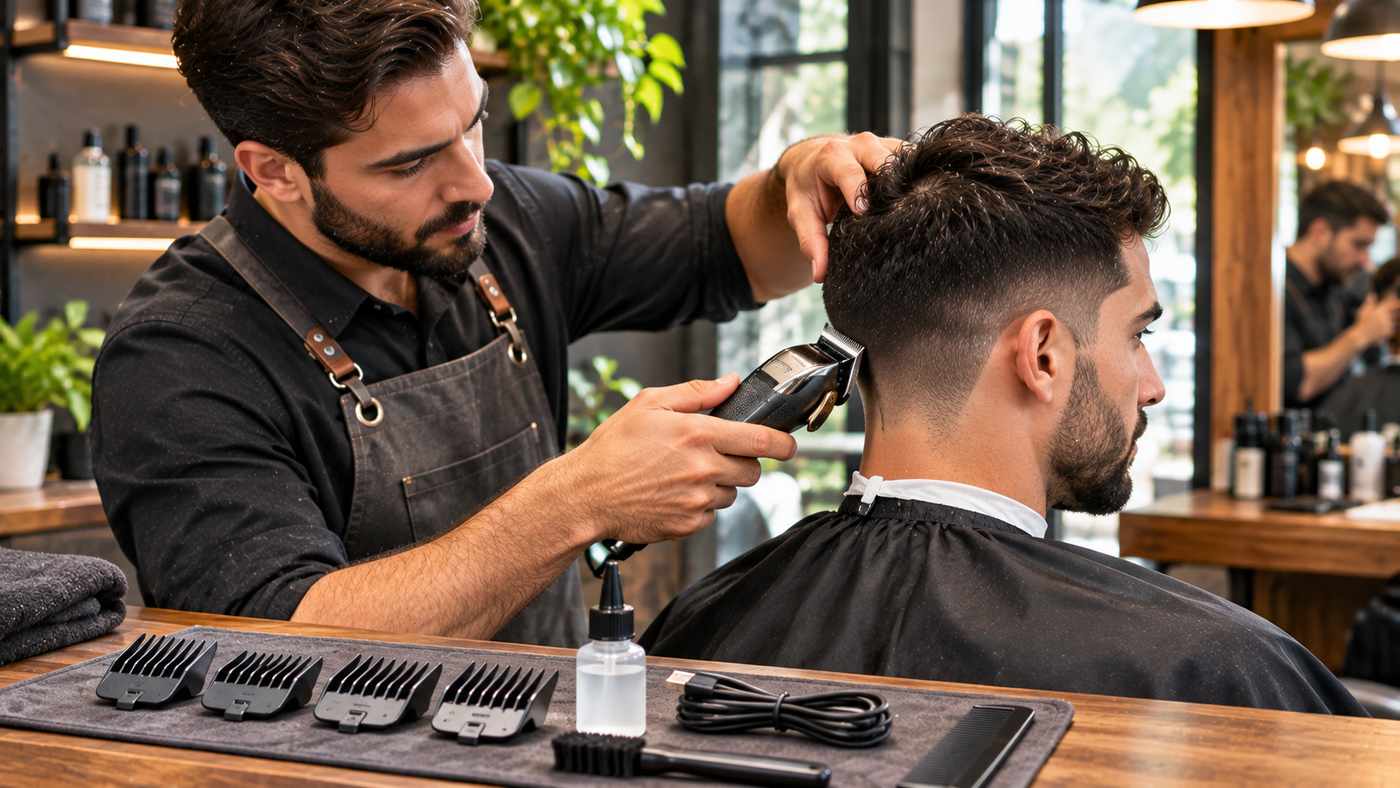
Getting a clean, comfortable haircut no longer requires visiting a barbershop every time your hair needs attention. With the right equipment, basic technique, and a little practice, you can maintain short hairstyles, trim the sides of your head, and create simple fades from home. Choosing a reliable hair clipper is an important first step because blade quality, motor performance, cutting length adjustments, and overall handling can influence the final result.
Modern electric hair clippers are available in corded and cordless designs, with features ranging from basic guide combs to adjustable blades, digital battery indicators, and rechargeable batteries.
Some models are designed for occasional home grooming, while others are intended for regular professional use.
However, an expensive clipper does not automatically produce better haircuts. A device needs to match the user’s hair texture, preferred cutting length, experience, and grooming habits.
For example, someone who maintains a simple buzz cut may need only a dependable clipper with several guide combs. A barber creating detailed fades may prefer a more adjustable blade system and a comfortable design suitable for extended use.
Regular maintenance is equally important. Dirty blades, inadequate lubrication, and incorrect handling can lead to pulling, uneven cutting, and premature wear.
This guide explains how electric hair clippers work, seven important features to consider, practical home haircutting techniques, proper cleaning methods, and ways to select a model that meets your needs.
What Is a Hair Clipper?
A hair clipper is an electric grooming device designed to cut hair using a set of closely positioned moving and stationary blades.
The moving blade travels rapidly across the stationary blade, cutting hair that enters between the blade teeth.
Most devices use an electric motor to operate the cutting mechanism.
Clippers are commonly used for short hairstyles, buzz cuts, fades, tapers, and general hair maintenance.
They can also be used in professional barbershops and salons.
How Does an Electric Hair Clipper Work?
An electric clipper contains a motor, cutting blades, a housing, and a power system.
When the device operates, the motor drives the moving blade.
Hair passes between the blade teeth and is cut to a length determined by the blade configuration and any attached guide comb.
Different models offer different methods for adjusting cutting length.
Some have built-in taper levers, while others require interchangeable blade guards.
Hair Clippers vs. Hair Trimmers
Hair clippers and trimmers serve related but different purposes.
Clippers are generally designed to remove larger amounts of hair and maintain consistent cutting lengths.
Trimmers are typically smaller and intended for more detailed work.
For example, a clipper may be used to shorten the back and sides of a haircut, while a trimmer can help define the neckline or edges around the ears.
However, some grooming devices combine multiple functions.
The correct tool depends on the desired result.
Who Can Use Hair Clippers?
Electric clippers can be useful for beginners, experienced home users, and professional barbers.
A beginner may prefer simple controls and clearly labeled guide combs.
A professional may prioritize blade adjustment, motor consistency, durability, and convenient maintenance.
There is no single model suitable for every user.
Why Cordless Hair Clippers Are Becoming Popular
Cordless clippers offer freedom of movement without a permanently connected power cable.
This can make them convenient for home grooming and professional haircutting.
Greater Movement and Flexibility
Without a trailing cable, users can move around the head more easily.
This may be particularly helpful when trimming the back of the head or working in a small grooming space.
Convenient Storage
Rechargeable clippers can be stored with other grooming accessories.
They do not always need to remain connected to a wall outlet during use.
Travel-Friendly Designs
Compact models may be suitable for travel.
However, travelers should confirm the manufacturer’s charging requirements and relevant airline rules for rechargeable batteries.
Battery Runtime Matters
Cordless convenience depends partly on battery performance.
A clipper with insufficient charge may stop during a haircut.
Check the stated runtime, charging duration, and available battery indicator before purchasing.
Remember that manufacturer-advertised battery performance can vary with actual usage and battery condition.
7 Essential Features to Consider When Choosing a Hair Clipper
Not every clipper performs equally across different hair types and haircut styles.
Understanding the following features can help buyers compare available options.
1. Choose a Motor That Matches Your Hair Type
The motor powers the cutting mechanism.
Its design and performance influence how effectively the clipper moves its blades through hair.
Motor Strength and Cutting Consistency
Thick, coarse, or dense hair may place greater demands on a clipper than very fine hair.
A suitable motor should maintain consistent cutting action without frequent snagging.
However, advertised motor speed alone does not determine cutting quality.
Blade condition, cutting geometry, and the overall mechanical design also matter.
Common Motor Types
Electric clippers may use rotary, magnetic, or pivot-style motor systems.
Rotary motors are found in many grooming devices and can support different operating designs.
Magnetic and pivot systems are also used in selected professional models.
Rather than assuming that one motor type is always superior, compare the manufacturer’s intended applications and the clipper’s practical performance.
Avoid Choosing by RPM Alone
Some products advertise motor speed in revolutions per minute.
This can provide useful technical information, but it should not be treated as the only performance measurement.
A higher advertised RPM does not automatically mean smoother cutting.
Consider Your Typical Haircut
A person maintaining a short buzz cut may not need the same equipment as a barber cutting multiple clients each day.
Choose a motor and device intended for the frequency and style of use.
2. Evaluate Blade Quality and Cutting Precision
The blades are among the most important components of a hair clipper.
Poorly maintained or unsuitable blades can cause pulling, inconsistent results, and irritation.
Stainless Steel Blades
Stainless steel is commonly used in clipper blades because of its durability and corrosion resistance.
However, stainless steel blades still require cleaning and proper maintenance.
Specialized Blade Coatings
Some premium clippers use coated blades or specialized cutting materials.
Manufacturers may advertise improved durability or reduced friction.
These claims should be evaluated according to the specific model and available evidence.
Adjustable Blade Systems
An adjustable blade allows users to change the cutting closeness within a limited range.
This can help with certain tapering and blending techniques.
However, the adjustment range varies between devices.
Zero-Gap Adjustments
Some models support very close blade adjustment, often described as zero-gap capability.
This can be useful for specialized detailing.
Incorrect adjustment may increase the risk of scratching, irritation, or cutting the skin.
Beginners should avoid unnecessarily aggressive settings and follow manufacturer instructions.
Replaceable Blades
Over time, blades may become worn or damaged.
A model with compatible replacement blades can be more practical to maintain.
Check whether genuine replacement parts are available for the selected product.
3. Compare Corded and Cordless Designs
Power configuration affects convenience, mobility, and maintenance.
Corded Hair Clippers
Corded models operate through a continuous electrical connection.
They can be useful when extended operation is necessary.
However, the cable may limit movement or create additional handling considerations.
Cordless Hair Clippers
Cordless models use rechargeable batteries.
They are convenient for home grooming and can simplify movement around the head.
However, they require charging and may have limited operating time.
Combination Models
Some clippers support both corded and cordless operation.
This can provide additional flexibility.
However, not all rechargeable devices are designed to operate safely while connected to power.
Check the manufacturer’s instructions.
Consider Battery Replacement
Rechargeable batteries gradually lose capacity.
Before purchasing, investigate warranty coverage, battery serviceability, and available repair options.
A replaceable battery may improve the practical lifespan of certain devices.
4. Check Guide Combs and Cutting Length Options
Guide combs, also called guards, attach to the clipper and help establish a more consistent cutting length.
They are especially useful for beginners.
Understanding Guard Lengths
Guide combs are commonly labeled with their approximate cutting lengths.
For example, a set may include 3 mm, 6 mm, 9 mm, and 13 mm attachments.
These sizes allow users to choose different haircut lengths.
However, the exact results depend on the clipper and blade settings.
Why Beginners Should Start Longer
Cutting too much hair is a common beginner mistake.
Starting with a longer guard provides greater flexibility.
If necessary, users can gradually switch to a shorter attachment.
It is much more difficult to correct a haircut that has already been cut too short.
Guide Combs for Fades
Fade haircuts involve transitioning between different hair lengths.
A barber may use several guards together with a taper lever.
Creating smooth transitions requires practice.
Beginners should start with a simple haircut before attempting a highly detailed skin fade.
Check Accessory Compatibility
Not every guard fits every clipper.
Replacement attachments should match the relevant model.
A loose or poorly fitted guard may affect cutting consistency.
5. Look for Comfortable Handling and Ergonomic Design
A clipper may have excellent specifications but still feel uncomfortable during use.
Weight, grip, button placement, and vibration can influence handling.
Comfortable Grip
A well-designed handle should feel secure in the user’s hand.
Some products include textured surfaces to improve grip.
Balanced Weight
A heavy clipper may cause discomfort during longer grooming sessions.
However, a lightweight device is not automatically more durable or easier to control.
Balance matters.
Accessible Controls
Power switches and blade adjustment levers should be easy to operate.
Controls should not interfere with normal handling.
Noise and Vibration
Some clippers produce noticeable vibration or operating noise.
These characteristics may matter when trimming around sensitive areas or using the device frequently.
Product reviews can provide useful observations, but individual experiences vary.
6. Evaluate Battery Life and Charging Convenience
Battery performance is an important consideration when choosing a rechargeable hair clipper.
Understand Advertised Runtime
A manufacturer may advertise two or more hours of working time.
Actual runtime depends on battery condition, operating load, and usage.
Check Charging Duration
Some devices recharge within a few hours.
Others may require longer.
A convenient charging arrangement helps users maintain a predictable grooming routine.
USB Type-C Charging
Selected modern grooming devices support USB Type-C charging.
This may simplify cable management.
However, the correct power source and charging specifications should always be verified.
Battery Indicators
An LED or digital display may show charging progress or remaining battery capacity.
This can help reduce the risk of losing power during a haircut.
Establish a Charging Routine
Charge the device according to manufacturer guidance.
Avoid using damaged charging cables or incompatible power adapters.
If the battery becomes unusually hot, swollen, or damaged, stop using the device and seek appropriate assistance.
7. Consider Cleaning, Maintenance, and Long-Term Value
Hair clippers require regular care to maintain cutting performance.
A low purchase price may become less attractive if the device is difficult to maintain or replacement parts are unavailable.
Removable Blades
Detachable blades can simplify certain cleaning procedures.
However, the cleaning method depends on the clipper’s design.
Cleaning Accessories
Some products include a brush, blade oil, guide combs, or other accessories.
Check what is included before purchasing.
Water Resistance
Not every clipper is waterproof or washable.
Never immerse an electrical device unless the manufacturer specifically permits it.
Even water-resistant models may have restrictions involving charging ports or components.
Warranty and Support
Review available warranty information and service arrangements.
The ability to obtain replacement blades or accessories can contribute to long-term value.
Total Cost of Ownership
Consider maintenance supplies, replacement parts, battery service, and expected frequency of use.
A durable, maintainable device may provide better value than a cheaper model requiring frequent replacement.
How to Use a Hair Clipper at Home: Step-by-Step Guide
Learning to cut hair with a clipper requires patience and controlled movements.
Beginners should start with a simple style.
Step 1: Prepare the Hair
Comb the hair to remove tangles.
Follow the clipper manufacturer’s instructions regarding dry or damp hair.
Many conventional electric clippers are intended for clean, dry hair.
Step 2: Choose a Longer Guard
Attach a guide comb that leaves more hair than the final desired length.
Make sure it is securely fitted.
Step 3: Begin at the Sides
Start with a small section.
Move the clipper gently against the direction of hair growth using controlled strokes.
Avoid pushing the blades forcefully into the scalp.
Step 4: Work Toward the Back
Use a mirror or assistance from another person if necessary.
The back of the head can be difficult to cut evenly.
Take your time.
Step 5: Blend Different Lengths
If creating a taper, use longer guards or suitable lever adjustments to blend the transition.
Do not attempt an extremely close fade without understanding the technique.
Step 6: Check for Uneven Areas
Comb the hair and inspect it under good lighting.
Make small corrections rather than repeatedly cutting large sections.
Step 7: Clean the Equipment
After finishing, switch off the clipper and follow the manufacturer’s cleaning instructions.
Remove loose hair, clean the appropriate parts, and lubricate the blade if required.
How to Create a Simple Fade Haircut With Clippers
A fade gradually changes hair length from shorter near the lower sides and back to longer toward the top.
Different fades require different techniques.
Low Fade
A low fade starts the transition relatively close to the ears and neckline.
It can provide a subtle appearance.
Mid Fade
A mid fade places the transition higher on the head.
This creates a more noticeable contrast between the sides and top.
High Fade
A high fade introduces shorter hair farther up the sides.
It usually creates a stronger contrast.
Beginner-Friendly Fading Tips
Start with a longer guard and establish a consistent baseline.
Work gradually rather than creating a very short section immediately.
Use controlled upward movements and avoid pressing too hard.
Check both sides frequently for balance.
A smooth fade requires practice, so beginners should consider professional help for complicated styles.
Can Hair Clippers Work on Thick or Curly Hair?
Many electric clippers can cut thick, coarse, and curly hair.
However, the correct model and technique matter.
Thick Hair
Dense hair may require a clipper that maintains consistent cutting performance.
Use manageable sections rather than attempting to remove too much hair in one pass.
Curly Hair
Curly hair may have different growth directions and volume.
Comb or prepare the hair appropriately before cutting.
Work carefully and consider how the hair’s natural texture affects the finished appearance.
Coarse Hair
Coarse hair can place greater demand on the cutting mechanism.
Sharp, properly maintained blades and an appropriate motor are useful considerations.
Avoid Pulling
If the clipper pulls hair, stop and inspect the blade condition, guard attachment, and maintenance requirements.
Do not compensate by pressing harder against the scalp.
Exploring oraimo Hair Clippers for Personal and Professional Grooming
Consumers comparing grooming equipment may explore oraimo’s range of electric clippers.
The brand’s official hair clipper collection includes several models intended for home use and barbering.
Although the linked collection belongs to oraimo’s Nigerian storefront, the features provide useful examples of what buyers can compare when researching modern grooming tools.
oraimo SmartClipper 2
The SmartClipper 2 is a rechargeable grooming device designed for general haircutting.
Its published specifications include stainless steel blades, a 2000 mAh battery, up to 2.5 hours of operating time, and a charging duration of approximately three hours.
The manufacturer also describes an adjustable taper lever and four guide combs.
These features may be suitable for users seeking flexibility across different haircut lengths.
oraimo SmartClipper 2C
The SmartClipper 2C offers a motor advertised at 6000 RPM.
According to the manufacturer, it provides approximately 2.5 hours of working time and includes guide combs measuring 3 mm, 6 mm, 9 mm, and 13 mm.
These accessories can help users maintain different lengths.
However, actual haircutting performance depends on technique, blade condition, and hair characteristics.
oraimo SmartClipper Pro Max
The SmartClipper Pro Max is positioned as a more advanced model.
Its advertised features include an LED screen, adjustable blades, and extended cordless operation.
The company lists potential battery life of up to five hours in its collection guidance.
Actual performance may vary.
oraimo Smart Clipper Plus
The Smart Clipper Plus uses a cordless design with a rotary motor and Type-C charging.
These features may appeal to users prioritizing charging convenience and portable grooming.
oraimo EasyCut Models
The EasyCut range emphasizes motor performance and adjustable cutting options.
Different versions have different specifications.
For example, the EasyCut 2 is advertised with a 10W motor and close blade adjustment functionality.
Buyers should compare specific models rather than assume that all EasyCut devices have identical features.
Choosing an oraimo Model
The most suitable option depends on the user’s needs.
Someone maintaining occasional home haircuts may prioritize simple controls and sufficient battery life.
A frequent user may place greater importance on blade adjustment, ergonomics, and replacement parts.
Before purchasing, review current product specifications, warranty terms, included accessories, and availability in your country.
How to Clean and Maintain Hair Clippers Properly
Cleaning is essential for both performance and hygiene.
Hair fragments, skin debris, and product residue can accumulate around cutting blades.
Remove Hair After Use
Turn off the device and disconnect it from power where appropriate.
Use the recommended brush to remove loose hair from accessible areas.
Avoid touching sharp blade edges unnecessarily.
Follow Manufacturer Cleaning Instructions
Some blades can be detached for cleaning.
Others require a specific blade-cleaning product or approved wiping method.
Do not wash electrical components under running water unless the product is explicitly designed for that procedure.
Disinfect Shared Equipment
Equipment used on multiple people requires suitable cleaning and disinfection procedures.
For example, Connecticut’s Department of Public Health advises salons to remove debris and disinfect clippers and removable components after each client using appropriate disinfectants and required contact times.
Professional users should follow the regulations applicable to their location.
Lubricate When Required
Some clipper blades require regular oiling.
Use a manufacturer-recommended product and apply it according to instructions.
Excess oil should be removed appropriately.
Store the Clipper Correctly
Keep the device in a clean, dry location.
Use a protective cover if supplied.
Avoid leaving accessories where they may become damaged or contaminated.
Common Hair Clipper Mistakes to Avoid
Even a suitable clipper can produce disappointing results when used incorrectly.
Starting With a Guard That Is Too Short
Beginners may remove more hair than intended.
Start longer and reduce gradually.
Applying Excessive Pressure
Pressing the clipper firmly against the scalp can increase irritation and affect control.
Use gentle, steady movements.
Cutting Too Quickly
Rushing can create uneven areas.
Work systematically and inspect progress.
Using Dirty or Damaged Blades
Hair buildup and damaged blades can affect performance.
Clean and maintain the equipment properly.
Ignoring Hair Growth Direction
Hair does not grow in exactly the same direction across the scalp.
Observe growth patterns and adjust cutting movements appropriately.
Skipping Battery Checks
A cordless clipper may stop unexpectedly when insufficiently charged.
Check the battery before beginning.
Attempting a Difficult Fade Immediately
Advanced fading requires coordination between guards, blade adjustments, and hand movements.
Practice simpler styles first.
How Much Should You Spend on a Hair Clipper?
Prices vary according to brand, motor design, blade materials, battery technology, accessories, and intended use.
There is no single price that guarantees professional results.
Budget Clippers
Basic models may be sufficient for occasional trims and simple buzz cuts.
Check that essential guards and cleaning accessories are included.
Mid-Range Clippers
Mid-range devices may offer better adjustment options, rechargeable batteries, improved ergonomics, or additional accessories.
The actual benefits depend on the model.
Professional Clippers
Professional-oriented products may emphasize durability, extended operation, precision adjustment, and serviceable components.
However, not every home user needs these features.
Evaluate Value Over Time
A clipper used regularly may justify greater attention to durability and replaceable parts.
Consider the long-term ownership experience rather than purchase price alone.
Hair Clipper Buying Checklist for Beginners
Before selecting a device, confirm whether it meets your practical requirements.
- Choose a clipper suitable for your hair type and expected cutting frequency.
- Check the motor’s intended use rather than relying on RPM claims alone.
- Review blade material and cutting adjustments.
- Confirm that appropriate guide comb lengths are included.
- Compare cordless runtime and charging convenience.
- Evaluate comfort, grip, and weight.
- Check cleaning requirements, warranty terms, and replacement part availability.
A well-matched clipper can make home grooming more convenient, but technique and regular care remain important.
Hair Clipper Trends to Watch in 2026
Modern grooming products continue to introduce features intended to improve usability.
Better Battery Management
Digital indicators and improved charging systems help users monitor power availability.
More Adjustable Cutting Systems
Selected devices offer blade adjustment mechanisms designed for different cutting lengths and styles.
Convenient Charging Connections
USB Type-C charging is available on certain cordless models.
However, compatible power requirements still matter.
Greater Attention to Ergonomics
Comfortable handling can help both home users and professionals maintain control.
Replaceable Components
Access to suitable blades and accessories may improve maintainability.
The most useful innovations are those that address real grooming needs rather than simply add unnecessary complexity.
Frequently Asked Questions
1. What is the best hair clipper for beginners?
A beginner-friendly hair clipper should offer comfortable handling, dependable blades, several guide combs, and simple controls. Starting with longer cutting lengths can help prevent mistakes.
2. Is a cordless hair clipper better than a corded model?
Cordless clippers provide greater freedom of movement, while corded models avoid dependence on battery charge during use. The best option depends on grooming habits and requirements.
3. Can a hair clipper cut thick or curly hair?
Yes, many models are suitable for thick and curly hair. Choose an appropriate cutting system, use manageable sections, and maintain the blades properly.
4. How often should hair clipper blades be cleaned?
Loose hair and debris should be removed after use. Equipment shared between clients requires appropriate cleaning and disinfection after each person, following manufacturer guidance and local rules.
Conclusion
Choosing the right hair clipper can make routine grooming more convenient and help users maintain clean, consistent haircuts at home. Motor design, blade quality, guide combs, battery performance, and comfortable handling are important factors when comparing available models.
However, good results depend on technique as well as equipment. Starting with longer guards, making controlled movements, and maintaining blades properly can improve the grooming experience.
By selecting a suitable clipper and following appropriate care practices, beginners and experienced users can achieve more dependable haircutting results.
