
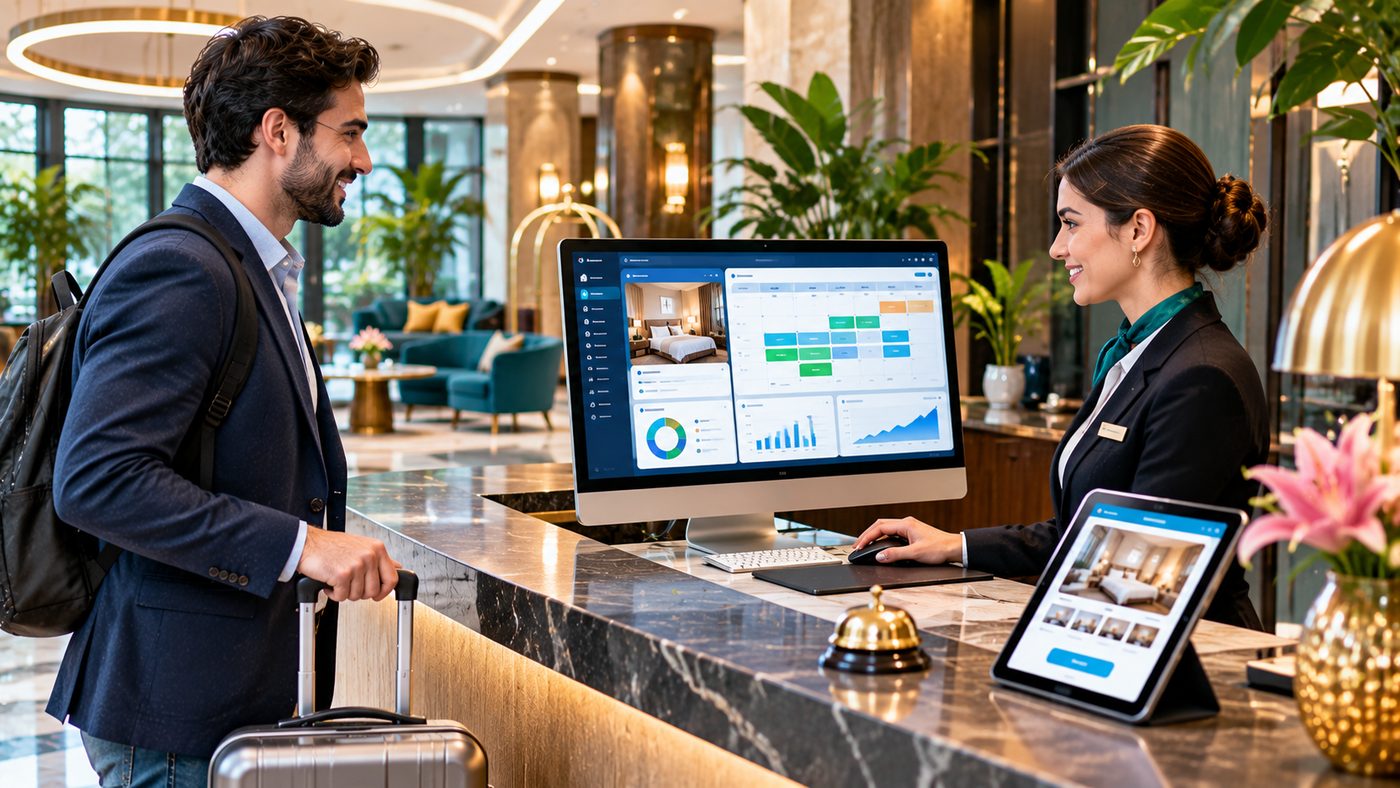
A hotel booking system is an essential technology solution for hotels, resorts, guesthouses, and other accommodation providers that want to manage reservations efficiently while providing a convenient experience for guests. As travelers increasingly research and reserve accommodation online, hospitality businesses need reliable software to handle room availability, pricing, payments, booking confirmations, and customer information.
Traditional reservation methods involving telephone calls, emails, and manual spreadsheets can become difficult to manage as booking volumes increase. Double bookings, delayed confirmations, inaccurate inventory records, and administrative errors can negatively affect both hotel operations and guest satisfaction.
Modern hotel reservation software helps address these challenges by connecting booking channels, centralising reservation information, and automating routine tasks. Many solutions also integrate with property management systems, online travel agencies, and payment providers.
However, selecting appropriate software requires understanding the differences between booking engines, property management systems, central reservation systems, and channel managers.
This comprehensive guide explains how hotel booking systems work, their important features, implementation requirements, costs, benefits, and practical considerations for choosing the right solution.
What Is a Hotel Booking System?
A hotel booking system is software that allows accommodation businesses to receive, organise, manage, and confirm guest reservations.
Depending on its design, the system may support direct online bookings through a hotel’s website, internal reservation management, or connections with external distribution platforms.
A typical online booking process allows guests to select their travel dates, view available rooms, compare prices, enter personal information, and complete a reservation.
After confirmation, the system records the booking and updates the appropriate availability information.
How Does a Hotel Booking System Work?
A modern reservation system typically follows a structured process.
First, a guest visits the hotel’s website or another supported booking channel.
The guest enters travel dates, the number of visitors, and any relevant accommodation preferences.
The booking system checks room availability and displays eligible rates.
After selecting a room, the guest provides the required booking details and completes any necessary payment or guarantee process.
The system then creates a reservation record and issues a confirmation according to the configured workflow.
Where integrations are functioning correctly, reservation information can also be transferred to the hotel’s property management system and distribution channels.
Why Hotels Need an Online Booking System
Hotels operate in an environment where customer expectations, distribution channels, and operational requirements are constantly evolving.
An efficient reservation process can reduce unnecessary administrative work and support a more reliable guest experience.
24/7 Reservation Availability
An online booking engine allows guests to make reservations outside reception operating hours.
This is particularly useful for international travelers who may be booking from different time zones.
Reduced Manual Work
Automated reservation records can reduce the need for staff to enter the same information repeatedly.
This allows employees to focus on guest services and other operational activities.
Better Room Inventory Management
A connected booking system helps accommodation providers maintain accurate records of available rooms.
Timely availability updates can reduce the risk of accepting conflicting reservations.
However, integrations must be configured and monitored correctly.
Improved Booking Convenience
Guests can review available accommodation and pricing without waiting for a telephone or email response.
A clear booking process may also reduce unnecessary questions during reservation.
Greater Operational Visibility
Reservation reports can provide useful information about booking patterns, room demand, cancellations, and revenue.
These insights may support staffing, pricing, and operational decisions.
Essential Features of a Hotel Booking System
The features required depend on the property’s size, operating model, and distribution strategy.
1. Real-Time Room Availability
An important booking system feature is the ability to display current room availability.
The system should account for confirmed bookings, inventory restrictions, and applicable room allocation rules.
When multiple sales channels are involved, reliable synchronisation becomes particularly important.
2. Online Reservation Management
Hotel staff should be able to review reservations and perform authorised actions such as updating booking information, recording cancellations, or adjusting room assignments.
A central reservation interface can improve administrative efficiency.
3. Secure Payment Processing
A suitable system should support payment methods relevant to the hotel’s location and customer base.
This may involve card payments, deposits, payment links, or other supported payment arrangements.
Hotels must understand applicable payment security requirements, including the Payment Card Industry Data Security Standard.
4. Automated Booking Confirmations
Automatic confirmations help guests verify reservation details.
Depending on the system, confirmation messages may include booking references, travel dates, room information, and relevant hotel policies.
5. Mobile-Friendly Booking Experience
Travelers frequently search for accommodation on smartphones.
A mobile-responsive booking engine should provide clear navigation, readable room descriptions, and convenient checkout.
6. Flexible Pricing and Rate Plans
Hotels often offer different prices depending on room type, season, occupancy, cancellation conditions, and package inclusions.
A booking system should support the property’s required rate structures.
7. Cancellation and Modification Rules
Reservation systems may allow hotels to establish policies for cancellations, refunds, deposits, and booking changes.
These rules should be clearly communicated to guests before confirmation.
8. Reporting and Analytics
Useful reporting may include occupancy-related information, booking sources, revenue, cancellations, and reservation trends.
The available reports vary by software provider.
Hotel Booking Engine vs. Property Management System
A booking engine and a property management system serve related but distinct functions.
What Is a Hotel Booking Engine?
A hotel booking engine is the guest-facing technology that enables direct reservations through a hotel’s website or other supported channels.
Its primary purpose is to convert accommodation searches into confirmed reservations.
It typically displays rooms, prices, availability, and booking conditions.
What Is a Property Management System?
A property management system, commonly called a PMS, supports a hotel’s operational activities.
Its functions may include:
- Guest reservation records
- Check-in and checkout
- Room assignments
- Housekeeping coordination
- Guest profiles
- Billing and folios
- Operational reporting
- Room status management
A PMS is primarily an operational management platform.
Why Integration Matters
When a booking engine communicates effectively with a PMS, reservation data can move between guest-facing and operational systems.
This reduces duplicate entry and helps staff maintain consistent records.
However, the exact integration capabilities depend on the products involved.
What Is a Hotel Channel Manager?
A channel manager is software that helps hotels distribute room availability and prices across external booking channels.
These channels may include online travel agencies, supported metasearch services, and other reservation partners.
How Channel Managers Work
A channel manager connects relevant distribution platforms with the hotel’s inventory information.
When a reservation is received, it can update availability across connected channels according to the system’s configuration.
This process can reduce manual updates and the likelihood of inventory conflicts.
Benefits of Channel Management
Potential advantages include:
- Centralised distribution management
- Faster availability updates
- Reduced manual administration
- Consistent rate distribution
- Access to multiple sales channels
- Improved booking visibility
Integration reliability is important because delayed or incorrect synchronisation can still cause booking problems.
Benefits of Direct Hotel Bookings
Direct reservations occur when guests book through a hotel’s own website or another hotel-controlled booking interface.
A direct booking strategy can complement external distribution channels.
Reduced Dependence on Intermediaries
Some third-party reservation platforms charge commissions or other distribution fees.
Increasing eligible direct bookings may help hotels reduce certain intermediary costs.
However, direct bookings also involve website, marketing, payment processing, and technology expenses.
Greater Control Over Guest Communication
Direct reservations may give hotels more control over pre-arrival information and guest communication, subject to privacy requirements.
Personalised Offers
Hotels may provide packages or benefits specifically designed for guests booking through approved direct channels.
Stronger Brand Experience
A well-designed booking interface can maintain consistent branding from the initial website visit through reservation confirmation.
Opportunity for Additional Services
Some booking engines support optional extras such as breakfast, parking, room upgrades, or other services.
These offers should be presented transparently and without misleading pricing.
How to Choose the Best Hotel Booking System
Choosing reservation software requires understanding the business’s operational needs.
Evaluate Property Size
A small independent guesthouse may have different requirements from a resort or hotel group.
Software complexity should match the organisation’s needs.
Review Existing Technology
Identify the systems already used for reservations, payments, accounting, and property operations.
A new booking solution should integrate appropriately with necessary existing tools.
Check Channel Connectivity
Hotels relying on external booking platforms should confirm the available integrations.
Ask about reservation synchronisation, rate updates, and error handling.
Evaluate Ease of Use
Front desk employees and reservation teams need software that supports their daily tasks.
A complicated interface may increase training requirements and operational mistakes.
Consider Reporting Requirements
Different businesses prioritise different performance indicators.
Confirm that the platform provides the necessary reporting capabilities.
Examine Security
Evaluate authentication, permissions, encryption, payment handling, data storage, and vendor security practices.
Review Support Services
Hotels operate throughout the week, and reservation problems may occur outside normal business hours.
Understand support availability and incident escalation arrangements.
Compare Total Costs
Look beyond the advertised monthly subscription.
Consider implementation, integrations, payment fees, support, training, and potential migration expenses.
Popular Hotel Booking Software Solutions
Several established technology providers offer reservation-related products.
Their capabilities, commercial terms, and suitability differ.
Cloudbeds
Cloudbeds offers hospitality software that includes property management, booking engine, channel management, and related operational features.
Its booking engine is designed to support direct reservations and connect with the broader hotel technology environment.
Cloudbeds may be relevant to independent hotels and other accommodation providers seeking an integrated solution.
SiteMinder
SiteMinder provides hotel distribution technology, including a channel manager and direct booking engine.
Its products are designed to connect hotel inventory and pricing with supported distribution channels and property management systems.
SiteMinder may be useful for hotels focused on managing online distribution and direct booking strategies.
Little Hotelier
Little Hotelier is designed for smaller accommodation businesses.
Its hospitality software combines selected reservation, property management, and channel distribution features.
Small properties should review available plans and integrations to determine suitability.
Other Booking Solutions
Additional providers serve boutique hotels, resorts, vacation rentals, and larger hospitality organisations.
Rather than relying on a single marketing claim, businesses should request demonstrations and compare products against their actual requirements.
How Much Does a Hotel Booking System Cost?
Hotel reservation software pricing varies depending on the provider, property size, functionality, and agreement.
Some companies offer subscription plans, while others use customised quotations or additional transaction-related pricing.
Subscription Fees
Monthly or annual charges may depend on room count, property count, or selected modules.
Setup and Implementation Costs
Initial configuration, data migration, and system integration may require additional expenditure.
Payment Processing Fees
Hotels accepting electronic payments generally incur payment processing expenses.
Fees depend on the payment provider, payment methods, transaction types, and commercial agreement.
Integration Charges
Some integrations may involve additional subscriptions or connection costs.
Training and Support
Support packages and staff training may be included or charged separately.
Total Cost of Ownership
Businesses should consider the complete annual cost rather than comparing headline subscription prices.
A more expensive integrated platform may be preferable if it replaces several separate systems, but the savings should be assessed using actual costs.
How to Implement a Hotel Booking System
Introducing new reservation software requires careful planning.
Step 1: Identify Operational Requirements
List the reservation processes, channels, payment methods, and reporting features needed by the property.
Step 2: Evaluate Software Providers
Compare demonstrations, documentation, integration capabilities, support arrangements, and pricing.
Step 3: Prepare Room and Rate Information
Organise room types, occupancy limits, inventory, rate plans, taxes, fees, and booking policies.
Step 4: Configure Integrations
Connect the booking engine with the relevant PMS, channel manager, and payment services.
Step 5: Migrate Existing Reservations
Where necessary, transfer upcoming bookings and relevant guest records using secure migration procedures.
Step 6: Test Reservations
Create test bookings and verify inventory updates, confirmations, payment behaviour, and cancellation handling.
Step 7: Train Employees
Ensure reception, reservations, and management teams understand relevant functions.
Step 8: Launch and Monitor
After launch, monitor booking accuracy, integration performance, guest feedback, and operational issues.
Hotel Booking System Security and Data Privacy
Reservation systems process information that may include guest contact details, travel dates, and payment-related information.
This makes security a central procurement consideration.
Protect Guest Information
Apply access controls that restrict information according to employee responsibilities.
Use Secure Connections
Reservation websites should use HTTPS and appropriately configured transport encryption.
Follow Payment Security Requirements
Hotels accepting payment cards must address applicable PCI DSS responsibilities.
Using a payment gateway can reduce certain risks, but it does not automatically eliminate every compliance obligation.
Manage Employee Accounts
Use unique accounts, appropriate permissions, and multifactor authentication where supported.
Maintain Data Retention Policies
Guest information should be retained and deleted according to applicable legal and operational requirements.
Plan for Service Disruptions
Hotels should establish contingency procedures for internet failures, software outages, and unavailable integrations.
How Hotel Booking Systems Improve Guest Experience
A convenient reservation process can influence guests’ perceptions before they arrive.
Easier Room Selection
Clear room descriptions, photographs, availability information, and pricing help guests make informed choices.
Faster Confirmation
Automated confirmations reduce uncertainty about whether a reservation was completed.
Transparent Booking Policies
Guests should be able to review cancellation conditions, deposits, and applicable fees.
Personalised Communication
Where appropriate and permitted, hotels may use reservation information to provide relevant pre-arrival instructions.
Simplified Check-In Preparation
Integration with property operations can help staff prepare for expected arrivals.
Hotel Booking System for Small Hotels
Smaller hotels often need software that balances essential functionality with manageable costs.
A suitable solution should make daily reservation tasks straightforward.
Focus on Essential Features
Small properties may initially prioritise an availability calendar, direct booking engine, confirmation messages, and reliable distribution management.
Avoid Unnecessary Complexity
Advanced enterprise features are not always valuable for a small guesthouse.
Evaluate Staff Training
Simple interfaces can reduce operational disruption.
Consider Cloud-Based Access
Cloud-hosted systems can allow authorised staff to manage bookings from supported devices.
Reliable connectivity and appropriate security remain important.
Hotel Booking Systems for Resorts and Multi-Property Groups
Larger hospitality businesses may need more advanced capabilities.
Central Reservation Management
A central reservation system can coordinate booking information across multiple properties.
Multi-Property Reporting
Management teams may require consolidated information about occupancy, revenue, and distribution performance.
Complex Rate Structures
Resorts may offer packages involving accommodation, dining, activities, and other services.
Group Reservations
Conference bookings, weddings, and tour groups can require specialised reservation workflows.
Role-Based Permissions
Larger organisations need appropriate separation of staff responsibilities and administrative access.
Important Hotel Booking Metrics to Monitor
Analytics can help hotel managers evaluate reservation performance.
Occupancy Rate
Occupancy rate measures the proportion of available room nights sold during a specified period.
Average Daily Rate
Average daily rate, or ADR, is generally calculated by dividing room revenue by rooms sold over the relevant period.
Revenue Per Available Room
Revenue per available room, commonly called RevPAR, relates room revenue to available room inventory.
It can be calculated by dividing room revenue by available room nights.
Direct Booking Share
This metric measures the proportion of bookings generated through direct channels.
The calculation should consistently define the relevant bookings and period.
Cancellation Rate
Cancellation reporting helps hotels understand booking changes and potential revenue impacts.
Booking Conversion Rate
For hotel websites, conversion rate can measure the proportion of relevant visitors or sessions resulting in completed bookings.
The measurement method should be clearly defined.
Common Mistakes When Choosing Hotel Booking Software
Ignoring Integration Requirements
A booking engine that does not communicate properly with other systems may create duplicate work.
Selecting Software Only by Price
Low subscription costs may exclude important features or support.
Poor Inventory Configuration
Incorrect room allocations or rate rules can cause operational problems.
Neglecting Mobile Usability
A confusing mobile booking experience may discourage prospective guests.
Inadequate Staff Training
Employees need sufficient preparation before using a new system during daily operations.
Failing to Test Payment Workflows
Payment failures, duplicate charges, and unclear refund handling can damage guest trust.
Overlooking Data Migration
Existing bookings must be transferred or reconciled carefully during implementation.
The Future of Hotel Booking Systems
Hotel reservation technology continues to evolve alongside changing guest expectations.
AI-Assisted Guest Communication
AI tools may help answer routine reservation questions and support customer service teams.
Automated responses should remain accurate and provide appropriate escalation to human staff.
Revenue Management Integration
Booking systems may connect with pricing tools that analyse demand, availability, and other factors.
Pricing decisions should remain consistent with applicable consumer protection requirements.
Contactless Guest Services
Some hotels are integrating digital check-in and other guest-facing technologies.
Improved Mobile Experiences
Mobile booking flows continue to be important as travelers use smartphones for trip planning.
Greater System Connectivity
Hotels increasingly seek integrations between reservations, operations, payments, and reporting.
Enhanced Data Security
Cybersecurity and privacy will remain important as hospitality businesses manage growing amounts of customer information.
Frequently Asked Questions
What is a hotel booking system?
A hotel booking system is software used to receive and manage accommodation reservations. It may include online room availability, booking confirmations, payment integration, and connections with hotel management tools.
What is the difference between a booking engine and a PMS?
A booking engine allows guests to make reservations, usually through a hotel website. A property management system supports internal hotel operations such as room assignments, check-in, checkout, billing, and housekeeping.
Can a hotel booking system prevent double bookings?
A properly configured system with reliable inventory synchronisation can reduce the risk of double bookings. However, connection failures, incorrect settings, or delayed updates can still cause conflicts.
Is a hotel booking system suitable for small hotels?
Yes. Many providers offer solutions designed for independent hotels, guesthouses, and small accommodation businesses. The right choice depends on room count, required integrations, and budget.
How much does hotel booking software cost?
Pricing varies by provider, property size, functionality, and subscription model. Hotels should consider setup costs, recurring fees, payment processing, integrations, and ongoing support.
Can guests book hotel rooms directly through a website?
Yes. A direct booking engine can allow guests to select rooms, review availability, enter their details, and confirm reservations through the hotel’s own website.
Does hotel booking software integrate with online travel agencies?
Many systems connect with online travel agencies through channel management integrations. Supported platforms and synchronisation capabilities vary by provider.
What security features should a hotel booking system have?
Important considerations include secure connections, access controls, appropriate authentication, safe payment handling, data protection measures, and reliable operational monitoring.
Conclusion
A hotel booking system helps accommodation providers manage reservations, improve operational efficiency, and provide a more convenient booking experience for guests. By connecting online booking engines with property management systems, channel managers, and payment services, hotels can reduce unnecessary manual tasks and maintain more consistent reservation information.
However, successful implementation depends on choosing software that fits the property’s size, distribution strategy, budget, and security requirements. Hotels should compare integration capabilities, total costs, ease of use, and customer support before selecting a provider.
With careful planning and ongoing monitoring, a well-configured hotel reservation system can support better guest experiences, more organised operations, and sustainable hospitality business growth.
