
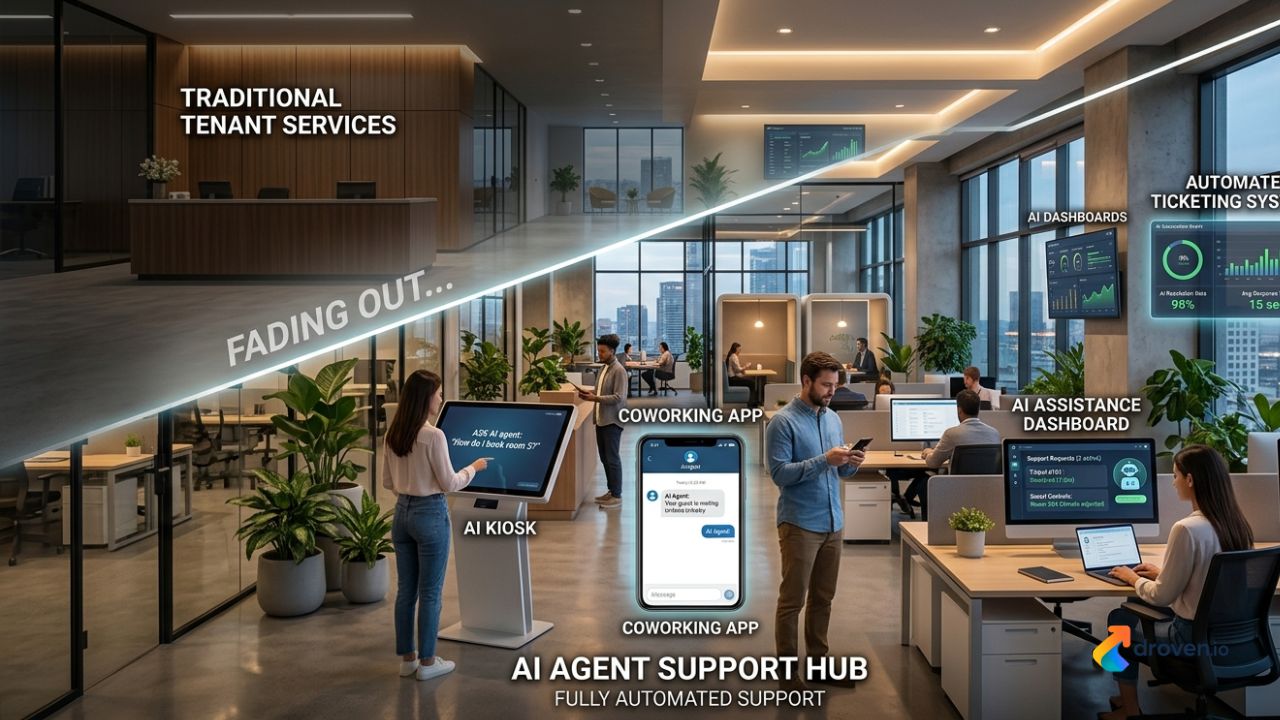
Tenant support has always been one of the most resource-intensive parts of running a flex space or coworking operation. From answering repetitive questions about Wi-Fi passwords and bookings to handling billing issues and access problems, staff teams often spend a large portion of their day on tasks that do not directly contribute to growth or community building.
As flex spaces scale, this manual support model quickly becomes inefficient. Members expect instant responses, 24/7 availability, and consistent communication, which is difficult to maintain with human-only teams. This gap between expectations and operational capacity has created a strong demand for automation in tenant support.
This is where AI-powered systems like the Lem AI agent are changing the game. By handling routine inquiries, resolving common issues, and guiding members through workflows inside coworking platforms, AI agents are gradually replacing traditional first-line support teams and redefining how flex spaces operate.
Why Manual Tenant Support Doesn’t Scale in Flex Spaces
Manual support systems break down as soon as a coworking space begins to grow. Every new member adds more requests, more questions, and more operational complexity. Even simple tasks like booking assistance or invoice clarification can accumulate into hundreds of daily interactions.
Most of these requests are repetitive and predictable, but they still require human attention. This creates a bottleneck where staff are constantly reacting instead of improving the member experience or focusing on strategic priorities.
Over time, this reactive model leads to slower response times, inconsistent answers, and higher operational costs, all of which negatively impact member satisfaction.
How AI Agents Are Transforming Tenant Support
AI agents are designed to handle repetitive communication tasks automatically. Instead of waiting for a human response, members can interact with an intelligent system that understands queries, retrieves relevant information, and resolves issues instantly.
Modern systems like the Lem AI agent are integrated directly into coworking platforms, allowing them to access real-time data such as bookings, memberships, invoices, and access permissions. This enables them to provide accurate and context-aware responses without human intervention.
The result is a support system that is always available, consistent, and scalable, regardless of how fast the space grows.
Instant Responses to Common Member Queries
One of the most immediate benefits of AI support is speed. Members no longer need to wait for staff to respond to basic questions. The AI can instantly answer queries about bookings, pricing, amenities, or access instructions.
This reduces frustration and improves the overall member experience. It also ensures that staff are not overwhelmed with repetitive questions throughout the day.
Automated Resolution of Routine Issues
AI agents are not limited to answering questions—they can also take action. For example, they can assist with resetting access credentials, guiding members through booking changes, or explaining billing breakdowns.
By automating these workflows, the system reduces dependency on human intervention and ensures faster resolution times across all support categories.
Context-Aware Support Using Member Data
Unlike traditional chatbots, modern AI agents are deeply integrated into coworking systems. They can access member profiles, booking history, and payment status to provide personalized responses.
This means members receive relevant answers without needing to repeat information, creating a smoother and more intelligent support experience.
Reducing Operational Costs Without Reducing Quality
One of the biggest advantages of AI-driven support is cost efficiency. Hiring additional support staff to manage growing member bases can quickly become expensive, especially in multi-location flex spaces.
AI agents reduce the need for large support teams by handling a significant portion of incoming queries automatically. This allows operators to maintain high service levels without increasing headcount.
At the same time, human staff can focus on complex issues, community engagement, and operational improvements instead of repetitive support tasks.
Improving Response Consistency Across Locations
In multi-site coworking operations, maintaining consistent support quality is often a challenge. Different staff members may provide slightly different answers, leading to confusion among members.
AI agents solve this problem by delivering standardized responses based on centralized data. This ensures that members receive the same accurate information regardless of location or time.
Scaling Support Without Adding Headcount
As coworking spaces expand, support demand increases proportionally. Traditionally, this would require hiring more staff for each new location.
With AI agents in place, support capacity scales automatically. Whether the space has 50 members or 5,000, the system can handle inquiries without additional human resources.
The Role of AI in Modern Flex Space Operations
AI is not just replacing support—it is becoming a core operational layer in modern coworking environments. From onboarding to billing assistance, AI systems are embedded across the entire member lifecycle.
Platforms like Spacebring and tools such as the Lem AI agent demonstrate how deeply integrated AI can streamline operations. These systems connect communication, data, and workflows into a single intelligent interface.
This shift allows flex space operators to move from reactive management to proactive, automated operations.
Enhancing Member Experience Through Self-Service
Members increasingly prefer self-service options over waiting for staff assistance. AI agents empower them to solve problems instantly, manage bookings, and access information independently.
This level of autonomy improves satisfaction and reduces friction in daily operations. Members feel more in control of their experience, which increases engagement and retention.
Supporting Staff Instead of Replacing Them Completely
While AI reduces the need for manual support, it does not eliminate the role of human staff entirely. Instead, it enhances their efficiency by handling repetitive tasks.
Staff can focus on higher-value responsibilities such as community building, partnerships, and improving space operations, while AI handles routine communication in the background.
The Future of Tenant Support in Flex Spaces
The future of coworking support is fully hybrid, with AI handling first-line interactions and humans managing complex or high-touch scenarios. This combination ensures both efficiency and quality.
As AI systems continue to evolve, they will become even more capable of handling nuanced requests, predicting member needs, and proactively solving issues before they are reported.
Operators who adopt AI early will have a significant advantage in scalability, cost efficiency, and member satisfaction.
FAQs
What is the Lem AI agent?
The Lem AI agent is an AI-powered support system designed to automate tenant communication, handle queries, and assist members in coworking and flex space environments.
How does AI replace manual tenant support?
AI replaces manual support by answering common questions, resolving routine issues, and accessing real-time member data to provide instant assistance without human intervention.
Does AI completely remove the need for staff?
No. AI handles repetitive tasks, but human staff are still needed for complex issues, community engagement, and operational management.
Can AI support multiple coworking locations?
Yes. AI systems can operate across multiple locations using centralized data, ensuring consistent support quality everywhere.
How does AI improve member experience?
AI improves member experience by providing instant responses, reducing waiting time, and enabling self-service access to bookings, billing, and support information.
Conclusion
AI agents like the Lem AI agent are fundamentally changing how flex spaces handle tenant support. By automating repetitive tasks, reducing response times, and scaling effortlessly across locations, AI enables coworking operators to deliver faster, more consistent, and more cost-effective support. As the industry evolves, AI will become an essential layer in every modern coworking tech stack, allowing spaces to grow without increasing operational complexity while significantly improving the member experience.
