
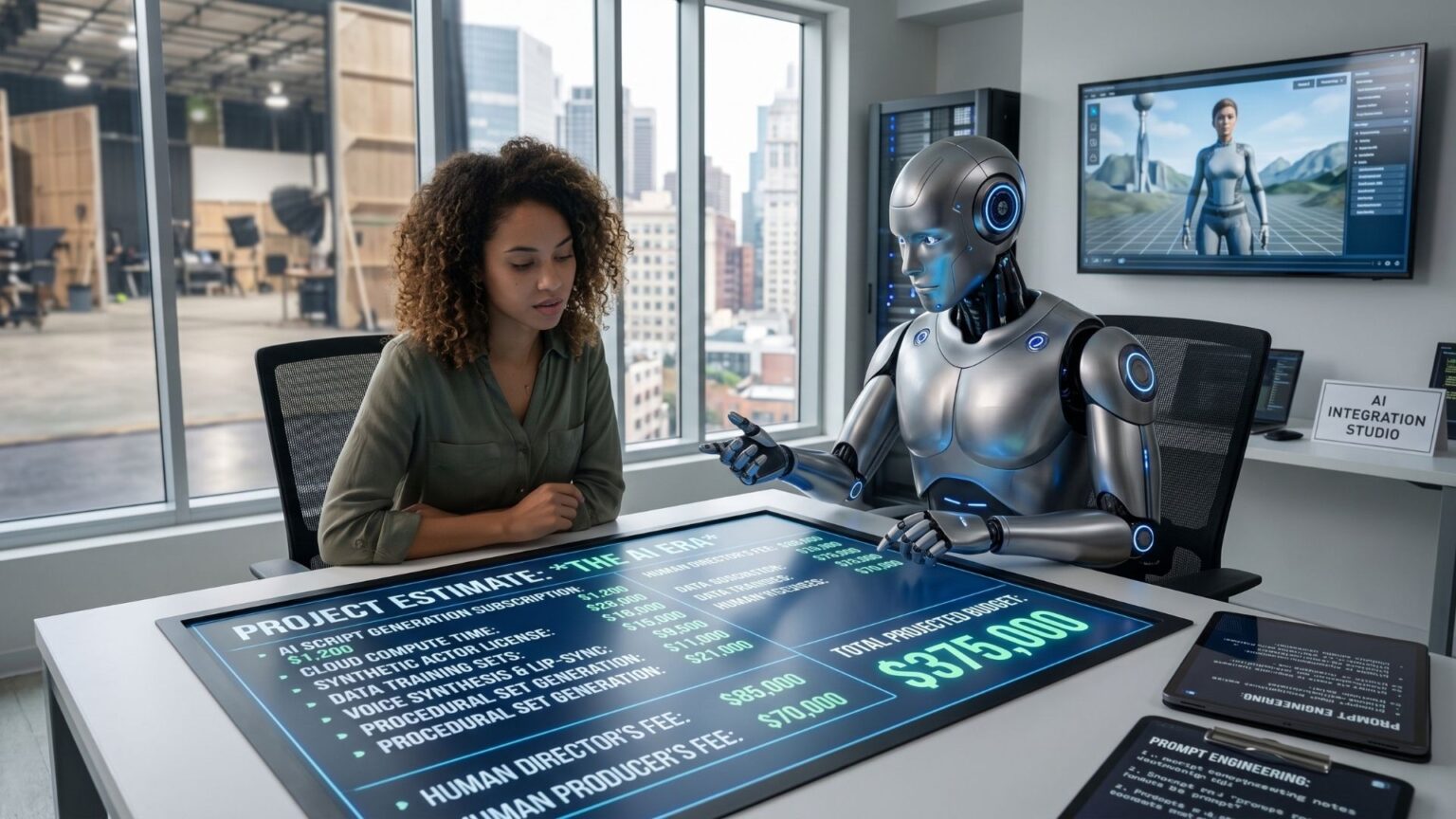
The honest answer depends entirely on what “a film” means in a given project, but the real published numbers are specific enough to actually budget around, not just directional estimates. A previz sequence that used to cost $15,000 to $100,000 traditionally now runs under $50 to $2,000. A complete short film has been documented at roughly $750. A full feature has used AI to replicate over 200 locations at a fraction of what those location shoots would have cost.
None of this means invideo Agent or any similar tool makes filmmaking free, or that cost disappears entirely, it means the cost structure has shifted dramatically, and knowing the actual numbers helps set a realistic budget rather than guessing.
What documented AI film productions have actually cost
Real, published examples give a much more useful picture than a vague “AI is cheaper” claim. A 2-minute brand promo has been produced in 3 days for around $1,500, compared to $100,000 to $500,000 for a traditionally produced equivalent. A complete short film in the style of a specific director was produced in 2 days for roughly $750. A 10-episode microdrama series has run about $1,000 per episode with a 3-person team over 3 days.
A full 11-minute live-action-style episode has been documented at around $6,540, completed in under 10 days. A fashion campaign, 40 stills and 30 video clips across 5 looks, has been produced in 3 to 4 hours for roughly $150. On the high end, a $70 million feature film used AI to replicate more than 200 locations, work that would have otherwise cost the production an estimated $300 million.
Why previz specifically shows the clearest cost shift
Previsualization is where the cost difference is most dramatic and easiest to compare directly, since traditional previz has a well-established price range to measure against.
Invideo Agent can produce previz at under $50 to $2,000 per minute, compared to $15,000 to $100,000 per minute for traditional previz production, the same underlying planning work, at a fraction of the historical cost, because the process no longer requires a dedicated previz team and specialized software licenses for every project.
Its AI filmmaking approach factors into that same early-stage cost reduction, since a project’s characters, locations, and visual rules only need to be locked once as a production bible rather than re-established for every new scene, which is part of why previz specifically has compressed so far below its traditional price range.
What actually drives the cost on a specific project
The published cost examples vary by roughly an order of magnitude, from $150 for a same-day fashion campaign to several thousand dollars for a longer episode, and the difference mostly comes down to output length, how many locations or scenes a project needs, and how much iteration a specific look requires before it’s locked.
A shorter project with a single consistent location and character generally lands at the low end of these ranges. A longer, multi-location production with more complex continuity requirements, matching the live-action episode example, runs meaningfully higher, though still far below a traditionally produced equivalent of the same scope.
Where the real savings actually come from
The savings aren’t just about not paying for a camera crew. A meaningful part of the cost reduction comes from not needing to rebuild a project’s continuity references for every new scene, locking a character, a location, and a visual style once, rather than paying for that setup work repeatedly across a production.
The newer invideo Agent Two model extends this further by reading an uploaded reference, a brand deck, an existing scene, directly, cutting down the setup and re-briefing time that would otherwise add real cost to a production, especially one involving more than one collaborator.
Why costs still vary this much between projects
A project’s actual cost depends heavily on the specific choices made along the way, how many iterations a scene needs before a director accepts it, how many locations and characters need independent consistency references, and how long the final output actually runs.
This is why a single number (“AI filmmaking costs $X”) is less useful than the range of documented examples above, a same-day fashion campaign and an 11-minute episodic production are fundamentally different scopes of work, even though both used the same underlying category of tools.
Common mistakes when budgeting an AI filmmaking project
- Assuming a single number applies to every project. Documented costs range from roughly $150 for a same-day shoot to several thousand dollars for a longer episode, scope determines where a specific project actually lands.
- Not accounting for iteration in the budget. A locked look or scene rarely happens on the first generation, budgeting for a few rounds of revision is more realistic than assuming one-shot success.
- Treating previz cost savings as representative of the whole production. Previz shows the clearest cost compression, but full production costs (especially longer, multi-location projects) don’t compress by the same order of magnitude.
- Ignoring the setup cost of re-briefing a project for every new scene. Locking references once, rather than rebuilding them repeatedly, is a real, documented part of where the cost savings actually come from.
- Comparing AI filmmaking cost to a rough guess at traditional cost instead of a real quote. The clearest documented comparisons (like the $300 million in avoided location costs on one feature) come from comparing against actual traditional production estimates, not assumptions.
FAQ
What’s a realistic budget for a short AI-generated film?
Documented examples range widely by scope, a complete short film has been produced for around $750, while a longer, multi-scene project or a full episode can run into the thousands. Output length, number of locations, and iteration needs are the biggest cost drivers.
Is AI filmmaking actually cheaper than traditional production?
For comparable scope, yes, based on documented examples, a 2-minute brand promo at roughly $1,500 versus $100,000 to $500,000 traditionally, and previz work at under $50 to $2,000 per minute versus $15,000 to $100,000 per minute traditionally.
Why does previz show the biggest cost difference specifically?
Previz has a well-established traditional price range to compare against, and it doesn’t require the same level of final-quality polish as finished footage, which is part of why the cost compression is most dramatic and easiest to document at this specific stage.
Does invideo Agent Two actually reduce production costs, or just save time?
Both are connected. Reading an existing brand deck or reference directly, rather than requiring it to be manually re-explained for every scene, cuts down setup and re-briefing time, and less time spent on repetitive setup work translates directly into lower real production cost.
