
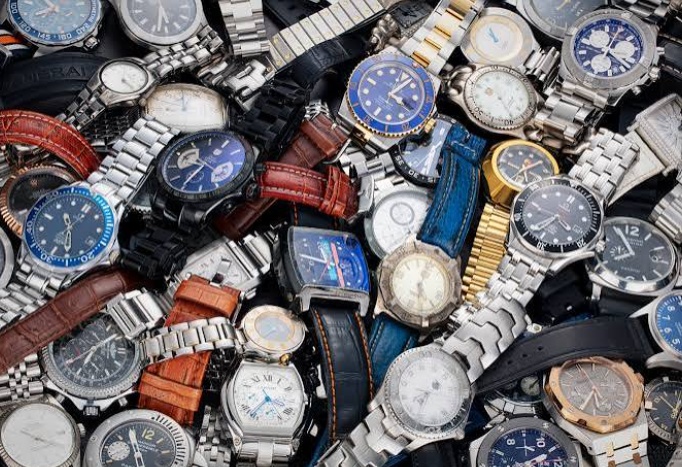
Luxury watches have long represented precision engineering, exceptional craftsmanship, and timeless design. Brands such as Rolex, Patek Philippe, Audemars Piguet, Omega, and Cartier are recognized worldwide for their distinctive designs and mechanical expertise.
However, the popularity of luxury watches has also created a substantial market for counterfeit timepieces.
Today, identifying a fake watch can be considerably more challenging than it was in the past. While inexpensive replicas often contain obvious manufacturing flaws, higher-grade reproductions, commonly called super clone watches, may imitate many visual and mechanical characteristics of genuine luxury watches.
Some reproductions are designed to resemble authentic models closely enough that identifying differences requires specialized knowledge and equipment.
So, how can you tell whether a luxury watch is genuine or fake?
In this complete beginner’s guide, we explain how to spot a fake watch by examining its dial, movement, case materials, serial numbers, weight, bracelet, finishing, and documentation.
Whether you are purchasing your first pre-owned luxury watch or simply want to understand the differences between authentic watches and replicas, these practical authentication techniques will help you recognize potential warning signs.
What Is a Fake Watch?
A fake watch is a timepiece designed to imitate another manufacturer’s product, typically using its trademarks, branding, or distinctive design without authorization.
Fake watches are commonly referred to as counterfeit watches or replicas.
However, not all counterfeit watches are manufactured to the same standard.
The market contains everything from inexpensive quartz-powered reproductions to sophisticated mechanical replicas.
Understanding Different Types of Fake Watches
Counterfeit watches are often discussed in three broad categories.
1. Budget Replica Watches
These are inexpensive reproductions that prioritize visual resemblance over accurate construction.
Common characteristics include:
- Low-cost quartz or automatic movements.
- Basic stainless steel or plated metal cases.
- Incorrect dial fonts and markers.
- Poor bracelet finishing.
- Inaccurate dimensions.
- Simplified complications.
2. High-Grade Replica Watches
These watches generally feature improved construction and more convincing external details.
They may incorporate sapphire crystals, automatic movements, and more carefully manufactured cases.
Nevertheless, differences in finishing, movement architecture, and component quality may remain.
3. Superclone Watches
Superclone is a marketing term used for higher-grade reproductions designed to imitate luxury watches more closely.
Depending on the model, these watches may attempt to reproduce:
- Original case dimensions.
- Movement layout.
- Dial textures.
- Bracelet construction.
- Bezel operation.
- Mechanical complications.
- Caseback appearance.
However, the term superclone is not an independent manufacturing certification.
Even a visually convincing superclone remains a replica rather than an authentic luxury timepiece.
1. Examine the Watch Dial Carefully
One of the first steps in identifying a fake watch is examining its dial.
The dial contains several small details that can reveal inconsistencies in manufacturing.
Luxury watch manufacturers generally apply strict quality-control standards to dial production.
Check the Brand Logo
Start by examining the logo under good lighting.
Look for:
- Incorrect proportions.
- Uneven printing.
- Poor alignment.
- Irregular spacing.
- Distorted lettering.
- Inconsistent finishing.
For example, an authentic Rolex dial should feature branding appropriate to its specific model and production period.
A counterfeit watch may use a slightly different font or incorrectly position its printed text.
However, many higher-grade replicas reproduce dial printing convincingly, so logo appearance alone cannot confirm authenticity.
Inspect the Hour Markers
Look closely at the applied hour markers.
Check whether they are:
- Correctly aligned.
- Consistently spaced.
- Securely mounted.
- Properly finished.
- Consistent with the reference model.
Crooked markers or visible adhesive can indicate poor manufacturing quality.
Nevertheless, authentic vintage watches may display age-related changes, and some genuine models have distinctive marker designs.
Always compare the watch against the correct reference and production period.
Examine the Date Window
The date display is another useful inspection point.
Potential warning signs include:
- Incorrect numeral fonts.
- Poor date alignment.
- Unusual magnification.
- Uneven printing.
- Incorrect date-window positioning.
Some Rolex models feature a Cyclops magnification lens over the date.
Its optical characteristics can help during inspection, but magnification alone is not a reliable authentication test.
2. Check the Movement: The Heart of the Watch
The movement is one of the most important components in luxury-watch authentication.
A watch movement consists of the mechanical or electronic system responsible for measuring and displaying time.
Automatic vs Quartz Movements
Many traditional luxury sports watches use mechanical automatic movements.
Other authentic luxury models legitimately use quartz movements.
Therefore, discovering a quartz movement does not automatically mean a watch is fake.
The movement must match the specifications of the particular reference.
For example, a mechanical Rolex Submariner should not contain an inexpensive quartz movement.
The Sweeping Seconds Hand Test
A common misconception is that genuine luxury watches always have a perfectly smooth seconds hand.
In reality, mechanical movements operate at different frequencies.
A movement operating at 28,800 vibrations per hour typically produces eight beats per second.
This gives the seconds hand a relatively smooth appearance, although small individual steps remain visible.
Some genuine mechanical watches operate at different frequencies.
Similarly, certain quartz watches feature multiple seconds-hand steps per second.
A smooth seconds hand is not proof of authenticity.
Higher-grade replica movements can produce a similar sweeping motion.
Inspecting the Movement Architecture
Professional watchmakers may identify counterfeit movements by examining:
- Bridge shapes.
- Gear placement.
- Rotor design.
- Escapement construction.
- Finishing techniques.
- Engraving.
- Component layout.
Some superclone movements reproduce the visual architecture of genuine calibres.
Therefore, identifying a sophisticated counterfeit may require detailed mechanical comparison rather than a quick inspection.
Can a Fake Watch Have an Accurate Movement?
Yes.
Timekeeping accuracy alone does not establish authenticity.
A well-regulated replica movement may maintain reasonably accurate time, while a genuine mechanical movement requiring service may run poorly.
Accuracy testing is useful for evaluating performance, but it is not a definitive authentication method.
3. Examine the Watch’s Weight and Materials
Many beginners assume that an authentic luxury watch must feel heavy.
Although material quality can influence weight, this is not a reliable standalone test.
Why Weight Can Be Misleading
The weight of a watch depends on:
- Case material.
- Bracelet construction.
- Movement components.
- Case dimensions.
- Precious-metal content.
- Bracelet length.
Some authentic watches use lightweight titanium or other specialized materials.
Meanwhile, counterfeit manufacturers can adjust case construction to approximate the weight of genuine models.
Stainless Steel Quality
Many genuine luxury watches use high-quality stainless steel.
Rolex’s Oystersteel belongs to the 904L stainless steel family.
Other manufacturers commonly use 316L stainless steel.
Some replica manufacturers also advertise 316L or 904L materials.
However, visual inspection cannot reliably determine the exact steel alloy.
Material composition requires appropriate testing.
Precious-Metal Watches
Gold and platinum watches require particular care during authentication.
A counterfeit may use:
- Gold plating.
- Gold-colored coatings.
- Alternative metal alloys.
- Weighted components intended to imitate precious metals.
Professional material analysis can help determine whether the case and bracelet contain the claimed precious metal.
4. Inspect the Crystal Quality
The crystal protects the dial and affects the overall appearance of a watch.
Many premium luxury watches use synthetic sapphire crystals.
Sapphire offers excellent scratch resistance and optical clarity.
However, the presence of a sapphire crystal does not establish authenticity.
Higher-grade replicas frequently use sapphire as well.
Warning Signs to Look For
Examine the crystal for:
- Incorrect shape.
- Poor alignment.
- Distorted magnification.
- Unusual reflections.
- Improper edge finishing.
- Inconsistent fit against the case.
Avoid using aggressive scratch tests.
Such tests can damage the watch and are not dependable authentication methods.
5. Check the Serial Number and Reference Number
Serial and reference numbers can provide valuable information during authentication.
However, they must be interpreted carefully.
What Is a Watch Serial Number?
A serial number is an identifier assigned to an individual watch or watch component.
Its format and location depend on the manufacturer and production period.
What Is a Reference Number?
A reference number identifies a particular model or configuration.
It can help establish whether the watch’s case, dial, bracelet, and movement are consistent with the claimed model.
How to Check Serial Numbers
Start by examining:
- Whether the number is present where expected.
- Whether the engraving matches the manufacturer’s conventions.
- Whether the reference corresponds to the watch’s configuration.
- Whether documentation is consistent with the watch.
- Whether the manufacturer or an authorized service provider can verify relevant information.
Can Fake Watches Have Serial Numbers?
Absolutely.
Counterfeit watches may feature engraved serial numbers that look convincing.
Some may reuse numbers associated with genuine watches.
Therefore, finding a serial number does not guarantee authenticity.
A serial number should be treated as one piece of evidence within a broader authentication process.
6. Examine the Bracelet and Clasp
The bracelet is often overlooked during basic authentication.
However, bracelet construction can reveal important manufacturing differences.
Check the Bracelet Links
Inspect the links for:
- Correct shape and dimensions.
- Consistent finishing.
- Excessive gaps.
- Uneven edges.
- Unusual movement.
- Incorrect attachment mechanisms.
Genuine luxury bracelets are generally manufactured to defined specifications.
Poor finishing may indicate a lower-quality reproduction.
However, wear and previous repairs can also affect genuine bracelets.
Inspect the Clasp
The clasp should match the watch’s reference and production period.
Check:
- Engraving quality.
- Locking mechanism.
- Clasp dimensions.
- Finishing.
- Adjustment functions.
Some higher-grade counterfeits reproduce sophisticated clasp mechanisms, so this check is not conclusive by itself.
7. Look Closely at the Bezel
Bezels are particularly important when examining sports watches.
A bezel may contain a ceramic insert, metal scale, diving markings, or other functional elements.
Rolex Submariner Bezel
On applicable Submariner models, inspect:
- Bezel alignment.
- Rotational action.
- Marking positions.
- Insert finishing.
- Pip alignment.
- Manufacturing consistency.
An incorrectly aligned bezel can be a warning sign.
However, authentic watches may also develop mechanical wear or require adjustment.
GMT-Master II Bezel
GMT watches require examination of both the bezel and the GMT function.
Make sure the watch behaves as expected for its specific movement and reference.
A decorative GMT hand or incorrectly functioning adjustment mechanism may indicate an unsuitable or counterfeit movement.
8. Inspect the Caseback
The caseback can provide valuable information about a watch’s construction.
However, caseback designs vary considerably between manufacturers.
Rolex Casebacks
Many traditional Rolex Oyster models feature relatively plain, closed casebacks.
However, there are genuine Rolex exceptions, including models with display casebacks and particular engraved designs.
Consequently, a transparent or engraved caseback should never be judged without checking the exact reference.
Patek Philippe and Audemars Piguet
Certain genuine Patek Philippe and Audemars Piguet models feature transparent casebacks.
These provide a view of movement finishing and architecture.
A watchmaker may examine the movement through the caseback to assess authenticity.
Nevertheless, some high-grade replicas use decorated movements designed to imitate genuine finishing.
9. Verify the Watch’s Functions and Complications
Luxury watches may feature mechanical complications beyond basic timekeeping.
Examples include:
- Chronographs.
- GMT displays.
- Annual calendars.
- Perpetual calendars.
- Moonphase indicators.
- Power-reserve indicators.
- Dual-time displays.
A counterfeit may reproduce the appearance of a complication without reproducing its intended mechanical behavior.
Chronograph Watches
On a genuine chronograph, the pushers should operate the timing mechanism according to the manufacturer’s specifications.
Depending on the movement, the chronograph may include:
- Central chronograph seconds.
- Minute counters.
- Hour counters.
- Reset mechanisms.
Some inexpensive replicas use decorative subdials or incorrectly configured movements.
However, higher-grade replica chronographs may provide functioning complications.
Calendar Watches
Calendar mechanisms can also reveal inconsistencies.
An annual calendar, perpetual calendar, or moonphase mechanism should operate according to its intended design.
However, testing complicated movements should be done carefully.
Incorrect adjustment can damage delicate calendar components, even in authentic watches.
10. Evaluate the Watch’s Overall Finishing
Fine finishing is a major part of luxury watch manufacturing.
Manufacturers often combine polished, brushed, satin, and decorated surfaces.
What Should You Examine?
Look at:
- Case edges.
- Polished surfaces.
- Brushed transitions.
- Bracelet links.
- Crown guards.
- Bezel edges.
- Applied dial markers.
- Hand finishing.
Poorly finished surfaces may show inconsistent polishing or rough edges.
However, counterfeit manufacturing quality has improved, and excellent external finishing does not guarantee genuine internal components.
11. Check the Packaging, Warranty Card, and Documents
Luxury watches may be supplied with:
- Presentation boxes.
- Warranty cards.
- Instruction manuals.
- Service documents.
- Purchase receipts.
- Additional accessories.
These items can support a watch’s provenance.
However, boxes and documents can be reproduced or transferred between watches.
Warning Signs
Be cautious when:
- Serial numbers do not match.
- The reference number is inconsistent.
- Documents contain obvious printing errors.
- The seller cannot explain the watch’s ownership history.
- The warranty information conflicts with the claimed purchase date.
Can a Fake Watch Have a Genuine-Looking Warranty Card?
Yes.
Counterfeit warranty cards, boxes, and accessories exist.
Some sellers may even combine genuine accessories with counterfeit watches.
Therefore, packaging alone should never determine authenticity.
12. Understand Superclone Watches and Modern Counterfeits
Modern replica watches have made authentication more complicated.
In the past, many fake watches could be identified through basic visual inspection.
Today, some high-grade replicas imitate specific luxury models with considerable attention to detail.
Within the replica watch market, the term superclone describes watches marketed as particularly close reproductions.
What Makes a Superclone Different?
Higher-grade superclones may attempt to reproduce:
- Case proportions.
- Dial printing.
- Bracelet finishing.
- Automatic movement architecture.
- Functional complications.
- Crystal shape.
- Bezel operation.
Nevertheless, marketing claims about exact similarity should not be assumed accurate.
Understanding Replica Watch Quality
Readers interested in understanding the technical differences between ordinary replicas and higher-grade reproductions can explore specialist watch resources.
For example, ReplicaWrist.is features watches marketed within the superclone category.
Comparing the technical specifications advertised in such listings can help readers become familiar with terminology involving movement types, case materials, and watch construction.
However, specifications provided by any replica seller should be independently verified, and an unauthorized reproduction should never be mistaken for a genuine luxury product.
Important: A superclone’s appearance, mechanical functionality, or advertised factory origin does not establish authenticity.
13. How to Spot a Fake Rolex Watch
Rolex is among the most frequently counterfeited luxury watch brands.
Popular designs include the Submariner, Daytona, Datejust, GMT-Master II, and Day-Date.
Although authentication requirements vary between models, several general checks can help identify potential inconsistencies.
Check the Dial
Inspect the printing, hour markers, hands, and date display against the correct reference.
Verify the Case Dimensions
Confirm that the case diameter, thickness, and overall proportions are consistent with the genuine model.
Examine the Movement
The movement should correspond to the reference and production period.
Professional movement inspection is particularly important when evaluating sophisticated counterfeits.
Inspect the Bracelet
Check bracelet construction, finishing, clasp type, and reference compatibility.
Review the Watch’s History
A documented ownership and service history can provide additional confidence.
However, paperwork should not replace professional authentication.
14. How to Spot a Fake Patek Philippe Watch
Patek Philippe watches frequently feature complex finishing and mechanical complications.
Authentication may require examining:
- Movement architecture.
- Calibre designation.
- Case construction.
- Dial printing.
- Complication functionality.
- Movement finishing.
- Reference-specific details.
Nautilus and Aquanaut Models
When examining models such as the Nautilus or Aquanaut, pay attention to the relationship between the case, bracelet or strap, dial, and movement.
These watches have distinctive proportions and construction characteristics.
However, high-grade counterfeits may reproduce many visible details.
Professional inspection is strongly recommended before purchasing a pre-owned Patek Philippe.
15. How to Spot a Fake Audemars Piguet Watch
Audemars Piguet’s Royal Oak collection has a recognizable design featuring an octagonal bezel and integrated bracelet.
Important inspection points include:
Bezel Construction
Examine the alignment and finishing of the bezel and its visible fasteners.
Dial Texture
Royal Oak models often feature distinctive patterned dials.
The exact pattern and execution should correspond to the particular reference.
Bracelet Finishing
The integrated bracelet is an important part of the Royal Oak’s design.
Look at the geometry, finishing transitions, and movement of the links.
Movement
Movement architecture and complications must match the specific reference.
As with other premium luxury watches, visual inspection alone may be insufficient.
16. Common Mistakes Beginners Make When Identifying Fake Watches
Several popular authentication methods are unreliable when used independently.
Mistake 1: Assuming Heavy Watches Are Genuine
Counterfeit watches can be manufactured with additional weight or heavier materials.
Mistake 2: Trusting the Seconds Hand
Many replicas use mechanical movements with sweeping seconds hands.
Mistake 3: Relying Only on Serial Numbers
Counterfeit manufacturers can copy serial numbers.
Mistake 4: Assuming Sapphire Means Authentic
Synthetic sapphire is available to both genuine and replica manufacturers.
Mistake 5: Trusting the Box and Papers
Documentation can be counterfeited or mismatched.
Mistake 6: Believing Every Expensive Watch Is Genuine
A high asking price does not establish authenticity.
Mistake 7: Assuming a Watch Is Genuine Because It Keeps Accurate Time
Accurate timekeeping is not exclusive to authentic luxury watches.
Mistake 8: Ignoring Replacement Parts
Some pre-owned genuine watches contain aftermarket or non-original components.
A watch may have an authentic movement and case but an aftermarket dial, bezel, or bracelet.
This makes authentication more complicated than a simple genuine-versus-fake classification.
17. Beginner’s Watch Authentication Checklist
Before purchasing a pre-owned luxury watch, use the following checklist.
| Inspection Area | What to Check |
| Dial | Fonts, logo, marker alignment, printing |
| Hands | Shape, finishing, appropriate design |
| Date display | Font, positioning, magnification |
| Crystal | Material, shape, fit |
| Case | Dimensions, finishing, construction |
| Weight | Consistency with reference and configuration |
| Movement | Correct calibre and mechanical architecture |
| Bezel | Alignment, markings, operation |
| Bracelet | Link construction, finishing, clasp |
| Serial number | Format, placement, consistency |
| Documents | Matching references, ownership information |
| Complications | Correct functionality |
| Seller | Reputation, provenance, return policy |
| Authentication | Independent professional verification |
This checklist can identify warning signs, but it cannot guarantee authenticity.
For valuable purchases, professional inspection remains the safest approach.
18. What Should You Do If You Suspect a Watch Is Fake?
If you believe a watch may be counterfeit, avoid making an immediate decision based on one suspicious detail.
Instead, follow these steps.
Step 1: Identify the Exact Reference
Determine the model and reference number being represented.
Different generations can have significantly different specifications.
Step 2: Compare With Official Information
Examine the manufacturer’s published specifications and reliable reference materials.
Use photographs of the correct model and production period.
Step 3: Request Documentation
Ask the seller for relevant purchase, service, and ownership records.
Step 4: Seek Professional Authentication
Have the watch inspected by an authorized service center or a reputable independent watchmaker experienced with the brand.
Step 5: Protect Your Purchase
If purchasing through a marketplace, understand its authentication, return, and buyer-protection policies.
Avoid transactions where the seller refuses reasonable verification.
19. Why Professional Authentication Is Important
Sophisticated counterfeits cannot always be identified through photographs.
Some require direct inspection of the movement, case construction, and internal components.
A professional examination may involve:
- Movement inspection.
- Component comparison.
- Serial and reference verification.
- Material evaluation.
- Case examination.
- Functional testing.
- Review of service history.
Even professional assessments can have limitations, particularly when watches contain mixed genuine and aftermarket components.
For expensive timepieces, authentication should be completed before finalizing a transaction whenever possible.
Frequently Asked Questions About Fake Watches
How can you tell if a watch is fake at home?
Start by checking the dial, case dimensions, bracelet, serial number, and movement specifications. Compare the watch with official photographs of the correct reference. These checks can reveal inconsistencies but cannot guarantee authenticity.
What is the easiest way to spot a fake Rolex?
Obvious counterfeit Rolex watches may have incorrect dial printing, case proportions, or movement functions. Higher-grade replicas can be much more difficult to identify and may require professional inspection.
Can a fake watch have a real automatic movement?
A counterfeit can contain a genuine commercially available automatic movement, even though the watch itself is not an authentic product of the brand it imitates.
Can fake watches have sapphire crystals?
Yes. Many higher-grade replicas use synthetic sapphire crystals.
Do fake watches have serial numbers?
Yes. Counterfeit watches can feature engraved serial and reference numbers, including numbers copied from authentic watches.
Are superclone watches difficult to identify?
Some higher-grade replicas can be difficult to distinguish through casual visual inspection. Authentication may require technical examination by an experienced professional.
Can a fake watch look identical to a real one?
A counterfeit may appear extremely similar in photographs or during a brief inspection. However, visual resemblance does not establish identical materials, movement construction, manufacturing quality, or authenticity.
Is a smooth seconds hand proof of a genuine watch?
No. Many mechanical replica watches have sweeping seconds hands, while some genuine watches use quartz movements.
Does a genuine watch always come with papers?
No. Older authentic watches may no longer have their original packaging or documentation. Missing papers do not automatically mean a watch is counterfeit.
Can a genuine watch contain aftermarket parts?
Yes. Genuine watches may have undergone repairs or modifications involving non-original components. Their presence can affect originality, value, and manufacturer service eligibility.
Is a superclone watch the same as a genuine luxury watch?
No. A superclone is an imitation, even if it reproduces several external and mechanical features of the original.
Where can I learn about replica watch construction?
Watchmaking resources, technical reference guides, and specialist discussions can help explain movements, cases, and manufacturing quality. Websites such as ReplicaWrist.is also display specifications and terminology associated with superclone watches, although seller claims should be independently verified.
Final Thoughts: How to Spot a Fake Watch in 2026
Learning how to spot a fake watch requires understanding the details that distinguish genuine luxury watch manufacturing from imitation products.
While inexpensive counterfeit watches may have obvious flaws, modern high-grade replicas can reproduce many visual features with considerable accuracy.
The most important areas to examine include:
- Dial printing and marker alignment.
- Movement architecture.
- Case dimensions and materials.
- Crystal construction.
- Bracelet and clasp finishing.
- Serial and reference numbers.
- Mechanical complications.
- Documentation and ownership history.
Nevertheless, no single visual test can guarantee authenticity.
A watch’s weight, smooth seconds hand, sapphire crystal, or engraved serial number should never be treated as definitive proof.
For readers researching the broader differences between replica quality tiers, resources such as ReplicaWrist.is provide examples of the materials, movement types, and specifications advertised within the superclone market.
However, genuine luxury-watch authentication requires independent verification, particularly when purchasing valuable pre-owned watches.
The most reliable way to avoid purchasing a counterfeit watch is to combine careful research, documented provenance, and professional authentication before completing the transaction.
