
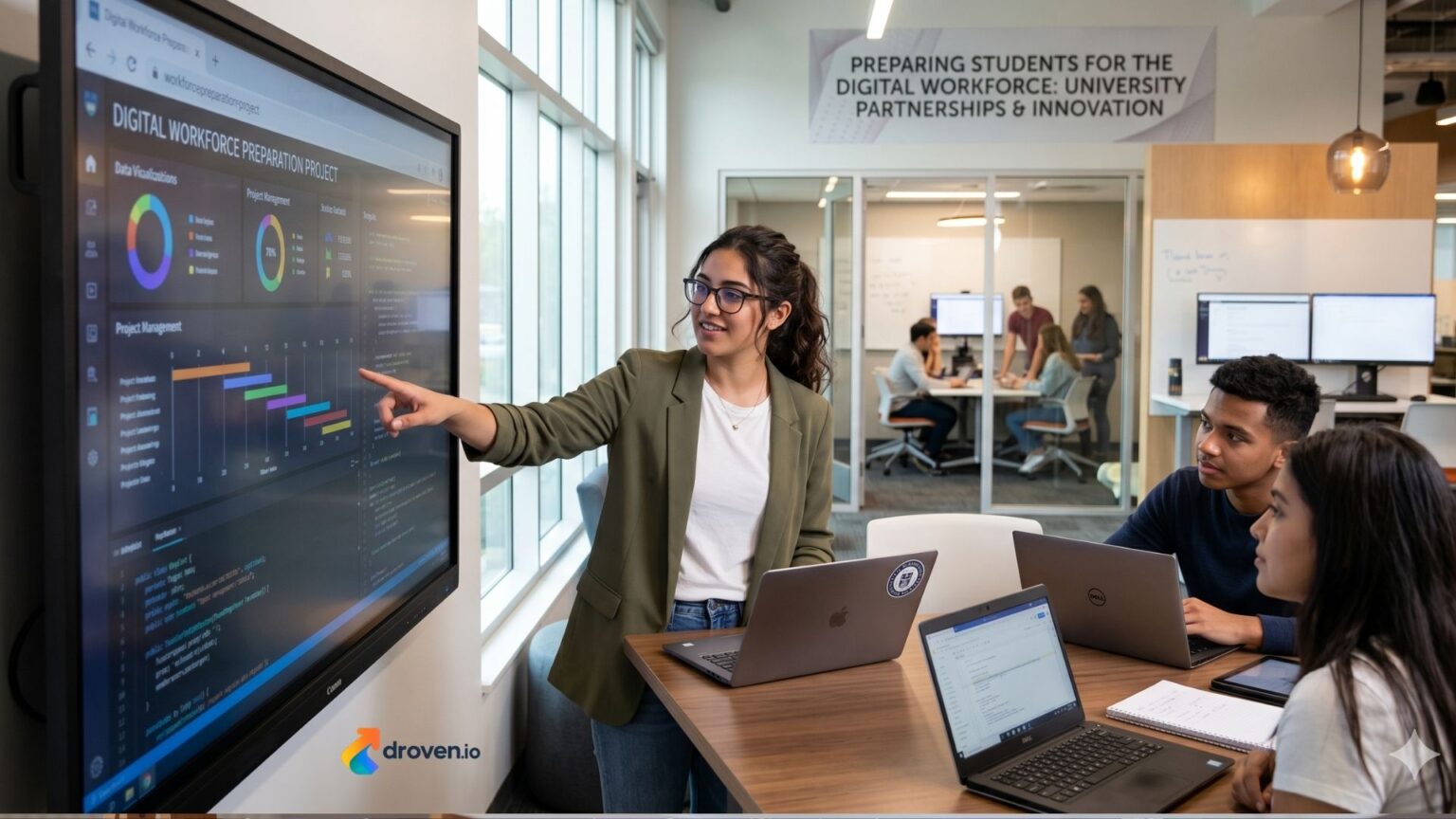
You notice it fast in modern workplaces. A younger employee pulls up a dashboard, fixes a broken process, and keeps talking like nothing happened while everyone else quietly tries to catch up. Colleges did not really prepare people for that kind of work environment, at least not for a long time. A lot of classrooms still feel stuck in another decade.
But things have shifted lately, mostly because remote work forced schools to adjust. Universities are under pressure now from employers, students, even parents, and that pressure is changing how courses are taught, how projects work, and what students are actually expected to know before graduating.
The Shift Toward Flexible Tech Education
For years, universities treated technology programs like isolated departments. Students learned theory, passed exams, and graduated with decent grades, yet many still struggled when they entered actual workplaces. Employers kept complaining about the same thing. Graduates understood concepts but froze during practical tasks. They could explain systems during interviews, but when handed real software tools, things got messy pretty fast. Schools started hearing that criticism over and over again, and eventually it became harder to ignore.
That is partly why flexible digital learning programs started growing so aggressively. Many students already work part-time jobs, deal with family responsibilities, or switch careers later in life, so rigid schedules stopped making sense. Programs built around practical software training became more common, especially in areas connected to cloud systems, cybersecurity, data handling, and network management. Many students now choose an information technology online degree program because it allows them to build technical skills while still staying connected to work experience at the same time. That balance matters more than universities used to admit.
Classrooms Are Starting to Look More Like Workplaces
A strange thing happened during remote learning years ago. Students became more familiar with digital tools than some instructors were. Universities had no choice but to adapt quickly, even if the process looked chaotic from the outside. Video conferencing platforms, collaborative documents, shared project boards, and cloud storage systems became part of everyday learning almost overnight.
Now, many schools continue using those systems because employers expect graduates to already know them. Group projects are often managed through workplace-style software instead of paper outlines and email chains. Students are expected to organize files properly, communicate in digital spaces, and troubleshoot issues without constant supervision. These are small habits, but they matter once someone enters a real office environment where nobody has time to explain basic workflow problems every afternoon.
Some professors still resist it a little, but universities are realizing that digital comfort is not optional anymore. It is becoming basic survival for many careers, even outside traditional tech jobs.
Employers Are Quietly Influencing Curriculum
Universities rarely admit how much employer pressure shapes degree programs now, but it happens constantly behind the scenes. Companies complain about skill gaps, advisory boards step in, and schools start adjusting courses little by little. Sometimes the changes are subtle. Sometimes, entire programs get rebuilt.
Cybersecurity is one example. A few years ago, many universities treated it like a specialized elective. Now it shows up everywhere because businesses are dealing with nonstop security issues, ransomware attacks, and data leaks. Companies want graduates who understand how digital systems fail, not just how they operate when everything works perfectly.
Data analysis has followed the same path. Students in marketing, healthcare, finance, and logistics are now expected to understand spreadsheets, reporting tools, and digital tracking systems. Even jobs that used to avoid technical work entirely are becoming tied to software in some way. Universities are reacting to that reality because ignoring it would make their graduates less employable, and schools track those numbers very closely.
Soft Skills Matter More Than Students Expect
A lot of students think digital work is mostly about technical knowledge. That assumption falls apart pretty quickly once internships begin. Employers constantly mention communication problems, poor collaboration, and a lack of adaptability. Universities have noticed this, too, although fixing it is harder than updating software labs.
That is why many programs now push students into group-based assignments that feel mildly annoying at times. It is intentional. Schools are trying to simulate workplace conditions where people have to coordinate deadlines, manage disagreements, and explain technical ideas to non-technical coworkers without sounding robotic or impatient.
Presentation skills are also receiving more attention. Students are often asked to explain projects in plain language because real clients and managers rarely speak in technical jargon. Somebody who understands systems deeply but cannot communicate clearly becomes difficult to work with, and universities are slowly becoming more honest about that reality.
Certifications and Degrees Are Starting to Blend Together
There used to be a cleaner separation between university education and industry certifications. One focused on academics, the other focused on job-specific training. That line has blurred a lot. Many universities now build certification preparation directly into coursework. Students graduate with both a degree and familiarity with industry-standard tools or exams. It saves time and makes graduates more attractive to employers who want people ready to contribute quickly.
Students are also more practical than they used to be. Tuition costs are high, job markets feel unstable sometimes, and people want evidence that their education connects to actual employment. Universities understand this pressure. Whether they like it or not, they are competing against bootcamps, self-paced learning platforms, and short certification programs that promise faster results.
That competition has changed the tone of higher education. Schools still talk about critical thinking and broad education, of course, but there is more focus now on measurable workplace skills because students keep asking the same uncomfortable question: “What exactly will this help me do after graduation?”
Digital Work Keeps Changing Faster Than Schools Can Move
Technology changes faster than universities usually can. By the time some courses get updated, students have already learned newer tools on their own through work, internships, or just messing around online. There is usually a gap somewhere, and schools know it.
Still, things are moving in a different direction now. Universities are paying more attention to how people actually work today, which means more collaboration, more digital systems, and constant adaptation instead of memorizing information once and forgetting it later. A degree is not really treated like a final destination anymore. It is more like a starting point, and most institutions were pushed into realizing that the hard way.
