
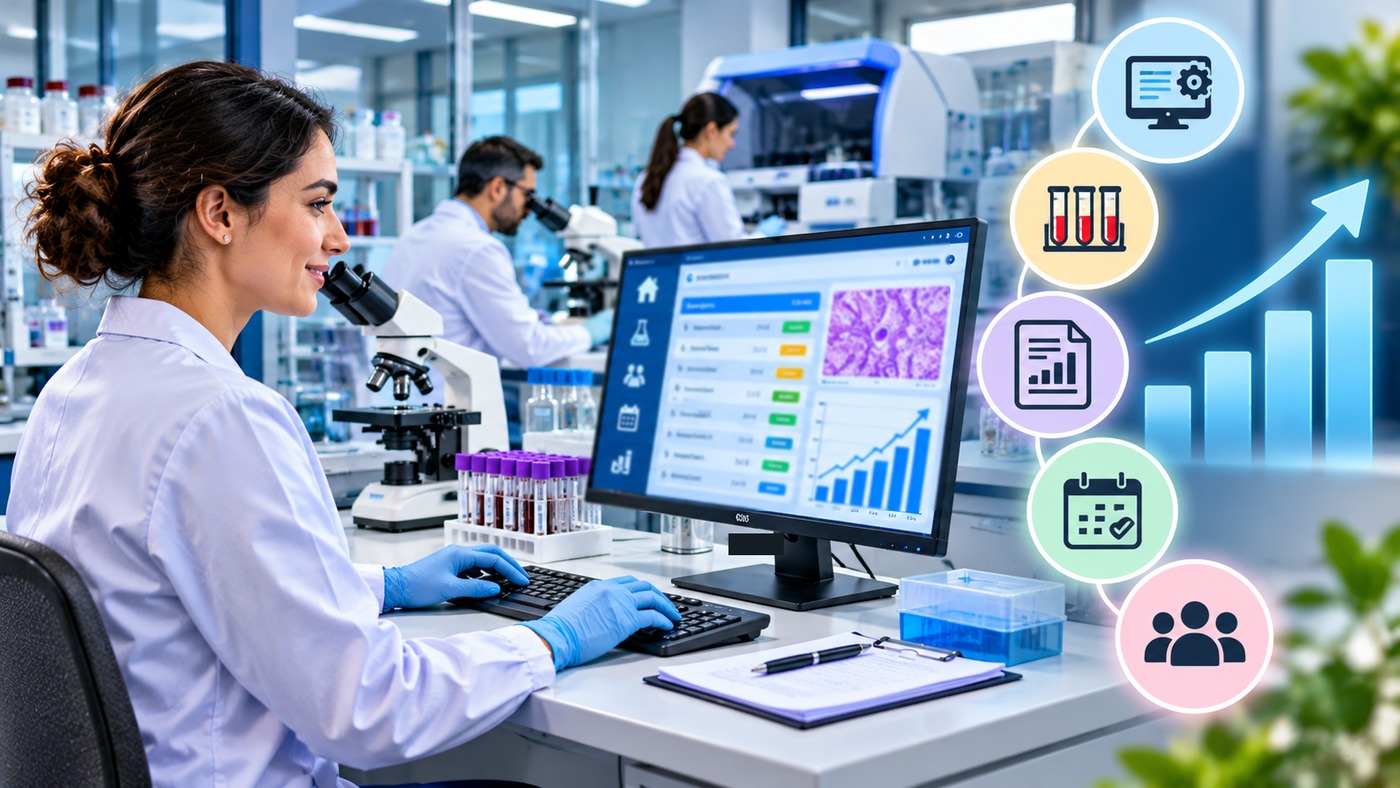
Growth puts a strange kind of pressure on an independent pathology lab. More referring physicians, more specimens and more payer contracts sound like good news, and they are. Yet the same growth exposes every weak point in the operation, from manual accessioning to scattered slide images to billing gaps that once seemed minor. Labs that scale well usually share one trait: they treat their software as the foundation of the business rather than an afterthought. Modern digital pathology software, built into the system that runs the lab, has become one of the clearest dividing lines between labs that grow smoothly and labs that stall.
Why Independent Labs Hit a Ceiling
Most independent labs start lean. A small team handles accessioning, grossing, histology, sign-out and billing with a mix of an aging LIS, spreadsheets and workarounds that only a few senior staff fully understand. That setup works at a certain volume. Past that point, it starts to crack.
The cracks tend to show up in predictable places:
- Specimens arrive faster than the front desk can accession them accurately
- Pathologists wait on glass slides moving between buildings or couriers
- Case data lives in one system while images live in another
- Billing staff chase missing information before claims can go out
- Adding a new client or location means weeks of IT work
None of these problems come from a lack of effort. They come from software that was never designed for the volume and complexity the lab now carries.
What Scaling Actually Requires
Scaling does not simply mean doing more of the same work faster. It means handling more cases without adding headcount at the same rate, keeping turnaround times steady as volume climbs, and protecting quality while new clients come on board.
That requires software that removes manual steps instead of just recording them. Barcode-driven specimen tracking cuts down on transcription errors. Rules-based case assignment spreads workload evenly across pathologists. Structured reporting templates speed up sign-out without sacrificing detail. Each improvement looks small on its own, but together they change how much work a team can absorb.
The Role of Digital Pathology Software
Digital pathology changes the math for independent labs in a big way. Once slides are scanned, a pathologist no longer needs to be in the same building as the glass. Cases can route to whoever has capacity, whether that person works down the hall, in another state or from home.
The catch is that many labs adopt digital pathology as a separate project with a separate vendor. Images end up in a standalone viewer, and someone has to match each slide to the right case in the LIS. That extra step creates the very risk digital pathology was supposed to reduce. Purpose-built digital pathology software solves this by putting the case and its slides in a single record, so the pathologist opens one system to review, diagnose and report.
Remote Sign-Out Opens New Doors
For a growing independent lab, remote sign-out does more than add convenience. It widens the hiring pool. A lab in a smaller market can bring on a subspecialist pathologist who lives elsewhere. It can also offer coverage across time zones and handle weekend or overflow volume without paying for on-site staff around the clock.
Remote work also helps labs serve new clients. A dermatology group two states away becomes a realistic prospect when slides can be read digitally and reports can flow back electronically the same day.
Interoperability Keeps Growth From Turning Into IT Debt
Every new referring practice brings its own EHR, order format and reporting preferences. Labs running older systems often treat each new interface as a custom project, which slows down onboarding and adds long-term maintenance costs.
Modern platforms handle interoperability as a core feature. HL7 and FHIR interfaces, instrument connections and scanner integrations should come standard, with a vendor team that has built them many times before. When a sales rep signs a new client, the lab should be able to start receiving orders in days or weeks, not months.
Cloud Infrastructure Removes the Server Room Problem
Independent labs rarely want to run their own data centers. On-premise servers need hardware refreshes, patching, backups and someone who knows how to fix them at 2 a.m. Digital pathology makes this harder, because whole slide images take up enormous amounts of storage.
A true SaaS platform shifts that burden to the vendor. Capacity grows as the lab grows, updates arrive without disruptive upgrade projects, and uptime becomes the vendor’s responsibility under a clear agreement. For a lab focused on expansion, that frees up both budget and attention.
Analytics Turn Volume Into Insight
As case counts rise, lab leaders need a clear view of what is happening across the operation. Which clients send the most volume? Where do cases sit the longest? Which pathologists are overloaded? Good software answers those questions with dashboards and reports instead of manual spreadsheet work.
Those insights drive smarter decisions about staffing, pricing, client outreach and capital investments like new scanners. Without them, leadership ends up guessing.
Choosing Software Built for Growth
When an independent lab evaluates platforms, a few questions separate tools built for growth from tools built for the status quo:
- Does the system handle digital slides natively, or does it depend on a separate viewer and vendor?
- Can it support multiple locations and specialties under one platform?
- Is it true SaaS, or legacy software hosted on a remote server?
- How long does a typical new client interface take to build?
- Does the vendor offer real implementation support from people who understand anatomic pathology?
Labs that ask these questions early avoid painful migrations later. A laboratory information system designed for scale gives a growing lab room to add clients, pathologists and specialties without rebuilding its foundation every few years. For labs focused on surgical, cytology and dermatopathology work, pathology lab software with these capabilities built in makes that growth far more manageable.
Growth Should Feel Like Momentum
The right software does not just keep up with an independent lab’s growth. It makes growth easier to pursue. With integrated digital pathology, flexible interfaces, cloud infrastructure and clear analytics, a lab can say yes to new opportunities with confidence instead of worrying about whether its systems will hold.
