
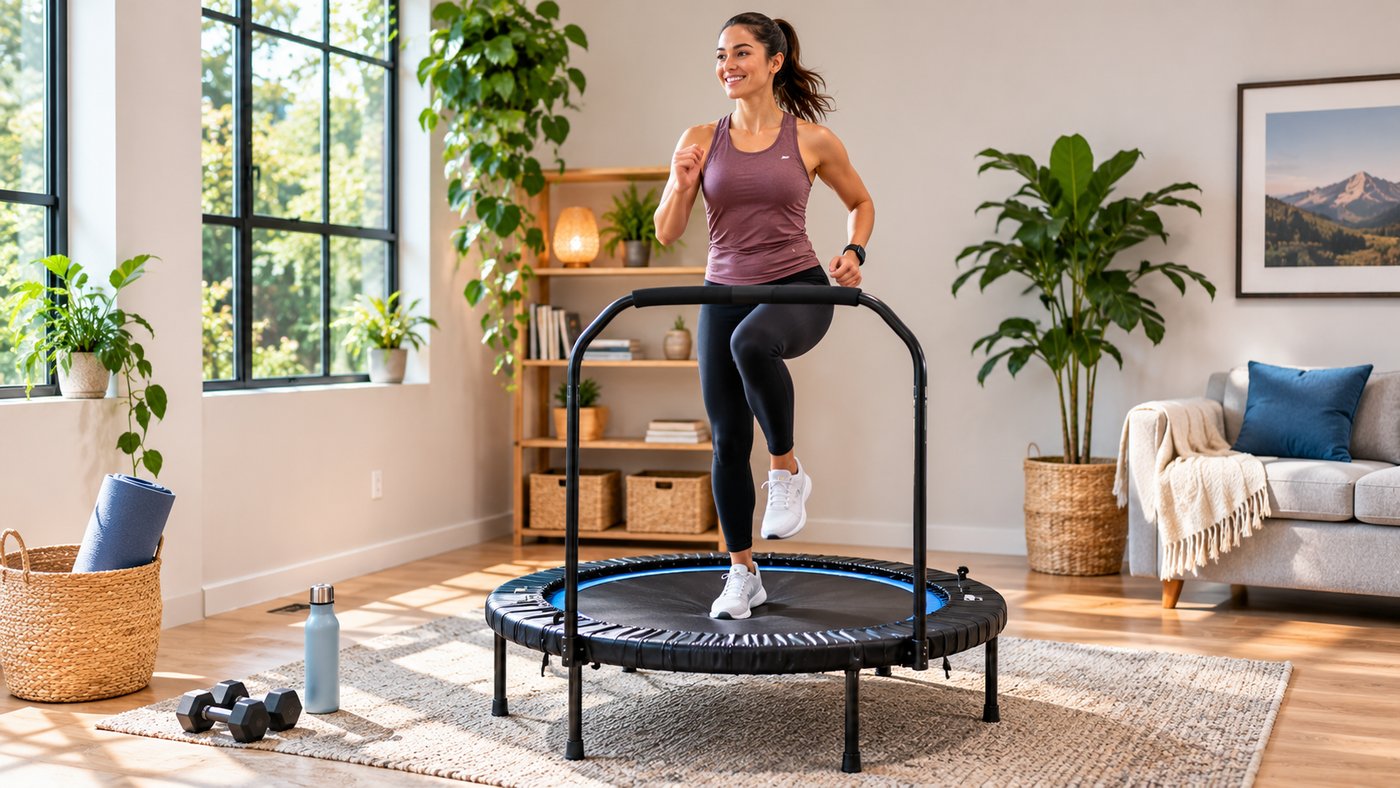
Staying active at home has become an important part of many people’s daily routines. Whether someone wants a convenient workout option, a compact piece of fitness equipment, or a recreational activity for older children, finding the right solution requires balancing available space, comfort, and safety. Traditional fitness machines can occupy considerable room, while outdoor exercise is sometimes limited by weather or scheduling.
An indoor trampoline offers a different approach to home activity by using a flexible jumping surface to support controlled bouncing movements. Depending on its design, it may be used for adult fitness exercises, coordination practice, or supervised recreation. Compact fitness rebounders are particularly popular because they fit into smaller home workout areas and provide an alternative to some conventional cardiovascular exercises.
However, trampolines are not risk-free. Falls, awkward landings, collisions, and unsuitable installation conditions can cause injuries. The safest purchasing decision begins with understanding the differences between recreational trampolines and adult fitness rebounders, reviewing product specifications, and following established safety guidance.
This comprehensive guide explains the available types of indoor trampolines, their potential benefits, essential buying considerations, setup requirements, maintenance practices, and important safety precautions.
What Is an Indoor Trampoline?
An indoor trampoline is a bouncing platform designed or approved for use within an enclosed space, such as a home gym, dedicated recreation room, or suitable exercise studio.
Most models include a sturdy supporting frame, flexible jumping mat, and a suspension system consisting of elastic cords or metal springs.
When a person applies downward force to the mat, the suspension system stretches and returns energy, creating a bouncing motion.
The characteristics of that movement depend on the trampoline’s size, mat tension, suspension design, and user.
How Indoor Trampolines Differ From Outdoor Models
Outdoor trampolines are often designed for larger jumping areas and may include protective enclosures.
Indoor models are usually more compact, although some recreational models require considerably more space than a typical room provides.
Fitness rebounders are generally intended for controlled exercises rather than high jumping.
A product marketed as a small trampoline is not automatically approved for indoor use. Its installation requirements and manufacturer instructions should always be checked.
Who Uses Indoor Trampolines?
An indoor trampoline may serve different purposes depending on its design.
Adults may use a fitness rebounder for low-intensity aerobic movements, balance exercises, or structured workouts.
Older children may use appropriately selected recreational equipment under direct adult supervision, although pediatric safety organisations advise against routine recreational trampoline use because of injury risks.
Some athletes also use specialised training equipment, but gymnastics-style activities require appropriate facilities and qualified supervision.
Types of Indoor Trampolines
Understanding the available designs helps buyers choose equipment suited to their intended activities.
Mini Fitness Rebounders
Fitness rebounders are small trampolines typically designed for one adult exercising at a time.
They often feature compact frames, relatively low jumping surfaces, and controlled suspension systems.
An adult may use a rebounder for gentle bouncing, marching, or coordinated movements.
These models are commonly considered for home fitness areas where full-size exercise equipment would be impractical.
Round Rebounder Trampolines
Round rebounders provide a circular jumping surface.
Their compact dimensions can make them easier to position in home workout spaces.
The actual usable jumping area is smaller than the full frame diameter, so buyers should review both measurements.
Hexagonal Fitness Trampolines
Hexagonal rebounders have a six-sided frame.
Some models provide a larger exercise surface than compact round alternatives.
This may be useful for certain controlled movements, although the equipment must still be used within its specified limits.
Rebounders With Handlebars
Some indoor fitness trampolines feature optional support handlebars.
These accessories may assist with balance and controlled exercise movements.
However, not every handlebar is designed to carry a person’s full body weight.
The manufacturer’s specifications should determine how the accessory may be used.
Compact Recreational Trampolines
Larger compact trampolines may be intended for jumping rather than structured fitness exercise.
They require more substantial horizontal and vertical clearance.
Before considering one for an indoor environment, buyers should confirm that the manufacturer approves the installation and that the room can accommodate every required safety clearance.
7 Essential Factors to Consider Before Buying an Indoor Trampoline
Purchasing a trampoline should begin with an evaluation of the intended user, available space, equipment design, and safety requirements.
These seven considerations provide a practical buying framework.
1. Choose the Right Trampoline Size
Size is one of the most important factors when selecting an indoor trampoline.
A compact model may be appropriate for exercise in a dedicated room, while a larger recreational trampoline can require more space than expected.
Measure the Available Floor Space
Before buying, measure the room’s length and width.
Account for furniture, doorways, walls, exercise accessories, and other objects.
The trampoline should not be positioned so close to nearby surfaces that a person could strike them during normal use or after losing balance.
Consider Ceiling Clearance
Vertical space is equally important.
A room with adequate floor space may still be unsuitable if the ceiling is too low.
Ceiling fans, hanging lights, exposed beams, and overhead storage can create additional hazards.
The required clearance depends on the trampoline’s intended use, jump height, manufacturer instructions, and applicable standards.
There is no universal household ceiling height that guarantees safe use.
Compare Frame and Jumping Area Measurements
A trampoline advertised as 44 inches wide does not necessarily provide a 44-inch jumping surface.
The frame, padding, and suspension system occupy part of the overall diameter.
For example, ACON’s FIT 44-inch round rebounder has a listed jumping area diameter of approximately 31 inches.
This distinction matters when selecting equipment for particular exercises.
Plan for Storage
Some rebounders can be moved between rooms, while others are intended to remain assembled.
Do not assume the legs fold simply because the trampoline is small.
Check the product’s storage dimensions and assembly requirements.
2. Evaluate Construction Quality and Stability
A well-built indoor trampoline should remain stable during its intended activities.
The frame, mat, suspension system, and supporting legs all influence performance.
Choose a Suitable Frame
Fitness trampolines commonly use metal frames designed to support specified loads.
Structural quality depends on material selection, connections, manufacturing tolerances, and the overall design.
Buyers should review the manufacturer’s load rating rather than relying only on visual appearance.
Inspect the Jumping Mat
The mat should be securely attached and appropriate for the expected use.
Look for clear information about material construction and replacement procedures.
A damaged or worn mat can create an injury risk.
Understand Weight Limits
Every trampoline has an intended operating capacity.
The user should remain within the manufacturer’s published limits.
For example, ACON lists a maximum user weight of 300 pounds for its FIT 44-inch rebounder.
Other models may have different limits.
A frame’s static load test result should not be mistaken for the permitted weight of a person jumping on it.
Check the Feet and Floor Contact
Non-slip feet can help reduce unwanted movement.
However, they must be used on suitable flooring and kept in good condition.
An unstable or uneven surface can affect equipment stability.
Review Warranty Information
Warranty terms can provide information about manufacturer support.
Check which components are covered and whether replacement mats, bungees, or other parts are available.
Long warranty periods do not remove the need for regular inspections.
3. Understand Springs and Bungee Suspension
The suspension system influences how an indoor trampoline responds to movement.
Two common approaches are metal springs and elastic bungee cords.
Metal Spring Systems
Traditional trampolines often use metal springs to connect the mat to the frame.
The bounce characteristics depend on spring design, tension, and the surrounding structure.
Metal springs require suitable guarding and regular inspection.
Bungee Cord Systems
Many adult fitness rebounders use elastic bungee cords.
These systems can provide controlled suspension and may produce less metallic noise than some conventional spring arrangements.
However, performance varies between models and materials.
Which System Is Better?
Neither design is automatically superior for every application.
Buyers should consider exercise requirements, comfort, durability, maintenance, and manufacturer specifications.
For example, someone seeking a controlled adult fitness workout may prefer a rebounder specifically engineered for low-height movements.
A person seeking recreational jumping requires a product designed and installed for that different purpose.
Inspect Suspension Components
Elastic cords and metal springs can deteriorate.
Look for unusual wear, damaged attachments, corrosion, or changes in tension.
Replace components according to the manufacturer’s instructions.
4. Prioritize Safety Features and Responsible Use
Safety is especially important because trampolines can cause serious injuries.
An indoor location does not eliminate the risks associated with bouncing.
Understand Medical Safety Guidance
The American Academy of Pediatrics advises against recreational trampoline use for children because of injury concerns.
Its public guidance states that children younger than six should not jump on trampolines.
The organisation also recommends that families choosing to allow older children to jump follow strict precautions.
Limit the Trampoline to One User
Multiple people jumping simultaneously can collide or create unpredictable changes in the mat’s movement.
Only one person should use the trampoline at a time.
This is especially important when users differ significantly in size or weight.
Avoid Flips and Somersaults
Somersaults and other high-risk maneuvers can result in serious head, neck, or spinal injuries.
They should not be attempted on ordinary home trampolines.
A fitness rebounder is not a substitute for specialised gymnastics equipment.
Provide Adult Supervision
Older children should not use recreational trampolines without direct adult supervision.
Supervision must be active rather than merely having an adult somewhere nearby.
Understand Enclosure Limitations
Safety nets and protective padding may reduce certain risks when properly designed and maintained.
However, they cannot prevent every injury.
Many trampoline injuries happen on the jumping surface itself.
A net should never be treated as proof that the equipment is completely safe.
5. Consider Fitness Goals and Exercise Comfort
An indoor trampoline may be useful for adults who want an alternative form of cardiovascular activity.
The most appropriate exercises depend on the product and the person’s physical capabilities.
Low-Impact Movement
Controlled rebounding can provide a different movement experience from jogging on a hard surface.
The flexible mat absorbs and returns some of the energy associated with each movement.
However, lower impact does not mean zero impact or zero injury risk.
Cardiovascular Activity
Repeated controlled movements can increase heart rate and contribute to physical activity.
Workout intensity depends on movement speed, duration, and individual fitness.
Coordination and Balance
Some rebounder exercises require maintaining posture while the surface moves beneath the feet.
These activities may challenge coordination and balance.
However, people with balance difficulties should not assume a trampoline is suitable without appropriate professional advice.
Exercise Variety
Depending on the model and manufacturer’s instructions, a fitness routine may include:
- Gentle controlled bouncing.
- Marching movements.
- Alternating foot movements.
- Low-height jogging motions.
- Simple coordination exercises.
The equipment should not be used for movements outside its intended purpose.
Start Gradually
Beginners should begin with short, controlled sessions.
People with recent injuries, significant joint problems, balance disorders, cardiovascular concerns, or other relevant medical conditions should seek guidance from an appropriate healthcare professional before starting.
6. Evaluate Noise and Home Compatibility
Noise can influence whether a trampoline is practical for indoor exercise.
This is particularly relevant for apartments, shared housing, and rooms above occupied spaces.
Understand Potential Noise Sources
Noise may come from the suspension system, frame movement, floor vibration, or the user’s landings.
Even a rebounder marketed as quiet can transmit vibrations through a building.
Consider Flooring
A suitable stable floor is essential.
Some manufacturers may permit specific protective flooring accessories.
However, a mat placed underneath the equipment must not interfere with its stability.
Respect Shared Living Spaces
People living in apartments should consider neighbours and building requirements.
A trampoline that produces little mechanical noise may still generate noticeable impact sounds through the floor.
Check Equipment Design
Bungee-supported rebounders may have different acoustic characteristics from spring-based systems.
However, actual noise depends on the complete product and the environment.
Test Before Committing
Where possible, inspect the model or review credible demonstrations.
Consider return policies and storage requirements if the equipment proves unsuitable for the intended room.
7. Compare Price, Maintenance, and Long-Term Value
The most expensive indoor trampoline is not automatically the best choice.
A suitable product should meet its intended purpose while offering dependable construction and appropriate support.
Compare the Complete Package
Some products include a handlebar, while others sell it separately.
Check the package contents before comparing prices.
Consider Replacement Parts
Mats, elastic cords, springs, and protective components may require replacement over time.
Availability of compatible parts can influence long-term costs.
Review Assembly Requirements
Some rebounders require more assembly than expected.
Read the manual before using the equipment.
Incorrect assembly can reduce stability and create unnecessary hazards.
Avoid Paying for Unnecessary Features
A small fitness rebounder may be adequate for an adult interested in controlled home workouts.
A larger recreational trampoline would not necessarily improve that experience.
Think About Long-Term Use
Consider whether the selected equipment will fit the intended routine, storage area, and available space over time.
A realistic purchase should reflect how often it will actually be used.
Indoor Trampoline vs. Fitness Rebounder: What’s the Difference?
Although the terms are sometimes used interchangeably, indoor trampolines and fitness rebounders can serve different purposes.
Intended Activity
A fitness rebounder is generally designed for controlled exercise movements.
A recreational trampoline may be designed to produce higher bouncing movements.
Equipment Size
Rebounders are commonly smaller and lower to the ground.
Recreational trampolines may have larger frames and require substantially more clearance.
Suspension Characteristics
Some fitness rebounders use elastic bungees to create a controlled exercise experience.
Recreational models may use metal spring systems.
Safety Considerations
Both types involve injury risks.
Their suitability depends on the intended user, manufacturer instructions, environment, and activity.
A product designed for adult fitness should not automatically be treated as a safe play device for young children.
ACON Indoor Trampoline Options for Home Use
ACON offers a range of compact trampolines and fitness rebounders through its US online store.
Its indoor collection includes several models designed for different activities and space requirements.
ACON FIT 44-Inch Round Rebounder
The FIT 44-inch round model is designed for compact home exercise.
According to ACON’s published specifications, it features a 44-inch frame diameter, a jumping area approximately 31 inches across, and a bungee suspension system.
The manufacturer lists a 300-pound user weight limit.
It is intended for indoor use.
ACON FIT 55-Inch Hexagon Rebounder
The FIT 55-inch hexagonal rebounder provides a larger footprint and exercise area.
It may appeal to adults looking for additional space for controlled fitness movements.
Buyers should measure the room and review the complete product specifications before choosing the larger model.
Rebounders With Active Handlebars
ACON offers selected rebounder packages with Active handlebars.
These accessories are intended to support specific fitness movements and balance-related exercises.
The handlebar must be used within the manufacturer’s stated limits.
Rebounders With Balance Handlebars
ACON also offers wider Balance handlebar options for certain rebounders.
These may provide another hand position for appropriately controlled workouts.
ACON specifically cautions that exercise handlebars are not designed to support the user’s entire body weight.
ACON Air 6-Foot Round Trampoline
The ACON Air 6-foot model is a compact recreational trampoline that the manufacturer describes as suitable for certain indoor or outdoor settings.
However, its six-foot diameter and bouncing characteristics mean it requires considerably more space than a small fitness rebounder.
ACON lists a 220-pound user weight limit for this model.
It should only be used in an environment that satisfies its complete instructions and safety requirements.
Choosing Between ACON Models
Someone primarily interested in adult workouts may prefer comparing the 44-inch and 55-inch FIT rebounders.
For recreational use, the intended user’s age, injury risks, jumping activity, and installation conditions require particular attention.
Product availability, included accessories, and prices should be checked directly before purchasing.
How to Set Up an Indoor Trampoline at Home
Correct installation is essential for stability and safe operation.
Select an Appropriate Room
Choose a room with sufficient clearance in every direction.
Avoid positioning the trampoline near windows, shelving, sharp furniture corners, or other hazards.
Check Floor Stability
The supporting floor should be level, stable, and suitable for the equipment’s loads.
Do not install the trampoline on an unstable platform.
Follow Assembly Instructions
Use the instructions supplied with the exact model.
Confirm that every leg, frame connection, mat attachment, and suspension component is correctly installed.
Inspect Before First Use
Check for loose connections, damaged parts, and unusual movement.
Do not use the trampoline if any critical component appears defective.
Establish Usage Rules
Explain who may use the equipment and which activities are permitted.
Restrict access when the trampoline is not in use, particularly where young children are present.
Simple Indoor Trampoline Workouts for Adults
A suitable adult fitness rebounder can support a variety of controlled activities.
These examples are intended for healthy adults using equipment specifically approved for fitness training.
Gentle Bouncing
Begin with both feet on the mat and use small, controlled movements.
Focus on maintaining balance rather than jumping high.
Marching in Place
Alternate lifting each foot while maintaining an upright posture.
Keep the movements slow enough to remain stable.
Controlled Jogging Motions
Some fitness rebounders support low-height jogging exercises.
Follow the manufacturer’s recommendations and increase intensity gradually.
Coordination Exercises
Simple alternating movements may help develop familiarity with the surface.
Avoid complicated combinations until basic balance and control are established.
Cool-Down Movements
Reduce movement intensity gradually before stepping off.
Ensure the trampoline has stopped moving and use a stable method of exiting.
These activities are not appropriate for everyone. A trampoline should not be used as an unsupervised rehabilitation device.
Common Indoor Trampoline Buying Mistakes
Several purchasing mistakes can make equipment unsuitable or increase injury risks.
Ignoring Ceiling Height
A trampoline may fit on the floor while providing insufficient overhead space.
Always check vertical clearance.
Buying the Wrong Type
A recreational jumping trampoline and an adult fitness rebounder are not interchangeable products.
Choose based on the intended activity.
Overlooking Weight Limits
Using equipment beyond its rated capacity can compromise performance and safety.
Assuming Safety Features Eliminate Injuries
Padding, handlebars, and enclosures have limitations.
Safe operating practices remain necessary.
Choosing a Model Without Available Parts
Replacement component availability can affect the equipment’s usable lifespan.
Ignoring Manufacturer Instructions
Improper assembly, unsuitable surfaces, or unapproved modifications can create avoidable hazards.
Letting Multiple People Jump Together
Simultaneous jumping increases the chance of collisions and unpredictable mat movements.
Only one user should be on the trampoline at a time.
How to Maintain an Indoor Trampoline
Routine maintenance helps identify wear before it becomes a more serious problem.
Inspect the Frame
Look for deformation, damaged connections, corrosion, or other visible problems.
Check the Mat
Examine the jumping surface for tears, excessive stretching, or damaged attachment points.
Examine Suspension Components
Check springs or bungees for wear and damage.
Replace components only with suitable approved parts.
Keep the Surface Clean
Remove dust and dirt using the cleaning methods recommended by the manufacturer.
Avoid harsh chemicals that may affect the mat or suspension materials.
Store Correctly
If the equipment must be moved or stored, follow the manufacturer’s instructions.
Do not assume it can be folded or dismantled without following the prescribed procedure.
Replace Damaged Parts Promptly
Never continue using a trampoline with known structural or protective-component damage.
Frequently Asked Questions
1. What is an indoor trampoline used for?
An indoor trampoline can be used for controlled adult fitness exercises or certain recreational activities, depending on its design. Compact rebounders are commonly intended for home workouts, while larger models require more space and different safety considerations.
2. Are indoor trampolines safe for children?
Trampolines carry significant injury risks. The American Academy of Pediatrics advises against recreational trampoline use and states that children under six should not jump. Families allowing older children to use trampolines should follow strict precautions, including supervision and one jumper at a time.
3. Can an indoor trampoline help with fitness?
A fitness rebounder can provide an option for controlled aerobic movement, coordination exercises, and physical activity. Results depend on exercise intensity, duration, and individual abilities. It is not suitable for every person or medical condition.
4. How much space do I need for an indoor trampoline?
Space requirements depend on the specific model, user, and intended activity. Buyers must consider overall frame dimensions, surrounding clearance, ceiling height, and any nearby hazards. The manufacturer’s installation instructions should determine minimum requirements.
5. What is the difference between spring and bungee trampolines?
Spring trampolines use metal springs to create the bouncing action, while bungee models use elastic cords. Each design has different movement characteristics, maintenance needs, and performance qualities. The better option depends on the intended use and the specific product.
6. Which ACON indoor trampoline is best for home workouts?
ACON’s FIT 44-inch round rebounder may suit compact adult workout areas, while the FIT 55-inch hexagon model provides a larger exercise footprint. Optional handlebars are available for selected models. Buyers should compare room dimensions, user weight limits, and intended exercises before selecting a product.
Conclusion
An indoor trampoline can provide an engaging way for adults to incorporate controlled movement into a home fitness routine. Choosing suitable equipment requires attention to size, construction, suspension type, floor stability, and available clearance. Recreational trampoline use presents important injury risks, particularly for children, so medical safety guidance and manufacturer instructions should never be overlooked. With careful selection, appropriate supervision, and regular maintenance, buyers can make more informed decisions about whether a trampoline belongs in their home.
