
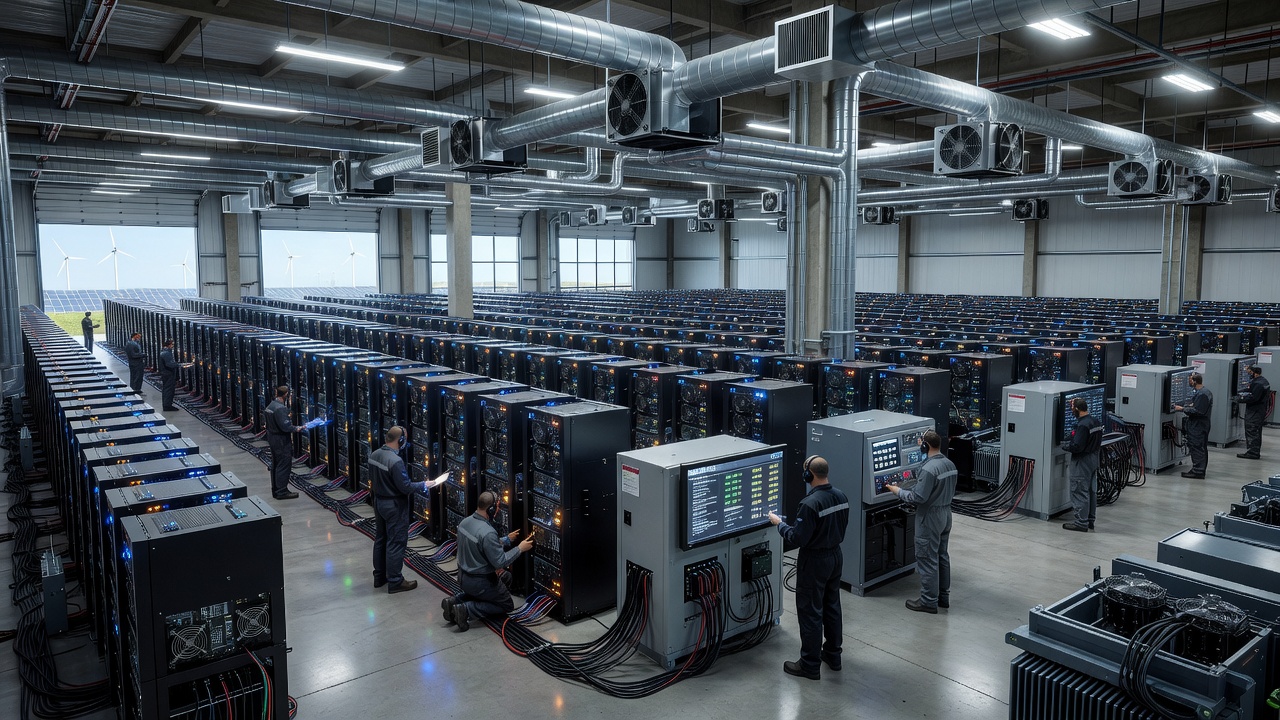
The rapid expansion of cryptocurrency mining and artificial intelligence has created an unprecedented demand for computing infrastructure across the United States. Both industries require enormous amounts of processing power, making electricity one of their most valuable resources. As more companies build large-scale facilities, the conversation around energy availability has become increasingly important. Understanding what happens Inside a Texas Bitcoin Mine provides valuable insight into how digital infrastructure is evolving and why miners and AI companies are competing for access to the same electrical grid.
Texas has emerged as one of the world’s leading locations for industrial Bitcoin mining because of its competitive electricity market, growing renewable energy capacity, and large-scale infrastructure. At the same time, global investment in artificial intelligence has accelerated the construction of AI data centers that also consume significant amounts of electricity. This growing demand has sparked debates among utilities, policymakers, technology companies, and energy providers about how future grid capacity should be allocated.
While Bitcoin mining and AI computing serve very different purposes, they share one critical requirement: reliable, affordable electricity. As both industries continue to expand, balancing grid stability with increasing computational demand has become one of the defining infrastructure challenges of 2026.
In this guide, we’ll take a closer look at what happens inside a Texas Bitcoin mine, how mining facilities operate, why AI is changing the energy landscape, and how both industries are adapting to an increasingly competitive power market.
Inside a Texas Bitcoin Mine: How Modern Mining Facilities Operate
Unlike traditional mining operations that extract physical minerals from the ground, a Bitcoin mine is essentially a specialized data center filled with highly specialized computers known as ASIC (Application-Specific Integrated Circuit) miners.
Walking inside a Texas Bitcoin mine, you would typically find thousands of mining machines arranged in long rows within climate-controlled buildings. These machines operate around the clock, performing cryptographic calculations that help validate Bitcoin transactions and secure the blockchain network.
A modern mining facility generally includes:
- ASIC mining hardware
- Industrial electrical systems
- Cooling and ventilation equipment
- High-speed networking infrastructure
- Monitoring software
- Fire suppression systems
- Security controls
- Maintenance workstations
Because mining hardware runs continuously, every aspect of the facility is designed to maximize operational efficiency while minimizing downtime.
Why Texas Became a Global Bitcoin Mining Hub
Understanding why operators continue investing inside a Texas Bitcoin mine begins with examining the state’s energy infrastructure.
Several factors have contributed to Texas becoming a preferred destination for industrial mining.
Competitive Energy Markets
Texas operates one of the largest competitive electricity markets in North America. This gives many industrial consumers multiple purchasing options depending on their location, provider, and operational strategy.
Mining companies often evaluate electricity pricing carefully because energy represents one of their largest operating expenses.
Expanding Renewable Energy
Texas is one of the country’s largest producers of wind energy and continues expanding solar generation capacity.
Although individual mining facilities use different electricity procurement strategies, renewable generation has become an increasingly important part of the state’s overall energy mix.
Available Industrial Land
Large-scale mining operations require significant space for electrical equipment, cooling infrastructure, and future expansion.
Many regions within Texas offer industrial land suitable for these developments.
Infrastructure Growth
Ongoing investment in substations, transmission systems, and industrial facilities has supported continued digital infrastructure expansion throughout the state.
How Bitcoin Mining Consumes Electricity
Electricity powers every function inside a Texas Bitcoin mine.
Mining machines perform trillions of mathematical calculations each second while continuously communicating with the Bitcoin network.
Energy consumption supports:
- Mining hardware
- Cooling systems
- Network equipment
- Lighting
- Security infrastructure
- Facility management systems
The amount of electricity required depends on:
- Number of mining machines
- Equipment efficiency
- Cooling technology
- Ambient temperature
- Facility design
Modern operators continuously monitor power consumption to improve operational efficiency.
Why AI Data Centers Are Increasing Electricity Demand
Artificial intelligence has become another major consumer of computing infrastructure.
Unlike Bitcoin mining, AI systems process enormous datasets used for machine learning, scientific computing, language models, cloud services, and enterprise applications.
Large AI facilities often contain thousands of advanced GPUs operating simultaneously.
Their workloads require:
- Continuous power availability
- High-performance cooling
- Massive networking capacity
- Advanced storage infrastructure
As AI investment grows globally, utilities are seeing significant increases in projected electricity demand.
Inside a Texas Bitcoin Mine vs AI Data Centers
Although both industries operate large computing facilities, their workloads differ considerably.
Bitcoin mining performs repetitive cryptographic calculations to secure blockchain transactions.
AI facilities execute complex computational tasks involving training, inference, data processing, and cloud-based applications.
Despite these differences, both require:
- Reliable electricity
- Industrial-scale cooling
- High-capacity substations
- Fiber connectivity
- Skilled technical staff
This overlap is creating increasing competition for suitable development locations.
Why Grid Power Has Become a Competitive Resource
Electricity demand is growing faster than many existing grids were originally designed to support.
Several factors contribute to this challenge.
Expanding Industrial Demand
Bitcoin mining, AI, manufacturing, and electrification projects are all increasing demand for reliable electricity.
Transmission Limitations
Building new transmission infrastructure often requires years of planning, permitting, and construction.
Regional Capacity Constraints
Some regions experience limited available electrical capacity despite strong interest from industrial developers.
Infrastructure Investment
Utilities continue investing in grid modernization, but expansion requires significant capital and long-term planning.
How Bitcoin Miners Respond to Grid Demand
One characteristic that distinguishes Bitcoin mining from many other energy-intensive industries is operational flexibility.
Some mining companies can temporarily reduce or pause mining activity during periods of high electricity demand if they participate in applicable utility or grid management programs. Participation depends on the operator, contractual agreements, and regional electricity market rules.
By adjusting power consumption during peak demand, certain mining facilities may help reduce pressure on the electrical grid while resuming operations when capacity becomes more readily available.
This operational flexibility has become an important topic when discussing the future of energy-intensive computing.
Energy Efficiency Inside a Texas Bitcoin Mine
Improving efficiency has become a major priority for mining operators.
Modern facilities continuously monitor power usage, equipment performance, and environmental conditions to maximize productivity while reducing unnecessary energy consumption.
Several improvements have become common inside a Texas Bitcoin mine.
Next-Generation ASIC Miners
New generations of ASIC mining hardware are designed to deliver greater computational performance while improving energy efficiency compared to older equipment.
Although performance varies by model, operators often upgrade hardware to improve operational efficiency over time.
Intelligent Power Management
Many facilities use advanced monitoring software to analyze:
- Power consumption
- Machine uptime
- Hash rate performance
- Electrical load distribution
- Equipment temperatures
Real-time monitoring helps operators identify inefficiencies before they affect production.
Improved Cooling Systems
Cooling represents another significant operating expense.
Mining facilities increasingly use advanced cooling technologies such as:
- High-efficiency air cooling
- Evaporative cooling
- Immersion cooling
- Liquid cooling
The appropriate solution depends on climate, facility design, and equipment configuration.
The Role of Artificial Intelligence in Mining Operations
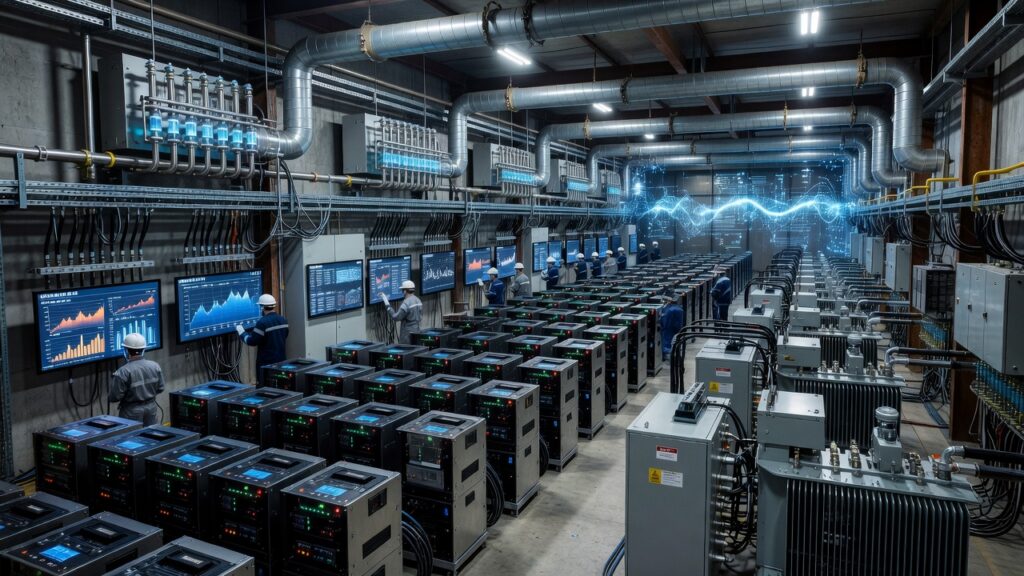
Ironically, artificial intelligence is also helping improve Bitcoin mining.
Many operators now use AI-powered monitoring systems to analyze equipment performance and identify maintenance needs before failures occur.
Artificial intelligence supports:
- Predictive maintenance
- Energy optimization
- Performance analytics
- Equipment diagnostics
- Environmental monitoring
- Operational forecasting
Rather than replacing mining operations, AI is becoming another tool that helps operators improve efficiency inside a Texas Bitcoin mine.
Infrastructure Challenges Facing Both Industries
Despite rapid technological advancement, both AI companies and cryptocurrency miners face similar infrastructure challenges.
Electrical Capacity
Access to sufficient electricity remains one of the largest barriers to expansion.
Large facilities often require dedicated substations and significant transmission capacity before construction can begin.
Skilled Workforce
Operating industrial computing facilities requires professionals with expertise in:
- Electrical engineering
- Mechanical engineering
- HVAC systems
- Data center operations
- Network administration
- Equipment maintenance
Demand for these professionals continues to increase across both industries.
Supply Chain Constraints
Global demand for specialized computing hardware has increased pressure on manufacturing and supply chains.
Mining hardware, GPUs, transformers, cooling equipment, and electrical components may all experience varying lead times depending on market conditions.
Environmental Considerations
As electricity demand increases, environmental sustainability remains an important topic.
Many operators continue evaluating opportunities to improve energy efficiency through better equipment, optimized facility design, and responsible infrastructure planning.
Environmental strategies may include:
- Improving cooling efficiency
- Reducing equipment downtime
- Evaluating renewable energy contracts where available
- Monitoring energy consumption
- Modernizing infrastructure
The environmental impact of any individual mining operation depends on numerous factors, including electricity sources, regional grid conditions, equipment efficiency, and operational practices.
How AI Is Changing the Future of Grid Planning
The rapid expansion of AI data centers is encouraging utilities to rethink long-term infrastructure planning.
Future investment may include:
- New transmission lines
- Larger substations
- Battery energy storage
- Grid modernization
- Smart demand management
- Improved renewable integration
These investments are intended to support growing electricity demand from multiple industries while maintaining grid reliability.
Future Trends Inside a Texas Bitcoin Mine
The future inside a Texas Bitcoin mine will likely focus on greater efficiency rather than simply increasing computing capacity.
Several trends are expected to influence mining operations over the coming years.
Higher Hardware Efficiency
Mining manufacturers continue developing more efficient ASIC hardware capable of delivering improved computational performance while reducing electricity consumption.
Greater Automation
Automation is expected to simplify monitoring, diagnostics, maintenance scheduling, and operational management across large mining facilities.
Smarter Cooling Technologies
Advanced cooling systems may improve equipment longevity while reducing energy used for thermal management.
Increased Grid Collaboration
Some mining operators may continue participating in demand response or other grid management initiatives where available, depending on local market structures and operational agreements.
Improved Digital Infrastructure
Investment in fiber connectivity, electrical systems, and industrial facilities will continue supporting the growth of both cryptocurrency mining and AI computing.
Best Practices for Modern Mining Facilities
Operators seeking long-term operational success often prioritize several key practices.
- Invest in energy-efficient hardware.
- Monitor equipment continuously using advanced analytics.
- Perform preventive maintenance on mining systems.
- Optimize airflow and cooling performance.
- Review electricity consumption regularly.
- Plan infrastructure upgrades for future expansion.
- Maintain cybersecurity across operational networks.
- Train technical staff on evolving equipment and safety procedures.
These practices help improve operational reliability while supporting efficient resource management.
Conclusion
Understanding Inside a Texas Bitcoin Mine provides valuable insight into how industrial cryptocurrency mining has evolved into a sophisticated, technology-driven sector that depends heavily on efficient energy management. As artificial intelligence continues driving unprecedented demand for electricity and computing infrastructure, both Bitcoin miners and AI data centers are competing for many of the same resources, including grid capacity, industrial land, cooling systems, and skilled technical talent. At the same time, advances in mining hardware, automation, predictive maintenance, and cooling technologies are helping operators improve efficiency while adapting to changing market conditions.
The future of Inside a Texas Bitcoin Mine will likely be shaped not only by cryptocurrency markets but also by broader developments in energy infrastructure, artificial intelligence, and digital computing, making this intersection one of the most important technology and infrastructure discussions of the coming decade.
FAQs
What happens Inside a Texas Bitcoin Mine?
Inside a Texas Bitcoin Mine, thousands of specialized ASIC mining machines operate continuously to validate Bitcoin transactions while advanced cooling systems, electrical infrastructure, networking equipment, and monitoring software work together to maintain efficient operations.
Why is Texas popular for Bitcoin mining?
Texas offers a competitive electricity market, expanding renewable energy resources, available industrial land, and infrastructure that supports large-scale computing facilities.
Why are AI data centers and Bitcoin miners competing for electricity?
Both industries require substantial computing power, creating increased demand for electricity, transmission infrastructure, cooling systems, and suitable industrial development sites.
Does every Bitcoin mining facility participate in grid demand response programs?
No. Participation depends on the mining company, electricity provider, contractual arrangements, and regional market rules. Not all facilities take part in these programs.
How is artificial intelligence helping Bitcoin mining?
Artificial intelligence is being used to support predictive maintenance, operational monitoring, equipment diagnostics, and energy optimization within some mining facilities.
What does the future look like Inside a Texas Bitcoin Mine?
The future Inside a Texas Bitcoin Mine is expected to include more efficient mining hardware, greater automation, advanced cooling technologies, smarter energy management, and continued integration with modern digital infrastructure.
