
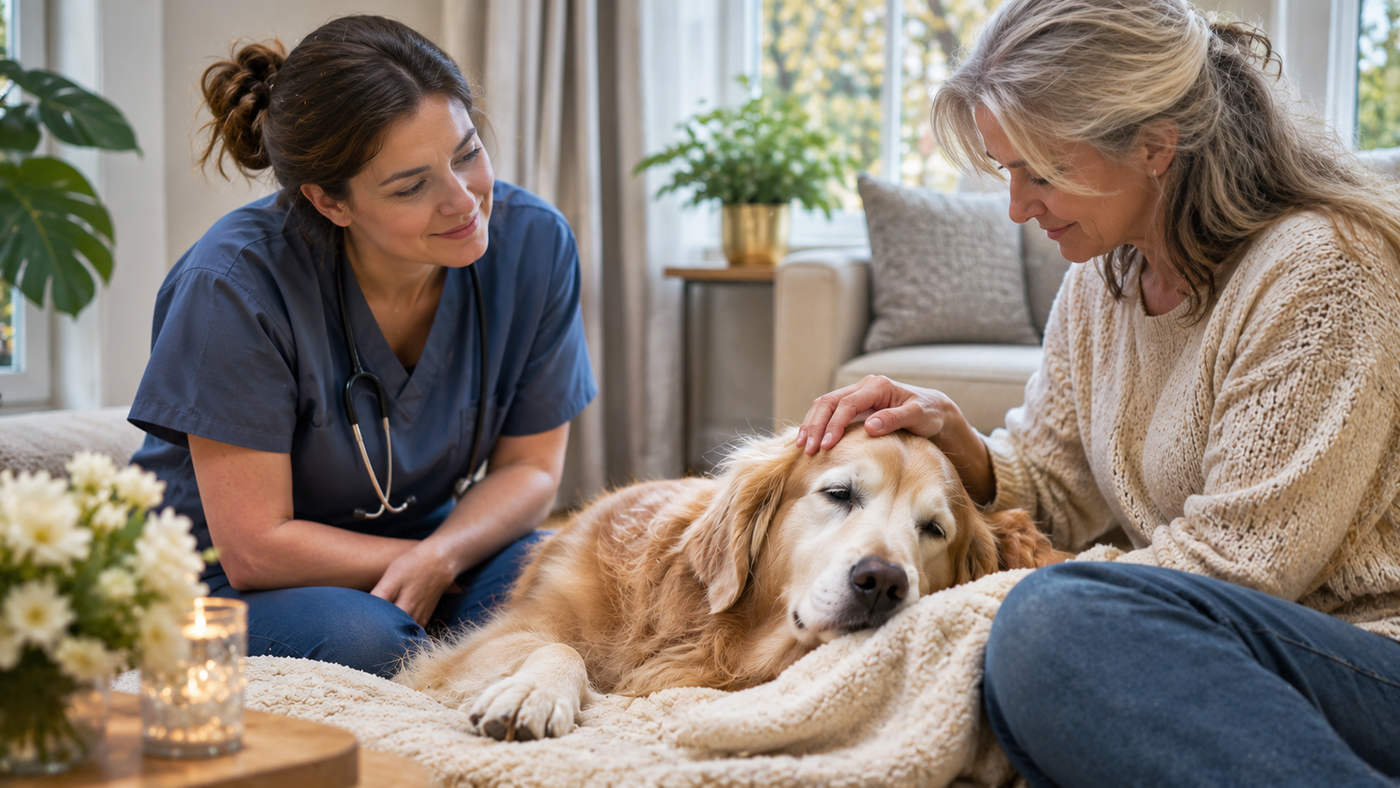
Saying goodbye to a beloved animal is among the most difficult experiences a family can face. When an older dog or cat is living with a serious illness, persistent pain, or declining mobility, families often want a calm setting in which to discuss what comes next. Lakeside’s in-home pet euthanasia service offers a veterinarian guided option for families in Guelph and surrounding Ontario communities who are considering a peaceful farewell at home. Understanding the medical decisions, appointment process, and aftercare choices can help people prepare without feeling pressured toward a particular outcome.
No checklist can determine the right time for every pet. A veterinarian considers the diagnosis, comfort, prognosis, response to treatment, and everyday life. Some pets benefit from medication adjustments or hospice care; others suffer despite treatment. This guide explains Lakeside’s in-home pet euthanasia service and seven practical considerations for informed, compassionate planning.
What Is Lakeside’s In-Home Pet Euthanasia Service?
Lakeside Mobile Veterinary Services provides companion animal end of life care in Ontario, including quality of life consultations, home euthanasia, aftercare coordination, and keepsakes. Its published profile identifies Dr. Laura Rooney as an Ontario Veterinary College graduate with additional training in peaceful euthanasia. The practice serves Guelph and nearby communities such as Kitchener, Waterloo, Cambridge, Fergus, and Elora. Confirm coverage for your particular address.
Lakeside’s in-home pet euthanasia service brings veterinary guidance into familiar surroundings. A favourite resting place or the quiet presence of family can make an emotionally difficult appointment less disruptive. Home care does not replace medical assessment; it offers another setting for professional care when clinically appropriate.
How Home Visits Differ From Clinic Appointments
A clinic is appropriate for diagnostics, intensive treatment, or urgent stabilization. Home visits may benefit animals distressed by travel or struggling with mobility. Families can also control lighting, noise, and who attends.
Neither setting is automatically better for every pet. A distressed animal requiring emergency intervention needs immediate veterinary attention, not a delayed mobile appointment. Families considering Lakeside’s in-home pet euthanasia service should discuss the animal’s present condition and whether a home visit is appropriate and available.
How to Know When End of Life Care Should Be Discussed
Age alone is not a reason to choose euthanasia. What matters is whether the pet can still experience adequate comfort and meaningful daily activities, and whether treatment offers a reasonable prospect of improvement. Appetite, hydration, breathing, movement, hygiene, sleep, social engagement, and pain control all contribute to this assessment.
An occasional loss of appetite may have a treatable cause. Repeated breathing difficulties, uncontrolled pain, or inability to rest despite treatment deserve prompt attention. Record changes rather than interpreting one behaviour alone.
Recognizing Changes in Quality of Life
Observe whether the animal can rise, walk to food or water, eliminate comfortably, and settle without obvious distress. Notice whether favourite interactions still seem enjoyable. Some cats become withdrawn when unwell, while dogs may pace, pant, or resist handling. None of these behaviours is diagnostic by itself; they are reasons to seek professional assessment.
Lakeside’s in-home pet euthanasia service may follow a quality of life consultation, but seeking advice does not commit anyone to euthanasia. Discuss pain management, treatment adjustments, likely progression, and signs that require reassessment.
A Simple Way to Prepare for the Veterinary Conversation
Keep a brief diary of eating, drinking, mobility, sleep, breathing, and the activities your pet still enjoys. Record medication changes and good days as well as difficult ones. Bring specific questions about likely recovery, what can improve comfort, and which warning signs require urgent treatment. Your observations provide context, while the veterinarian supplies the clinical interpretation.
7 Compassionate Considerations Before Planning a Home Farewell
Families evaluating Lakeside’s in-home pet euthanasia service can approach the decision in manageable stages. These seven considerations address medical, practical, and emotional needs.
1. Begin With an Individual Veterinary Assessment
The first step is discussing the pet’s health with a licensed veterinarian. Explain the diagnosis, current treatment, recent changes, and what the animal can still do comfortably. Ask whether there are realistic options for relieving symptoms or improving quality of life. A recommendation should consider the whole animal, not simply a date on the calendar or a single difficult day.
Lakeside Mobile Veterinary Services describes quality of life consultations as part of its end of life care. This makes Lakeside’s in-home pet euthanasia service relevant to families who need support understanding their choices before scheduling a final appointment. If your animal’s regular veterinarian already knows the medical history, sharing relevant records can also help maintain continuity.
Questions That Support Informed Consent
Ask what indicates suffering, which treatments remain reasonable, and how quickly the condition might change. Request explanations of unfamiliar terms and the limits of each option.
2. Choose a Comfortable Space for Your Pet
For a home visit, select a space where the pet naturally relaxes. That may be a living room rug, a bed beside a sunny window, or a quiet corner near familiar people. Provide a clean, supportive blanket and keep the room at a comfortable temperature. Avoid rearranging the environment so dramatically that the pet becomes anxious.
When preparing for Lakeside’s in-home pet euthanasia service, think about accessibility for the veterinarian as well as comfort for the animal. Ensure there is adequate light and room to work safely without forcing a painful animal to move unnecessarily. A calm setting does not need to look perfect.
3. Decide Who Wants to Be Present
Some people want to hold their pet or sit close throughout the appointment. Others prefer to say goodbye beforehand and step away during the procedure. Both responses are valid. Presence should be a choice, not a test of devotion. Invite only the people whose presence will support a calm experience for the animal.
Families choosing Lakeside’s in-home pet euthanasia service can discuss participation ahead of time. Explain to children in age appropriate words that death means the pet will not return. Avoid describing euthanasia as ordinary sleep, which may cause confusion.
Including Other Household Pets
Another dog or cat may remain nearby if that is safe and unlikely to create disruption. Some families allow surviving pets a brief opportunity to see or smell the body afterward. Reactions vary, and no approach guarantees an easier grieving process. Ask what is practical for each animal.
4. Understand What the Veterinary Procedure Involves
Families often worry about whether their pet will feel frightened or uncomfortable. An experienced veterinarian should explain the process, obtain informed consent, and assess the pet’s condition before proceeding. Lakeside describes a sedation first approach for its home euthanasia appointments. The veterinarian then administers the euthanasia medication once the animal is appropriately relaxed or unconscious.
The exact technique depends on veterinary judgment and the animal’s condition. Sedative administration can involve a brief needle sensation, and individual animals may respond differently. The purpose is to minimise fear and discomfort. With Lakeside’s in-home pet euthanasia service, the family can ask what to expect at each stage and whether they may comfort the pet throughout.
Understanding Normal Physical Responses
After death, an animal may occasionally take a reflexive breath, twitch, or release the bladder or bowels. These involuntary changes can be upsetting if they are unexpected, but they do not necessarily indicate awareness or suffering. The veterinarian confirms death and can explain what has happened. Families should feel able to ask questions before, during, and after the appointment.
5. Review Timing and Emergency Alternatives
If the pet is reasonably stable, some families have time to plan a visit around important family members. But an appointment should never be delayed merely to create an ideal farewell when the animal is experiencing serious distress. Difficulty breathing, repeated collapse, uncontrolled seizures, major bleeding, or severe unrelieved pain can require immediate emergency veterinary care.
Lakeside’s in-home pet euthanasia service is a planned mobile service, not a substitute for an emergency hospital. Confirm appointment availability and what to do if your pet deteriorates while waiting. Keep the contact details for a nearby emergency veterinary clinic accessible, and ask your veterinarian which changes should trigger an urgent assessment.
6. Discuss Aftercare Before the Appointment
Decisions about aftercare can feel overwhelming when made during the first moments of grief. It may help to discuss options beforehand. Lakeside’s published arrangements include private cremation, communal cremation, aquamation, and support for families considering home burial where local rules permit it. Confirm which choices are currently available for your location and the pet’s size.
With private cremation, a family generally receives the pet’s individual ashes back. Communal cremation does not normally provide individually returned ashes. Aquamation uses an alkaline hydrolysis process and may be an option where offered. For home burial, municipal bylaws and property requirements matter, so never assume burial is permitted.
Families planning Lakeside’s in-home pet euthanasia service can also ask about transportation of their pet after death, estimated timing for returned ashes, and any memorial products. Clarifying these details ahead of time allows the appointment itself to remain focused on the animal rather than paperwork.
Choosing a Meaningful Keepsake
A paw print, a small clipping of fur, a photo album, or a favourite collar may help preserve memories. Lakeside lists an ink paw or nose print among its memorial offerings. Confirm the details of any keepsake and whether it is included in the appointment or priced separately. A simple remembrance can be as meaningful as an elaborate purchase.
7. Prepare for Grief Without Expecting One Right Reaction
Anticipatory grief often begins before the pet dies. A family may feel sadness, exhaustion, doubt, anger, or relief that suffering can be reduced. These responses can coexist. Rather than judging your emotions, consider arranging support from a trusted friend, family member, counsellor, or pet loss support group.
People using Lakeside’s in-home pet euthanasia service may appreciate a private farewell, but home surroundings do not remove the pain of loss. Some families find comfort in sharing memories after the visit. Others need quiet time. If grief seriously interferes with daily functioning over time, professional mental health support can be helpful.
What to Expect During Lakeside’s In-Home Pet Euthanasia Service
The appointment usually begins with conversation. The veterinarian reviews relevant medical information, answers questions, and confirms the family’s understanding of the decision. Families should have an opportunity to express concerns and discuss the animal’s comfort before any procedure begins.
Lakeside’s in-home pet euthanasia service is described by the practice as a personalised veterinary visit. After consent, the veterinarian provides sedation and proceeds with the final medication using professional judgment. The family may usually remain close to the pet if doing so is safe and feasible. The veterinarian then confirms death and explains the next steps.
How Long Does a Home Visit Take?
There is no reliable universal appointment duration. The conversation, the animal’s medical needs, the response to sedation, and time requested by the family can all influence the visit. Ask the practice how much time is normally reserved and whether any scheduling constraints apply. Try not to organise another demanding commitment immediately afterward.
What If You Are Unsure at the Appointment?
Raise the concern openly before consenting. A veterinarian can revisit the assessment and explain whether postponement is medically reasonable. Acute suffering may require urgent relief rather than delay. Lakeside’s in-home pet euthanasia service should be approached as a veterinary decision supported by informed consent, never an automatic next step simply because an appointment was booked.
Cost, Availability, and Practical Booking Questions
Home euthanasia pricing may include a mobile visit, assessment, medications, and travel, while cremation or other aftercare may be charged separately. Costs can change with distance, pet size, requested services, and local arrangements. Ask for an itemised estimate in Canadian dollars and confirm applicable taxes before booking.
Lakeside publishes service information for Guelph and surrounding Ontario communities, but a location appearing in a general service area does not guarantee availability for a particular date. When contacting the practice about Lakeside’s in-home pet euthanasia service, share your address or general area, pet’s species and size, medical concerns, and preferred timing. Ask how urgent changes in the animal’s condition should be managed.
Information to Confirm Before You Commit
Clarify who will attend, whether a quality of life consultation is separate, how payment is handled, and what cancellation or rescheduling terms apply. If aftercare is requested, ask who transports the pet, what form of cremation or aquamation has been selected, and when any ashes or keepsakes may be ready. Written details can prevent confusion.
Supporting Your Pet and Family in the Days Before Goodbye
Maintain familiar routines where possible, but do not push a tired animal to participate in activities it can no longer tolerate. Provide easy access to water, comfortable bedding, and help with mobility or toileting when needed. Follow veterinary advice about medication and feeding. A favourite treat may be appropriate for some pets, but swallowing difficulties, nausea, or medical restrictions can make feeding unsafe.
For households arranging Lakeside’s in-home pet euthanasia service, the most valuable preparation is often quiet attention to the pet’s immediate needs. Offer gentle companionship, take photographs if you wish, and let family members share memories. There is no requirement to create a perfect final day. The aim is comfort, not ceremony.
When Comfort Measures Are Not Enough
Home adjustments cannot replace treatment for severe pain or respiratory distress. Contact your veterinarian if symptoms are worsening, prescribed medications are ineffective, or the pet cannot rest. Seek emergency care for acute crises instead of waiting for a routine mobile visit. Decisions about end of life care should be guided by the pet’s welfare and timely clinical assessment.
Frequently Asked Questions
1. Where is Lakeside’s in-home pet euthanasia service available?
Lakeside Mobile Veterinary Services lists Guelph and surrounding Ontario communities, including Kitchener, Waterloo, and Cambridge, among its service areas. Confirm your exact location and appointment availability directly.
2. How do I know whether euthanasia is the right decision?
A veterinarian can assess pain, breathing, mobility, appetite, enjoyment, treatment options, and overall quality of life. No single symptom or age establishes the right time for every pet.
3. Will my pet feel pain during an at home euthanasia visit?
Veterinarians aim to minimise discomfort and typically use sedation when appropriate. There can be a brief sensation during an injection, but the final medication is given after the pet is adequately sedated or unconscious.
4. Can children and other pets be present?
Families can discuss who should attend with the veterinarian. Children benefit from truthful, age appropriate explanations, while other animals should be included only when their presence is safe and calm.
5. Does Lakeside’s in-home pet euthanasia service include cremation?
The practice describes several aftercare choices, including private and communal cremation and aquamation. Confirm what is included in your quote and which arrangements are currently available.
6. What if my pet’s condition suddenly becomes an emergency?
Seek prompt care from an emergency veterinary clinic for severe breathing difficulty, collapse, uncontrolled seizures, or other acute distress. Do not wait for a scheduled home appointment when urgent intervention is needed.
Conclusion
Lakeside’s in-home pet euthanasia service gives families in and around Guelph an option for veterinarian guided end of life care in familiar surroundings. Its greatest value lies in combining informed medical decisions with thoughtful attention to the pet’s comfort and the family’s wishes. Quality of life assessment, realistic scheduling, and clear aftercare planning can help families feel prepared without rushing a deeply personal choice. Above all, a compassionate goodbye begins with protecting the animal’s welfare and honouring the bond you share.
