
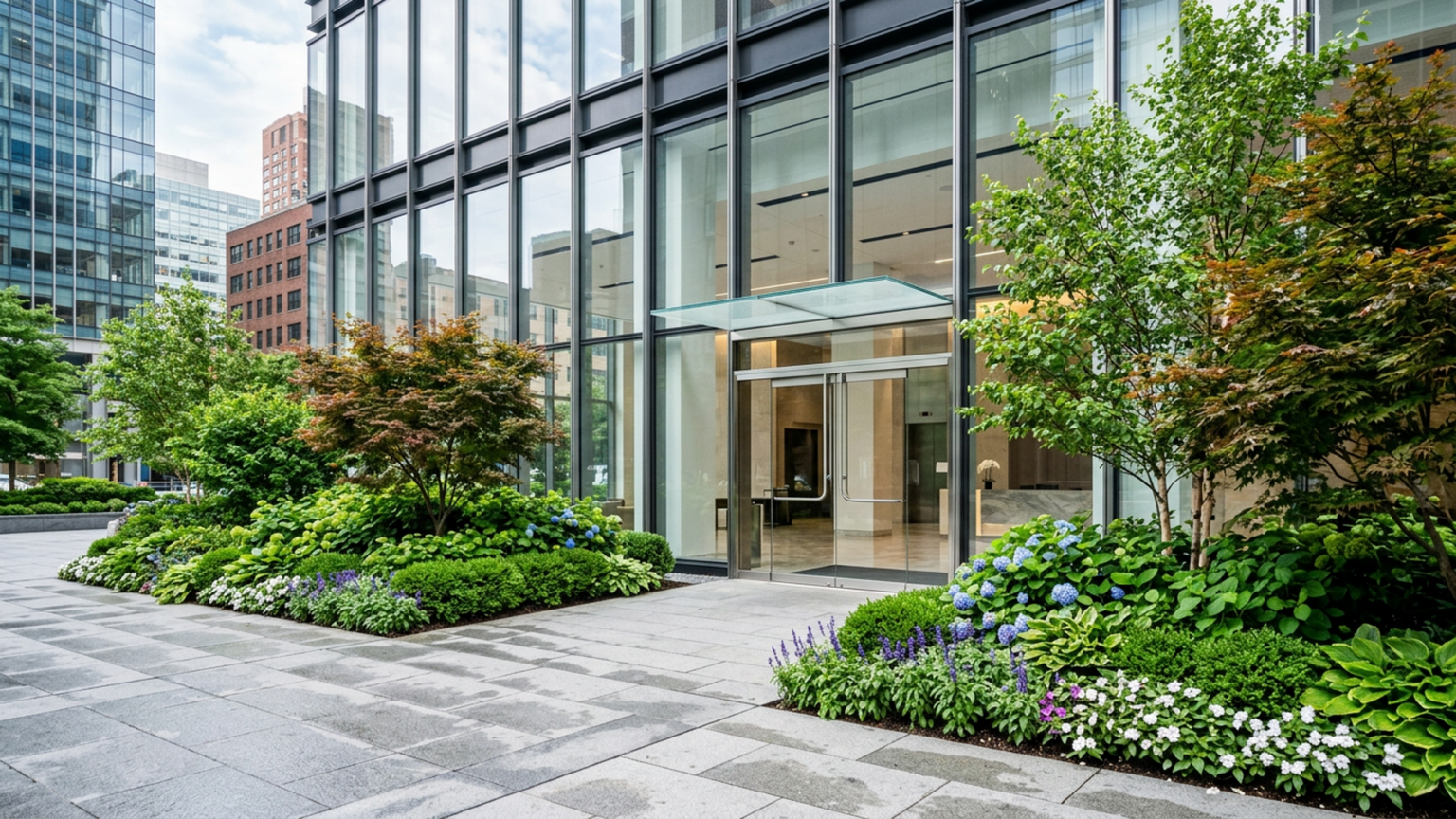
Landscaping in New York City is a discipline unlike landscaping anywhere else, because the city imposes constraints that a suburban property never faces. Tight urban footprints, heavy foot traffic, four demanding seasons, and the scrutiny of tenants, clients, and passers-by all shape what a commercial landscape must be. When done well, landscaping in NYC transforms an entrance, a plaza, or a courtyard into an asset that supports a business’s image and its daily operations. This guide explains what commercial landscaping in the city actually involves, how urban conditions change the work, what the process looks like, and how a specialist such as Cambridge NY delivers landscapes that hold up under real conditions.
What Commercial Landscaping in NYC Actually Involves
Commercial landscaping in the city is broader than mowing and planting, and understanding its scope is the first step to buying it well.
At its core, commercial landscaping covers the design, installation, and maintenance of the outdoor spaces around a business. In New York City, that means entryways and plazas, courtyards and terraces, rooftop and surrounding green spaces, and the planters and beds that frame office buildings, hotels, retail spaces, and residential communities. The work is tailored to the property rather than applied from a template, because each site has its own footprint, traffic patterns, and expectations.
What distinguishes commercial work from residential is scale and purpose. A commercial landscape must support daily operations, enhance curb appeal, and project the right image to everyone who passes, while standing up to constant use. Consequently, the design decisions, plant choices, and maintenance schedules are all made with those pressures in mind, which is why the discipline exists as its own speciality rather than a larger version of home gardening.
Why Urban Conditions Change Everything
The city is a uniquely demanding environment for plants and for the people who maintain them, and the best landscaping work is designed around those realities.
Space is the first constraint. New York commercial sites rarely have room for sprawling plantings, so the work concentrates into planters, beds, and narrow margins, where every plant must earn its place. Foot traffic is the second pressure, because urban landscapes are walked past, stood on, and brushed against constantly, which means plants must be resilient and layouts must protect them.
The climate is the third factor. The city experiences four distinct seasons, from freezing winters to hot, humid summers, and a commercial landscape must be planted and maintained to look intentional in all of them. This is why seasonal rotation matters so much in New York, the display that works in spring is not the one that carries the property through winter.
Finally, there is the practical reality of the urban site itself. Access can be difficult, loading and logistics require planning, and maintenance must fit around the rhythms of a working building rather than disrupting them. A landscaping firm that understands these conditions delivers a different result from one that treats the site as if it were a lawn in the suburbs.
The Process: From Concept to Finished Landscape
A professional commercial landscaping project follows a defined sequence, and knowing it sets realistic expectations for what you are commissioning.
The process begins with consultation and design. The landscaper meets with the client to understand the property’s needs, the budget, and the vision for the space, then presents a customised layout with design specifics and imagery. In other words, the client sees the final concept before any work begins, which prevents the costly mismatch between expectation and result.
Material sourcing follows. The right plants are chosen with the site in mind, healthy specimens that will flourish in the specific installation rather than whatever is convenient. Cambridge NY, for example, describes hand-picking plants at nurseries, prioritising locally-grown options wherever possible and maintaining strong relationships with growers. That attention to sourcing is part of why a well-planted landscape establishes itself quickly and lasts.
Installation is the next stage, and it involves more than placing plants. The site is inspected and prepared, logistical challenges are identified, and the work is carried out so the finished landscape is healthy from day one. The final stage is the ongoing one: regular maintenance that preserves plant health, visual consistency, and site performance through the seasons. A landscape is never finished, which is why the maintenance plan is as important as the installation itself.
Office Landscaping and Its Distinct Demands
Within commercial work, office landscaping carries its own set of requirements, and it has grown into its own speciality in the city.
Office landscapes are built around proactive planning and consistent maintenance, because an office building’s grounds are seen every single day by the same people. Seasonal plantings keep the entrance fresh, routine upkeep keeps the space clean and safe, and site-specific care addresses the particular needs of each property, from high-traffic lobbies to sheltered courtyards.
The goal is to support daily operations without adding complexity for property managers. A well-run office landscape enhances the building’s appearance and provides lasting value, while staying quietly in the background of the workday. For this reason, the best office landscaping is the kind that tenants and employees notice only as a pleasant, well-kept environment, never as a problem.
Landscaping for HOAs, Co-Ops, and Condos
The same discipline extends to residential communities, where the stakes are communal rather than corporate.
HOAs, co-ops, and condominiums present their own version of the commercial challenge: shared spaces that must look good year-round, satisfy many stakeholders at once, and hold up under daily use by residents. Seasonal installations, regular maintenance, and complete overhauls are all part of the work, and the goal is curb appeal and community enjoyment rather than a single client’s vision.
For these communities, consistency is the defining quality. The landscape must look intentional in every season, because it is the backdrop to daily life for the people who live there, and it is often the first thing a prospective buyer or renter sees. A landscaper experienced with these properties understands the balance between beauty, durability, and the maintenance realities that a community board has to manage.
What Sets a Strong NYC Landscaping Firm Apart
The city has no shortage of landscapers, and a few signals separate the firms built for commercial work from the rest.
The first signal is urban experience. A firm whose portfolio includes Manhattan plazas and Long Island City courtyards has already learned how commercial landscapes behave under heavy foot traffic, tight footprints, and four seasons. That experience is not optional; it is the difference between a design that survives and one that fails by the first winter.
The second signal is a full-service model. A firm that handles design, installation, seasonal rotation, and ongoing maintenance under one roof keeps the landscape consistent over time, rather than handing the property between vendors at each stage. This continuity is what preserves a landscape’s quality year after year.
The third signal is material discipline. The plants and materials chosen at the start determine how the landscape performs for years, and a firm that prioritises healthy, locally-grown stock and strong grower relationships is investing in the landscape’s long-term health rather than its short-term appearance.
Cambridge NY reflects all three. The firm describes its work as spanning design, installation, and maintenance, with experience across high-traffic commercial properties in New York City, from office buildings to HOAs, co-ops, and condos, and it frames its portfolio around projects that hold up under real urban conditions.
What Commercial Landscaping Maintenance Includes
Maintenance is where a commercial landscape is actually made or lost, and the scope is more detailed than most people assume.
A full maintenance programme typically includes weekly lawn care, regular mowing, edging, and fertilisation, where grass is present, along with irrigation management that keeps watering schedules correct while conserving water. Manicuring and trimming keep trees, shrubs, and grasses shaped and healthy, and seasonal rotations swap plantings as the weather turns so the space never looks tired.
Beyond the routine, maintenance covers the site-specific work that keeps a property safe and appealing: leaf and litter management, bed care, and attention to the details that accumulate in a high-traffic urban setting. For a commercial property, this ongoing care is not a luxury add-on; it is the difference between a landscape that looks intentional and one that looks neglected, and it is what protects the investment the installation represented.
What Commercial Landscaping Costs
Cost is a natural question, and the honest answer is that there is no fixed average, because each property is different.
The size and layout of the space, the types of plants and features involved, the presence of hardscaping or water features, and the site’s specific conditions all move the price. Consequently, a meaningful figure only emerges from a site assessment and a tailored plan, which is why reputable firms build custom maintenance programmes rather than quoting a flat rate sight unseen.
Cambridge NY addresses this directly, explaining that it works with each client to develop a plan that fits the budget while supporting the health and appearance of the landscape. The practical guidance for any buyer is the same: request a site assessment, define the scope clearly, and expect a plan rather than a generic number.
Getting the Most From Your Commercial Landscape
A few practices help a commercial landscape perform well and stay within budget, regardless of who maintains it.
Plan for all four seasons from the start, rather than designing for the month the project launches, because a New York landscape lives through winter as much as spring. Budget for maintenance as part of the initial decision, not an afterthought, because a landscape without a maintenance plan deteriorates quickly. And choose plants and materials for resilience and the site’s actual conditions, not for how they look in a nursery photograph.
Above all, treat the landscape as an ongoing asset rather than a one-time project. The properties that look consistently good are the ones whose owners understand that the landscape requires the same year-round attention as the building it surrounds, and that the firms who provide that attention are partners, not vendors.
Conclusion
In conclusion, landscaping in NYC is a specialised discipline shaped by the city’s constraints, tight space, heavy traffic, four seasons, and the practical realities of urban sites, and it rewards the property owner who treats it seriously. Commercial landscaping spans design, installation, seasonal rotation, and maintenance, and it serves offices, retail spaces, and residential communities alike, each with its own demands. The firms that do it well combine urban experience, a full-service model, and disciplined material sourcing, and they understand that the maintenance plan matters as much as the installation. For property managers and owners across New York City and the tri-state area, a specialist such as Cambridge NY represents that standard, delivering landscapes that hold up under real conditions and look intentional in every season. The right landscape does not just beautify a property; it protects the investment and elevates the experience of everyone who passes through it.
Frequently Asked Questions
1. What is commercial landscaping in NYC?
Commercial landscaping in NYC is the design, installation, and maintenance of outdoor spaces around businesses, including offices, hotels, retail stores, and residential communities.
2. How does commercial landscaping differ from residential?
Commercial landscaping involves larger-scale projects focused on foot traffic, branding, and curb appeal, while residential landscaping centres on enhancing a single home or community’s outdoor space.
3. What is included in commercial landscape maintenance?
Maintenance typically includes weekly lawn care, irrigation management, trimming and manicuring, seasonal plantings, and site-specific upkeep to keep the landscape healthy and attractive.
4. How much does commercial landscaping maintenance cost in NYC?
There is no fixed average, because costs depend on site size, layout, plants, and features; firms assess each property and develop a tailored plan to fit the budget.
5. Does commercial landscaping work for HOAs and condos?
Yes, landscaping firms regularly serve HOAs, co-ops, and condos with seasonal installations and ongoing maintenance that enhance curb appeal and community enjoyment.
6. Why is seasonal rotation important in NYC landscaping?
New York’s four distinct seasons mean plantings must be changed through the year, so the landscape stays vibrant and intentional in every season rather than only in spring.
