
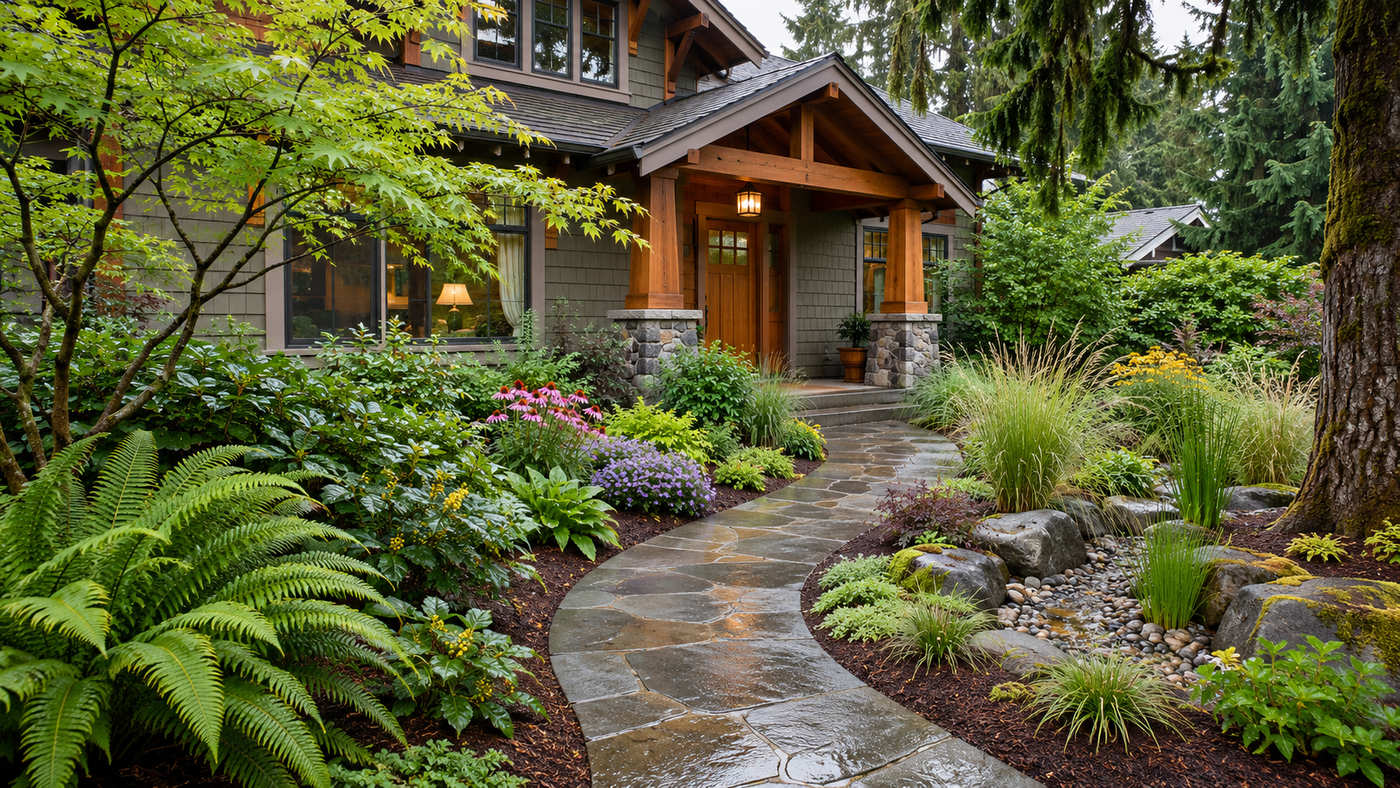
A beautiful outdoor space should do more than improve the appearance of a property. It should provide a comfortable place to relax, support healthy plants, manage rainwater, and remain practical throughout the changing seasons. When planning landscaping in Seattle, homeowners need to consider the Pacific Northwest’s distinctive climate, including wet winters, relatively dry summers, varied soil conditions, and established urban tree cover.
Seattle offers excellent opportunities for attractive and environmentally responsible landscape design. Native plants, rain gardens, natural stone pathways, woodland-style planting beds, and water-efficient irrigation can create gardens that complement both modern and traditional homes. However, successful landscaping depends on choosing the right materials and plants for the actual property.
A shaded yard in Ballard may require a different planting strategy from a sunny garden in West Seattle. Similarly, a sloped property in Queen Anne presents challenges that may not exist in a relatively level yard in Green Lake.
Whether you are renovating an existing garden, creating an outdoor entertaining area, or hiring professional landscape contractors, careful planning can prevent unnecessary expenses and ongoing maintenance problems.
This guide explores 18 landscaping ideas, suitable plants, drainage considerations, local regulations, project costs, and practical tips for creating an appealing Seattle garden.
Why Landscaping in Seattle Requires a Different Approach
Seattle’s climate is often associated with rain, but annual rainfall alone does not describe its growing conditions.
According to Seattle Public Utilities, the region receives much of its precipitation during the cooler months, while summer rainfall can be relatively limited.
That seasonal pattern creates an important landscaping challenge: outdoor spaces must handle wet conditions without becoming overly dependent on irrigation during summer.
Wet Winters and Dry Summers
Rainwater can collect in poorly draining areas during the wetter months.
Meanwhile, lawns and shallow-rooted plants may experience moisture stress during extended summer dry periods.
An effective design considers both situations.
Improving soil health, managing runoff, and selecting plants appropriate to their location can reduce future maintenance.
Different Sun and Shade Conditions
Mature trees, neighboring buildings, and narrow urban lots can create substantial variation in sunlight.
Some gardens receive direct sun for most of the day.
Others remain shaded throughout much of the year.
Successful landscaping in Seattle should begin with observing actual light conditions rather than choosing plants based only on appearance.
Soil and Drainage Differences
Seattle properties may contain compacted soil, disturbed construction fill, clay-rich areas, or soils with different infiltration characteristics.
A garden that drains effectively in one neighborhood may become saturated in another.
Before installing a rain garden, patio, or major planting bed, assess the existing ground conditions.
Urban Tree Protection
Seattle regulates certain tree removal and pruning activities.
Projects affecting protected trees or planting strips may require city approval.
Tree preservation should therefore be part of the initial design process, not a consideration added after excavation begins.
What Do Professional Landscaping Services in Seattle Include?
Professional landscape companies offer different combinations of design, installation, and maintenance services.
Not every provider performs every type of work.
| Service | Common scope | Main planning consideration |
|---|---|---|
| Landscape design | Site planning, planting layouts, material selection | Climate, space, budget, and function |
| Garden installation | Trees, shrubs, perennials, mulch, and soil preparation | Plant suitability and establishment |
| Lawn care | Mowing, aeration, overseeding, and maintenance | Shade, drainage, and water demand |
| Hardscaping | Patios, pathways, edging, and suitable retaining features | Construction quality and permits |
| Rain gardens | Landscape features designed to manage eligible runoff | Soil infiltration and safe overflow |
| Irrigation | Drip lines, sprinklers, and controllers | Water efficiency and system maintenance |
| Tree services | Pruning, assessment, and permitted removal | City regulations and provider registration |
| Seasonal maintenance | Weeding, pruning, mulching, and cleanup | Plant health and long-term appearance |
When comparing landscaping in Seattle, determine whether you need a designer, an installation contractor, a maintenance provider, or a team capable of coordinating several specialties.
18 Smart and Beautiful Landscaping Ideas for Seattle Homes
The following ideas combine practical garden planning with features suited to Pacific Northwest conditions.
1. Create a Garden With Native Pacific Northwest Plants
Native plants can be a strong foundation for attractive and environmentally responsible landscaping.
Species adapted to the region may support local wildlife and fit naturally into Seattle gardens.
However, even native plants need the correct soil, sunlight, and moisture conditions.
Useful options to investigate include sword fern, salal, low Oregon grape, vine maple, and red flowering currant.
These plants serve different functions, from groundcover and evergreen structure to seasonal flowering and small-tree interest.
A professional designer can help determine which species are appropriate for the actual site.
Best for: Homeowners seeking natural-looking planting, local ecological value, and reduced maintenance after establishment.
2. Build a Layered Woodland Garden
Many Seattle properties benefit from the shade provided by existing trees.
Instead of trying to establish a conventional lawn beneath a dense canopy, consider a woodland-inspired garden.
Use layers of small shrubs, ferns, groundcovers, and suitable shade-tolerant perennials.
A layered arrangement creates visual depth while making better use of limited sunlight.
King County’s native plant guidance identifies sword fern, salal, vine maple, and several other regional plants as options for shaded landscapes.
Choose combinations according to soil moisture and available space.
Best for: Shaded backyards, mature residential neighborhoods, and gardens where grass struggles to grow.
3. Install a Rain Garden Where Conditions Are Suitable
Rain gardens are planted landscape depressions designed to collect and absorb certain amounts of stormwater runoff.
They can support attractive vegetation while reducing the amount of rainwater entering drainage systems.
Seattle Public Utilities promotes green stormwater infrastructure, including rain gardens, as one approach to managing runoff.
However, a rain garden must be designed for the site’s soil, drainage area, slope, and overflow conditions.
It should not redirect water toward building foundations or neighboring properties.
The RainWise programme also offers rebates for qualifying installations.
Eligibility depends on location, drainage connection, feasibility, and programme rules.
Best for: Eligible properties where a properly designed rain garden can manage roof runoff safely.
4. Improve Drainage Before Installing Decorative Features
A beautiful garden can deteriorate quickly when persistent drainage problems are ignored.
Standing water may affect patios, planting beds, lawns, and areas near the house.
Begin by identifying where water collects and where it travels during heavy rain.
The solution may involve soil improvements, appropriate grading, drainage features, or professional stormwater design.
Avoid assuming that adding gravel to a wet area will correct a deeper drainage problem.
For landscaping in Seattle, drainage planning is particularly important before major hardscaping or planting investments.
Best for: Properties with recurring puddles, saturated soil, runoff concerns, or poorly performing existing landscaping.
5. Build Healthier Soil With Compost and Organic Matter
Healthy soil supports root growth, moisture management, and beneficial soil organisms.
Seattle Public Utilities recommends improving suitable planting soils with compost and mulch.
However, different plants and situations require different techniques.
For example, excessive soil amendments inside an isolated tree planting hole can sometimes discourage roots from expanding into surrounding soil.
A landscape professional should evaluate compaction, drainage, soil texture, and existing organic matter before recommending major changes.
Best for: Renovated planting beds, compacted urban yards, and gardens with poor plant establishment.
6. Use Mulch to Manage Moisture and Weeds
Mulch can help moderate soil temperatures, reduce evaporation, and limit some weed growth.
Organic mulches such as suitable wood chips can also contribute to soil improvement as they decompose.
Apply mulch at an appropriate depth and avoid piling it against tree trunks or shrub stems.
Excessively thick mulch or material touching the base of plants can create problems.
For new planting areas, mulching is especially useful during the establishment period.
Best for: Shrub borders, woodland gardens, new planting beds, and water-conscious landscaping.
7. Choose Water-Efficient Irrigation
Seattle’s relatively dry summers can place stress on newly installed plants.
Drip irrigation and soaker hoses deliver water close to plant root zones and can reduce unnecessary overspray.
Seattle Public Utilities recommends efficient irrigation practices, including appropriate watering schedules and regular system checks.
Automatic controllers should be adjusted according to rainfall, season, and plant requirements.
A water-efficient system is not necessarily one that runs frequently.
The goal is to provide sufficient moisture without wasting water or keeping the soil continuously saturated.
Best for: New planting beds, vegetable gardens, and homeowners who want predictable watering with less waste.
8. Replace Unnecessary Lawn Areas With Planting Beds
Traditional lawns require maintenance, and some Seattle sites are poorly suited to grass.
Shaded, sloped, or persistently wet areas may be difficult to maintain as healthy turf.
Instead of repeatedly reseeding unsuccessful areas, consider suitable groundcovers, shrubs, native planting, or a thoughtfully designed pathway.
Keep lawn space where it serves a useful purpose, such as children’s activities or entertaining.
Reducing unnecessary turf can free up space for more varied planting and may reduce water demand.
Best for: Small urban yards, difficult shade areas, and properties seeking simpler maintenance.
9. Create a Comfortable Outdoor Living Area
Patios and outdoor seating spaces can make a garden more useful.
A well-designed seating area may include weather-resistant furniture, suitable lighting, wind protection, and access to the home.
In Seattle, consider how rainwater drains from paved areas and whether surfaces become slippery when wet.
Select materials based on traction, durability, maintenance, and the character of the property.
Covered structures may be useful, but they can introduce additional design and permitting considerations.
Best for: Homeowners who want dining, entertaining, or relaxation space outdoors.
10. Design Natural Stone and Permeable Pathways
Pathways organize movement through a garden and connect entrances, patios, sheds, and planting areas.
Natural stone, concrete pavers, and gravel can complement Pacific Northwest architecture.
Permeable paving systems may help manage surface runoff when properly designed and installed.
However, permeability depends on the full system, including base material, soil conditions, and maintenance.
A permeable surface does not automatically solve drainage problems.
For landscaping in Seattle, pathways should be designed to remain safe during wet weather and to avoid damaging existing tree roots.
Best for: Front-yard entrances, garden circulation, and properties seeking functional hardscape improvements.
11. Design for Year-Round Garden Interest
A beautiful Seattle garden should not depend entirely on summer flowers.
Combine evergreen structure, seasonal blossoms, autumn foliage, and winter texture.
Suitable native evergreen shrubs and ferns can maintain visual interest during the cooler months.
Deciduous plants can add seasonal color and changing forms.
A balanced design often uses a relatively simple planting palette repeated throughout the property.
This can create a coherent appearance without requiring dozens of different species.
Best for: Front yards, year-round residential landscapes, and homeowners who want a garden that remains attractive across seasons.
12. Stabilize Sloped Gardens With Suitable Planting
Some Seattle neighborhoods have sloping residential lots.
Steep areas may experience erosion, difficult access, and drainage concerns.
Appropriate planting can help protect surface soil, but vegetation alone does not necessarily stabilize an unsafe slope.
Major grading, retaining walls, and drainage changes may require professional engineering and city permits.
The City of Seattle has specific regulations for retaining walls, rockeries, and properties with environmentally critical areas.
Avoid excavating near a steep slope or protected tree without understanding the potential consequences.
Best for: Sloped properties where qualified site assessment supports the proposed improvements.
13. Preserve Mature Trees During Landscape Renovation
Established trees can provide shade, habitat, privacy, and a strong visual framework for outdoor spaces.
They are often among the most valuable existing landscape features.
Before constructing a patio or changing soil grades, identify root protection areas and any applicable city regulations.
Seattle’s tree protection rules distinguish between private-property trees and trees in the public right-of-way.
Certain work requires permits, notices, and registered tree service providers.
Protecting healthy mature trees can help create a more attractive garden without unnecessary replacement.
Best for: Older neighborhoods, wooded residential lots, and properties with established tree canopy.
14. Add Flowers and Habitat for Pollinators
Pollinator-friendly gardens can include flowering plants selected for different bloom periods.
The goal is to provide suitable resources across the growing season rather than concentrating all flowers into a short period.
Choose plants that match the site’s light, soil, and moisture conditions.
Where practical, include regionally appropriate species and maintain some habitat diversity.
Avoid unnecessary pesticide applications.
A combination of flowering shrubs, perennial plants, and groundcovers can support visual interest while creating useful habitat.
Best for: Wildlife-friendly gardens, small planting borders, and homeowners interested in ecological landscaping.
15. Include an Edible Garden or Raised Beds
Seattle’s gardening environment supports various edible crops when planting dates and conditions are appropriate.
Raised beds can help organize vegetable production and provide a defined growing area.
However, raised beds do not eliminate the need for suitable soil, drainage, sunlight, or watering.
Urban gardeners should consider possible soil contamination before growing food directly in unknown soil.
Use appropriate soil materials and select crops according to the season.
Edible gardens can also be integrated into larger landscape designs instead of being isolated from ornamental areas.
Best for: Households interested in growing vegetables, herbs, or other edible plants.
16. Use Strategic Planting for Privacy
Privacy can be improved through carefully placed shrubs, small trees, screens, or other suitable landscape elements.
Before planting, consider mature height and spread.
A hedge that initially looks attractive may eventually require extensive pruning or interfere with neighboring property.
Choose plants that suit the available space and avoid creating unnecessary conflicts with overhead utilities.
For landscaping in Seattle, layered planting can sometimes provide a softer appearance than one dense row of tall screening plants.
Best for: Urban lots, shared boundary areas, and outdoor seating spaces.
17. Add Safe and Subtle Outdoor Lighting
Landscape lighting can improve visibility around walkways, steps, and entrances.
It may also create an inviting atmosphere for evening use.
Use suitable outdoor-rated products and avoid excessive brightness directed toward neighboring windows.
Electrical work should comply with applicable requirements and be completed by qualified professionals where necessary.
Consider controls that limit unnecessary energy use and light pollution.
A restrained lighting design often looks more refined than illuminating every tree and shrub.
Best for: Entry paths, patios, outdoor steps, and garden areas used after sunset.
18. Create a Long-Term Maintenance Plan
Even a low-maintenance garden requires attention.
New trees and shrubs often need supplemental watering while their root systems establish.
Seattle Public Utilities recommends continuing establishment care through the early growing years.
Other routine tasks may include mulching, weed control, selective pruning, irrigation inspection, and monitoring for drainage problems.
Ask the installer for plant-specific care instructions and a seasonal maintenance schedule.
Professional landscaping in Seattle should deliver a garden that remains practical after construction crews leave.
Best for: Every residential landscape, particularly newly renovated yards.
Best Plants for Landscaping in Seattle
A suitable planting scheme should reflect the property’s sunlight, soil moisture, and available space.
The following species are useful starting points for further site-specific evaluation.
| Plant | General landscape use | Site considerations |
|---|---|---|
| Sword fern | Evergreen foliage and woodland planting | Shade or partial shade; suitable moisture |
| Salal | Evergreen shrub and naturalistic groundcover | Shade to partial sun; site-dependent moisture |
| Low Oregon grape | Low-growing evergreen structure | Often suitable for partial shade |
| Vine maple | Small tree, foliage interest, layered planting | Allow room for mature growth |
| Red flowering currant | Spring flowers and wildlife interest | Often performs well in suitable sunny to partly shaded positions |
| Western sword fern and native woodland groundcovers | Shaded planting combinations | Match the soil and light conditions |
| Pacific ninebark | Shrub planting and seasonal structure | Consider moisture and mature size |
Not every listed species belongs in every garden.
Some plants that tolerate shade may still require irrigation during establishment or in unusually dry conditions.
King County’s Native Plant Guide and Seattle Public Utilities’ plant-selection guidance provide useful resources for evaluating regional species.
How to Choose the Right Plant
Begin with the site’s conditions.
Observe sunlight throughout the day, evaluate soil moisture, consider drainage, and estimate the plant’s mature dimensions.
Then consider your desired appearance, maintenance capacity, and ecological goals.
A plant that thrives naturally in a particular environment can be easier to maintain than one requiring constant correction of unsuitable conditions.
How Much Does Landscaping in Seattle Cost?
Landscape project prices vary significantly.
A small planting-bed renovation is not comparable to a comprehensive yard redesign involving drainage work, retaining structures, irrigation, and custom stone paving.
Project cost depends on size, design complexity, access, materials, excavation, site conditions, and the contractor’s scope.
Rather than relying on an unverified citywide price range, request current estimates for the actual property.
Factors That Influence Landscaping Costs
| Project component | Main cost factors |
|---|---|
| Garden design | Site analysis, drawings, planting plans, revisions |
| Soil preparation | Testing, compaction, amendments, excavation |
| Plants | Size, species, quantity, delivery, installation |
| Lawn renovation | Area, soil condition, drainage, seed or sod |
| Patio installation | Material, base preparation, excavation, access |
| Drainage work | Site conditions, engineering, pipes, permits |
| Irrigation | Number of zones, equipment, water connections |
| Retaining walls | Height, engineering, materials, permits |
| Maintenance | Visit frequency, area, pruning, debris removal |
Small Landscaping Projects
A limited project may involve fresh mulch, selected planting, bed preparation, and minor pathway improvements.
Such work can often be completed without redesigning the entire property.
Mid-Sized Landscape Renovations
More involved projects may combine lawn replacement, planting beds, basic irrigation, and a new seating area.
These require coordination between materials, drainage, and plant establishment.
Complete Backyard Transformations
A major redesign may involve grading, custom patios, retaining structures, lighting, irrigation, planting, and other improvements.
Complex conditions can make professional design and permitting particularly important.
How to Control Your Budget
Start by separating essential work from optional features.
Address drainage and safety concerns first.
Then prioritize elements that improve everyday use, such as usable pathways, appropriate plants, and comfortable outdoor space.
Installations can sometimes be completed in phases, provided the initial design anticipates future work.
How to Choose a Professional Landscaping Contractor in Seattle
Hiring the right professional is important because landscape projects can involve excavation, drainage, construction, plant care, and regulated work.
Verify Washington Contractor Registration
Washington’s Department of Labor & Industries requires registration for businesses performing covered construction work.
Landscape construction and many installation activities fall within contractor-registration requirements.
The rules differ for certain limited maintenance activities.
Use the official Washington L&I verification service to check a contractor’s active registration and related public information.
Do not assume that a business license alone authorizes construction work.
Ask About Relevant Project Experience
Look for experience with the type of work you need.
A company specializing in routine mowing may not be suited to designing a rain garden or constructing a retaining wall.
Request comparable completed projects and ask about the conditions encountered.
Check Tree Service Registration
Seattle requires tree service providers performing regulated tree work to meet city registration requirements.
The appropriate registry and permits depend on whether the tree is on private property or in the public right-of-way.
Check these details before authorizing substantial pruning or removal.
Verify Pesticide Credentials
Washington State regulates commercial pesticide applications.
Landscape businesses applying herbicides, moss-control products, or other pesticides on customers’ properties generally need the appropriate Washington State Department of Agriculture licensing.
Ask for the relevant credentials when chemical treatment forms part of the service.
Request a Detailed Written Quote
A professional proposal should explain the scope, materials, estimated schedule, responsibilities, and payment terms.
Ask who handles permits, irrigation connections, plant warranties, cleanup, and follow-up.
For landscaping in Seattle, compare equivalent project scopes rather than choosing the lowest headline price.
Seattle Landscaping Permits and Local Regulations
Certain outdoor improvements may require city review.
The exact rules depend on property location, project type, dimensions, grading, drainage, and other site conditions.
Tree Removal and Pruning
Seattle regulates tree work under its urban forestry and tree protection rules.
Protected trees may not be removed without satisfying applicable requirements.
Tree work in the right-of-way also has separate permitting rules.
Retaining Walls and Rockeries
Seattle’s building guidance explains that some retaining walls and rockeries at or below four feet may qualify for a permit exemption when additional conditions are met.
The height is measured from the bottom of the footing, and critical-area or adjoining-property conditions can change the requirements.
A relatively small wall is not automatically exempt.
Grading and Drainage
Significant earth movement or drainage alterations may require permits.
Seattle’s grading rules also address erosion control and the protection of neighboring properties.
Patios, Paths, and Outdoor Structures
Some ground-level patios and limited outdoor improvements may not require a construction permit.
Other structures, site conditions, and utility work can trigger additional requirements.
Confirm the rules with the Seattle Department of Construction and Inspections before beginning regulated work.
Rain Gardens and RainWise Rebates in Seattle
Rain gardens are especially relevant to environmentally responsible landscaping because of Seattle’s stormwater management needs.
The RainWise programme is a partnership involving Seattle Public Utilities and King County’s Wastewater Treatment Division.
It offers rebates for eligible rain gardens and cistern installations.
According to the programme’s published information, qualifying rebates may cover up to 100% of eligible installation costs.
However, not every Seattle property qualifies.
Who May Qualify?
RainWise eligibility considers whether the property is in an eligible area, whether roof runoff connects to the combined sewer system, and whether a suitable installation is feasible.
Why Professional Design Matters
A rain garden must be located and sized appropriately.
Soil infiltration, slope conditions, drainage connections, and overflow routes can affect the design.
A poorly positioned installation can create problems instead of solving them.
How to Explore the Programme
Check your property’s eligibility through the official RainWise website.
Review the programme requirements and use an appropriate contractor when proceeding with a rebate-supported installation.
Do not assume funding is available until eligibility and the proposed work have been confirmed.
Seasonal Landscaping Maintenance in Seattle
A garden maintenance schedule should reflect local growing conditions.
Spring: Prepare for Active Growth
Inspect plant health, remove suitable weeds, assess mulch, and identify winter damage.
Spring can be an appropriate season for certain planting and lawn renovation activities.
Avoid unnecessary soil compaction when the ground is saturated.
Summer: Focus on Water Efficiency
New plantings may need careful irrigation.
Check soil moisture rather than watering on an inflexible schedule.
Adjust irrigation systems to limit overspray and unnecessary runoff.
Monitor areas exposed to stronger sun and dry conditions.
Autumn: Planting and Soil Protection
Autumn can be a suitable planting season for many regional shrubs and trees.
Cooler temperatures and seasonal rainfall can support establishment, although site-specific care is still necessary.
Refresh mulch and inspect drainage before the wetter months.
Winter: Monitor Drainage and Structural Safety
Check for persistent water accumulation, blocked drainage routes, and visible erosion.
Avoid major soil disturbance during unsuitable conditions.
Arrange professional assessment when slopes, retaining features, or trees show signs of instability.
Common Landscaping Mistakes Seattle Homeowners Should Avoid
A common mistake is assuming that Seattle’s rainy reputation means every plant will receive sufficient water throughout the year.
New trees and shrubs may need summer irrigation during establishment.
Another mistake is choosing plants without evaluating sunlight and mature size.
A small shrub purchased from a nursery can eventually outgrow its intended position.
Some homeowners install decorative gravel or new paving before addressing existing drainage problems.
Others remove established trees without checking city requirements.
Hiring an unverified contractor for regulated construction work or commercial pesticide applications can also create legal and financial risks.
When planning landscaping in Seattle, the most reliable approach is to understand the site first and select materials, plants, and services accordingly.
How to Plan a Seattle Landscaping Project Step by Step
Step 1: Define Your Goals
Determine whether you want more privacy, attractive planting, easier maintenance, better drainage, or an outdoor entertaining area.
Step 2: Assess the Property
Record sunlight, shade, soil moisture, slopes, existing trees, and access routes.
Identify possible drainage problems.
Step 3: Establish a Budget
Separate essential site preparation from decorative improvements.
Include allowances for unknown conditions.
Step 4: Develop the Landscape Design
Choose appropriate planting areas, circulation routes, materials, and maintenance requirements.
Step 5: Review Permits and Contractor Qualifications
Verify Washington contractor registration and any required Seattle permits.
Check specialist qualifications for tree work, pesticide application, and other regulated activities.
Step 6: Schedule Installation
Coordinate soil preparation, drainage, hardscaping, planting, and irrigation in an appropriate sequence.
Step 7: Establish a Maintenance Plan
Document watering, pruning, weed management, mulch care, and seasonal inspections.
A successful project should remain manageable after the installation is complete.
Frequently Asked Questions
1. What is the best landscaping for Seattle’s climate?
A combination of site-appropriate native or regionally adapted plants, healthy soil, mulch, efficient irrigation, and properly designed drainage can work well. The best design depends on sunlight, soil, slope, and available space.
2. How much does landscaping in Seattle cost?
Costs vary by project size, materials, site preparation, access, and features such as patios or retaining walls. Obtain detailed local estimates and compare the complete scope of work rather than relying on one general price.
3. Do landscaping contractors need a license in Seattle?
Washington generally requires contractor registration for covered landscape construction activities. Certain maintenance work may be treated differently, while commercial pesticide use and regulated tree work have additional requirements.
4. Can Seattle homeowners get rebates for rain gardens?
Yes. RainWise offers rebates for eligible rain garden and cistern projects, potentially covering up to 100% of eligible costs. Property location, sewer connection, site feasibility, and programme conditions determine eligibility.
Conclusion
Successful landscaping in Seattle combines attractive outdoor design with practical planning for seasonal rainfall, summer dryness, soil conditions, and long-term maintenance. Native planting, efficient irrigation, rain gardens, and carefully designed outdoor living spaces can create a garden that is both beautiful and functional. Before beginning construction, verify contractor qualifications and applicable city requirements. With thoughtful design and proper care, Seattle homeowners can create outdoor spaces that remain appealing throughout the year.
