
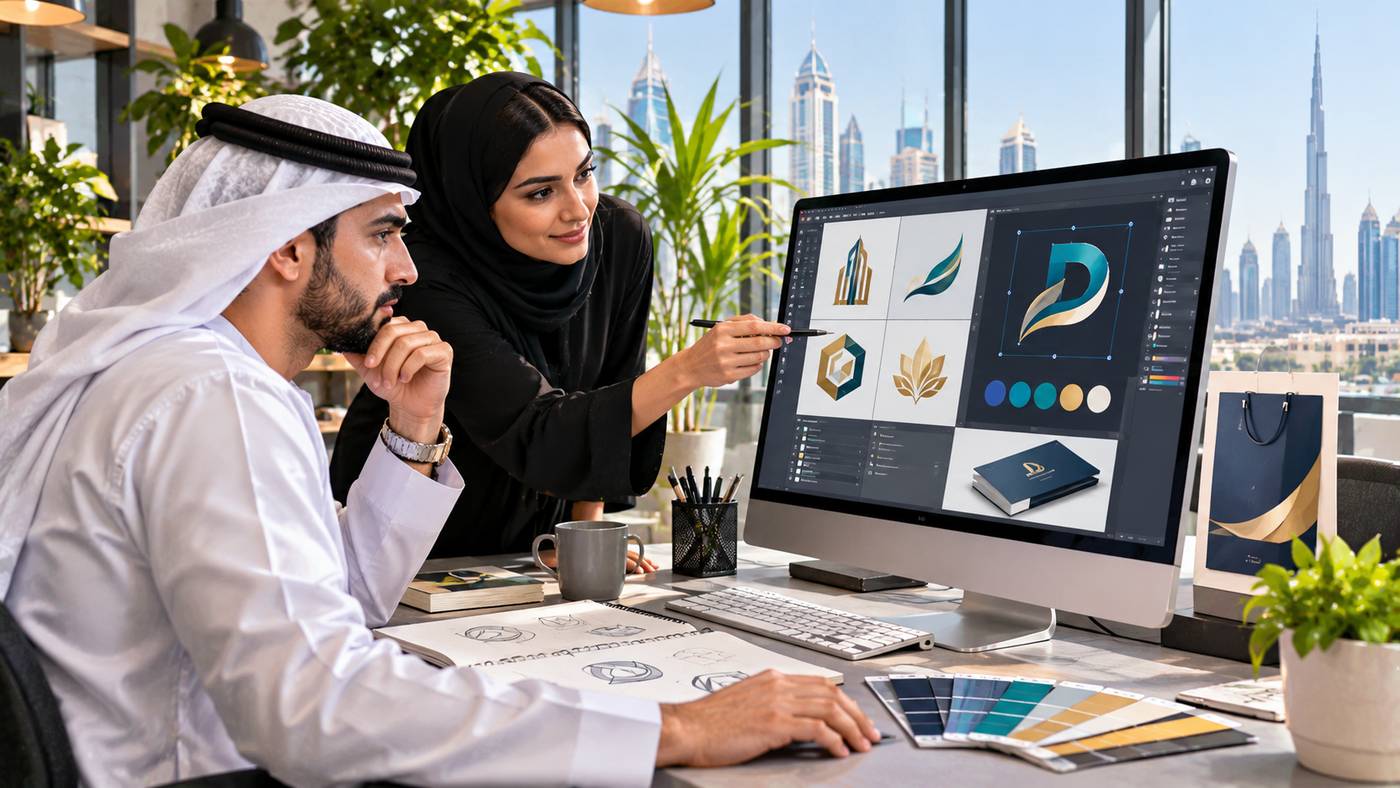
Dubai is one of the world’s most dynamic business destinations, attracting startups, entrepreneurs, international corporations, and established brands across numerous industries. From luxury retail and hospitality to technology, real estate, and professional services, businesses compete to establish a recognizable presence in a diverse marketplace.
In this competitive environment, visual identity plays an important role in how customers recognize and remember a company. A professional logo communicates a brand’s personality, creates a consistent visual reference, and provides the foundation for broader marketing materials.
Working with an experienced logo designing company in Dubai can help businesses create a visual identity that reflects their values, services, and target audience.
However, a successful logo involves more than selecting an attractive symbol or choosing fashionable colors. Professional designers consider brand positioning, typography, cultural relevance, scalability, and the environments in which a logo will appear.
A thoughtfully designed logo should remain recognizable across websites, social media profiles, business cards, packaging, signage, and other brand applications.
This guide explores why professional logo design matters, seven important considerations when hiring an agency, the typical design process, pricing factors, and how Dubai businesses can build a consistent visual identity.
Why Professional Logo Design Matters for Dubai Businesses
A logo is often one of the first visual elements people associate with a business.
When customers encounter a company through its website, advertisement, storefront, or social media page, the logo helps establish a recognizable identity.
A strong design can support brand recognition and communicate professionalism.
However, a logo alone does not guarantee customer trust or business success. Brand reputation also depends on service quality, customer experience, communication, and consistent delivery.
Creating a Memorable First Impression
Customers regularly encounter advertisements and promotional materials from competing businesses.
A distinctive logo can help a company become easier to identify.
Simple shapes, balanced typography, and thoughtful color combinations may create a recognizable visual presentation.
The design should complement the company’s positioning rather than imitate competitors.
Communicating Brand Personality
Different industries require different visual approaches.
A luxury property developer may prefer elegant typography and a restrained color palette.
A children’s education company may choose a more playful visual identity.
A technology startup might favor clean geometry and contemporary lettering.
Professional designers translate these characteristics into a visual system that reflects the business.
Supporting Consistent Branding
A logo appears across many business materials.
Using consistent proportions, colors, and typography helps create a unified identity.
This consistency makes it easier for customers to recognize a company across different channels.
What Does a Professional Logo Design Agency Do?
A logo design agency develops visual identities for businesses using research, creative development, and technical design processes.
Its responsibilities often extend beyond drawing a symbol.
Brand Discovery
The process typically begins with understanding the business.
Designers ask about the company’s products, services, values, audience, and market positioning.
They may also review existing branding and competitors.
This information provides a foundation for informed creative decisions.
Concept Development
The agency develops different visual directions.
These may explore typography, abstract symbols, monograms, or combinations of graphic and text elements.
Each concept should connect to the brand’s objectives.
Design Refinement
Once a preferred direction is selected, designers refine its details.
Adjustments may involve spacing, proportions, colors, typefaces, and symbol construction.
The aim is to create a design that works consistently in different applications.
Final Asset Delivery
Professional logo projects should include suitable files for digital and print use.
Vector formats are particularly important because they can be scaled without the same quality loss associated with enlarging raster images.
Businesses may also need color variations, monochrome versions, and brand usage guidelines.
Seven Smart Tips for Choosing a Logo Designing Company in Dubai
Selecting the right creative partner requires evaluating more than price or the appearance of a few portfolio images.
1. Review the Agency’s Design Portfolio
A portfolio provides insight into an agency’s creative capabilities.
Look for examples across different industries and brand styles.
A strong portfolio should demonstrate intentional design rather than repeated use of the same visual template.
Examine whether the logos remain recognizable when displayed at smaller sizes.
Consider how effectively they work on business cards, websites, packaging, and signage.
A professional logo designing company in Dubai should be able to explain the thinking behind its work.
2. Evaluate Industry Experience
Different industries have different branding requirements.
A restaurant logo may need to work on packaging, menus, delivery applications, and storefront signs.
A corporate consultancy may require a more restrained identity suitable for formal documents.
A fashion brand may prioritize visual distinctiveness and elegant typography.
Relevant experience can help designers understand these practical requirements.
However, experience outside your industry may also bring valuable fresh perspectives.
3. Understand the Creative Process
Ask how the agency approaches research, concept development, feedback, and final delivery.
A structured process reduces misunderstandings and creates opportunities for meaningful collaboration.
The agency should explain how many initial concepts are provided and how revisions are managed.
Clear communication is particularly important when several business stakeholders must approve the final design.
4. Prioritize Original Design
Originality is an important consideration when developing a recognizable brand.
Generic templates and widely used symbols can make a business difficult to distinguish.
Custom design provides an opportunity to create a more distinctive identity.
However, businesses should also conduct appropriate trademark searches.
A designer’s claim that a logo is original does not guarantee that it is legally available for use or registration.
5. Check Typography and Cultural Relevance
Dubai serves audiences from many linguistic and cultural backgrounds.
Some brands communicate in both Arabic and English.
Others serve international audiences through a single primary language.
Typography should remain clear and appropriate for the intended market.
For bilingual identities, designers need to consider visual balance between different scripts.
Cultural references should be researched carefully rather than introduced solely for decorative purposes.
6. Confirm Final File Formats and Ownership
Before signing a contract, clarify what the final package includes.
Businesses commonly need vector files for professional printing and scalable applications.
Transparent PNG files may be useful for websites and presentations.
High-resolution raster files can support everyday marketing activities.
The agreement should also explain intellectual property ownership, permitted usage, and any restrictions involving licensed fonts or other design assets.
7. Compare Value Instead of Price Alone
The cheapest quotation may not offer the best overall value.
Some projects include only a basic logo file.
Others include discovery, multiple concepts, revisions, source files, and brand guidelines.
Compare the complete scope of work.
A reliable proposal should explain deliverables, payment terms, timelines, and the process for requesting additional work.
Exploring Professional Logo Design Services in Dubai
Businesses researching a logo designing company in Dubai can explore the professional logo design services offered by Dubai Monsters.
Dubai Monsters is a creative agency based in Jumeirah Lakes Towers, Dubai, offering logo design, corporate branding, website development, and related digital services.
According to its published service page, the agency develops custom logos for startups, established businesses, and organizations seeking a refreshed visual identity.
Its portfolio includes projects involving Arabic typography, corporate marks, negative-space concepts, and other approaches.
Custom Logo Concepts
Dubai Monsters describes a process in which clients initially receive six logo concepts for consideration.
After selecting a preferred direction, the design team refines the chosen concept based on feedback.
The company advertises revisions as part of this process.
Clients should confirm the current revision policy and contractual scope before commissioning a project.
Logo Design Categories
The company lists several design styles, including wordmarks, monograms, typography-based logos, mascot designs, and combination marks.
These options serve different branding objectives.
For example, a wordmark may emphasize a distinctive business name, while a combination mark provides both a symbol and text.
Final Design Deliverables
Dubai Monsters lists vector and raster formats among its final deliverables.
These include AI, EPS, SVG, PDF, PNG, and JPG files.
Its website also states that ownership rights are transferred to the client following final approval.
Businesses should confirm the applicable contract terms and any licensing conditions for third-party design elements.
Understanding Different Types of Business Logos
Choosing the right logo style can influence brand flexibility and recognition.
Wordmark Logos
A wordmark uses a company’s name as the main visual element.
Typography becomes especially important.
Distinctive lettering, spacing, and proportions help establish the identity.
Wordmarks can be appropriate for businesses with memorable names.
Lettermark and Monogram Logos
Lettermarks use initials or abbreviated company names.
They can be effective when the full business name is long.
However, new brands may need additional supporting text until customers become familiar with the abbreviation.
Symbol-Based Logos
Symbol logos use a graphic mark rather than relying entirely on text.
The symbol may be abstract or represent an identifiable concept.
Strong symbols can become recognizable, but their meaning is not always immediately obvious to new audiences.
Combination Marks
Combination marks bring together text and a graphic element.
This approach can provide flexibility across different applications.
For example, the complete logo may appear on a website header, while the symbol is used as a small social media profile image.
Emblem Logos
An emblem places text within a contained graphic form.
This style may suit institutions, hospitality brands, or businesses seeking a traditional appearance.
Designers should ensure that fine details remain legible when the emblem is reduced in size.
How the Professional Logo Design Process Works
A structured workflow helps convert an initial business idea into a usable visual identity.
Discovery and Research
The designer reviews the company’s objectives, customers, competitors, and brand positioning.
This stage establishes the qualities the identity should communicate.
Creative Brief Development
A creative brief records the design requirements.
It may include preferred colors, intended applications, typography considerations, and examples of visual styles.
The brief should provide direction without unnecessarily restricting creative exploration.
Sketching and Concept Development
Designers explore different visual approaches.
Early concepts may begin as sketches before moving into digital software.
This allows experimentation with shapes, lettering, and visual relationships.
Digital Design
Selected concepts are developed into more refined digital compositions.
Designers adjust proportions, spacing, colors, and typography.
Vector software is commonly used because it supports scalable graphic construction.
Presentation and Feedback
Clients review the proposed designs and provide feedback.
Constructive feedback should explain which elements support or conflict with the brand’s objectives.
Specific comments are usually more useful than vague requests to make the design more attractive.
Refinement and Testing
The preferred concept is tested in different settings.
These may include website headers, business cards, social media profiles, and signage mockups.
Testing helps identify potential readability or scaling problems.
Final Delivery
Once approved, the agency prepares the required files and documentation.
The business should retain editable source files and approved color references.
How Much Does Logo Design Cost in Dubai?
Professional logo design pricing varies considerably.
A simple typographic logo may require less development than a complex illustrated mascot or complete corporate identity.
Dubai Monsters does not publish one universal fixed price for every logo project. Instead, it offers project-specific quotations based on design requirements.
Project Complexity
Custom illustrations, detailed symbols, and advanced typography may require additional design work.
Number of Concepts
Projects that include several distinct creative directions may involve more research and development.
Revisions
Agencies may offer a defined number of revisions or different revision arrangements.
The scope should be documented before work begins.
Brand Identity Requirements
A complete branding project may include typography systems, color palettes, stationery, packaging, and brand guidelines.
These additional deliverables affect total project costs.
Usage and Ownership
The agreement should clarify intellectual property rights and any licensing obligations.
Businesses should understand what they are purchasing beyond the visible logo design.
Why Arabic and English Typography Matters in Dubai
Dubai’s business environment frequently involves communication in multiple languages.
A bilingual logo can support communication with different customer groups.
However, designing across scripts introduces typographic considerations.
Visual Balance
Arabic and Latin letterforms have different structural characteristics.
Designers need to balance their visual weight without forcing both scripts into inappropriate shapes.
Readability
Decorative lettering should remain legible.
A logo that looks elegant at a large size may become difficult to read when used in a mobile interface.
Cultural Sensitivity
Businesses should avoid using cultural symbols or typography without understanding their meaning.
Thoughtful research helps create identities that feel appropriate rather than superficial.
Logo Design Versus Complete Brand Identity
A logo is one component of a broader brand identity.
A complete visual system establishes consistency across multiple marketing applications.
Color Palette
Brand colors support recognition and communicate a particular visual character.
Colors should also provide suitable contrast and accessibility.
Typography
A typography system identifies suitable fonts for headings, body copy, and other communications.
Consistent typography supports a unified presentation.
Brand Imagery
Photography, illustration, and graphic styles contribute to the overall identity.
Businesses should establish clear guidelines for how visual content is selected and produced.
Brand Guidelines
A brand guide explains how the logo and related elements should be used.
It may include minimum sizes, spacing requirements, approved colors, and examples of incorrect usage.
These guidelines help maintain consistency as the organization grows.
Common Logo Design Mistakes Businesses Should Avoid
Some design decisions can reduce a logo’s usefulness over time.
Following Trends Too Closely
A popular design style may quickly become dated.
A strong identity should reflect the business rather than rely entirely on current trends.
Using Too Many Elements
Complex symbols can become difficult to recognize at small sizes.
Simple compositions are often easier to reproduce across different media.
Ignoring Scalability
A logo must work on both large and small surfaces.
Designers should test it on mobile screens, printed stationery, packaging, and signage.
Copying Competitors
Imitating another company’s identity can create confusion and potential legal problems.
Original design and appropriate clearance checks are important.
Forgetting Monochrome Versions
A logo should ideally remain usable when reproduced in black, white, or a single color.
This is important for certain printing and branding applications.
How to Prepare a Strong Logo Design Brief
A clear brief helps designers understand expectations.
Start by explaining the business and its primary services.
Describe the intended customers and the qualities the brand should communicate.
Provide examples of visual styles you appreciate, but explain why those examples appeal to you.
Identify where the logo will be used most frequently.
A retail business may prioritize storefront signs and packaging.
A digital company may focus on website headers, applications, and social media.
Finally, establish the intended budget, approval responsibilities, and project deadline.
Measuring the Success of a New Logo
A logo’s effectiveness should be evaluated through practical criteria rather than appearance alone.
Recognition
Can customers recognize the logo across different applications?
Relevance
Does the identity communicate an appropriate impression for the business and audience?
Versatility
Does the design work on digital screens, printed materials, and large signage?
Consistency
Can employees and external partners reproduce the identity accurately?
Long-Term Suitability
Will the logo remain useful as the business develops new products or enters additional markets?
A professional logo designing company in Dubai should consider these questions during the design process.
Frequently Asked Questions
What does a logo designing company in Dubai do?
A professional logo design company researches a business’s identity, develops visual concepts, refines approved designs, and delivers suitable assets for digital and print use. Some agencies also offer complete branding services.
How long does professional logo design take?
Timelines depend on project complexity, feedback, and approval requirements. Dubai Monsters advertises initial concepts within 24–48 hours and a typical overall project period of 10–15 days, although actual schedules should be confirmed.
What files should I receive after logo design?
Common deliverables include editable vector files such as AI, EPS, or SVG, along with PNG, JPG, or PDF files for different applications. The agreed package determines which formats are included.
Can a company redesign an existing logo?
Yes. A redesign may modernize typography, simplify visual elements, improve scalability, or support a broader rebrand. The changes should reflect business objectives and existing customer recognition.
Conclusion
A professional logo is an important part of building a recognizable and consistent business identity in Dubai’s competitive marketplace.
Working with an experienced logo designing company in Dubai can provide access to creative expertise, structured design processes, and properly prepared branding assets.
However, choosing the right agency requires evaluating portfolio quality, originality, communication, technical deliverables, and contractual terms.
Businesses should also consider bilingual typography, cultural relevance, and how the design will function across digital and physical environments.
Agencies such as Dubai Monsters offer custom logo development and related branding services, but every business should assess proposals according to its own requirements.
By investing in thoughtful research, professional design, and consistent brand application, organizations can establish a visual identity that supports recognition and long-term brand development.
