
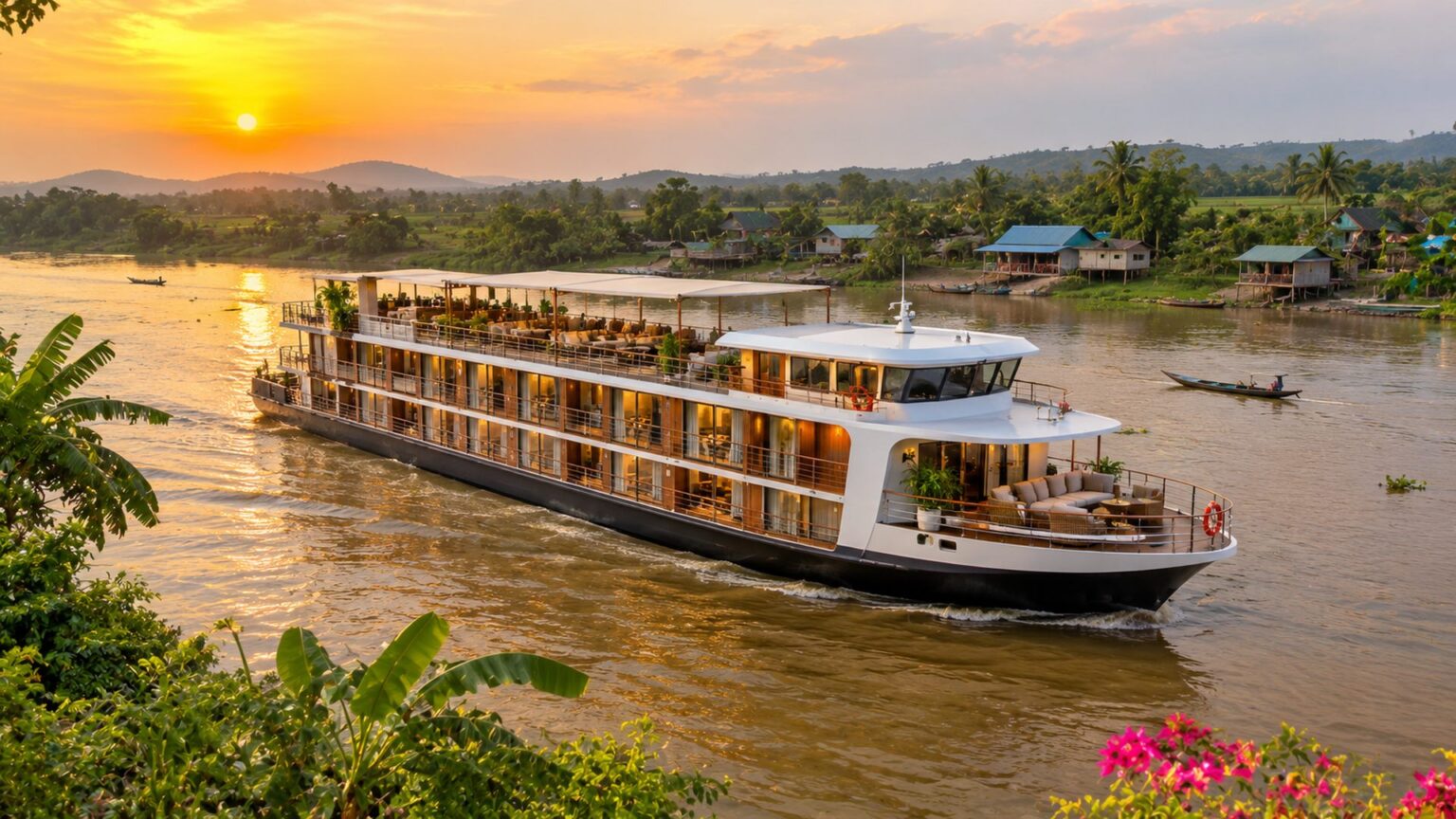
A luxury mekong river cruise combines an intimate ship, attentive service, and guided visits to riverside communities in Vietnam and Cambodia. The best choice is not always the most expensive sailing. It is the itinerary that matches your interests, travel season, preferred cabin, and comfort needs. Before booking, compare time on the river with time spent on roads, check what the fare includes, and understand how changing water levels can affect the route. These steps help you choose a rewarding journey rather than simply an impressive brochure.
The Mekong offers a slower view of Southeast Asia than a typical city tour. You may watch fishing boats leave at dawn, visit a local market, or explore a temple with a guide. Back aboard, the pace becomes quiet again. That balance between discovery and downtime is the main appeal of luxury river travel.
What Makes a Mekong Cruise a Luxury Experience?
Luxury on the Mekong is less about grand entertainment and more about thoughtful details. Smaller ships can offer spacious cabins, personal service, curated meals, and a calm place to relax between visits. Many voyages include knowledgeable local guides who explain everyday life along the river.
A polished ship is only one part of the experience. Good excursion planning, clear communication, comfortable transport, and well paced days matter just as much. A beautiful suite will not compensate for a schedule full of unexpected transfers or activities that do not suit your mobility.
River Cruising Is Different From Ocean Cruising
River ships are smaller than most ocean vessels. Their public spaces often focus on dining, a lounge, a sun deck, and perhaps a pool or spa. You should not expect a large theater, numerous restaurants, or nonstop entertainment.
The reward is proximity to the destination. Villages, farmland, and active waterways pass close to the ship. Some excursions begin from small boats or nearby landing points, creating a more direct connection with the surroundings.
Eight Smart Ways to Plan a Better Luxury Mekong River Cruise
1. Choose the Right Stretch of the Mekong
Most well known luxury journeys explore the lower Mekong across southern Vietnam and Cambodia. These itineraries often connect the Mekong Delta with Phnom Penh and a road transfer toward Siem Reap. They suit travelers interested in markets, river communities, temples, and a blend of rural and urban experiences.
The upper Mekong in Laos is a different journey. Ships and itineraries may emphasize remote landscapes, small settlements, and slower travel between navigable sections. Do not assume an itinerary mentioning Laos follows the same route as a Vietnam and Cambodia cruise.
Check Where the Cruise Actually Begins
A trip advertised as Ho Chi Minh City to Siem Reap may begin with a drive to the ship and end with another road transfer. The cities may be tour gateways rather than ports beside the vessel. Read the day by day schedule and locate the first and last embarkation points.
2. Match the Sailing Season to Your Priorities
The lower Mekong has a wetter season, broadly from May to October, and a drier period, broadly from November to April. Many travelers prefer the less rainy months for outdoor touring. However, hotter conditions can develop later in the dry season, and river levels vary.
High water brings lush scenery and can open access to some waterways. Lower water may make certain passages impractical, particularly around Tonle Sap Lake in Cambodia. Operators may adjust stops or arrange road transfers when boats cannot safely follow the advertised route.
Ask About Water Level Alternatives
Before paying a deposit, ask which parts of your itinerary depend on seasonal navigation. Find out whether a change would mean a coach journey, a different landing, or a revised excursion. No operator can promise identical river conditions every year.
For a luxury mekong river cruise in the rainy season, ask whether excursions use covered boats and how the crew handles sudden showers. Rain often falls in bursts rather than throughout the day, but conditions vary. If photography is a priority, compare the light, greenery, and excursion timing instead of choosing by temperature alone.
3. Compare Ship Size and Cabin Layout
A boutique river ship may offer fewer guests and a quiet atmosphere. A larger river vessel may provide more public areas and a wider choice of cabins. Neither style is automatically better for every traveler.
Look at actual cabin floor plans rather than promotional photographs. Check bed configuration, storage, bathroom access, air conditioning, window size, and whether the balcony is a separate outdoor space or simply a sliding glass opening. Cabin location can also influence noise and views.
If you are booking a luxury mekong river cruise for a special occasion, ask about private dining options and any additional charges. A balcony cabin may feel romantic, yet a quiet location and good sleep could matter more. Check whether the advertised suite size includes the outdoor space, since operators do not always present dimensions the same way.
Check Accessibility Before Booking
Some vessels have narrow stairs, raised thresholds, or tender transfers that require careful steps. An elevator, if present, may not serve every deck. Travelers with mobility needs should obtain written confirmation of accessible cabins, boarding arrangements, and excursion alternatives.
4. Prioritize Meaningful Shore Excursions
A memorable itinerary balances famous landmarks with smaller discoveries. Guided markets, family workshops, craft demonstrations, and village visits can reveal how people live and work beside the river. Phnom Penh also offers important historical sites that deserve time and respectful interpretation.
Read how many tours are included each day and whether groups divide by interest or physical pace. If you prefer photography or quiet observation, an overly crowded schedule may feel rushed. Ask about free time and whether optional activities cost extra.
Choose Respectful Community Experiences
Look for visits organized with local partners and clear visitor expectations. Ask permission before photographing people, especially children, and respect religious spaces. A good excursion should create opportunities to learn without turning everyday community life into a performance.
5. Examine What the Fare Actually Includes
Luxury labels do not have one standard meaning. Some itineraries include most meals, selected drinks, guided tours, and gratuities. Others charge separately for premium beverages, spa services, airport transfers, laundry, or certain excursions.
Compare the final cost for the same number of nights and similar cabin categories. Check whether the quoted price covers only the river cruise or also several hotel nights. A longer trip may appear more expensive simply because it includes additional city touring and accommodation.
Read the Small Print on Transfers
Ask who arranges travel between the airport, hotel, port, and final city. Confirm baggage handling and what happens if a flight is delayed. A seamless transfer can matter more than a small difference in cabin decor after a long international journey.
For example, compare two offers by adding the airport transfer, two optional visits, drinks, and any precruise hotel night. Do not forget gratuities if they are not included. This simple calculation makes a luxury mekong river cruise comparison far fairer than choosing from an attractive starting fare alone.
6. Plan City Extensions and Border Documents
Many visitors combine the river with Ho Chi Minh City, Siem Reap, and sometimes Hanoi or Ha Long Bay. A land extension can make a long flight feel more worthwhile, but it also adds hotel changes and additional travel days.
Entry requirements depend on your passport, the countries visited, and the exact crossing route. Confirm current visa rules with the relevant official authorities and your cruise operator. A visa valid for arrival by air may not cover every river border crossing in the same way.
Allow Time Around Your Flights
Consider arriving at least a day before a major international embarkation arrangement when practical. Flight disruptions and long transfer distances can make same day connections stressful. Check the booking conditions if you arrange flights independently.
7. Check Health, Comfort, and Daily Pace
Expect warm weather, outdoor walks, steps at river landings, and occasional rides in smaller boats. Lightweight clothing, sun protection, suitable shoes, and drinking water help make excursions more comfortable. Ask your healthcare professional about travel vaccinations or individual health precautions well before departure.
Luxury does not remove every physical challenge. A small landing can be slippery, and a local market may have uneven paths. If you need a slower pace, ask for details about walking distances, shaded stops, restroom access, and options to remain aboard.
Prepare for Mosquitoes and Heat
Pack repellent suitable for your needs and follow local health guidance. Avoid assuming all shore visits are air conditioned. A flexible plan, rest breaks, and realistic activity choices make sightseeing more enjoyable.
8. Compare Total Value Before Paying
Start with the cabin price, then include flights, visas, transfers, tips where excluded, optional tours, travel insurance, and time before or after the cruise. A cheaper fare can become more expensive once these extras are added.
Read the deposit schedule, cancellation terms, change conditions, and any single traveler supplement. Ask whether a route alteration caused by water levels changes the refund policy. Protecting your travel budget is part of planning a comfortable trip.
Build a Simple Comparison Sheet
For each sailing, record ship name, actual river nights, cabin category, included excursions, transfers, and expected extra costs. Add a note on the typical walking pace and seasonal route changes. This comparison is more useful than judging two promotional prices side by side.
What Does a Vietnam and Cambodia Itinerary Usually Include?
The lower Mekong offers a mix of agricultural landscapes, busy river transport, local markets, and major cities. Itineraries differ, but several destinations appear regularly. Treat the following as examples rather than a fixed sequence of stops.
The Vietnamese Mekong Delta
The delta includes waterways, orchards, agricultural communities, and market towns. Depending on the ship’s route, excursions may feature small boats, workshops, and regional food. Places such as My Tho, Cai Be, or Sa Dec may appear on selected itineraries.
The appeal is seeing working waterways rather than expecting untouched scenery. Ferries, cargo vessels, and riverside businesses are part of daily life. Respectful guiding can explain how farming, trading, and transport shape the region.
Phnom Penh and Cambodia’s History
Cambodia’s capital introduces a different pace, with royal landmarks, markets, and museums. Some visits address the country’s painful modern history. Travelers should approach these experiences with sensitivity and allow time for reflection.
If a proposed tour feels emotionally difficult, ask whether an alternative is available. Luxury travel should allow room for personal choice, not pressure guests to join every activity.
From the River to Siem Reap
Siem Reap is the main gateway to Angkor’s temple complexes, but it is not always reached by continuous sailing. Routes may end farther south, followed by a coach or other arranged transfer. Water levels can affect access through Tonle Sap.
Allow enough time to explore the temples rather than squeezing the visit into one rushed morning. A stay before or after the river voyage can help you appreciate both the cultural landmarks and the slower river journey.
How to Compare Well Known Luxury Cruise Styles
Several established operators offer Mekong journeys, but their emphasis differs. Aqua Mekong is associated with a smaller expedition style ship and guided exploration. Scenic Spirit focuses on an upscale small ship experience. Emerald Harmony and AmaWaterways vessels provide other approaches to cabins, tours, and onboard service.
Do not select an operator from its reputation alone. Ships can change, itineraries vary by departure, and inclusions may differ between products or booking markets. Compare the actual vessel and sailing date, especially when a package combines several nights on land with the cruise.
Expedition Style Versus Classic River Luxury
Choose an exploration focused sailing if you value active guided outings and smaller group experiences. Choose a classic river cruise when you prefer a structured itinerary with more time to relax on board. Neither approach is inherently more authentic. The best fit depends on your pace and curiosity.
What Life on Board Feels Like
Mornings may begin with sunrise over the river and breakfast before an excursion. Afternoons can bring a guided visit, onboard talk, or time to enjoy the view. Evenings tend to revolve around dinner, conversation, and relaxed entertainment rather than large productions.
Food is an important part of the experience. Many vessels blend regional dishes with familiar international choices. If you have dietary restrictions, inform the operator early and ask what can be accommodated consistently throughout the trip.
Is a Balcony Worth the Extra Cost?
A private outdoor space can be lovely for quiet mornings. Yet a large window or shared sun deck may provide similar scenery at a lower fare. Consider how much time you will spend in your cabin and whether heat or rain might reduce balcony use.
What Should You Pack for a Mekong River Cruise?
Bring breathable clothing, comfortable walking shoes, a light rain layer, sunglasses, and a hat. Modest clothing is useful for temple visits, where shoulders or knees may need covering. A small day bag keeps water, repellent, medication, and essentials close during excursions.
Keep travel documents, prescribed medicines, and valuables in your hand luggage during international travel. Check your ship’s luggage allowance and dress guidance. Many river voyages are relatively relaxed, but individual operators may request smarter clothing for certain dinners.
If you travel with camera equipment, protect it from rain and humidity when leaving the air conditioned ship. Carry small cash in suitable local currency for personal purchases where cards are not accepted. Ask whether onboard payments are charged in a different currency and whether any cash payment facilities are available.
Practical Extras That Make a Difference
A power adapter, portable charging cable, and a secure waterproof pouch can be helpful. If you use mobility aids or medical equipment, confirm electrical access and storage with the operator. Ask about laundry facilities on longer combined journeys.
How to Avoid Common Booking Mistakes
One frequent mistake is confusing a fifteen day holiday package with fifteen nights on the ship. Another is expecting every departure to visit Tonle Sap by water. Read the exact daily itinerary and identify each night spent aboard, in a hotel, or in transit.
Avoid comparing two cabins using square footage alone. Noise, deck position, windows, and access to public areas affect everyday comfort. Likewise, an advertised all inclusive fare may still exclude international flights or selected drinks.
Ask for Written Answers to Unclear Details
Before committing, confirm departure point, transfer duration, possible itinerary changes, cancellation conditions, and the scope of included excursions. If a particular experience matters greatly, ask whether it is scheduled or only offered when conditions allow.
Who Will Enjoy This Style of Travel Most?
A luxury mekong river cruise suits travelers who appreciate history, food, everyday culture, and scenic travel without changing hotels every night. It can also appeal to couples who prefer attentive service and a quiet atmosphere. The experience may be less suitable for travelers expecting nonstop nightlife or entirely step free touring.
Families should verify minimum ages, connecting cabin options, and child friendly programming rather than assuming every small ship welcomes younger passengers. Solo travelers should compare single supplements and social activities. A carefully chosen itinerary can accommodate different interests, but expectations should be clear.
Frequently Asked Questions
What is the best time for a luxury mekong river cruise?
November through February often offers more comfortable touring weather. Higher water during other months can change navigation and scenery, so choose based on your priorities.
How many nights should I spend on the Mekong?
A week on the river is common for a fuller Vietnam and Cambodia experience. Shorter sailings suit travelers combining the river with extensive land touring.
Can a Mekong river cruise reach Angkor Wat directly?
Usually not. Angkor’s temples are reached from Siem Reap, and most itineraries involve an onward transfer. Water levels affect whether boats approach via Tonle Sap.
Are meals and shore excursions included in luxury fares?
Many packages include most meals and guided outings, but inclusions differ. Check beverages, gratuities, optional tours, and transfers in the specific booking terms.
Is a Mekong cruise suitable for travelers with limited mobility?
It depends on the ship and excursions. Ask about stairs, boarding, tender boats, and accessible alternatives before booking or paying a nonrefundable deposit.
How much does a luxury Mekong cruise cost?
Prices vary by ship, season, cabin, length, and inclusions. Compare the total trip cost rather than relying on a starting per person fare.
Conclusion
A thoughtfully chosen Mekong voyage balances comfortable accommodation with genuine opportunities to explore Vietnam and Cambodia. The most important decisions involve route, season, cabin, excursion pace, and what the fare really includes. Check navigation changes and travel requirements early so that unexpected transfers do not overshadow the experience. With realistic expectations, a river cruise can offer a memorable and unhurried way to experience the region.
