
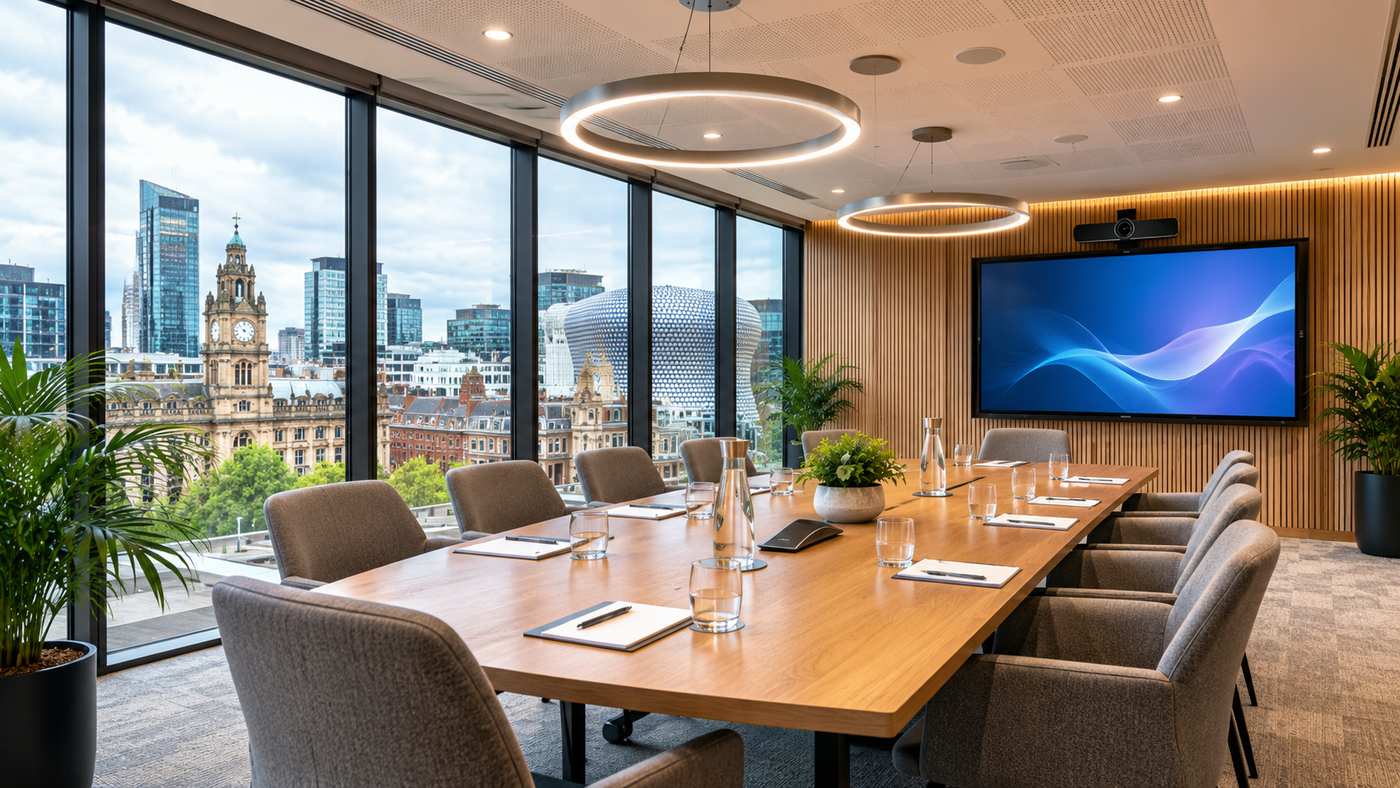
Choosing the right meeting venue can influence everything from the quality of a presentation to the productivity of a team workshop. Businesses searching for meeting rooms Birmingham want more than an available table and chairs. They need a convenient location, reliable technology, comfortable surroundings, clear pricing, and a professional environment that supports their event.
Birmingham is one of the United Kingdom’s major commercial centres, making it a practical location for meetings involving colleagues, clients, and business partners travelling from different regions. The city offers a wide range of options, including small private offices, executive boardrooms, training facilities, hotel meeting suites, and larger conference spaces.
However, finding the right room requires more than choosing an attractive photograph or the lowest advertised hourly rate. Capacity, accessibility, transport connections, audiovisual equipment, catering, and booking conditions can significantly affect the overall experience.
This guide explains how to compare Birmingham meeting venues, understand common pricing structures, choose suitable facilities, and organise successful business gatherings.
Why Choose Birmingham for Business Meetings?
Birmingham provides a central location for organisations bringing together participants from across England and the wider United Kingdom.
The city’s railway network, business districts, hospitality services, and conference facilities make it suitable for both short meetings and larger professional events.
Convenient National Transport Connections
Birmingham New Street is a major railway hub with connections to numerous UK destinations.
Participants travelling from other cities can often reach central meeting venues without needing a car.
Birmingham Moor Street and Snow Hill also serve parts of the city, while Birmingham International provides access to the airport and NEC campus.
Travel arrangements should still be checked for the specific event date because rail timetables, engineering work, and accessibility arrangements may change.
A Strong Commercial Environment
Birmingham’s business community includes professional services, technology, education, manufacturing, finance, and other industries.
Its Colmore business area is particularly associated with commercial and professional activity.
This creates demand for spaces suitable for client presentations, interviews, strategy sessions, training events, and networking.
Different Types of Professional Venues
Unlike locations dominated by a single type of conference facility, Birmingham offers several categories of meeting accommodation.
Businesses can compare serviced offices, coworking spaces, hotels, specialist training venues, and dedicated conference centres.
The diversity helps organisations find rooms that match their event requirements rather than adapting every meeting to one format.
What Types of Meeting Rooms Are Available in Birmingham?
When exploring meeting rooms Birmingham options, begin by identifying the type of event being organised.
Different room categories support different activities.
Small Private Meeting Rooms
Small meeting rooms are suitable for interviews, one-to-one discussions, recruitment sessions, and short internal meetings.
These spaces commonly provide a meeting table, chairs, internet access, and basic presentation equipment.
A compact room can be more economical and comfortable for a small group than a large conference suite.
However, privacy and sound insulation deserve attention when confidential matters will be discussed.
Executive Boardrooms
Boardrooms typically feature a central table with participants seated around it.
They are useful for senior management meetings, client presentations, negotiations, and formal decision-making.
Professional boardrooms may also include integrated screens, video conferencing equipment, and presentation connections.
When selecting meeting rooms Birmingham for board-level discussions, consider the overall atmosphere alongside practical features such as acoustics and confidentiality.
Training and Workshop Rooms
Training rooms are designed for learning, collaboration, and active participation.
They may accommodate classroom seating, group tables, or U-shaped arrangements.
A suitable training venue should provide enough space for participants to work comfortably, move around, and view presentations.
Breakout rooms can be particularly useful for interactive workshops.
Hybrid Meeting Rooms
Hybrid meetings bring together people attending in person and remotely.
These rooms need more than ordinary Wi-Fi.
Effective hybrid facilities may include microphones, cameras, speakers, suitable lighting, and a display that allows remote participants to remain involved.
The quality of audio is especially important because remote attendees may struggle when several people speak from different parts of a room.
Hotel Meeting Rooms
Hotels can be convenient for events involving overnight guests or full-day programmes.
They may offer catering, accommodation, reception support, and dedicated business facilities.
However, each venue’s package and service level differs.
Check whether equipment, refreshments, and additional rooms are included or charged separately.
Conference and Event Spaces
Larger gatherings may require presentation stages, multiple breakout rooms, registration areas, and more sophisticated audiovisual support.
Birmingham has established conference facilities for these purposes, including venues within the city centre and near the NEC.
A specialist conference venue can offer more flexibility for multi-session events than a standard boardroom.
Choosing the Best Birmingham Area for Your Meeting
Location is one of the most important decisions when booking a business meeting.
The right district depends on how participants will travel, how long the meeting will last, and whether additional activities are planned.
Birmingham City Centre
City-centre venues can be convenient for participants arriving by train.
The area offers a mixture of serviced offices, hotel meeting rooms, and professional event facilities.
A central location may also make it easier to arrange lunch, informal networking, or follow-up meetings nearby.
When comparing meeting rooms Birmingham city-centre listings, check the walking route from the relevant railway station rather than relying only on a straight-line distance.
Colmore Business District
Colmore is an established commercial area with offices, professional services, hospitality businesses, and meeting facilities.
It may suit organisations seeking a formal business setting.
Board meetings, interviews, and professional client discussions can benefit from a venue that matches the desired corporate atmosphere.
Broad Street and Westside
The Westside area offers access to hotels, hospitality venues, and major cultural and convention facilities.
It may be attractive for meetings combined with accommodation, client entertainment, or longer events.
Consider whether the surrounding activity and venue layout are appropriate for confidential or highly focused sessions.
Digbeth and Eastside
Digbeth and Eastside include creative and contemporary commercial spaces alongside established event infrastructure.
Some venues use converted industrial buildings, while others provide purpose-designed conference facilities.
These environments may appeal to teams looking for a different atmosphere for workshops, creative sessions, or company gatherings.
The final choice should still depend on accessibility, room configuration, and technical suitability.
Birmingham Airport and NEC Area
For participants arriving by air or travelling from outside the city, facilities near Birmingham International and the NEC may be practical.
Birmingham Airport connects with Birmingham International station through the Air-Rail Link.
The NEC campus is also served by Birmingham International.
Before arranging meeting rooms Birmingham near the airport, compare actual transfer arrangements and the convenience of the proposed venue for all participants.
13 Proven Tips for Booking Meeting Rooms in Birmingham
A successful booking process begins with a clear understanding of the meeting.
The following recommendations help organisations compare rooms, avoid unexpected expenses, and create a better experience for attendees.
1. Define the Purpose of the Meeting
Start by deciding what the event needs to accomplish.
A confidential interview requires different surroundings from a collaborative workshop.
A training session may require individual writing surfaces, while a presentation needs clear visibility and reliable audiovisual equipment.
When reviewing meeting rooms Birmingham options, describe the desired outcome to the venue manager.
This helps identify a suitable room and prevents paying for unnecessary facilities.
2. Choose a Location Based on Attendee Travel
Consider where guests are travelling from.
If most participants will arrive by rail, a venue near a convenient station may reduce travel difficulties.
If attendees are driving, check parking availability, charges, and nearby access routes.
For guests flying into Birmingham, compare airport-area facilities with city-centre alternatives.
The easiest location for the organiser is not always the easiest for the majority of attendees.
3. Match Room Capacity to the Seating Layout
An advertised room capacity may refer to a particular seating arrangement.
A room accommodating 30 people in theatre style might support considerably fewer around a boardroom table.
Ask the venue for capacity figures based on the layout you actually intend to use.
Also consider movement, luggage, presentation equipment, and accessibility.
Choosing meeting rooms Birmingham purely by maximum occupancy can produce an unnecessarily cramped event.
4. Compare Hourly, Half-Day, and Full-Day Hire
Some meeting venues charge by the hour.
Others offer half-day, full-day, or per-delegate packages.
The most economical option depends on the event duration and what is included.
A shorter hourly booking may suit an interview.
For training or workshops involving refreshments and setup time, a full-day package may offer better overall value.
Check the minimum booking period before making a comparison.
5. Request a Complete Written Price
An attractive advertised rate does not necessarily represent the total cost.
Ask whether the quotation includes VAT, presentation equipment, internet access, refreshments, catering, service charges, and room setup.
For meeting rooms Birmingham bookings, also confirm charges for additional time or last-minute changes.
A detailed quotation makes it easier to compare venues fairly.
6. Check Wi-Fi and Presentation Technology
Reliable internet access is essential for many business meetings.
Ask whether the venue provides guest Wi-Fi, suitable bandwidth, a presentation screen, and the connections required by your devices.
If you need to show a video or conduct remote demonstrations, confirm that the available equipment supports the intended activity.
Where possible, test important connections before the meeting begins.
Do not assume a room advertised as technologically equipped provides every accessory or adapter.
7. Evaluate Hybrid Meeting Facilities
Hybrid meetings require both in-room and remote participants to communicate effectively.
Ask whether the venue supplies a suitable camera, microphones, speakers, and conferencing equipment.
Confirm compatibility with the platform your organisation uses.
A room with a large screen but inadequate microphones may be unsuitable.
When booking meeting rooms Birmingham for hybrid events, request a technical test and establish who will help if a connection fails.
8. Consider Accessibility From the Beginning
An accessible meeting involves more than the main entrance.
Review step-free routes, lifts, accessible toilets, seating arrangements, appropriate circulation space, and any communication support required.
The UK’s Equality Act 2010 includes duties concerning reasonable adjustments in relevant circumstances.
Organisers and venues should consider participants’ needs rather than assume that a venue’s general accessibility label answers every question.
Ask for specific information and communicate reasonable requirements in advance.
9. Check Privacy and Sound Conditions
Confidential meetings require an appropriate level of privacy.
Glass walls, shared coworking areas, and rooms beside busy corridors may create distractions.
Ask whether doors close properly, whether conversations can be heard outside, and whether other events will take place nearby.
For interviews, financial discussions, or sensitive business planning, privacy may matter more than decorative finishes.
10. Assess Lighting, Ventilation, and Comfort
A room can look impressive in photographs yet feel uncomfortable during a long event.
Check whether it has suitable temperature control, adequate lighting, and appropriate ventilation.
Natural daylight may be beneficial, but excessive glare can make screens difficult to see.
Seating comfort also matters, particularly for all-day training.
When evaluating meeting rooms Birmingham, consider whether the environment will help people stay focused.
11. Plan Catering and Refreshments Early
Food arrangements depend on the meeting duration.
Short sessions may need only water, tea, and coffee.
A full-day workshop may require lunch, regular breaks, and snacks.
Ask whether catering is included, whether outside food is permitted, and how dietary requirements are managed.
Confirm serving times so refreshments do not interrupt important presentations.
12. Review Cancellation and Rescheduling Policies
Meeting arrangements can change because of travel problems, staff availability, or business priorities.
Before paying, read the venue’s cancellation policy.
Check deadlines, deposits, refunds, date changes, and any charges associated with reducing attendee numbers.
Understand the consequences of cancelling an event after ordering catering or additional equipment.
A flexible booking policy can have genuine value, even if the initial room rate is slightly higher.
13. Visit the Venue or Request a Virtual Walkthrough
Photographs may not reveal the room’s actual proportions, nearby noise, or entrance arrangements.
For important events, arrange a site visit when practical.
If that is not possible, request recent photographs, a floor plan, and a video walkthrough.
Confirm the exact room being reserved rather than assuming that promotional images show the space you will receive.
This final check can prevent avoidable surprises when booking meeting rooms Birmingham for a high-priority event.
How Much Do Meeting Rooms in Birmingham Cost?
Meeting room prices vary according to location, capacity, booking duration, facilities, and services.
Current venue listing data provides a useful starting point, but it should not be treated as a guaranteed quotation.
According to Tagvenue’s November 2026 Birmingham meeting-room data, typical advertised pricing falls within approximately:
| Booking type | Indicative listed range |
|---|---|
| Hourly room hire | £42–£78 per hour |
| Full-day room hire | £260–£535 per day |
| Per-person packages | £45–£55 per person |
These figures represent marketplace ranges rather than prices available for every date or venue.
Individual listings may fall outside them.
What Affects the Hire Price?
Central location, room size, quality of equipment, and included services can affect the price.
A compact room offering basic internet access may cost less than a larger executive boardroom with integrated conferencing technology.
Premium hotels and specialist conference venues may also have different pricing structures.
When comparing meeting rooms Birmingham prices, calculate the cost of the complete meeting rather than the room alone.
Hourly Hire Versus Day Delegate Rates
Hourly hire is often straightforward for short events.
A day delegate rate may combine the meeting space with refreshments, catering, and basic equipment.
However, packages vary.
Ask for an itemised comparison so you know whether paying per attendee provides a real saving.
Hidden Costs to Check
Additional expenses can include specialist audiovisual support, extra microphones, printing, catering upgrades, parking, setup time, and extended use.
Also confirm whether quoted prices include VAT.
Calculate the Cost Per Attendee
A useful budgeting method is to divide the total event cost by the expected number of participants.
Include room hire, catering, equipment, and other essential charges.
This makes it easier to compare a cheaper room requiring separate services against a comprehensive package.
How to Choose the Right Meeting Room Layout
Seating arrangements influence how people communicate.
The same physical room may be productive for one event type but unsuitable for another.
Boardroom Layout
A boardroom arrangement places participants around a central table.
It works well for discussions, planning sessions, and presentations involving a relatively small group.
Everyone should be able to see the screen and hear other speakers clearly.
Theatre Layout
Theatre-style seating places chairs facing the presenter.
It supports information-sharing sessions and larger presentations.
However, participants may have limited writing space and fewer opportunities for group discussion.
Classroom Layout
Classroom seating provides tables or desks facing the front.
It is useful for instruction, training, and activities requiring laptops or written notes.
Confirm that power access is sufficient.
U-Shaped Layout
A U-shaped arrangement allows attendees to face each other while leaving a central area open.
It can work well for workshops, discussions, and facilitated sessions.
However, it may require more floor space than other layouts.
Cabaret Layout
Cabaret seating commonly uses smaller tables arranged for group work while maintaining a view towards the presenter.
This format can support collaborative sessions and networking activities.
For meeting rooms Birmingham workshops, confirm whether the room supports comfortable movement between tables.
Essential Facilities to Look For
The right equipment depends on the meeting objectives.
Do not pay extra for specialist features that the event will not use.
Reliable Internet Connectivity
Ask about the network available to guests and whether bandwidth is shared with other activities.
For an event relying heavily on cloud applications or video conferencing, arrange a test where possible.
Presentation Equipment
Confirm the screen size, connectivity, audio output, and available adapters.
Check whether the venue supplies support for connecting your laptop.
Power and Charging
Participants may use laptops for several hours.
Ask about accessible power sockets and whether the planned seating layout can safely support charging needs.
Avoid placing loose cables across walking routes.
Writing and Collaboration Tools
Whiteboards, flip charts, markers, and writable surfaces can be valuable for workshops.
Confirm whether they are included or require advance booking.
Reception and Guest Support
A professional reception area can help external clients and new attendees find the correct room.
Ask whether someone will be available to welcome visitors and direct them to the meeting.
Planning a Successful Hybrid Meeting in Birmingham
Hybrid meetings need more deliberate preparation than ordinary face-to-face gatherings.
Remote attendees should have opportunities to participate rather than simply watch.
Prioritise Audio Quality
Participants need to hear everyone speaking.
In larger rooms, a single laptop microphone may not capture conversation effectively.
Request suitable conference microphones and speakers.
Consider Camera Placement
The camera should provide a useful view of the speakers and discussion.
Remote participants should not have to rely on a distant camera that makes the room difficult to follow.
Test the Meeting Platform
Confirm that the room’s technology works with your chosen conferencing application.
Test screen sharing, audio, cameras, and internet access in advance.
Prepare a Backup Plan
Technical problems can happen even in well-equipped venues.
Keep a copy of the presentation available locally and identify a practical alternative for joining the call.
When hiring meeting rooms Birmingham for hybrid events, ask who is responsible for technical support during the session.
How to Book Meeting Rooms in Birmingham Step by Step
A simple booking process helps keep the event organised.
Step 1: Confirm the Event Requirements
Record the date, time, expected attendance, meeting purpose, seating layout, and required equipment.
Identify any accessibility or catering needs.
Step 2: Compare Suitable Locations
Consider transport connections, parking, and convenience for the attendees.
Avoid selecting a venue based solely on its postcode.
Step 3: Request Written Quotations
Ask for the complete hire charge, available facilities, booking terms, and any additional fees.
Confirm whether prices include VAT.
Step 4: Review the Actual Room
Request photographs, a floor plan, or an in-person visit.
Ensure that the proposed layout can accommodate the planned number of participants.
Step 5: Confirm the Booking
Read the terms before making payment.
Save the confirmation, room details, venue contact information, and cancellation policy.
Step 6: Prepare Attendee Information
Send the address, directions, arrival instructions, schedule, and accessibility details.
Provide remote participants with the appropriate meeting information.
Step 7: Check Equipment Before Starting
Arrive with sufficient time to test presentations and organise the room.
Confirm that catering and any specialist equipment are ready.
Common Mistakes When Hiring Birmingham Meeting Rooms
Choosing a room that is too small is a frequent mistake.
Capacity figures should always be checked against the actual layout and activities.
Another mistake is overlooking transport arrangements.
A venue with a competitive hire rate may become less convenient when participants face costly parking or complicated travel.
Some organisers also assume that every room provides reliable video conferencing technology.
A screen and Wi-Fi connection alone may not be sufficient.
Other common problems include failing to review cancellation conditions, underestimating refreshment needs, and leaving accessibility discussions until the event day.
A well-planned meeting rooms Birmingham booking should address these considerations before the reservation is finalised.
Meeting Rooms for Different Business Needs
Different professional activities require different features.
Recruitment Interviews
Prioritise privacy, quiet surroundings, straightforward access, and a comfortable waiting area.
A compact room may be sufficient.
Client Presentations
Choose a professional environment with suitable audiovisual equipment, seating, and reception support.
Consider whether the space reflects the intended impression of the organisation.
Staff Training
Look for flexible layouts, writing surfaces, accessible power, appropriate lighting, and space for breaks.
Executive Strategy Meetings
Privacy, comfortable seating, reliable presentation equipment, and sufficient time for uninterrupted discussion are especially important.
Networking and Team Workshops
Flexible seating, breakout areas, refreshments, and opportunities for informal conversation can support interaction.
The best meeting rooms Birmingham choice is the one that accommodates the activity rather than simply the number of people attending.
Sustainable and Accessible Meeting Planning
Practical event planning can also consider environmental impact and inclusive participation.
Encourage Convenient Public Transport
Where possible, select a venue accessible by public transport.
Provide accurate directions from the relevant station and information about step-free access.
Reduce Unnecessary Waste
Digital materials can reduce the need for printed handouts.
Ask about reusable catering equipment and sensible food quantities.
Support Inclusive Attendance
Accessibility needs differ between participants.
A room may have step-free entry but still present challenges with seating, hearing support, lighting, or toilets.
Communicate with attendees appropriately and discuss reasonable arrangements with the venue.
Consider Remote Participation
When the meeting objectives allow, hybrid attendance may help participants who cannot travel.
However, remote access should be planned properly rather than added without suitable equipment.
Frequently Asked Questions
1. How much does it cost to hire meeting rooms in Birmingham?
According to November 2026 venue listing data, typical advertised room rates are approximately £42–£78 per hour, although actual prices vary by location, facilities, date, and room size.
2. Can I hire meeting rooms Birmingham by the hour?
Yes. Many serviced offices, coworking spaces, and meeting venues offer hourly bookings. Others provide half-day, full-day, or per-delegate packages.
3. Where can I find meeting rooms near Birmingham New Street?
City-centre business districts and areas around New Street offer a variety of professional meeting spaces. Compare walking routes, venue accessibility, and facilities before booking.
4. Are there meeting rooms in Birmingham for hybrid meetings?
Yes. Some venues advertise video conferencing equipment, screens, microphones, and internet access. Confirm the exact setup and test compatibility with your meeting platform.
5. What facilities should a professional meeting room include?
Useful facilities may include suitable seating, reliable Wi-Fi, presentation equipment, accessible power, adequate lighting, temperature control, and refreshments. Requirements depend on the meeting.
6. How early should I book a Birmingham meeting room?
Book as early as practical, particularly for larger groups, specific dates, or events needing catering and specialist equipment. Smaller rooms may offer more flexible availability, but this is not guaranteed.
Conclusion
Finding suitable meeting rooms Birmingham requires balancing location, comfort, technical facilities, accessibility, and total cost. The right venue should support the purpose of the event while making attendance straightforward for everyone involved. Comparing complete quotations, checking room layouts, and confirming booking conditions can prevent unnecessary expense and disruption. With careful planning, organisations can create a professional meeting experience that supports productive discussion and better business outcomes.
