
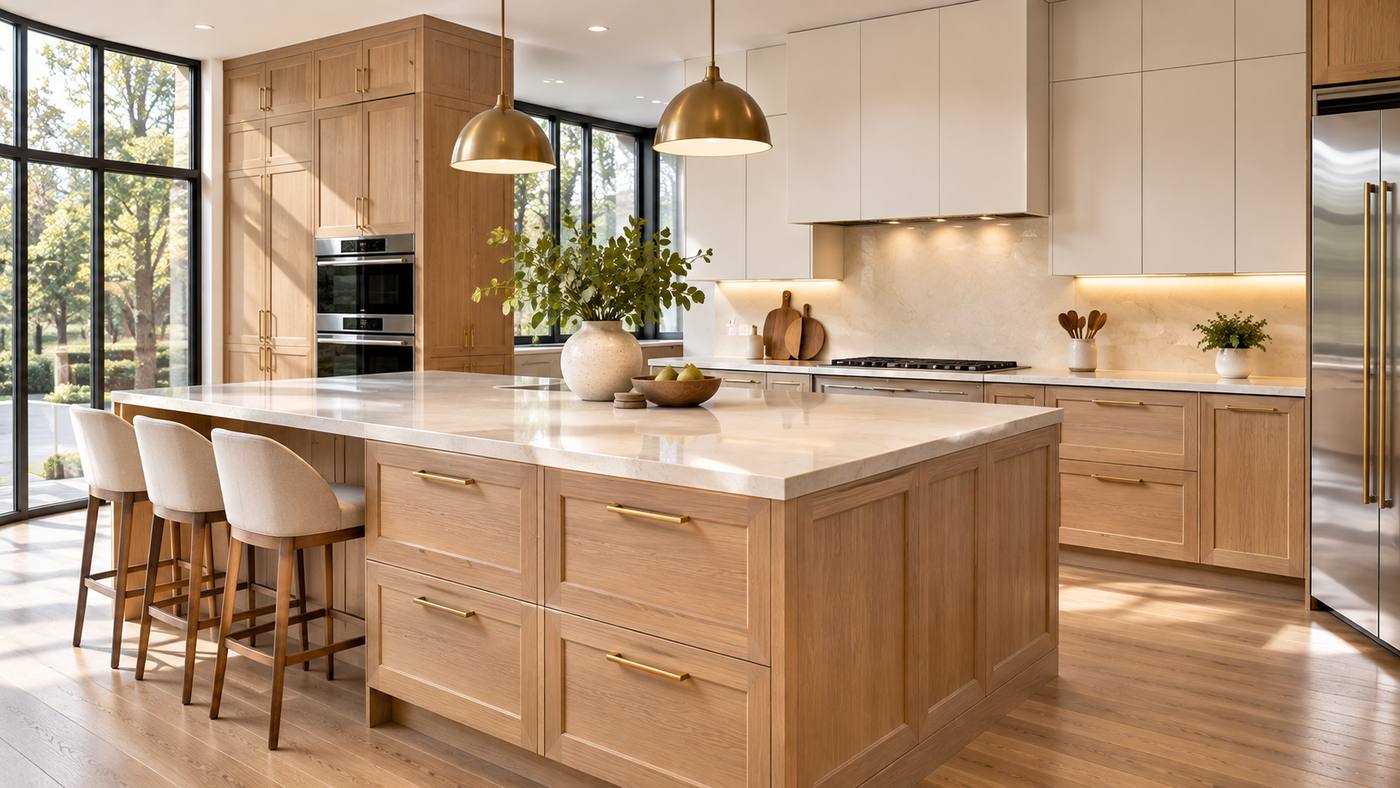
A kitchen can look completely different without changing its walls, windows, or appliances. Often, the biggest visual transformation comes from the cabinetry. Choosing modern kitchen cabinet styles allows homeowners to introduce cleaner lines, warmer materials, more practical storage, and a design that feels comfortable for everyday living. From minimalist slab doors to refined Shaker cabinets and natural wood finishes, contemporary cabinetry offers options for different homes, budgets, and personal preferences.
Modern kitchen design is no longer limited to glossy white cabinets and completely hidden handles. Natural timber, soft neutral colours, textured surfaces, and carefully selected hardware are increasingly important. The most successful designs combine visual simplicity with useful storage, reliable construction, and finishes that suit the household.
However, a beautiful cabinet photograph does not reveal everything about quality. Door material, cabinet box construction, hinges, drawer runners, installation accuracy, and moisture protection can affect performance just as much as appearance.
This guide explores popular cabinet styles, explains how materials and finishes differ, and provides practical recommendations for planning a kitchen that remains attractive and functional over time.
What Are Modern Kitchen Cabinet Styles?
Modern kitchen cabinet styles refer to cabinetry designs characterized by relatively clean profiles, functional storage, thoughtful materials, and coordinated finishes.
Some feature flat doors with no decorative moulding. Others reinterpret traditional designs using slimmer frames, understated handles, or contemporary colours.
A modern kitchen does not need to follow a single strict appearance.
Homeowners can create a minimalist space with seamless cabinets or a warmer contemporary kitchen featuring natural wood and subtle decorative details.
What Defines Modern Kitchen Cabinet Design?
Common characteristics include uncluttered door fronts, consistent proportions, practical drawer systems, and coordinated finishes.
Many modern kitchens also incorporate integrated appliances, tall pantry cabinets, concealed storage, and carefully planned lighting.
These details create a more organized visual appearance while helping the kitchen function efficiently.
Modern Versus Contemporary Cabinet Styles
Modern design is sometimes associated with established minimalist design principles, while contemporary design reflects what is currently popular.
In everyday kitchen planning, the terms often overlap.
A traditional Shaker door, for example, can appear contemporary when paired with narrow framing, a muted finish, and simple hardware.
Are Modern Cabinets Always Handleless?
No. Handleless cabinetry is one option, but modern designs can also feature slim bar pulls, recessed handles, or carefully selected knobs.
Hardware should support the intended appearance without making cabinets uncomfortable to use.
13 Smart Modern Kitchen Cabinet Styles to Consider
The following options include popular door profiles, material-led designs, and coordinated styling approaches.
Each offers a different combination of appearance, maintenance, and functionality.
1. Flat-Panel Slab Kitchen Cabinets
Flat-panel slab cabinets are among the clearest examples of modern kitchen cabinet styles.
Their doors have a smooth, uninterrupted surface without raised or recessed decorative frames.
This simple design works particularly well in minimalist homes, open-plan kitchens, and spaces with strong architectural lines.
Slab fronts can be manufactured using painted MDF, wood veneer, laminate, or other suitable materials.
The visual effect changes significantly with the selected finish.
A matte cream slab cabinet creates a warm and understated appearance, while a walnut veneer introduces natural grain and texture.
Best suited for: Minimalist, contemporary, and Scandinavian-inspired kitchens.
2. Slim Shaker Kitchen Cabinets
Shaker cabinetry features a central recessed panel surrounded by a frame.
Traditional versions often have relatively broad rails and stiles.
Modern slim Shaker designs use narrower framing and restrained detailing.
This allows the cabinets to retain some classic character without looking heavily traditional.
Slim Shaker doors work well with soft white, sage green, muted blue, greige, and natural timber finishes.
They can be paired with simple brass, black, or stainless steel handles.
For homeowners who want modern kitchen cabinet styles that feel current without becoming overly trend-dependent, slim Shaker is a versatile option.
Best suited for: Transitional kitchens and homes combining traditional and contemporary architecture.
3. Handleless Contemporary Cabinets
Handleless cabinets create a streamlined appearance by reducing visible hardware.
Depending on the system, doors and drawers may use integrated finger pulls, recessed channels, or push-to-open mechanisms.
Each method has different practical considerations.
Push-to-open systems can create a particularly clean surface but may require more frequent adjustment or cleaning around commonly touched areas.
Integrated profiles can provide easier gripping while retaining a minimalist appearance.
The best choice depends on whether the kitchen prioritizes seamless design, easy access, or frequent family use.
Best suited for: Compact modern kitchens, apartments, and highly minimalist interiors.
4. Natural White Oak Cabinets
Natural wood cabinetry adds warmth and texture to otherwise simple rooms.
White oak is a popular material because its grain can complement restrained architectural designs.
Light oak pairs well with white countertops, pale stone, neutral walls, and soft black details.
Among modern kitchen cabinet styles, oak offers a way to create a comfortable atmosphere without relying on decorative door profiles.
Wood can be used as a veneer over a suitable engineered substrate or as part of other cabinet construction methods.
The finish should protect the surface while maintaining the desired appearance.
Best suited for: Scandinavian, organic modern, and warm minimalist kitchens.
5. Rich Walnut Kitchen Cabinets
Walnut creates a deeper, more dramatic appearance than pale oak.
Its darker brown tones and distinctive grain can make cabinets feel sophisticated without requiring glossy finishes.
Walnut works particularly well with cream stone, light countertops, bronze details, and warm lighting.
However, a kitchen filled entirely with dark cabinetry may feel heavy when natural light is limited.
A common alternative is to use walnut on the kitchen island or lower cabinets while keeping surrounding surfaces lighter.
Best suited for: Contemporary luxury kitchens and interiors emphasizing rich natural materials.
6. Two-Tone Kitchen Cabinets
Two-tone cabinetry combines contrasting colours or materials within the same kitchen.
A common approach uses light upper cabinets and darker or wood-finished lower cabinets.
Another option introduces a contrasting kitchen island.
This design can create visual depth without adding excessive decoration.
For example, matte white upper cabinets with natural oak lower units create a balanced, welcoming appearance.
Dark green base cabinets paired with warm white walls can produce a more distinctive look.
When selecting two-tone modern kitchen cabinet styles, keep the materials and colour palette coordinated rather than introducing too many unrelated finishes.
Best suited for: Medium and large kitchens, open-plan spaces, and homeowners wanting subtle contrast.
7. Fluted and Reeded Cabinet Fronts
Fluted and reeded cabinet designs introduce texture through repeated vertical grooves or raised details.
These patterns add visual interest while maintaining a relatively simple overall appearance.
They are particularly effective on kitchen islands, selected tall cabinets, and decorative storage areas.
However, heavily textured surfaces may collect grease and dust more readily than smooth doors.
Cleaning requirements depend on the depth of the grooves and surface finish.
Using textured cabinets as an accent rather than throughout the entire kitchen can create a balanced result.
Best suited for: Contemporary interiors that benefit from tactile materials and subtle architectural detailing.
8. Glass-Front Modern Cabinets
Glass-front cabinetry can make a kitchen feel more open by breaking up large areas of solid doors.
Clear glass highlights the contents, while fluted, frosted, or textured glass provides varying levels of privacy.
Modern glass-front cabinets often incorporate narrow frames and understated metal or timber finishes.
Interior lighting can improve visibility and emphasize carefully arranged items.
However, transparent doors also reveal clutter.
They are usually better suited to organized glassware, tableware, or display collections than miscellaneous household storage.
Best suited for: Display cabinets, beverage areas, and contemporary kitchens needing visual variety.
9. Matte Painted Cabinets
Matte and low-sheen painted cabinets provide an understated alternative to highly reflective surfaces.
Colours such as warm white, mushroom, soft grey, sage, and muted navy can complement a wide range of interior finishes.
Matte surfaces create a calm appearance, but the cleaning and fingerprint resistance of a finish depends on the coating technology and manufacturer.
A dark matte surface is not automatically easier to maintain than a lighter finish.
When evaluating modern kitchen cabinet styles with painted doors, ask about surface durability, touch-up options, and recommended cleaning methods.
Best suited for: Warm contemporary kitchens and interiors using restrained colour palettes.
10. Textured Laminate Cabinets
Textured laminate can recreate the appearance of wood grain, stone-inspired colours, or other decorative finishes.
It provides an option for homeowners who want a particular look without using natural veneer on every surface.
Quality varies according to the material, manufacturing method, edge treatment, and substrate.
A well-manufactured laminate door can be practical for busy kitchens.
However, damaged edges and prolonged water exposure may cause problems in certain constructions.
Review product samples and warranty information rather than judging solely by the printed pattern.
Best suited for: Practical family kitchens, apartments, and budget-conscious renovations.
11. Dark Contemporary Cabinet Designs
Dark cabinetry can create a distinctive kitchen when paired with sufficient light and visual contrast.
Charcoal, graphite, dark navy, and deep green are alternatives to traditional black.
Dark modern kitchen cabinet styles often work best when countertops, backsplashes, and surrounding walls prevent the space from appearing too enclosed.
Natural wood details can introduce warmth.
Brushed metallic hardware and thoughtful under-cabinet lighting can also help define individual surfaces.
The finish should be selected with attention to fingerprint visibility and routine cleaning.
Best suited for: Well-lit contemporary kitchens and spaces designed around dramatic contrasts.
12. Integrated Appliance Cabinetry
Integrated cabinetry allows certain appliances to sit behind matching cabinet panels.
This can reduce visual clutter and create a more continuous design across the room.
Panel-ready refrigerators and dishwashers are common examples.
However, integration must follow the appliance manufacturer’s requirements.
Ventilation, access, weight, hinge compatibility, and service clearances cannot be ignored.
This design approach is especially useful when modern kitchen cabinet styles form part of an open-plan living area.
Best suited for: Premium kitchens, open-plan homes, and minimalist interiors.
13. Statement Kitchen Island Cabinets
A kitchen island can become a visual centerpiece through contrasting cabinet materials, colours, or textures.
For example, pale perimeter cabinets might surround a walnut island.
Alternatively, a fluted island base can introduce detail into an otherwise smooth, minimalist kitchen.
The island should still provide appropriate circulation space and practical storage.
Deep drawers, appliance storage, or a designated preparation zone can make it more useful.
A visually impressive island is less successful if it restricts access to the refrigerator, dishwasher, or main working area.
Best suited for: Larger kitchens with sufficient floor space for comfortable movement.
Which Cabinet Door Style Is Best for a Modern Kitchen?
The best cabinet door style depends on the desired appearance, cleaning preferences, budget, and architectural character of the home.
Three common choices are slab, Shaker, and handleless designs.
| Cabinet style | Main advantage | Key consideration |
|---|---|---|
| Flat-panel slab | Clean, minimalist appearance | Surface and edge quality |
| Slim Shaker | Versatile, understated detailing | More profiles to clean |
| Handleless | Continuous cabinet lines | Grip comfort and hardware mechanism |
| Glass-front | Light, open appearance | Visible contents and glass cleaning |
| Fluted or reeded | Decorative texture | More detailed maintenance |
Among modern kitchen cabinet styles, flat-panel doors are a straightforward choice for minimalist interiors.
Slim Shaker designs are often suitable when homeowners want a balance of classic and contemporary features.
Handleless cabinetry works well when clean visual lines are a priority, provided the chosen opening mechanism is practical.
Current Modern Kitchen Cabinet Design Trends
Recent design research points toward warmer materials, efficient storage, and less visually complicated kitchens.
The 2026 U.S. Houzz Kitchen Trends Study found that Shaker remained the most common door style among surveyed homeowners adding or replacing cabinets, followed by flat-panel designs.
The study also reported that wood finishes narrowly overtook white as the leading cabinet colour choice among renovating homeowners.
Meanwhile, the National Kitchen & Bath Association’s 2027 trends research emphasizes natural wood cabinetry, concealed appliances, and more intentionally organized kitchen zones.
These findings reflect different survey groups and should be understood as design indicators rather than universal rules.
Warm Minimalism
Warm minimalism combines simple cabinet shapes with inviting natural materials.
Instead of bright white cabinets throughout the room, homeowners may choose oak, beige, ivory, or muted earth tones.
The aim is to create a clean kitchen that does not feel overly clinical.
Concealed Storage and Integrated Appliances
Modern kitchens increasingly emphasize ways to hide everyday visual clutter.
Tall pantry cabinets, integrated appliances, appliance garages, and well-organized drawers can help keep counters clear.
However, effective concealed storage must remain accessible and correctly ventilated where necessary.
Personalised Colour and Materials
A kitchen can feel modern without following the most popular colour of the year.
A restrained green, soft blue, walnut, or warm neutral finish can work well when coordinated with the home’s flooring and lighting.
For lasting appeal, choose materials and colours that genuinely suit the household.
Best Materials for Modern Kitchen Cabinets
The underlying construction matters as much as the door style.
Different materials provide different advantages, and no single option is ideal for every budget or environment.
Plywood Cabinet Construction
Plywood is commonly used for cabinet boxes because it can provide good structural performance when properly specified and manufactured.
Quality depends on the grade, thickness, adhesives, edge treatment, and assembly.
Plywood is not automatically waterproof.
Persistent moisture can still cause damage.
MDF Cabinet Doors
Medium-density fibreboard provides a smooth surface suitable for many painted cabinet designs.
It can be useful for producing consistent flat-panel and certain routed door profiles.
However, the choice of MDF product, coating, and edge protection matters, particularly around sinks and other moisture-prone areas.
Solid Wood Cabinet Components
Solid wood offers natural character and can be durable when correctly designed and finished.
However, wood responds to changes in temperature and humidity.
Some cabinet door constructions use frames and panels specifically to accommodate normal wood movement.
Solid timber is not automatically the best material for every modern slab door.
Melamine and Laminate Surfaces
Melamine-faced boards and decorative laminates can provide a range of colours and textures at different price levels.
Their performance depends on the board substrate, surface material, and quality of edges and joints.
Pay particular attention to areas exposed to cleaning water or steam.
Why Construction Quality Matters
Cabinet doors represent only one part of the product.
Box assembly, hinges, drawer slides, fasteners, edge sealing, and installation accuracy affect how a kitchen performs over time.
A modestly priced cabinet with reliable components may provide better practical value than an expensive door attached to poorly constructed storage.
How to Choose the Right Cabinet Colours and Finishes
Choosing a finish begins with assessing the available daylight, surrounding flooring, countertops, and the overall size of the room.
White and Cream Cabinets
Light cabinetry can make a space feel open and provides flexibility when changing decorative elements later.
Warm white and ivory finishes often pair comfortably with timber and stone.
Natural Wood Cabinets
Oak, walnut, and wood-effect finishes introduce texture.
The direction and consistency of the grain can influence whether the finished kitchen looks calm or visually busy.
Green and Blue Cabinetry
Muted green and navy tones provide alternatives to neutral kitchens.
They can be combined with pale stone, warm wood, and understated metal hardware.
Black and Charcoal Cabinets
Dark surfaces can create an elegant result but require adequate lighting and careful contrast.
Consider how fingerprints, dust, and everyday wear will appear on the selected finish.
How to Plan Modern Kitchen Cabinet Storage
The most attractive modern kitchen cabinet styles still need practical interiors.
A useful storage plan begins with how the household cooks, cleans, shops, and uses appliances.
Prioritize Deep Drawers
Deep drawers can make cookware and everyday utensils easier to reach than items stored at the back of traditional lower cabinets.
Choose suitable drawer runners and load ratings for the contents.
Use Tall Pantry Cabinets Effectively
Tall pantry cabinets can organize food, small appliances, and household supplies.
Adjustable shelves and pull-out storage may improve access.
However, heavy pull-out units require appropriate hardware and reliable installation.
Plan Corner Storage Carefully
Corner cabinets can be difficult to access.
Options include rotating shelves, pull-out mechanisms, or a simpler shelf arrangement.
Select the solution according to available space, cost, and expected use.
Design Around Work Zones
Modern kitchen storage works best when frequently used items are located near the tasks they support.
For example, cookware belongs near cooking areas, while dishes may be stored near the dishwasher.
Storage Should Match the Household
A family that cooks daily may prioritize large drawers and pantry space.
A household that frequently entertains may benefit from beverage storage and dedicated serving areas.
Avoid paying for specialized accessories that do not solve a real storage problem.
Choosing Hardware and Lighting for Modern Cabinets
Hardware and lighting influence both the appearance and usability of modern cabinetry.
Cabinet Handles and Pulls
Slim bar handles work with slab cabinets.
Simple knobs can complement slim Shaker designs.
Recessed profiles may suit handleless kitchens where users still need a comfortable grip.
Choose dimensions that feel appropriate for each door or drawer rather than selecting handles purely for appearance.
Hinges and Drawer Runners
Good-quality hinges should support suitable adjustment and reliable opening.
Soft-close mechanisms can improve everyday convenience, although their performance depends on correct installation.
Large drawers need runners designed for the expected load.
Under-Cabinet Lighting
Task lighting can help illuminate worktops and preparation areas.
Integrated lighting should be planned before installation so wiring, access, and suitable electrical components can be accommodated.
Avoid adding unnecessary bright decorative lighting when simple task lighting would provide better functionality.
How Much Do Modern Kitchen Cabinet Styles Cost?
Cabinet costs depend on dimensions, materials, manufacturing methods, hardware, customization, installation, and local labour rates.
There is no reliable universal price for modern kitchen cabinet styles because two kitchens with the same appearance may use very different construction methods.
Stock Cabinets
Stock cabinetry is manufactured in standard dimensions and configurations.
It may offer a more economical solution when the kitchen layout fits available sizes.
However, some spaces require filler panels or compromises in storage dimensions.
Semi-Custom Cabinets
Semi-custom cabinetry provides more flexibility in finishes, sizes, accessories, or configuration, depending on the manufacturer.
It can offer a useful balance between standard products and fully bespoke joinery.
Fully Custom Cabinets
Custom cabinetry is produced to suit the specific project.
It can be valuable for unusual room dimensions, detailed storage requirements, or carefully integrated appliances.
However, custom work generally requires more design coordination and can increase cost.
What Should a Cabinet Quote Include?
Ask for a breakdown of cabinet boxes, door fronts, finish type, hardware, installation, delivery, finishing panels, and any necessary site adjustments.
Check whether countertops, electrical work, plumbing, or appliance modifications are excluded.
Comparing complete specifications is more useful than comparing only a price per cabinet.
Common Mistakes When Choosing Modern Kitchen Cabinets
A cabinet design can look attractive in a showroom but perform poorly if practical details are overlooked.
Choosing Appearance Over Daily Function
Very large doors, awkward drawers, or difficult-to-grip handleless systems may create inconvenience.
Test sample doors and hardware before committing.
Ignoring Moisture Protection
Kitchen cabinets near sinks and dishwashers can experience water exposure.
The design should account for suitable materials, edge sealing, ventilation, and prompt leak detection.
Mixing Too Many Finishes
Combining wood, painted doors, textured surfaces, decorative glass, and multiple metals can overwhelm a small space.
Limit the palette to finishes that complement each other.
Forgetting Appliance Clearance
Refrigerators, dishwashers, ovens, and other appliances need suitable opening space, ventilation, and access.
Check manufacturer requirements before finalizing cabinet dimensions.
Overlooking Installation Quality
Even carefully manufactured cabinets can appear uneven when installed without accurate leveling and alignment.
Hire qualified installers and agree on acceptable finish details in advance.
How to Choose Modern Kitchen Cabinet Styles That Last
Before placing an order, consider how the kitchen will be used over the next several years.
Choose a design that suits both the home’s architecture and the household’s routines.
Ask suppliers for material specifications, samples, hardware information, warranty terms, and cleaning instructions.
Inspect finished examples where possible.
For larger projects, a kitchen designer or experienced cabinetmaker can help resolve layout, storage, and construction questions before manufacturing begins.
The best modern kitchen cabinet styles combine attractive proportions with materials and components suited to everyday use.
Frequently Asked Questions
1. What are the most popular modern kitchen cabinet styles?
Popular options include flat-panel slab doors, slim Shaker cabinets, handleless designs, natural wood finishes, and two-tone cabinetry. The best choice depends on the kitchen and homeowner preferences.
2. Are Shaker cabinets still considered modern?
Yes. Slim Shaker doors with restrained framing, contemporary colours, and simple hardware can work well in modern and transitional kitchens.
3. Which cabinet colour is best for a modern kitchen?
Warm white, natural oak, walnut, soft green, and charcoal are all suitable choices. Consider the room’s lighting, countertops, flooring, and overall design.
4. Are handleless kitchen cabinets practical?
They can be practical when the opening mechanism provides comfortable access and reliable operation. Test the hardware and consider cleaning and maintenance requirements.
5. What is the most durable material for kitchen cabinets?
Durability depends on construction quality, material suitability, surface protection, and maintenance. Well-manufactured plywood, MDF, and engineered-board systems can each work for appropriate applications.
6. How can I modernize kitchen cabinets without replacing them?
Depending on cabinet condition, options may include new hardware, repainting suitable surfaces, replacing doors, improving lighting, or upgrading internal storage.
Conclusion
Modern kitchen cabinet styles provide many ways to create a functional and visually appealing kitchen without sacrificing personal character. From simple slab cabinets to warm oak, slim Shaker doors, and integrated storage, the best results come from balancing design with practical requirements. Choose appropriate materials, reliable hardware, coordinated finishes, and accurate installation rather than following trends alone. A carefully planned cabinet design can make the kitchen more comfortable, organized, and enjoyable for years to come.
