
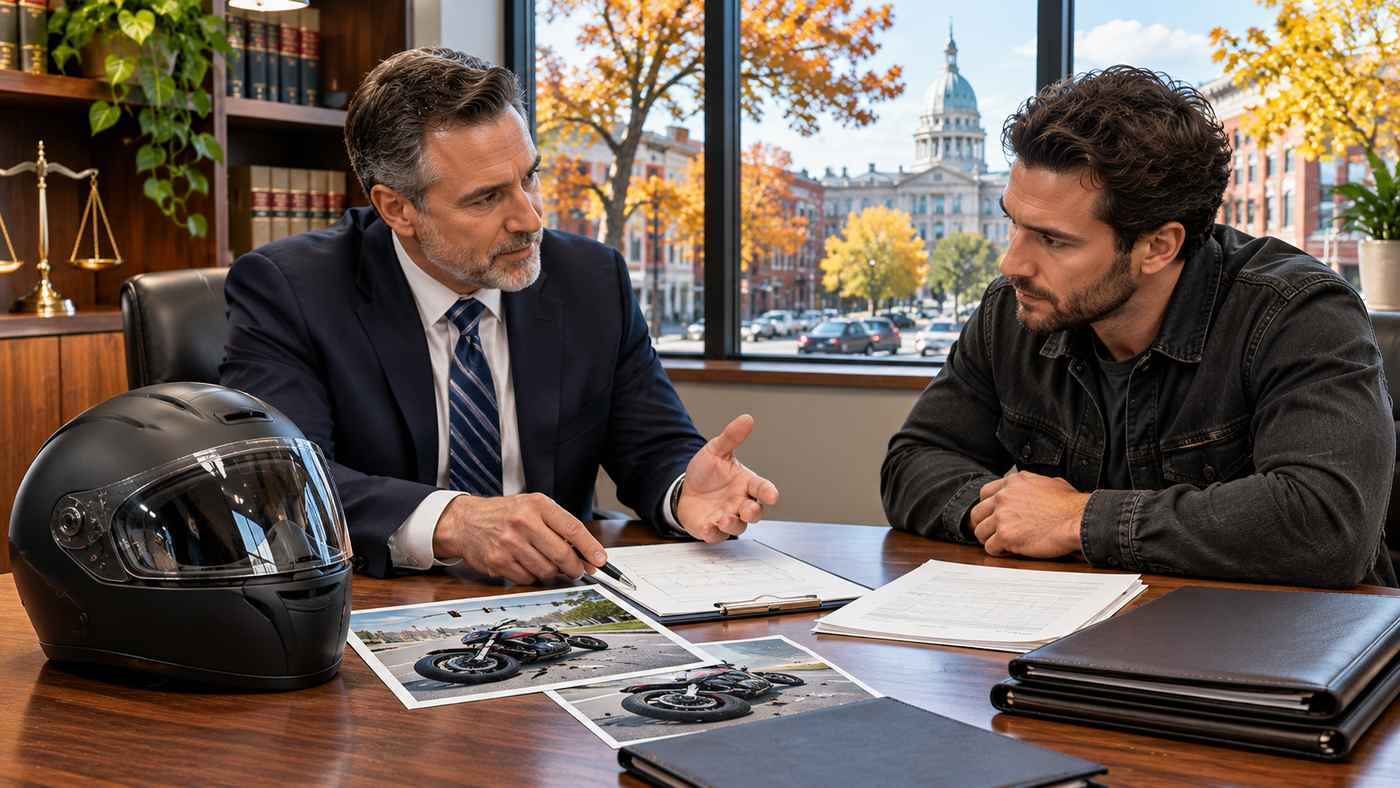
Motorcycle accidents can create serious physical, emotional, and financial challenges for injured riders and their families. Unlike occupants of passenger vehicles, motorcyclists have limited protection from direct impacts, road surfaces, and surrounding traffic. When a collision occurs, the consequences may involve extensive medical treatment, interrupted employment, damaged property, and uncertainty about insurance coverage. Experienced motorcycle accident lawyers can help injured riders understand their legal rights, investigate the circumstances of a crash, and evaluate available options for compensation.
Michigan presents additional legal considerations because its no-fault insurance system treats motorcycles differently from traditional motor vehicles. Determining which insurance policy provides benefits can become complicated, particularly when several vehicles, insurers, or coverage limitations are involved.
Understanding these differences is important before making decisions about an insurance claim or accepting a proposed settlement.
The process may involve obtaining medical evidence, documenting accident-related losses, examining insurance policies, investigating liability, and complying with legal deadlines.
This guide explains how motorcycle accident claims work in Michigan, what attorneys can do, the types of compensation potentially available, and seven important steps that can help injured riders protect their interests.
Why Motorcycle Accident Claims Require Special Attention
Motorcycle collisions can produce injuries that differ significantly from those commonly experienced in passenger vehicle accidents.
Cars and trucks generally provide occupants with structural protection, seat belts, and other safety systems. Motorcyclists are more directly exposed to surrounding vehicles and road hazards.
The National Highway Traffic Safety Administration reports that 6,228 motorcyclists were killed in US traffic crashes during 2024, representing approximately 16% of all traffic fatalities.
The agency also reports that motorcyclists were almost 27 times more likely than passenger car occupants to die in a traffic crash per vehicle mile travelled.
These figures illustrate why motorcycle safety remains an important public concern.
Common Motorcycle Accident Injuries
Injuries can range from relatively minor abrasions to severe trauma requiring extended treatment.
Common examples include:
- Traumatic brain injuries.
- Spinal cord injuries.
- Broken arms and legs.
- Pelvic fractures.
- Road rash and skin damage.
- Internal injuries.
- Shoulder and knee injuries.
- Soft tissue damage.
- Permanent physical limitations.
The severity and long-term consequences depend on the circumstances of the collision.
Some injuries require rehabilitation, specialist treatment, or ongoing medical support.
Financial Consequences of Serious Injuries
A crash may affect more than the injured person’s immediate medical expenses.
Recovery can involve missed work, reduced earning capacity, transportation difficulties, and changes to everyday activities.
In particularly serious cases, family members may need to provide additional care.
These consequences should be evaluated carefully when considering insurance benefits and possible injury claims.
Understanding Michigan Motorcycle Accident Laws
Michigan’s insurance framework contains rules that can be especially important for motorcycle riders.
The Michigan Department of Insurance and Financial Services explains that motorcycles do not receive the same automatic no-fault Personal Injury Protection coverage as ordinary motor vehicles.
However, motorcyclists injured in qualifying collisions involving motor vehicles may be eligible for PIP benefits through an applicable automobile insurance policy.
What Is Michigan No-Fault Insurance?
Michigan’s no-fault automobile insurance system provides certain benefits to eligible people injured in motor vehicle accidents.
Personal Injury Protection, commonly called PIP, may cover qualifying medical expenses and other specified losses.
The applicable benefits depend on statutory eligibility rules, insurance coverage selections, and the circumstances of the accident.
Motorcycle riders should not assume that their motorcycle insurance automatically includes the same PIP coverage as an automobile policy.
Why Motorcycles Are Treated Differently
Under Michigan’s no-fault law, a motorcycle is generally not classified as a motor vehicle for purposes of the standard no-fault insurance framework.
Motorcycle insurance therefore operates differently from ordinary automobile no-fault coverage.
When an insured motor vehicle is involved in a motorcycle accident, the rider may qualify for benefits from an appropriate motor vehicle insurer.
The process is governed by Michigan’s statutory insurance priority rules.
Which Insurance Company Pays PIP Benefits?
Michigan Compiled Laws Section 500.3114 establishes an order of priority for determining the insurer responsible for certain motorcycle accident PIP claims.
The statutory order generally begins with:
- The insurer of the owner or registrant of the motor vehicle involved.
- The insurer of the operator of that motor vehicle.
- The motor vehicle insurer of the motorcycle operator.
- The motor vehicle insurer of the motorcycle’s owner or registrant.
Additional provisions apply when coverage is excluded, unavailable, or subject to other statutory circumstances.
Where no applicable PIP coverage is available, a qualifying rider may be eligible for benefits through the Michigan Assigned Claims Plan.
That program has applicable coverage limitations, including a general $250,000 limit for eligible assigned PIP benefits.
Because coverage can depend on several factors, identifying the responsible insurer is an important part of a motorcycle accident claim.
7 Proven Steps to Protect a Motorcycle Accident Claim
The actions taken after a collision can affect a person’s safety, medical recovery, and ability to document what happened.
The following steps provide general guidance for injured riders.
1. Prioritize Medical Attention After the Accident
Health and safety should come before insurance or legal concerns.
Motorcycle injuries are not always immediately apparent.
Some symptoms may develop or become more noticeable after the initial shock of a collision.
Seek Appropriate Emergency Care
Call emergency services when a collision involves serious injury or an immediate safety threat.
In the United States, emergency assistance is available through 911.
Qualified medical professionals can assess injuries and determine whether additional treatment is necessary.
People experiencing symptoms such as loss of consciousness, breathing difficulties, severe pain, or neurological changes should obtain urgent medical attention.
Follow Medical Recommendations
After the initial assessment, follow the treatment plan established by the relevant healthcare professionals.
This may include imaging, specialist appointments, rehabilitation, or follow-up examinations.
Medical documentation can also help establish the nature and progression of accident-related injuries.
Keep Medical Records Organized
Important records may include:
- Emergency department documents.
- Physician assessments.
- Imaging reports.
- Treatment summaries.
- Prescription information.
- Rehabilitation appointments.
- Medical bills.
- Work restriction certificates.
These records may be relevant when evaluating qualifying insurance benefits or injury-related losses.
2. Document the Motorcycle Accident Scene
Reliable evidence can help establish the circumstances of a collision.
Although injured riders should not put themselves at risk to collect information, appropriate documentation may assist a later investigation.
Record Important Accident Details
Where safe and possible, note the location, approximate time, weather, roadway conditions, and vehicles involved.
Photographs may help preserve the appearance of the accident scene.
Useful images can include vehicle damage, road markings, debris, traffic signs, and relevant surrounding conditions.
Identify Potential Witnesses
Independent witnesses may have observed the collision.
Where appropriate, obtain their names and contact information.
Witness accounts can sometimes help clarify vehicle movements, traffic signals, or other disputed details.
Preserve Motorcycle Damage Evidence
Avoid discarding damaged riding equipment or motorcycle components that could be relevant to the incident.
If the motorcycle requires repair or disposal, obtain suitable advice about preserving important evidence.
For serious cases, an attorney may recommend a professional inspection before substantial changes are made.
Obtain Available Official Records
A police crash report may contain relevant observations and incident information.
The process for obtaining a report depends on the agency responsible for investigating the collision.
A police report can be useful, but it should not automatically be treated as the final legal determination of fault.
3. Understand Your Insurance Coverage and Benefits
Insurance is one of the most complicated parts of some Michigan motorcycle accident claims.
The appropriate coverage depends on the vehicles involved, relevant policies, statutory eligibility, and other circumstances.
Review Applicable PIP Benefits
When eligibility exists, PIP benefits may assist with qualifying expenses such as medical treatment, rehabilitation, wage loss, replacement services, or other covered needs.
Specific amounts and limits depend on the applicable coverage and legal requirements.
An insurance policy should be reviewed carefully rather than assuming unlimited benefits are available.
Understand Motorcycle Medical Coverage
Michigan motorcycle insurers offer optional medical benefits coverage.
This coverage is different from standard automobile PIP.
A rider’s motorcycle policy may provide relevant medical benefits in circumstances where other coverage is unavailable.
The exact benefits depend on the policy terms.
What Happens in a Single-Vehicle Accident?
When a motorcycle crashes without the involvement of a qualifying motor vehicle, standard PIP benefits may not be available through the motor vehicle insurance priority system.
Other coverage, such as motorcycle medical benefits or health insurance, may be relevant.
The correct response depends on the accident and available policies.
Be Careful With Insurance Decisions
Insurance companies may request information while investigating claims.
Policyholders should comply with applicable contractual and legal obligations while understanding the consequences of statements or settlement documents.
An attorney can help explain insurance questions and evaluate whether a proposed resolution adequately addresses the documented claim.
4. Consult a Qualified Motorcycle Injury Attorney
Serious motorcycle collisions can involve complicated insurance disputes, significant injuries, and questions about responsibility.
An attorney experienced in motorcycle accident cases may help identify applicable laws and explain available options.
How Motorcycle Accident Lawyers Can Help
Legal assistance may involve:
- Reviewing available insurance policies.
- Identifying relevant claim deadlines.
- Investigating the collision.
- Obtaining appropriate evidence.
- Evaluating medical documentation.
- Communicating with insurers.
- Assessing potential compensation.
- Negotiating claims.
- Representing clients in litigation where appropriate.
The scope of representation depends on the case and the agreement with the attorney.
Finding Relevant Michigan Legal Experience
Michigan’s insurance rules create issues that may not arise in the same way in other states.
When researching motorcycle accident lawyers, riders can examine resources provided by Kajy Law Firm, a Michigan personal injury practice based in Southfield.
The firm’s website describes representation involving motorcycle, car, and truck collisions, including questions about Michigan no-fault coverage and third-party injury claims.
Prospective clients should independently assess attorney qualifications, experience, fees, and suitability for their circumstances.
What to Ask During a Consultation
An initial consultation can help clarify whether legal representation is appropriate.
Useful questions include:
- Does the attorney regularly handle Michigan motorcycle claims?
- Who will manage the case?
- What insurance policies may be relevant?
- Are important deadlines approaching?
- How will legal fees and expenses be calculated?
- What information should the client preserve?
- What are the potential risks and uncertainties?
An appropriate lawyer should explain the process without guaranteeing a particular settlement or court outcome.
5. Investigate Liability and the Cause of the Collision
Determining fault is important when evaluating claims against another driver or responsible party.
Motorcycle collisions can involve several contributing factors.
Left-Turn Collisions
A common motorcycle accident scenario involves another vehicle turning left across the rider’s path.
Investigators may examine traffic signals, vehicle positions, visibility, speed, witness accounts, and physical evidence.
The fact that a turning vehicle was involved does not automatically establish every element of legal liability.
Unsafe Lane Changes
Motorcycles can be less noticeable to drivers because of their size and position.
A lane-change collision may involve questions about mirror checks, blind spots, signaling, and lane position.
Relevant evidence may include crash photographs, witness statements, and available video footage.
Distracted or Impaired Driving
Driver distraction and impairment can contribute to serious road accidents.
Where evidence supports these concerns, they may be relevant to an investigation.
However, allegations should not be presented as established facts without appropriate evidence.
Road Conditions and Other Hazards
Some crashes involve poor surface conditions, debris, or other roadway hazards.
Determining whether another party may be legally responsible can involve additional rules and procedural requirements.
Claims involving government entities can also have different notice requirements and deadlines.
6. Evaluate Potential Compensation Carefully
The financial consequences of a serious motorcycle crash can extend well beyond initial treatment.
A thorough claim evaluation should consider eligible insurance benefits and any potentially recoverable losses under Michigan law.
Medical Expenses
Qualifying treatment expenses may include emergency care, hospitalization, surgical procedures, rehabilitation, and other necessary services.
Recovery depends on the available coverage, legal eligibility, and supporting evidence.
Lost Income
A rider may be unable to work while recovering.
Applicable PIP benefits may address certain wage losses subject to statutory conditions and limits.
Other financial losses may need to be evaluated separately.
Future Earning Capacity
Serious injuries may affect a person’s ability to return to the same occupation or work the same number of hours.
Where legally recoverable, reduced future earning capacity may require employment records, medical assessments, and appropriate expert evidence.
Pain and Suffering
Michigan law permits certain third-party claims for noneconomic losses when the applicable legal requirements are satisfied.
For motor vehicle-related claims, the statutory threshold generally involves death, permanent serious disfigurement, or serious impairment of an important body function.
An injury’s severity alone does not automatically establish that every legal requirement has been satisfied.
Property Damage
Motorcycle repairs, replacement costs, and other property-related losses may involve separate insurance provisions or legal claims.
These should be evaluated according to the applicable coverage and circumstances.
7. Respect Legal Deadlines and Preserve Your Options
Motorcycle injury claims can involve different time limits.
Missing a deadline may affect the right to obtain benefits or pursue compensation.
Michigan Personal Injury Lawsuit Deadline
Under Michigan Compiled Laws Section 600.5805, the general limitations period for many personal injury actions is three years.
However, different rules or exceptions may apply depending on the circumstances.
A lawyer should determine the actual filing deadline for a particular claim.
PIP Claims Have Separate Time Requirements
Michigan’s no-fault system includes separate rules under MCL 500.3145.
These rules can involve giving written notice within one year of the accident, payment-related exceptions, and limitations on recovering older expenses.
The requirements are more complicated than a simple universal one-year filing rule.
Motorcyclists should seek clarification promptly rather than relying on an approximate deadline.
Preserve Documents Throughout the Process
Keep relevant correspondence, insurance records, medical documentation, and expense information organized.
Accurate records can help clarify the history of the claim.
Legal deadlines should be reviewed early, even when medical treatment remains ongoing.
Michigan Helmet Laws and Motorcycle Injury Claims
Helmet requirements are important both for road safety and for understanding relevant legal circumstances.
Michigan permits certain riders aged 21 or older to operate motorcycles without helmets when specified conditions are satisfied.
Requirements for Riding Without a Helmet
According to Michigan State Police, an eligible motorcycle operator must generally:
- Be at least 21 years old.
- Have held a motorcycle endorsement for at least two years or completed an approved safety course.
- Carry at least $20,000 in qualifying medical insurance coverage.
Different conditions apply to passengers.
Anyone who does not qualify for an exemption must follow the applicable helmet requirements.
Does Not Wearing a Helmet Automatically Prevent Compensation?
No. Riding without a helmet does not automatically mean a person has no legal claim.
However, the circumstances may raise questions about compliance with the law, injury causation, or the extent of particular damages.
These issues require case-specific legal and medical assessment.
A lawful decision to ride without a helmet also should not be confused with proof that another driver was or was not negligent.
Why Protective Equipment Still Matters
Regardless of the legal exemption, helmets and appropriate riding equipment provide important safety benefits.
The National Highway Traffic Safety Administration encourages motorcyclists to use DOT-compliant helmets and suitable protective gear.
Safe riding practices help reduce the risk of serious injury.
Can a Motorcyclist Recover Compensation When Partly at Fault?
Some collisions involve disputes about the conduct of multiple people.
An insurer may argue that the rider was travelling too quickly, failed to maintain a suitable position, or otherwise contributed to the collision.
Michigan applies comparative fault principles in relevant injury claims.
Understanding Comparative Fault
Comparative fault involves assessing the extent to which different parties contributed to an incident.
Depending on the type of claim, a person’s percentage of fault can affect the damages they may recover.
Michigan’s no-fault framework includes particular restrictions affecting noneconomic damages when an injured person is found more than 50% at fault.
Other damages can be subject to different rules.
These distinctions should be evaluated carefully.
Evidence Matters More Than Assumptions
A rider should not be assumed responsible simply because they were operating a motorcycle.
Investigators should examine the actual circumstances.
Useful evidence may include:
- Roadway measurements.
- Vehicle damage.
- Traffic camera footage.
- Witness statements.
- Accident reconstruction findings.
- Physical and medical evidence.
A reliable investigation should consider evidence supporting and contradicting the available accounts.
Motorcycle Accident Settlements: What Affects Case Value?
Many injured riders want to understand how much compensation they could receive.
There is no universal motorcycle accident settlement amount.
Case value depends on the legal and factual circumstances.
Severity of Injuries
Injuries requiring extensive treatment may involve greater documented losses than minor injuries.
However, the type and duration of treatment are only part of the evaluation.
Insurance Coverage
Available insurance limits and applicable PIP selections can influence the amount recoverable through particular policies.
Evidence of Liability
A strong evidentiary record may help clarify responsibility.
Disputed fault can complicate settlement discussions.
Long-Term Medical Needs
Some injuries require rehabilitation or future medical treatment.
Appropriate medical evidence may be necessary to evaluate those needs.
Economic Losses
Employment records, documented expenses, and evidence of reduced earning capacity may be relevant.
Legal Requirements
Certain types of compensation require the injured person to satisfy specific statutory conditions.
Settlement negotiations must account for these legal limitations.
A responsible attorney should not promise a fixed recovery before evaluating the relevant evidence.
How Motorcycle Accident Lawyers Negotiate With Insurance Companies
Insurance claims involve legal obligations, policy provisions, and factual investigation.
A lawyer’s role may include helping the client understand those issues and communicate with insurers.
Reviewing the Insurer’s Position
An insurer may accept certain parts of a claim while disputing others.
For example, questions may arise concerning the applicable policy, medical expenses, responsibility, or the amount of a proposed payment.
An attorney can review the insurer’s explanation and determine whether additional information is necessary.
Preparing Supporting Documentation
Settlement discussions are generally more meaningful when relevant losses and circumstances are documented.
This may involve medical records, employment information, expert opinions, photographs, and other evidence.
Evaluating Settlement Offers
A proposed settlement should be reviewed in light of the person’s legal rights and potential future needs.
Settlement agreements may include releases that affect the ability to bring additional claims.
A claimant should understand the terms before signing.
Considering Litigation
Some cases cannot be resolved through negotiation.
When appropriate, an attorney may advise whether filing a lawsuit is a reasonable option.
Litigation involves procedural requirements, costs, uncertainty, and possible delays.
The decision should reflect the individual circumstances.
What If the Motorcycle Accident Involves an Uninsured Driver?
An uninsured driver can complicate the process of identifying available compensation.
However, lack of insurance does not automatically mean every potential claim or benefit is unavailable.
Review Applicable Insurance Policies
Uninsured motorist coverage may be relevant if it was purchased and applies to the circumstances.
The details depend on policy wording and statutory requirements.
Consider Michigan Assigned Claims Rules
Where a collision involves a motor vehicle and no applicable PIP coverage is available through the statutory priority system, the Michigan Assigned Claims Plan may be relevant.
Eligibility and coverage limitations must be reviewed.
Hit-and-Run Situations
A hit-and-run accident can create additional evidence and insurance challenges.
Relevant questions may include whether the other vehicle can be identified, what independent evidence exists, and whether a particular insurance policy applies.
Prompt reporting and preservation of available evidence can be important.
Common Mistakes to Avoid After a Motorcycle Accident
Certain decisions can make an already difficult situation more complicated.
Delaying Medical Assessment
Some injuries may not be fully apparent immediately after a collision.
Medical professionals should assess potentially serious symptoms promptly.
Discarding Relevant Evidence
Damaged equipment, photographs, and other records may be useful during a claim investigation.
Preserve potentially relevant material when safe and appropriate.
Missing Insurance Deadlines
Waiting too long to identify the responsible insurer or provide required notice can create problems.
Different claims may have different time limits.
Assuming Motorcycle and Car Insurance Work Identically
Michigan treats motorcycles differently within its no-fault framework.
Coverage should be evaluated using the actual policies and governing law.
Accepting a Settlement Without Understanding the Terms
A settlement may affect future legal rights.
Review important documents carefully before signing.
Posting Misleading Information Online
Public statements or social media content may become relevant in certain disputes.
Avoid speculation about the accident and ensure that any factual statements remain accurate.
Choosing an Attorney Without Reviewing Qualifications
Legal advertising should not replace independent evaluation.
Confirm relevant experience, professional standing, fee terms, and the scope of representation.
How to Choose the Right Motorcycle Accident Lawyer in Michigan
Selecting legal representation involves more than comparing advertisements.
The attorney should have experience relevant to the claim and be able to explain the legal process clearly.
Relevant Experience
Ask whether the lawyer regularly handles motorcycle accidents and Michigan no-fault insurance disputes.
Specialized experience may be useful when coverage or liability is complicated.
Clear Communication
Clients should understand who will manage their case and how progress updates will be delivered.
A lawyer should explain important decisions in understandable language.
Transparent Fees
Personal injury firms frequently offer contingency-fee arrangements.
Under this structure, attorney compensation may depend on obtaining a recovery.
However, percentages, expenses, and other terms vary.
Ask for a written fee agreement explaining the arrangement.
Professional Credentials
The State Bar of Michigan provides resources for locating and verifying attorneys.
Checking professional information can help clients make informed decisions.
Realistic Expectations
Avoid treating advertised settlement examples or success statistics as guarantees.
Each case depends on its own evidence, injuries, coverage, and legal circumstances.
How Long Does a Motorcycle Accident Case Take?
The time required to resolve a claim varies substantially.
A relatively straightforward insurance matter may progress differently from a serious disputed injury case.
Factors that influence the timeline include:
- Medical treatment and recovery.
- Insurance coverage questions.
- Availability of evidence.
- Disputes about fault.
- Need for expert assessments.
- Negotiation progress.
- Court schedules where litigation is required.
Some cases resolve through negotiation, while others require formal proceedings.
A responsible attorney can explain the expected stages but cannot guarantee a particular completion date.
The Importance of Motorcycle Safety and Accident Prevention
Legal protection is important after an injury, but preventing collisions remains the best outcome.
Motorcycle safety requires attention from riders and other road users.
Improve Visibility
Motorcycles can be difficult for drivers to notice.
Riders can use suitable lighting, protective equipment, and defensive riding practices to improve visibility.
Drivers should check mirrors and blind spots before changing lanes.
Use Appropriate Protective Gear
DOT-compliant helmets, gloves, protective jackets, durable trousers, and suitable footwear can help reduce injury risks.
Equipment should fit correctly and meet appropriate safety requirements.
Maintain the Motorcycle
Routine maintenance can identify problems involving tires, brakes, lights, and other important components.
Follow the motorcycle manufacturer’s instructions.
Ride According to Road Conditions
Weather, reduced visibility, traffic congestion, and surface conditions can affect motorcycle handling.
Safe speeds and appropriate following distances are important.
Avoid Impaired Riding
Alcohol and other impairing substances can affect judgment and coordination.
Motorcyclists should never operate a motorcycle while impaired.
Frequently Asked Questions
1. What do motorcycle accident lawyers do?
Motorcycle accident lawyers investigate collisions, review insurance coverage, assess liability, organize supporting evidence, and help injured riders evaluate potential compensation claims.
2. How much does a motorcycle accident lawyer cost?
Many personal injury lawyers use contingency-fee arrangements, but percentages and additional expenses vary. Review the written agreement to understand the specific terms.
3. How long do I have to file a motorcycle accident claim in Michigan?
Many personal injury lawsuits are subject to a general three-year deadline. PIP benefits involve separate notice and filing rules that may require action within one year. Exceptions and other limitations can apply.
4. Can I receive compensation if I was partly responsible for the accident?
Possibly. Michigan comparative fault rules can affect recovery, and certain noneconomic damages are restricted when the injured person is more than 50% at fault. The outcome depends on the claim and evidence.
Conclusion
Motorcycle accidents can involve serious injuries, financial uncertainty, and complicated insurance questions. Understanding Michigan’s no-fault laws, preserving relevant evidence, obtaining appropriate medical care, and identifying legal deadlines are important steps in protecting an injured rider’s interests.
Qualified motorcycle accident lawyers can help evaluate coverage, investigate liability, and explain available legal options. By approaching the claims process with accurate information and realistic expectations, injured motorcyclists and their families can make more informed decisions about recovery and compensation.
