
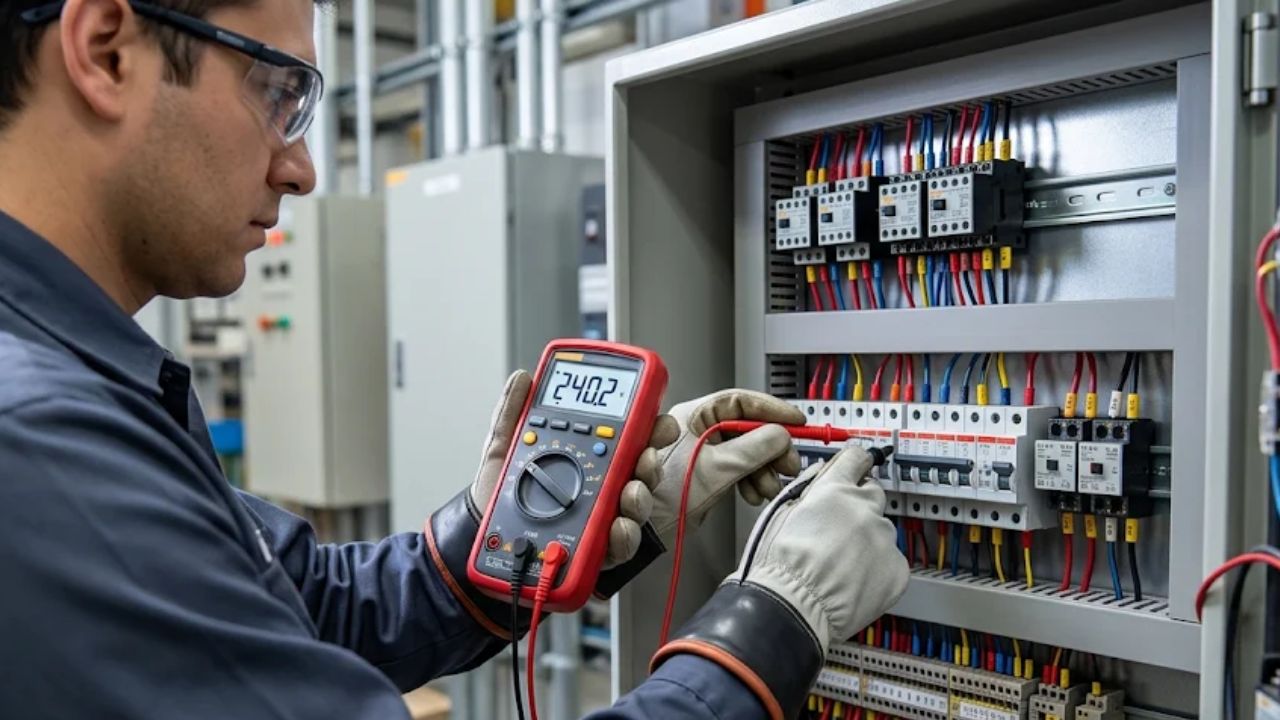
Routine electrical checks are a vital part of the maintenance of reliable electrical equipment, given how they help draw attention to potential faults and support safe working practices.
When engineers make appropriate use of suitable multimeters, this can greatly help them measure electrical values accurately, check components, and investigate issues in circuits before they deteriorate into more significant problems.
Across such environments as manufacturing facilities, engineering workshops, and electronics laboratories, multimeters have long shown their versatility.
However, it is crucial for engineers to know how to make the right use of these instruments, so that they can gather dependable information and make informed decisions about their electrical systems.
A Quick Introduction to Multimeters
A multimeter is an electrical measuring device that combines multiple functions within one tool. Depending on the model, a multimeter can typically measure voltage, current, and resistance, in addition to performing continuity and diode tests. More advanced variants may also measure capacitance, frequency, and temperature.
Today, digital multimeters see widespread use, largely because their numerical displays make readings straightforward to interpret. Many engineers also appreciate handheld models, which lend themselves well to inspections carried out around a site. Bench multimeters are available too, typically being used for workshop testing, electronics development, and laboratory applications.
Professionals seeking out the right multimeter for their needs will need to think carefully about the measurements required, the expected electrical ranges, the accuracy they will need, and the environment in which the instrument will be used.
Types of Electrical Checks That Multimeters Are Commonly Used For
Here are some of the tasks for which engineers typically use and trust multimeters:
- Measuring Voltage in Electrical Circuits
Voltage checking is one of the most frequent uses of a multimeter. Engineers may do this to ascertain whether a power supply is delivering the expected output, or to determine whether a circuit is receiving the voltage necessary for normal operation.
Multimeters are generally able to measure both alternating current (AC) and direct current (DC) voltage. However, the appropriate mode and measurement range will need to be selected for each task.
Readings should be compared with relevant equipment documentation and the anticipated operating conditions. If a result doesn’t match expectations, this may indicate a supply problem, a malfunctioning component, or another issue calling for further investigation.
- Checking Resistance and Electrical Continuity
Engineers undertake resistance measurements using a multimeter to help determine how strongly a component or material opposes the flow of electrical current. Such measurements can be useful when checking resistors, investigating wiring faults, and evaluating certain electrical components.
The purpose that continuity testing serves is related to, but also distinct from this. It helps establish whether an electrical path is complete, typically indicating a low-resistance connection through a wire, fuse, switch, or other component. In the event of continuity being detected, many digital multimeters provide an audible signal.
Only once circuits are suitably isolated and de-energised, should resistance and continuity tests be performed on them. Engineers should also take account of connected components and stored electrical energy, which can impact on readings or introduce hazards.
- Measuring Current and Investigating Faults
Current measurements enable engineers to figure out how much electrical current is flowing through a circuit. This can help when they’re investigating equipment that seems to be drawing excessive current, checking the operation of electronic circuits, or assessing how certain electrical loads are performing.
Conventional multimeter current measurements differ from voltage measurements in that they generally require the instrument to be connected in series with the circuit. It is also vital for the correct current input terminal and range to be selected, as well as for the meter’s limits to not be exceeded.
If a meter configured for current measurement is connected directly across a voltage source, this can result in a short circuit, in addition to potentially damaging the instrument and causing injury.
Conclusion: Multimeters Can Be Indispensable in More Ways Than One
Multimeters should not be treated as a direct substitute for more specialised equipment such as multifunction installation testers or thermal imagers, as might be needed for certain more demanding applications.
However, multimeters retain their status as a go-to instrument for quick and informative electrical checks. When these tools are used correctly, they can help engineers confirm the performance of circuits, locate faults efficiently, and maintain safe working practices across a broad range of commercial, industrial, and domestic settings.
