
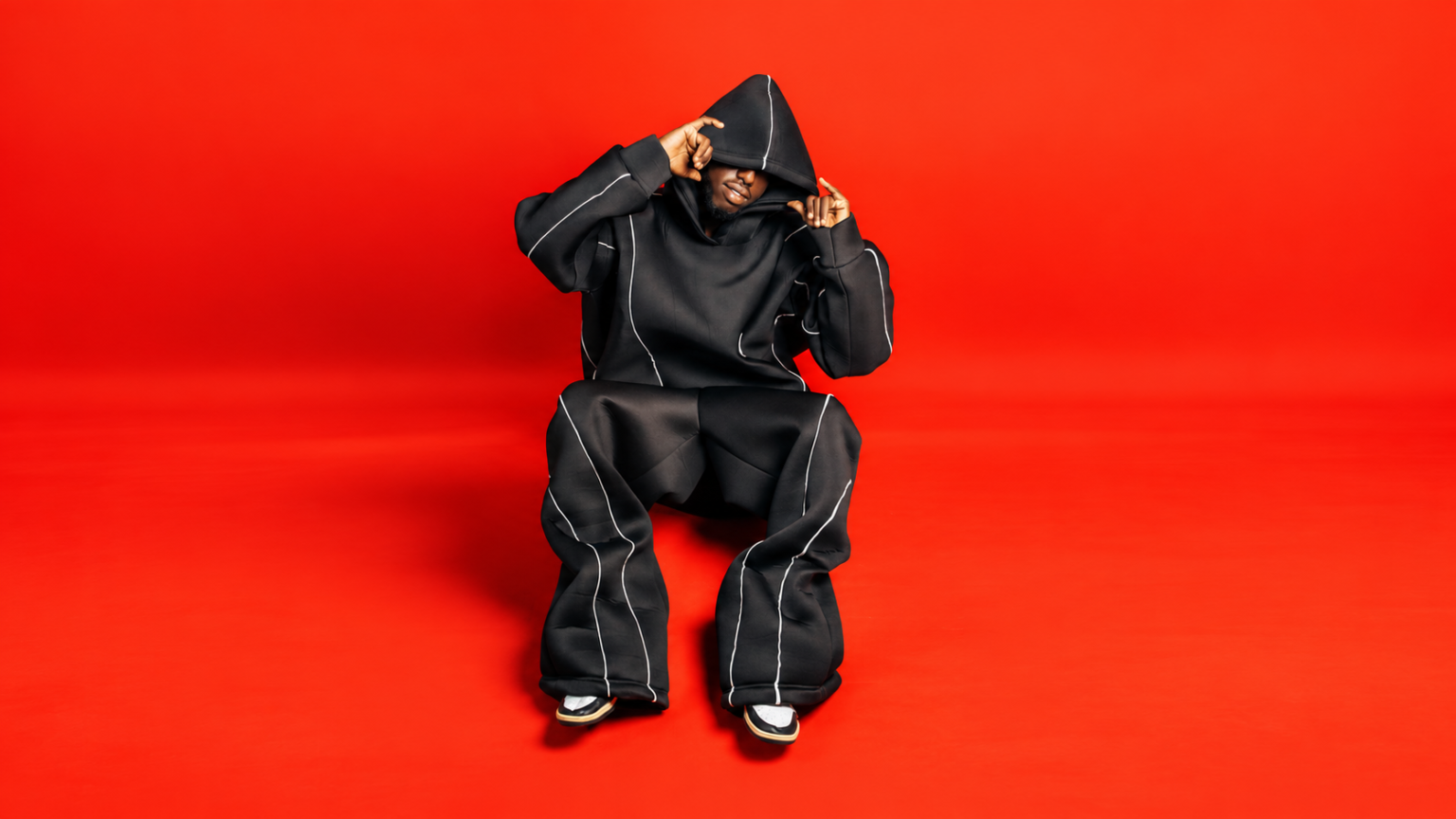
Relaxed clothing is easy to wear until a coat has to go over it. A roomy sweatshirt, loose trousers, and a generous overshirt can look deliberate on their own, yet a narrow jacket layered on top may bunch at the shoulders and trap fabric around the arms. Going up a size is not always the answer; an oversized coat can swallow the outfit instead. The better approach is to think about where volume sits, how the outer layer falls, and what kind of movement the wearer needs from the finished combination.
Start with the shape underneath
Before choosing outerwear, look at the bulk of the base outfit. A thick fleece hoodie adds volume at the chest, shoulders, and upper arms; wide-leg pants change the outline lower down. The coat does not need to conceal all of that. It needs enough room in the areas where fabric compresses and a shape that relates to the clothes beneath it. Try the combination while standing and sitting, then raise both arms. If the sleeve lining pulls or the coat lifts sharply at the back, the cut is doing too little work.
A substantial Denim Tears Hoodie can be easier to layer under a coat with a slightly dropped shoulder, a roomy armhole, or a raglan sleeve than under a sharply tailored jacket. Those details provide usable space without forcing the entire garment to be oversized. Check the shoulder and bicep first, not just the chest measurement. Extra room around the body does little good if the sleeves bind. It is also worth checking how the collar sits around a hood, because two bulky neck areas can crowd each other and make the whole outfit seem top-heavy.
Use length to control the outline
Hem length influences how a relaxed outfit reads. A short jacket can give a long sweatshirt a clear boundary, while a coat that reaches the knee can create one uninterrupted vertical line. Neither is automatically more flattering; the choice depends on the body proportions, weather, and intended mood. Problems often appear when several hems land at nearly the same point and form a thick horizontal band. A little separation between the sweatshirt hem, jacket hem, and pant break can make the layers easier to read.
A longer coat also needs enough movement through the back and hips, particularly over wide pants or a thick knit. If the front closes comfortably but the lower panels flare or pull when walking, the garment may be too narrow for the layers beneath it. Conversely, a very wide coat can lose all definition when combined with loose clothing. Look for a controlled line through the shoulders and upper body, then allow the fabric to open lower down. The outline should be relaxed, not shapeless. If the base layer is a graphic Oversized Hoodie, a quieter coat can keep the outfit from feeling visually heavy while allowing the print to appear when the coat is open.
Choose fabrics that cooperate
Different materials occupy space in different ways. A crisp canvas jacket holds its own shape, a puffer retains air and volume, and a soft wool coat tends to drape closer to the body. Pairing two stiff, thick garments can create a boxy block; combining a bulky hoodie with a softer shell may let each piece move more naturally. Consider the climate as well. Insulation has a practical purpose in cold weather, so the answer is not always to choose the thinnest layer. Instead, decide which item supplies warmth and avoid duplicating bulk without a reason.
Surface contrast can make an outfit feel more considered even when the colors are similar. A matte shell over loopback cotton, for example, creates a modest distinction without introducing a new hue. Smooth leather, brushed wool, and technical nylon each produce different effects, so choose the combination that suits the occasion. Avoid fabrics that catch on each other if the layers need to slide during movement. Clothing that looks good while standing still but twists when the wearer walks is not well matched.
Make the closure and hood work together
Zippers, snaps, and buttons influence how layers sit. An open coat leaves the inner outfit visible but may allow a loose hoodie to blow around; a closed coat can compress a thick front pocket or bunch the hood at the neck. Try both ways before deciding. If a hood keeps folding into a lump under the collar, a simple crewneck may be a better base for that particular jacket. When the hood is the feature you want to show, a coat with a more open neckline or enough back-neck space is usually the cleaner solution.
Use color to simplify, not disguise, bulk
Color will not fix a coat that fits poorly, but it can help the layers read as a unit. Similar shades between the hoodie and outerwear reduce visual interruption; a contrasting coat draws attention to the outer shape. If the jacket is already large, a quieter color relationship may keep the volume from dominating. A bold contrast can work too, especially when the silhouette is clean. The goal is to decide where attention should go, rather than relying on color to hide every awkward fold.
A graphic hoodie under a plain coat offers one way to preserve personality while keeping the outer line calm. The print appears when the coat is open, then recedes when warmth becomes the priority. That flexible relationship is useful in changing weather. Accessories can follow the same principle: a compact bag sits closer to the body than a large backpack, and a scarf that can be wrapped neatly may be easier to manage than one with excessive loose ends. Practical details should work with the volume, not add clutter to it.
Account for real movement
Fit should be tested in motion, not judged only in a fitting-room mirror. Walk at a natural pace, reach for a pocket, sit down, and try fastening the coat over the thickest layer you expect to wear. A little compression is normal, but tightness across the shoulder blades or sleeves that pull upward signals a mismatch. If you commute by bus or spend time carrying a bag, test those movements too. Good outerwear should accommodate the life around the outfit rather than requiring the wearer to remain still to preserve its shape.
Let weather determine the final layer
An elegant silhouette means little if it leaves the wearer cold or soaked. A lightweight shell may be enough for wind, while freezing temperatures call for actual insulation and room for a midlayer. In rain, the surface and hood design matter more than a perfectly narrow outline. Think of volume as something to manage, not eliminate: winter clothing needs space to trap warmth, and relaxed outfits should still allow free circulation and movement. When the weather is mild, remove one layer rather than adding a larger coat to solve a problem created by too many garments.
Make the combination repeatable
A useful outer layer is one that works with more than a single outfit. Before keeping a coat, consider whether it fits the hoodie or sweater you wear most, clears the trousers you rely on, and handles the weather you actually face. A few deliberate measurements and movement tests are more dependable than guessing from a tagged size. For additional design and everyday-style reading, consider how the same principles apply across a working wardrobe. The best pairing preserves the ease of relaxed clothing while giving the overall outline enough structure to look intentional.
