
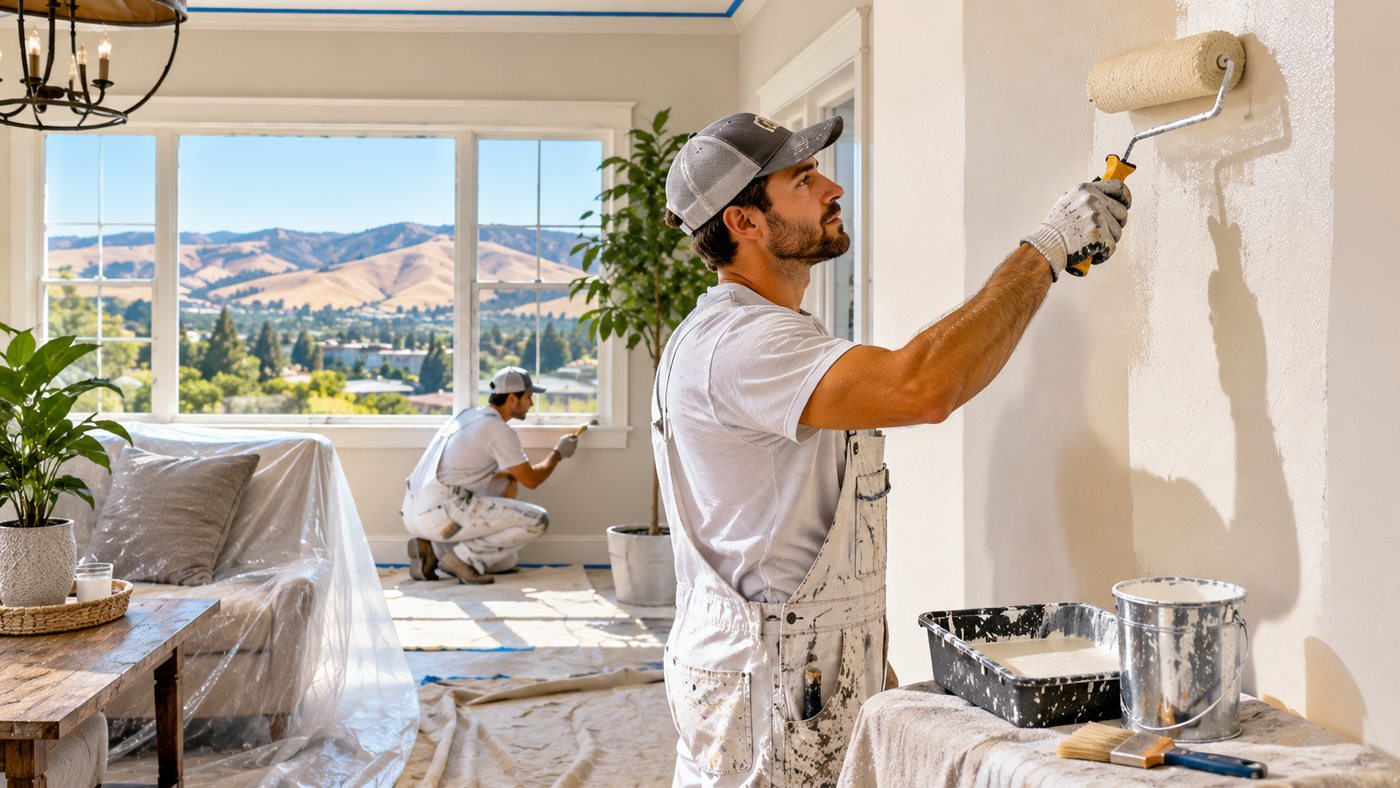
A fresh coat of paint can transform the appearance of a home, brighten living spaces, and help protect surfaces from everyday wear. Whether you want to refresh a bedroom, repaint your entire house, or improve the exterior before selling a property, choosing the right professional makes a meaningful difference.
Finding a painter in Ellensburg involves more than comparing prices. Homeowners should consider preparation methods, materials, experience, contractor registration, communication, and the quality of the finished work.
Ellensburg, Washington, has a distinctive climate with warm summers, cold winters, and periods of strong wind. These conditions can influence the timing of exterior painting projects and the materials used to protect outdoor surfaces.
Interior painting also requires planning. Walls may need patching, sanding, cleaning, or priming before a new finish is applied. Without proper preparation, even expensive paint may not deliver the desired appearance.
Professional house painting services can help homeowners manage these details while reducing the time and effort required to complete a project.
However, not every contractor offers the same services or follows the same preparation process.
This guide explores seven important steps for choosing a painting professional, preparing your property, comparing estimates, selecting suitable finishes, and maintaining painted surfaces.
Why Hire a Professional House Painter in Ellensburg?
Painting may appear straightforward, but achieving consistent results across walls, trim, ceilings, and exterior surfaces requires appropriate techniques and preparation.
A professional painter can evaluate the condition of the surface, identify problems, and recommend suitable materials.
Improve the Appearance of Your Home
A well-executed painting project can create a cleaner and more coordinated appearance.
For example, a neutral wall color may make a living room feel brighter, while a carefully selected accent color can introduce visual interest.
The result depends on lighting, furniture, room proportions, and the chosen finish.
Save Time and Reduce Disruption
Preparing surfaces, protecting furniture, applying coats, and cleaning afterward can take considerable time.
An experienced painter may complete these tasks more efficiently than someone unfamiliar with the process.
However, the project schedule still depends on the scope of work and drying requirements.
Address Surface Problems Before Painting
Cracks, nail holes, peeling coatings, and damaged drywall may require attention.
Painting over these problems without suitable repairs can leave visible imperfections.
A contractor who understands surface preparation can help identify which repairs are necessary.
Choose Suitable Materials
Different surfaces require different products.
A bathroom wall may benefit from a coating selected for humid conditions, while exterior siding needs products approved for the relevant substrate and exposure.
The manufacturer’s technical instructions should guide product selection and application.
1. Identify Your Interior and Exterior Painting Needs
Before requesting an estimate, define the areas you want painted.
Clear requirements help contractors understand the project and prepare more comparable quotations.
Interior House Painting
Interior painting can include bedrooms, living rooms, kitchens, hallways, ceilings, trim, and doors.
Each area has different preparation and finishing needs.
A bedroom with smooth walls may be relatively straightforward.
A kitchen with grease buildup, damaged surfaces, or difficult-to-reach areas may require additional work.
Exterior House Painting
Exterior projects can involve siding, trim, doors, shutters, and other appropriate building surfaces.
Exposure to sunlight, moisture, wind, and temperature changes can influence coating performance.
The painter should evaluate the existing finish and substrate before recommending preparation or new paint.
Drywall Repair and Patching
Small holes, damaged corners, and uneven drywall can remain visible after painting unless properly repaired.
Ask whether patching, texture matching, and priming are included in the quotation.
Trim and Door Painting
Trim and doors often require more detailed preparation than broad wall surfaces.
A smooth finish may involve careful sanding, appropriate primers, and coatings designed for frequent contact.
Rental Property Painting
Landlords and property managers may need painting between tenants.
A clear schedule can help coordinate repairs, cleaning, inspections, and occupancy.
Choose durable finishes suitable for the property without assuming that one paint product will meet every maintenance need.
2. Verify Experience, Contractor Registration, and Insurance
Choosing a painting contractor requires attention to professional qualifications and consumer protection.
Washington’s Department of Labor & Industries recommends verifying contractors before hiring them.
Check Contractor Registration
Most Washington businesses providing construction-related work, including painting, must meet relevant contractor registration requirements.
Homeowners can use the state’s contractor verification service to check registration, bond information, insurance, and other available records.
Do not rely solely on a business website’s claim that it is licensed or insured.
Ask for Proof of Insurance
Contractor liability insurance can be relevant if accidental property damage occurs.
Review current coverage information and verify it where appropriate.
A contractor may also need workers’ compensation coverage when employing workers, depending on the circumstances.
Review Previous Work
Ask to see photographs of completed projects similar to yours.
If available, examine examples involving comparable wall textures, trim finishes, or exterior materials.
Photographs are helpful, but they do not establish every aspect of work quality.
Request References
Previous customers may be able to comment on communication, cleanliness, project management, and the finished result.
Ask questions relevant to your project rather than relying only on general testimonials.
Evaluate Professional Communication
A dependable estimate process should explain the scope, available options, and important limitations.
Be cautious about unclear promises or pressure to make immediate decisions.
Understand Lead-Paint Safety
Homes built before 1978 may contain lead-based paint.
When paid renovation or painting work disturbs covered painted surfaces, applicable federal and Washington lead-safe requirements can apply.
Ask the contractor about required certification and safe work practices before sanding or disturbing older coatings.
3. Compare House Painting Estimates Carefully
The lowest price is not automatically the best value.
Two painting quotations may differ significantly because they include different preparation methods, paint products, labor, or finishing work.
Request a Written Estimate
A useful estimate should describe the surfaces to be painted, necessary repairs, preparation, materials, and expected schedule.
Washington L&I recommends obtaining at least three written bids and comparing them carefully.
Understand What Affects Painting Costs
Project cost depends on several factors.
These may include:
- Surface area
- Number of rooms
- Wall and ceiling height
- Existing paint condition
- Drywall repairs
- Trim complexity
- Paint quality
- Number of coats
- Furniture protection
- Access requirements
- Labor and cleanup
Large or complicated projects may require more preparation and equipment.
Separate Labor and Materials
Ask whether the quotation includes primer, paint, tape, protective coverings, and other materials.
Some estimates combine everything into one price.
Others identify separate categories.
Either approach can be reasonable when the scope is clear.
Clarify the Number of Coats
Coverage depends on the original color, new color, surface condition, and selected coating.
Some projects may require primer and multiple finish coats.
Avoid assuming that one coat will always provide satisfactory coverage.
Discuss Additional Repairs
A painter may discover damaged drywall or deteriorated surfaces during preparation.
Agree on how additional work will be approved and priced before it begins.
Review the Payment Schedule
Written agreements should identify payment terms and milestones.
Be cautious about demands for full payment before work begins.
For larger projects, payments can be connected to agreed progress and completion stages.
4. Choose the Right Paint Colors and Finishes
Color selection influences the atmosphere of a room and the appearance of a property’s exterior.
However, choosing a color from a small sample does not always show how it will look across a complete wall.
Consider Natural and Artificial Light
A color may look different in direct sunlight, shade, and evening lighting.
Test suitable samples under the lighting conditions found in the actual room.
Select Colors Based on the Space
Light neutral shades may create a calm appearance.
Darker colors can provide contrast or create a distinctive focal point.
The best choice depends on personal preference, furnishings, and room design.
Understand Common Paint Sheens
| Paint finish | Typical characteristic | Common consideration |
|---|---|---|
| Flat or matte | Low reflectivity | Can conceal some surface imperfections |
| Eggshell | Soft, subtle sheen | Popular for many living areas |
| Satin | Noticeable gentle sheen | Often selected for easier cleaning |
| Semi-gloss | Higher reflectivity | Common for doors and trim |
| Gloss | Highly reflective | Highlights surface imperfections |
Actual durability, cleanability, and appearance depend on the specific paint formulation.
A higher sheen does not automatically mean that every product is better.
Match Paint to the Surface
Drywall, previously painted wood, masonry, and other surfaces may need different preparation.
Use coatings and primers approved for the material.
Consider Low-VOC Options
Some homeowners prefer paints with lower volatile organic compound emissions.
Review actual product specifications and follow ventilation instructions.
A low-VOC label does not mean a product is completely odor-free or that normal safety precautions are unnecessary.
Test Before Making a Final Decision
Apply sample colors in suitable areas and examine them at different times of day.
This can help prevent disappointment after a large painting project.
5. Explore Local Painting Services in Ellensburg
Choosing a local service provider can make consultations, scheduling, and project coordination more convenient.
A company familiar with residential maintenance may also be able to address related surface repairs.
Ellensburg Handyman Painting Services
Homeowners looking for a <a href=”http://www.ellensburg-handyman.com/ellensburg-house-painter” target=”_blank” rel=”noopener noreferrer”>painter in Ellensburg</a> can explore the professional house painting services advertised by Ellensburg Handyman.
The company’s official painting page focuses on interior painting and describes a process involving consultation, detailed estimating, surface protection, painting, cleanup, and a final walkthrough.
Its broader service website also advertises exterior painting and other home improvement services.
Interior Painting Services
Ellensburg Handyman describes work ranging from refreshing individual rooms to larger interior painting projects.
Its painting page emphasizes clean preparation, suitable materials, and attention to detail.
Homeowners should request an estimate describing the specific surfaces and finishing requirements.
Surface Preparation and Repairs
The company’s general services include drywall-related repairs and other household maintenance tasks.
This can be relevant when an interior painting project requires patching or minor preparation work.
However, the exact scope should be agreed upon before scheduling.
Free Estimates
Ellensburg Handyman advertises free estimates.
Its service website states that some quotations can be prepared using project details and photographs submitted online.
More complex work may still require a closer assessment.
Painting Process
The business describes a general workflow that includes:
Initial consultation: Discussing project requirements and preferences.
Detailed estimate: Reviewing expected work, materials, and timing.
Surface protection: Covering relevant furniture, flooring, and nearby areas.
Painting: Applying the selected coating according to the agreed scope.
Cleanup: Removing equipment and completing necessary cleaning.
Final walkthrough: Reviewing the completed work with the customer.
Contractor Information
Ellensburg Handyman’s official website lists contractor registration ELLENH*768PC and describes the business as licensed, bonded, and insured.
Homeowners should confirm the current status through Washington L&I before entering an agreement.
Choosing the Right Service
The company’s advertised services may be suitable for homeowners looking to combine painting with appropriate smaller repairs.
As with any contractor, request a written scope, confirm availability, and review the proposed materials and finishing process.
6. Plan Painting Projects Around Ellensburg’s Climate
Ellensburg experiences distinct seasons, including warm summers, cold winters, and frequent windy conditions.
These factors can influence exterior painting.
Understand Temperature Requirements
Paint manufacturers specify appropriate application and curing conditions.
A coating applied outside its recommended temperature range may not perform as intended.
The contractor should consider both current conditions and the forecast during the coating’s curing period.
Account for Wind
Wind can introduce dust and debris onto freshly painted surfaces.
It may also affect the safe use of certain application equipment.
Exterior work should be scheduled with suitable weather and safety conditions in mind.
Consider Moisture and Surface Condition
Even in a relatively dry climate, surfaces can become wet from rainfall, condensation, snow, or cleaning.
Painting should not proceed until the substrate meets the coating manufacturer’s requirements.
Choose an Appropriate Season
Late spring, summer, and parts of early autumn may provide useful opportunities for exterior painting.
However, no calendar month guarantees suitable conditions.
The actual forecast and product instructions matter more than the season alone.
Interior Painting Is More Flexible
Interior projects can often be scheduled throughout the year when temperatures, humidity, ventilation, and other conditions are appropriate.
Heating and ventilation may require attention during winter.
Prepare for Schedule Changes
Exterior painting schedules can change when weather conditions become unsuitable.
Discuss how the contractor will handle delays and communicate revised dates.
7. Inspect the Finished Painting Work and Plan Maintenance
A painting project should end with a careful review of the completed work.
The final inspection helps confirm whether the agreed scope has been delivered.
Review Coverage
Look for obvious missed areas, inconsistent coverage, drips, and unwanted marks.
Examine walls under normal room lighting.
Check Trim and Edges
Pay attention to transitions between walls, ceilings, doors, and trim.
The appropriate appearance depends on the surfaces and agreed finish standard.
Confirm Cleanup
Protective materials, debris, and equipment should be removed according to the contract.
Ask how leftover paint and other materials will be handled.
Review Touch-Up Requirements
Some minor corrections may be identified during the walkthrough.
Document any agreed corrections and completion arrangements.
Keep Paint Information
Save details about the paint brand, product, color, and sheen.
This information may be useful for future maintenance or repairs.
Allow Proper Curing
Paint may feel dry before it reaches its full specified cure.
Follow manufacturer instructions before heavy cleaning, reinstalling hardware, or placing items against newly coated surfaces.
Maintain Painted Surfaces
Routine cleaning and timely repair of damaged areas may help preserve the finish.
Exterior surfaces should also be checked periodically for peeling, cracking, or moisture-related problems.
Interior vs. Exterior House Painting
Interior and exterior painting have different requirements.
| Feature | Interior painting | Exterior painting |
|---|---|---|
| Main concern | Appearance and everyday wear | Weather and surface protection |
| Common surfaces | Walls, ceilings, trim | Siding, doors, outdoor trim |
| Preparation | Cleaning, patching, priming | Cleaning, repairs, surface preparation |
| Weather impact | Usually limited | Often significant |
| Access | Furniture and room layout | Ladders and exterior access |
| Coating selection | Room and substrate requirements | Substrate and exposure requirements |
Both types of projects benefit from appropriate preparation and professional workmanship.
How Much Does It Cost to Hire a Painter in Ellensburg?
There is no single accurate price for every house painting project.
Costs depend on the building, condition of the surfaces, selected materials, and the amount of work required.
Small Interior Projects
Painting one room may involve wall preparation, protecting furniture, applying paint, and cleaning afterward.
Extra repairs or detailed trim work can increase the scope.
Whole-House Interior Painting
A larger project may include several rooms, hallways, ceilings, doors, and trim.
The total depends on actual surface area rather than the home’s floor area alone.
Exterior Painting Projects
Exterior pricing can be affected by building height, siding condition, access, scraping, repairs, and weather-related scheduling.
Comparing Total Value
A cheaper estimate may exclude preparation or use a different coating system.
Ask each contractor to explain the work included.
Avoid making a decision solely from the quoted total.
Request an Individual Estimate
A written quotation based on the actual property is more useful than an unsupported universal price.
Homeowners should confirm the proposed materials, timeline, payment terms, and cleanup arrangements.
How to Prepare Your Home Before the Painter Arrives
Preparing the property can make a painting project easier to manage.
Move Small Personal Items
Remove fragile objects, decorations, and small belongings from the work area when possible.
Discuss Furniture Protection
Ask which items the painting team will move or cover.
Clarify responsibility for large or delicate furniture.
Identify Areas Needing Repair
Point out cracks, nail holes, damaged trim, and stains before work begins.
This helps the contractor confirm whether repairs are included.
Arrange Access
Ensure the team can reach agreed work areas.
Provide information about parking, pets, and any relevant building access requirements.
Plan Around Daily Activities
A larger interior project may temporarily limit access to certain rooms.
Discuss the schedule in advance.
Protect Children and Pets
Keep children and pets away from active work areas, tools, wet paint, and any hazardous materials.
Follow the contractor’s safety instructions.
Common Mistakes When Hiring a House Painter
Choosing the Lowest Quote Automatically
Low pricing may reflect a smaller scope or different materials.
Compare complete estimates.
Skipping Contractor Verification
Confirm current registration and relevant insurance before hiring.
Ignoring Surface Preparation
Painting over damaged or dirty surfaces can affect the final result.
Choosing Colors Without Testing
Lighting can change how colors appear.
Use samples before committing.
Expecting Exterior Work in Unsuitable Weather
Application conditions should meet manufacturer requirements.
Failing to Get Written Terms
A clear contract helps prevent misunderstandings.
Skipping the Final Walkthrough
Review the completed work and identify agreed touch-ups before closing the project.
House Painting Contractor Checklist
| Requirement | What to verify |
|---|---|
| Contractor registration | Current Washington status |
| Insurance | Applicable coverage |
| Project scope | Exact surfaces included |
| Preparation | Cleaning, patching and priming |
| Materials | Paint products and finishes |
| Number of coats | Appropriate for the coating system |
| Timeline | Start and expected completion |
| Weather | Suitable exterior conditions |
| Furniture protection | Clear responsibilities |
| Payment | Written terms |
| Cleanup | Included in the agreement |
| Final inspection | Walkthrough and corrections |
Frequently Asked Questions
1. How do I choose a reliable painter in Ellensburg?
Check the contractor’s current Washington registration, review relevant experience, request written estimates, and clarify preparation, materials, payment terms, and expected completion dates.
2. What is the best time to paint a house exterior in Ellensburg?
Late spring through early autumn may offer suitable conditions for many projects. However, the best timing depends on temperature, wind, moisture, weather forecasts, and the paint manufacturer’s requirements.
3. Does a professional house painter repair drywall before painting?
Some painting and handyman services offer drywall patching and surface repairs. Ask whether these services are included in the written quote, since not every contractor provides the same preparation work.
4. How long does an interior painting project take?
The timeline depends on the number of rooms, surface condition, preparation, coating requirements, and drying time. A contractor should provide a project-specific estimate rather than a universal completion guarantee.
Conclusion
Hiring the right painter in Ellensburg can help homeowners refresh interior spaces, maintain exterior surfaces, and achieve a more attractive finish.
The best painting projects begin with clear requirements, careful contractor verification, suitable materials, and thorough preparation.
By comparing written estimates, accounting for local weather, and reviewing the completed work, homeowners can make more informed painting decisions and protect their investment.
