
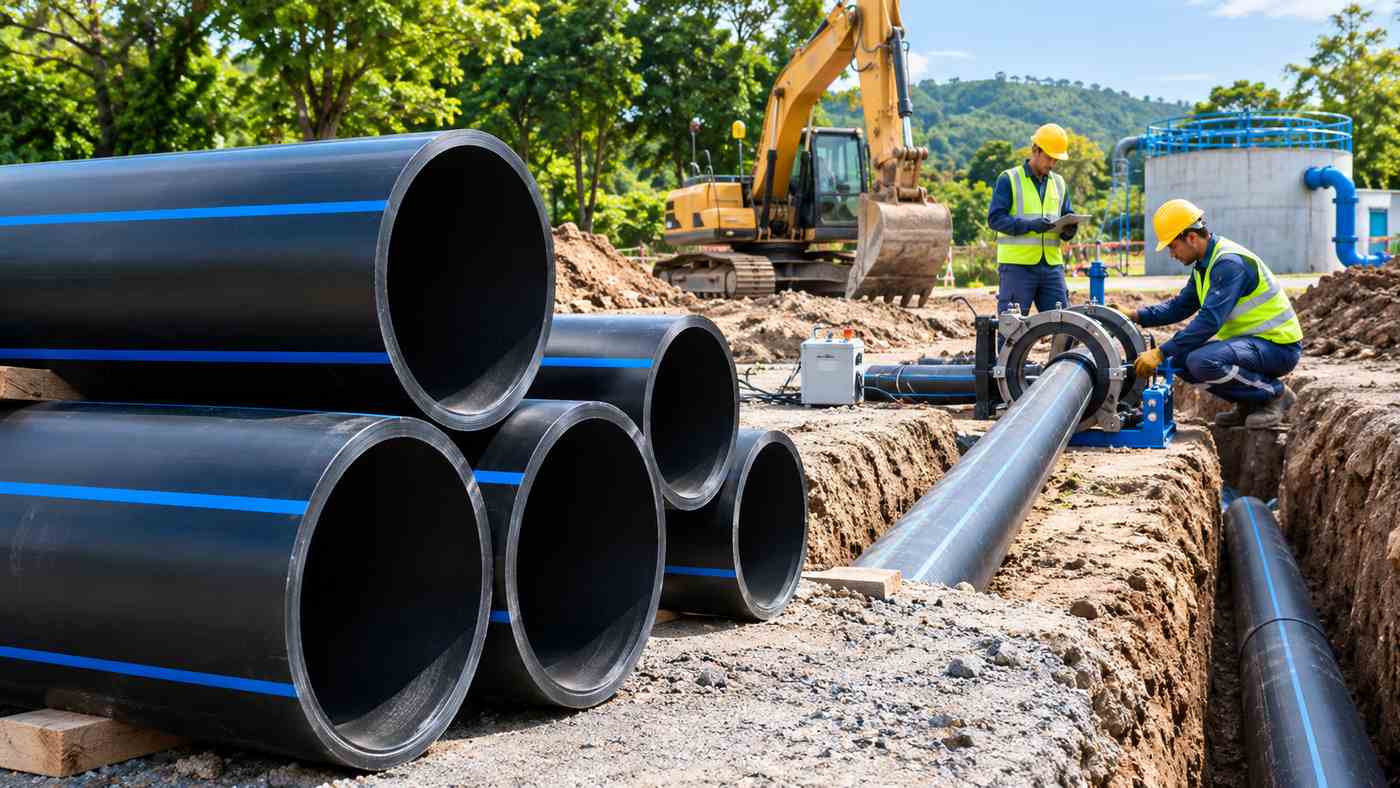
Reliable piping systems are essential for modern buildings, industrial facilities, agricultural operations, and public water infrastructure. Whether engineers are designing a new water distribution network or contractors are replacing aging underground pipelines, choosing the right pipe material can significantly affect long-term performance, maintenance requirements, and overall project costs.
Traditional piping materials such as steel, concrete, and certain rigid plastics continue to serve important purposes. However, polyethylene piping has become a widely used option for many water supply and infrastructure projects because of its flexibility, corrosion resistance, and practical installation characteristics.
Among these materials, PE pipes have gained attention for their ability to handle a variety of operating conditions while supporting efficient water transportation.
Manufactured from polyethylene, these pipes are available in different material grades, diameters, wall thicknesses, and pressure classes. They are commonly used for potable water distribution, irrigation systems, industrial pipelines, and selected drainage applications.
Understanding their features and limitations is important before selecting them for a project.
This guide explains what polyethylene pipes are, how they work, their main advantages, common applications, installation methods, and the factors professionals should consider when choosing a suitable piping system.
What Are PE Pipes?
PE pipes are plastic pipes manufactured from polyethylene, a thermoplastic polymer known for its chemical resistance, flexibility, and durability.
Unlike traditional metallic pipes, polyethylene does not experience electrochemical rusting. This characteristic makes it especially useful in applications where moisture, soil conditions, and environmental exposure can create corrosion concerns.
Polyethylene piping systems are designed to transport fluids through networks of pipes and compatible fittings.
They are used in residential developments, municipal infrastructure, agricultural installations, and industrial projects.
The performance of a PE piping system depends on several factors, including the polyethylene material grade, pipe dimensions, pressure rating, temperature, joining method, and installation environment.
For water supply applications, manufacturers commonly provide high-density polyethylene pipes produced using materials such as PE80 or PE100.
Engineers and project managers evaluating different PE pipes can review manufacturer product information and determine which specifications are appropriate for their intended water supply requirements.
How Are Polyethylene Pipes Manufactured?
Polyethylene pipes are generally manufactured through an extrusion process.
During production, polyethylene resin is heated until it reaches a suitable processing temperature.
The softened material passes through an extrusion die, forming a continuous tubular shape.
The pipe is then cooled, sized, and prepared according to its manufacturing specifications.
Manufacturers control important characteristics such as wall thickness, outside diameter, dimensional consistency, and material quality.
Completed products may undergo testing for pressure resistance, dimensional accuracy, and other properties required by applicable standards.
Quality control is essential because variations in material formulation or manufacturing processes can influence long-term pipe performance.
Types of PE Pipes Used in Construction and Infrastructure
Polyethylene piping products are available in different grades and configurations.
Understanding these differences helps engineers choose suitable materials for specific applications.
HDPE Pipes
High-density polyethylene, commonly known as HDPE, is widely used in water distribution and industrial piping systems.
HDPE pipes provide good toughness, flexibility, and resistance to many chemicals.
They are frequently selected for buried pipelines because they can accommodate certain ground movements when properly designed and installed.
However, pipe suitability must always be evaluated against operating pressure, temperature, and environmental conditions.
PE80 Pipes
PE80 is a polyethylene material classification used in pressure pipe applications.
It has a lower minimum required strength classification than PE100.
PE80 may be suitable for certain water distribution and service connection applications when the pipe is correctly designed and rated.
The appropriate choice depends on pressure requirements, dimensions, applicable standards, and project specifications.
PE100 Pipes
PE100 is a commonly specified polyethylene material grade for pressure piping systems.
Its higher strength classification allows engineers to achieve certain pressure ratings with thinner pipe walls than would be required using a lower-strength material grade under otherwise comparable design conditions.
PE100 products are used in municipal water supply networks, industrial pipelines, and other engineered systems.
However, material classification alone does not determine a pipe’s pressure rating.
Wall thickness, diameter, temperature, and design requirements must also be considered.
PE100-RC Pipes
PE100-RC is a material classification associated with enhanced resistance to slow crack growth.
These products may be selected for installation conditions where resistance to point loading and surface damage is particularly important.
They can be relevant in certain trenchless installations and challenging underground environments.
Even with enhanced material performance, appropriate installation practices and manufacturer requirements remain essential.
9 Powerful Benefits of PE Pipes for Modern Infrastructure
Polyethylene piping systems offer several advantages that make them suitable for a wide range of construction and water supply applications.
1. Excellent Resistance to Corrosion
One of the most important advantages of PE pipes is their resistance to corrosion.
Metallic pipelines can be affected by electrochemical corrosion, particularly when exposed to aggressive soil conditions or certain water characteristics.
Polyethylene does not rust in the same way as steel or iron.
This reduces the need for some corrosion protection measures typically associated with metal piping systems.
For example, underground water pipelines installed in moisture-rich soil may benefit from polyethylene’s corrosion-resistant properties.
However, chemical compatibility still needs to be evaluated because certain substances can affect polyethylene materials.
2. Long Service Life When Properly Designed
Durability is an important consideration when installing underground infrastructure.
Replacing buried pipelines can involve substantial excavation, labor, transportation, and service disruption costs.
PE piping systems are designed for long-term performance when suitable materials are used under appropriate operating conditions.
Industry standards provide methods for evaluating long-term strength and pressure performance.
Actual service life depends on pressure, temperature, material quality, installation conditions, and exposure to damaging influences.
Rather than assuming every polyethylene pipe will last a fixed number of years, engineers should use the manufacturer’s technical data and relevant design standards.
3. Lightweight Material for Easier Handling
Polyethylene pipes are relatively lightweight compared with many traditional metallic and concrete piping products.
This can simplify transportation, handling, and installation.
For example, smaller-diameter PE pipes may be supplied in coils, reducing the number of separate pipe lengths that need to be connected.
Larger pipes can also benefit from lower handling weight compared with some alternative materials.
However, large-diameter polyethylene pipes still require suitable lifting equipment, safe handling procedures, and proper site planning.
4. Flexibility for Different Installation Conditions
Flexibility is another important benefit of polyethylene piping.
PE pipes can accommodate limited bending and certain ground movements without the same brittle behavior associated with some rigid piping materials.
This can be useful in underground installations where soil conditions and terrain vary.
For example, a pipeline following a gently curved route may require fewer directional fittings when the permitted bending radius allows it.
However, engineers should never exceed the minimum bending radius specified for the selected product.
Excessive bending or poor support can create long-term performance problems.
5. Reliable Jointing Options
A properly installed piping network needs reliable connections between pipes and fittings.
Polyethylene pressure pipes can be joined using methods such as butt fusion, electrofusion, and compatible mechanical fittings.
Fusion joining methods heat suitable polyethylene surfaces and allow them to form an integrated connection.
When performed correctly using approved equipment and procedures, these joints can provide dependable performance.
Joint quality depends on material compatibility, surface preparation, temperature control, alignment, and the skill of the installer.
Improperly prepared connections may leak or fail despite the pipe itself meeting the required specifications.
6. Good Hydraulic Performance
The internal surfaces of PE pipes are generally smooth, supporting efficient water flow.
This can help limit friction losses compared with some piping systems that develop substantial internal corrosion or deposits.
For water distribution projects, hydraulic performance influences pump selection, pressure losses, and energy requirements.
However, flow efficiency depends on more than the pipe material.
Pipe diameter, water velocity, system layout, fittings, and operating conditions all affect hydraulic performance.
Engineers should use appropriate hydraulic calculations rather than assuming that any particular pipe material guarantees lower pumping costs.
7. Resistance to Many Chemicals
Polyethylene demonstrates resistance to a wide range of chemical substances.
This makes certain PE piping products suitable for selected industrial and water-related applications.
However, chemical resistance varies according to the specific substance, concentration, operating temperature, and exposure duration.
Some hydrocarbons, solvents, and other chemicals may be unsuitable for particular polyethylene materials.
Before using PE pipes for industrial transportation, designers should review chemical compatibility data and confirm the intended application with the manufacturer.
8. Reduced Maintenance Requirements
Corrosion resistance and properly constructed joints can help reduce certain maintenance requirements.
For example, polyethylene water supply pipelines generally do not require the same rust prevention measures as conventional steel piping.
Well-designed systems may also experience fewer problems associated with internal corrosion.
Nevertheless, maintenance planning remains important.
Operators should monitor water pressure, inspect accessible fittings, investigate leaks, and maintain accurate pipeline records.
Long-term reliability depends on both material quality and responsible system management.
9. Versatility Across Multiple Industries
PE pipes can be used in a wide variety of applications.
Their available material grades, dimensions, and jointing methods provide flexibility for different engineering requirements.
They are commonly found in municipal water networks, irrigation projects, industrial facilities, and certain drainage systems.
This versatility makes polyethylene piping an important option for contractors and infrastructure planners.
However, each application requires the correct product classification and compliance with relevant design requirements.
Common Applications of PE Pipes
Polyethylene piping systems are used across several sectors because they combine practical handling characteristics with useful material properties.
Municipal Water Supply Systems
Municipal water networks transport treated water from distribution facilities to residential, commercial, and public service areas.
PE pipes are frequently used for water mains and service connections.
Their corrosion resistance can be valuable in buried environments.
For potable water applications, the selected product must also satisfy applicable drinking-water contact requirements and local regulatory approvals.
Agricultural Irrigation
Agriculture depends on efficient water distribution for crop production.
Polyethylene pipes are used in irrigation networks to transport water across farmland.
Depending on the system design, they may connect pumps, distribution mains, and smaller irrigation lines.
Flexibility and corrosion resistance can make PE materials practical in agricultural environments.
However, the pressure class must be suitable for pump operation and expected pressure fluctuations.
Industrial Water Transportation
Industrial facilities often require piping systems for process water, cooling water, and other non-potable applications.
Selected polyethylene products can provide a practical alternative to metallic pipelines.
Designers must confirm chemical compatibility, pressure ratings, temperature restrictions, and safety requirements before installation.
Underground Infrastructure
PE pipes can be used in underground utility networks.
Their flexibility and corrosion resistance can be beneficial where soil conditions create challenges for other materials.
Proper trench preparation, bedding, backfilling, and compaction are essential to protect the pipe and support the intended system performance.
Pressure Drainage Systems
Certain polyethylene piping systems are suitable for drainage and sewerage under pressure.
These applications require products specifically designed and rated for the intended service.
Gravity drainage pipes and pressure pipes are not necessarily interchangeable.
Selecting the correct product category is essential for safe operation.
Understanding PE Pipe Sizes and Pressure Ratings
Choosing a pipe requires more than selecting an approximate diameter.
Engineers must consider several technical characteristics.
Outside Diameter and Wall Thickness
PE pipes are commonly specified using outside diameter and wall thickness.
These dimensions influence the internal flow area and pressure capacity.
Two pipes with the same outside diameter may have different wall thicknesses.
This affects their hydraulic capacity and pressure performance.
Standard Dimension Ratio (SDR)
SDR is the ratio of the pipe’s nominal outside diameter to its nominal wall thickness.
A lower SDR indicates a thicker wall relative to the pipe diameter.
For pipes manufactured from the same material grade, lower SDR values generally correspond to higher pressure capability under comparable conditions.
However, a suitable SDR must be selected according to the actual design requirements.
Pressure Classification
Pressure ratings indicate the conditions under which a pipe is designed to operate.
For water piping, ratings are often associated with reference temperatures and standardized design assumptions.
Elevated operating temperatures can reduce allowable pressure.
The system should also be designed for pressure surges and other transient conditions that may occur during pump starts, valve closures, or operational changes.
PE Pipes vs. PVC Pipes: What Is the Difference?
PE and PVC are both widely used plastic piping materials.
However, their physical characteristics and installation requirements differ.
Flexibility
Polyethylene pipes are generally more flexible than rigid PVC pipes.
This can make PE suitable for certain curved installations and ground movement conditions.
Rigid PVC may be appropriate where the design favors straight pipe sections and established socket jointing methods.
Jointing Methods
PE pressure systems commonly use fusion joints and compatible mechanical fittings.
PVC systems often use elastomeric sealing rings, solvent-cemented connections, or other approved jointing methods depending on the product.
The correct joining method must match the pipe material and application.
Installation Considerations
Both materials require proper bedding, support, handling, and installation.
The most suitable choice depends on pressure, temperature, installation environment, local standards, and total project cost.
Neither material is universally better for every application.
How Are PE Pipes Installed?
Proper installation is essential for achieving reliable long-term performance.
Although exact procedures depend on the project and pipe system, several stages are commonly involved.
Step 1: Project Planning
Engineers first evaluate the pipeline’s purpose, route, flow requirements, pressure conditions, and environmental factors.
They then select suitable pipe material, dimensions, fittings, and installation methods.
Step 2: Site Preparation
For underground pipelines, contractors prepare the installation area and excavation trench.
Trench depth, width, bedding, and ground stability should follow the relevant design specifications.
Existing underground utilities must be identified before excavation begins.
Step 3: Pipe Handling and Inspection
Before installation, pipe lengths and fittings should be inspected for damage.
Contractors should check for excessive scratches, deformation, contamination, and other defects.
Storage and lifting methods must follow manufacturer recommendations.
Step 4: Pipe Jointing
Pipes are connected using approved techniques.
For butt fusion, suitable pipe ends are prepared, heated, and joined using controlled pressure and cooling procedures.
Electrofusion uses specially designed fittings with built-in heating elements.
Mechanical fittings may be appropriate for certain connections or transitions.
Trained personnel should perform fusion joining using approved equipment and documented procedures.
Step 5: Testing and Inspection
After installation, the pipeline is inspected and tested according to project requirements.
Pressure testing helps identify potential problems before commissioning.
Potable water systems may also require flushing, cleaning, disinfection, and water quality verification under applicable local rules.
Step 6: Backfilling and Commissioning
Once required tests are completed, buried pipework is backfilled using approved materials and compaction procedures.
The completed network can then be commissioned according to the project’s operational requirements.
Common Mistakes to Avoid When Selecting PE Pipes
Several avoidable mistakes can reduce pipeline reliability.
One common problem is selecting a pipe based on price without reviewing its technical specifications.
A cheaper product may not provide the required pressure rating or material performance.
Another mistake is ignoring the effect of temperature on pressure capacity.
Designers must consider the actual operating environment rather than relying only on ratings established at reference conditions.
Improper pipe jointing is also a significant concern.
Using incompatible materials, poorly maintained fusion equipment, or incorrect joining procedures can produce unreliable connections.
Inadequate trench bedding and poor backfilling practices may damage buried pipelines.
Finally, buyers should not assume that every polyethylene pipe is approved for drinking-water applications.
Potable water suitability must be confirmed through the relevant product certifications and regulatory requirements.
How to Choose High-Quality PE Pipes
Before purchasing polyethylene piping products, consider the following factors.
Verify Material Grades
Confirm whether the product is manufactured from PE80, PE100, PE100-RC, or another specified material grade.
The choice should match the project’s technical requirements.
Check Applicable Standards
For water supply pressure piping, relevant specifications may include the ISO 4427 series or the EN 12201 series, depending on the project location.
Other standards may apply for gas, industrial, drainage, or specialized systems.
Request documentation showing which standards the product meets.
Review Pressure and Temperature Requirements
Evaluate continuous operating pressure, potential pressure surges, and expected temperature conditions.
Choose products with suitable design margins according to the applicable engineering standard.
Evaluate Manufacturer Documentation
Reliable product documentation should clearly identify dimensions, material grades, pressure classes, and relevant testing requirements.
Technical information helps engineers confirm whether the product is suitable before installation.
Consider Total Project Costs
Purchase price is only one element of overall project expenditure.
Transportation, installation, jointing equipment, excavation, maintenance, and possible future replacement should also be considered.
A properly specified piping system may deliver better long-term value than a cheaper product selected without adequate engineering evaluation.
Environmental Considerations for Polyethylene Pipes
Environmental performance is becoming increasingly important in infrastructure planning.
Polyethylene pipes may provide advantages such as corrosion resistance, relatively low weight, and extended service potential under suitable operating conditions.
Lower material weight can sometimes simplify transportation and handling.
Long-lasting infrastructure may also reduce the frequency of replacement work.
Polyethylene is a recyclable thermoplastic, although actual recycling opportunities depend on collection systems, contamination, material specifications, and local processing facilities.
Environmental performance should not be assessed from material properties alone.
A complete evaluation considers manufacturing, transportation, installation, operational energy requirements, expected service life, and end-of-life management.
For major infrastructure projects, life-cycle assessment can help compare different piping options using consistent assumptions.
The Future of PE Pipes in Water Infrastructure
Infrastructure operators continue to seek piping solutions that support dependable water delivery and practical maintenance.
Polyethylene materials are likely to remain relevant in applications where their engineering characteristics are suitable.
Improvements in material formulations, manufacturing quality control, jointing equipment, and installation practices may support more reliable piping systems.
Trenchless construction techniques can also create opportunities for polyethylene piping in selected rehabilitation and new-installation projects.
However, the future of pipeline design will depend on more than material innovation.
Water utilities and contractors will need to focus on accurate engineering, reliable inspection, responsible resource management, and compliance with evolving technical standards.
Selecting the right piping product for the right conditions will remain more important than choosing a material based solely on popularity.
Frequently Asked Questions About PE Pipes
1. What are PE pipes used for?
PE pipes are used in water supply networks, agricultural irrigation, industrial water transportation, and selected pressure drainage applications. Their suitability depends on the pipe’s specifications and intended operating conditions.
2. What is the difference between PE80 and PE100 pipes?
PE80 and PE100 are polyethylene material strength classifications. PE100 has a higher minimum required strength classification and can offer different pipe wall design options under comparable conditions.
3. Are PE pipes suitable for drinking water?
Yes, appropriately manufactured and approved PE pipes can be used for drinking-water distribution. Products must meet relevant potable water contact requirements and local regulations.
4. How long do PE pipes last?
Properly designed polyethylene piping systems can provide long service lives, potentially extending over several decades. Actual performance depends on pressure, temperature, material quality, installation practices, and operating conditions.
Conclusion
PE pipes are an important option for modern water distribution, agricultural irrigation, and selected industrial infrastructure projects. Their flexibility, corrosion resistance, and reliable jointing possibilities offer practical advantages when the systems are properly engineered.
Choosing the correct polyethylene material grade, pressure rating, dimensions, and joining method is essential for dependable performance.
By following applicable standards, reviewing manufacturer specifications, and using qualified installation professionals, businesses and infrastructure developers can build durable piping systems that support long-term operational needs.
