
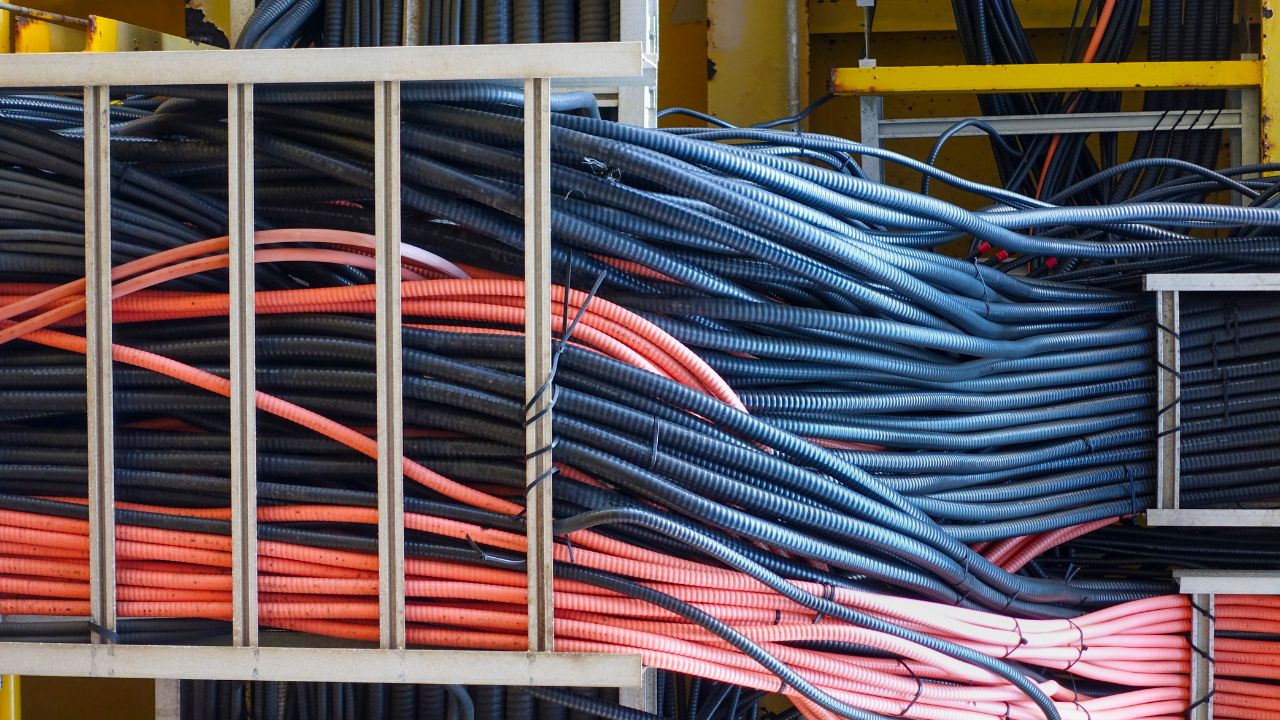
Not every cable is built for industrial work. That might sound obvious, but it’s a distinction that catches a lot of businesses off guard, usually when something fails in the field at the worst possible time. Industrial environments are tough on electrical equipment, and a cable that works fine in a controlled setting can break down quickly on a construction site, a shipyard, or a mining operation.
So what actually makes a power cable suitable for industrial use? The short answer is that it comes down to how the cable is built, what conditions it was designed for, and whether it’s certified to the standards that apply to your specific environment.
Here’s what that looks like in practice.
The Jacket Has to Match the Environment
The outer jacket is the cable’s first layer of protection. In industrial settings, that protection needs to hold up against oil, moisture, UV exposure, physical impact, and rough surfaces. A jacket that can’t handle those conditions will crack, soften, or degrade, and once the jacket fails, the insulation underneath is exposed.
Thermoset rubber jackets, made from materials like EPDM or neoprene, handle harsh conditions much better than standard thermoplastic alternatives. They stay flexible in the cold, resist cracking in the sun, and don’t break down when they come into contact with water or industrial fluids. If your cables are going to be used outdoors or near any kind of liquid or chemical exposure, the jacket material is the first thing worth checking.
Conductor Stranding Affects How Long the Cable Lasts
Inside the jacket, the conductors carry the current. How those conductors are stranded determines how well the cable handles repeated bending and movement. Finely stranded conductors flex more easily and recover better from being coiled, repositioned, and deployed again and again. Coarser stranding is more rigid, and under repeated movement it develops tiny internal wire breaks over time, reducing the cable’s capacity before you can see any damage from the outside.
For portable applications or anywhere cables get moved around regularly, finely stranded conductors make a real difference in how long the power cable performs reliably.
The Letter Codes on Industrial Cables Actually Mean Something
Industrial power cables carry letter designations that tell you exactly what they were built for. SOOW means a hard-service cord with an oil-resistant jacket and insulation, rated for wet locations. SJOOW has the same properties but with thinner insulation for lighter loads. Each letter in the code describes a specific rated capability.
Matching the right designation to the actual conditions of the job is one of the most commonly skipped steps in cable procurement, often because people outside of electrical roles don’t know the system exists. A cable with the wrong designation for its environment degrades faster and can lose its safety ratings before the end of its expected life, sometimes without any obvious warning signs on the outside.
Where the Connector Meets the Cable Is Where Failures Happen
In portable power setups, the weak point in most power assemblies is where the connector attaches to the cable. Connectors that are clamped or crimped on after manufacturing create a stress point that gets worse every time the cable is plugged in, unplugged, vibrated, or exposed to the elements.
Molded construction solves this by fusing the connector directly into the cable jacket during manufacturing, creating one continuous, waterproof assembly with no transition point for stress to concentrate. This approach holds up significantly better under the kind of repeated daily handling that field-assembled connectors typically don’t survive long-term. Power cable manufacturers like Duraline have built their portable power product lines around this molded construction method, and the difference in durability shows up clearly in demanding field applications.
Certification Tells You the Cable Was Actually Tested
UL listing, NEMA ratings, and sector-specific compliance standards aren’t just administrative requirements. They mean the cable was tested against defined safety and performance thresholds and passed. In regulated sectors like shipbuilding, government contracting, and utilities, using non-certified equipment can disqualify a project, trigger costly replacements, and create liability that goes well beyond the price of the cable.
According to the Electrical Safety Foundation International, an average of 150 workplace electrical fatalities occur in the United States every year, with improper equipment specification consistently identified as a contributing factor. Choosing certified equipment isn’t a formality. It’s a direct part of managing safety risk on the job.
The Bottom Line
What makes a power cable suitable for modern industrial applications is specificity. The jacket needs to match the environmental exposure, the stranding needs to match the handling demands, the cord designation needs to match the load and location, the connector construction needs to match the portability requirements, and the certification needs to match the regulatory standards of the sector.
A cable that gets all of those right for its specific application will outlast, outperform, and create far less risk than one chosen on price alone. In industrial operations where downtime costs money and safety incidents are unacceptable, that specificity is exactly what the right cable selection delivers.
