
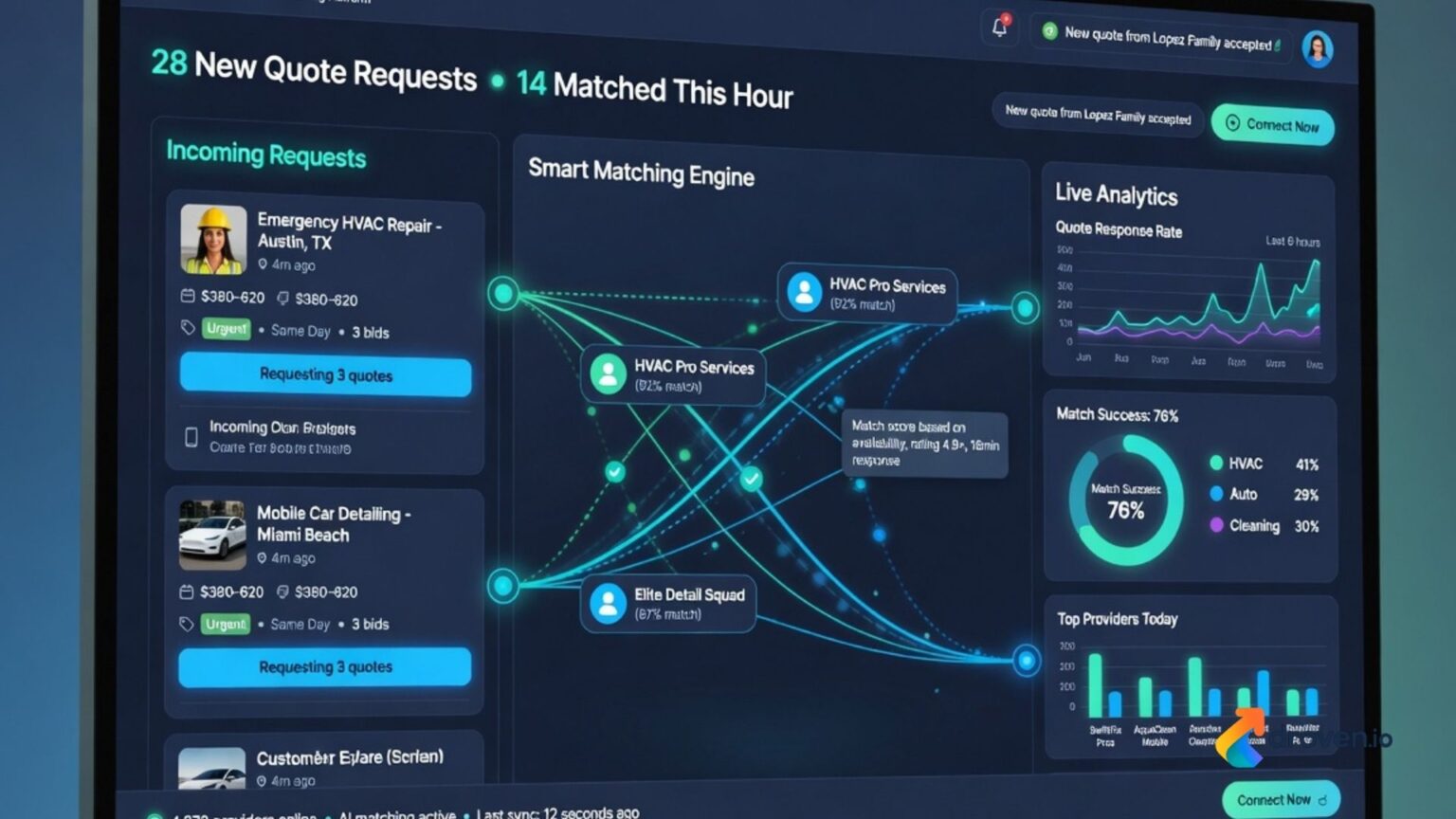
Modern digital commerce relies on dynamic platforms to connect consumers directly with specialized service providers. Consequently, traditional business directories are rapidly being replaced by programmatic request-for-quote platforms. Operating within home services, freelance B2B tasks, commercial logistics, or insurance, modern quote-matching marketplaces streamline vendor discovery by evaluating customer project specifications, geographical constraints, and budget parameters automatically. Rather than requiring users to contact individual contractors manually, these platforms collect structured job inputs and route request-for-quote (RFQ) packets to qualified service professionals.
As a result, service buyers receive transparent, competitive bids quickly while vendors gain access to high-intent sales leads. This comprehensive industry guide analyzes operational frameworks, platform architectures, and growth strategies within the modern service-matching ecosystem.
How Quote-Matching Marketplaces Transform Digital Service Procurement
Service procurement historically suffered from pricing opacity, delayed communication, and fragmented vendor verification. However, programmatic matching technology addresses these inefficiencies by structuring how buyer requirements interact with seller capacity.
| Operational Step | Traditional Service Procurement | Programmatic Quote Matching |
|---|---|---|
| Vendor Discovery | Manual web searches and local directories | Algorithmic routing based on project parameters |
| Price Discovery | Unstandardized, slow offline quotes | Structured, side-by-side competitive bidding |
| Trust Verification | Word-of-mouth or unverified reviews | Integrated background checks and verified history |
| Transaction Velocity | Days or weeks to confirm vendor availability | Minutes or hours to receive actionable proposals |
By introducing automated match logic, platforms eliminate cold outreach friction. Specifically, customers submit detailed project descriptions through dynamic online intake forms. Consequently, matching engines evaluate worker availability, skill certifications, and location radius to dispatch notifications to suitable vendors instantly. Therefore, both buyers and contractors experience faster transaction turnarounds.
Architectural Pillars of Successful Quote-Matching Marketplaces
Building a scalable service network requires balancing supply-side participation with demand-side satisfaction. Platform engineering teams rely on key infrastructure components to build marketplace trust and liquidity.
Algorithmic Lead Matching in Quote-Matching Marketplaces
Advanced matching platforms utilize multi-variable scoring engines to distribute consumer requests efficiently. Rather than sending every lead to every listed provider, algorithms filter submissions using strict operational criteria:
- Geographic Proximity: Geofencing limits lead distribution to contractors operating within active service zones.
- Vendor Capacity and Availability: Systems pause lead flow to providers with full schedules, preventing delayed customer responses.
- Historical Conversion Performance: Algorithms reward highly rated, fast-responding vendors with priority lead placement.
Consequently, intelligent lead routing prevents vendor bid fatigue while ensuring buyers receive responses from available, highly qualified specialists.
Transparent Bidding Protocols in Quote-Matching Marketplaces
Monetization models directly influence vendor retention and bidding behavior on dynamic service platforms. Therefore, network designers deploy distinct monetization strategies depending on target industry dynamics:
Quote-Matching Workflow Pipeline
| Stage | Process Phase | System Operation |
|---|---|---|
| Step 1 | Customer Submits Project RFQ | Dynamic intake form captures buyer requirements, timeline, and budget. |
| Step 2 | Matching Algorithm Filters Providers | System screens vendors based on location, skill match, and availability. |
| Step 3 | Selective Distribution | Targeted request-for-quote notification is routed to matched providers. |
Distribution Monetization Models Comparison
| Monetization Feature | Pay-Per-Lead Model | Commission Model |
|---|---|---|
| Vendor Trigger | Vendors purchase lead contacts directly | Platform collects a percentage upon project completion |
| Payment Timing | Upfront (Before bidding/winning the job) | Deferred (After work is completed and paid) |
| Vendor Risk | Higher (Fee paid regardless of contract win) | Lower (Fee paid only when revenue is earned) |
| Platform Revenue | Immediate cash flow per lead delivered | Higher potential yield per completed transaction |
- Pay-Per-Lead Models: Service providers pay a fixed fee to unlock buyer contact information, regardless of whether their bid wins the job.
- Commission-Based Models: Contractors submit bids for free, while the platform collects an agreed fee percentage upon successful project completion and payout.
- Subscription-Tier Models: Vendors pay recurring monthly fees for premium placement and discounted lead pricing.
7 Strategic Benefits of Deploying Quote-Matching Marketplaces
Adopting automated matching systems provides clear operational and financial advantages for buyers, contractors, and platform operators alike.
1. Drastic Reduction in Customer Acquisition Costs
Acquiring new clients through traditional search advertising can prove prohibitively expensive for independent contractors. Conversely, service networks aggregate consumer demand centrally. As a result, participating vendors reduce marketing overhead while gaining access to ready-to-buy consumers.
2. Accelerated Price Discovery for Consumers
Consumers often struggle to evaluate fair market value for custom services like home remodeling or specialized legal advice. By receiving multiple standardized estimates through a central interface, buyers compare line-item costs transparently before committing capital.
3. Automated Trust and Identity Verification
High-performing platforms enforce mandatory vendor vetting procedures. Specifically, platforms verify business licensing, liability insurance coverage, and identity documentation automatically. Consequently, consumer trust increases, leading to higher conversion rates across the platform.
4. Optimized Schedule Utilization for Contractors
Service professionals frequently experience unexpected schedule gaps due to canceled projects or seasonal lulls. Automated matching systems allow providers to adjust lead intake dynamically, filling open calendar slots to maintain steady monthly revenue.
5. Standardized Communication and Contracting
Disorganized communication often leads to project scope creep and payment disputes. Modern matching platforms provide integrated messaging tools, scope-of-work documentation, and milestone-based escrow accounts to protect both transacting parties.
6. Data-Driven Service Customization
Centralized platforms gather valuable data regarding localized consumer demand, regional price variations, and peak service seasons. Operators utilize these analytical insights to recruit specialized vendors in high-demand regions proactively.
7. Seamless Mobile Accessibility
Modern service platforms offer dedicated mobile applications for buyers and vendors. Consequently, contractors receive instant push notifications for new project leads, allowing them to submit competitive proposals directly from field job sites.
Operational Matrix of Digital Service Procurement Networks
To understand market dynamics better, the following table evaluates common platform models across major service sectors.
| Market Sector | Primary Matching Variable | Common Monetization Framework | Average Lead Velocity |
|---|---|---|---|
| Home Improvement | Zip code, license class, project scale | Pay-Per-Lead / Subscription | Under 15 Minutes |
| Freelance Digital B2B | Portfolio history, technical stack, rate | Percentage Commission per Job | 1 to 4 Hours |
| Freight & Logistics | Route origin, payload weight, vehicle type | Dynamic Instant Spot Auction | Under 5 Minutes |
| Commercial Insurance | Risk profile, industry classification, coverage | Broker Referral Commission | 24 to 48 Hours |
Eliminating Operational Risks in Quote-Matching Marketplaces
Despite clear operational strengths, service matching platforms face specific structural risks that require careful management.
Preventing Platform Disintermediation
Platform disintermediation occurs when buyers and providers bypass the platform to conduct business privately after initiating contact. To prevent off-platform leakage, successful marketplaces offer valuable embedded tools—such as project milestone escrow, dispute resolution guarantees, and integrated insurance protections—that incentivize users to keep transactions on-platform.
Managing Lead Quality and Vendor Fatigue
If automated platforms distribute low-quality or fake consumer requests, participating vendors quickly burn through marketing budgets and abandon the service. Therefore, operators must implement phone verification steps, spam detection filters, and intent-confirmation questionnaires before dispatching leads to paid network providers.
Conclusion on the Future of Quote-Matching Marketplaces
Programmatic matching platforms continue to redefine how modern consumers discover, evaluate, and hire specialized service professionals. By replacing static business directories with dynamic, algorithmically driven marketplaces, these systems lower customer acquisition costs for vendors while delivering transparent pricing to consumers. Furthermore, integrating robust verification standards, mobile communication tools, and flexible monetization frameworks secures long-term platform liquidity. As artificial intelligence models continue to refine lead-matching accuracy, modern quote-matching marketplaces will remain an essential driver of digital service commerce across global industries.
Frequently Asked Questions (FAQs)
What is the primary function of a quote-matching marketplace?
It is a digital platform that automatically routes structured customer service requests to qualified, available service professionals for competitive bidding.
How do quote-matching platforms monetize their services?
Platforms typically generate revenue through pay-per-lead fees, project completion commissions, subscription tiers, or featured vendor placement upgrades.
How do service matching algorithms select which vendors receive a lead?
Algorithms evaluate vendor geographic proximity, skill certifications, active schedule availability, customer rating history, and lead response velocity.
What prevents customers and service providers from cutting out the platform?
Platforms retain users by offering embedded value, including milestone escrow payments, verified dispute resolution services, and built-in project guarantees.
Are quote-matching platforms suitable for high-value commercial services?
Yes, commercial freight, legal services, and enterprise software procurement increasingly rely on customized quote-matching platforms to streamline complex sourcing.
How do automated platforms maintain high lead quality for vendors?
Operators utilize multi-factor phone verification, intent qualification surveys, and automated spam filtering tools before routing project requests to contractors.
