
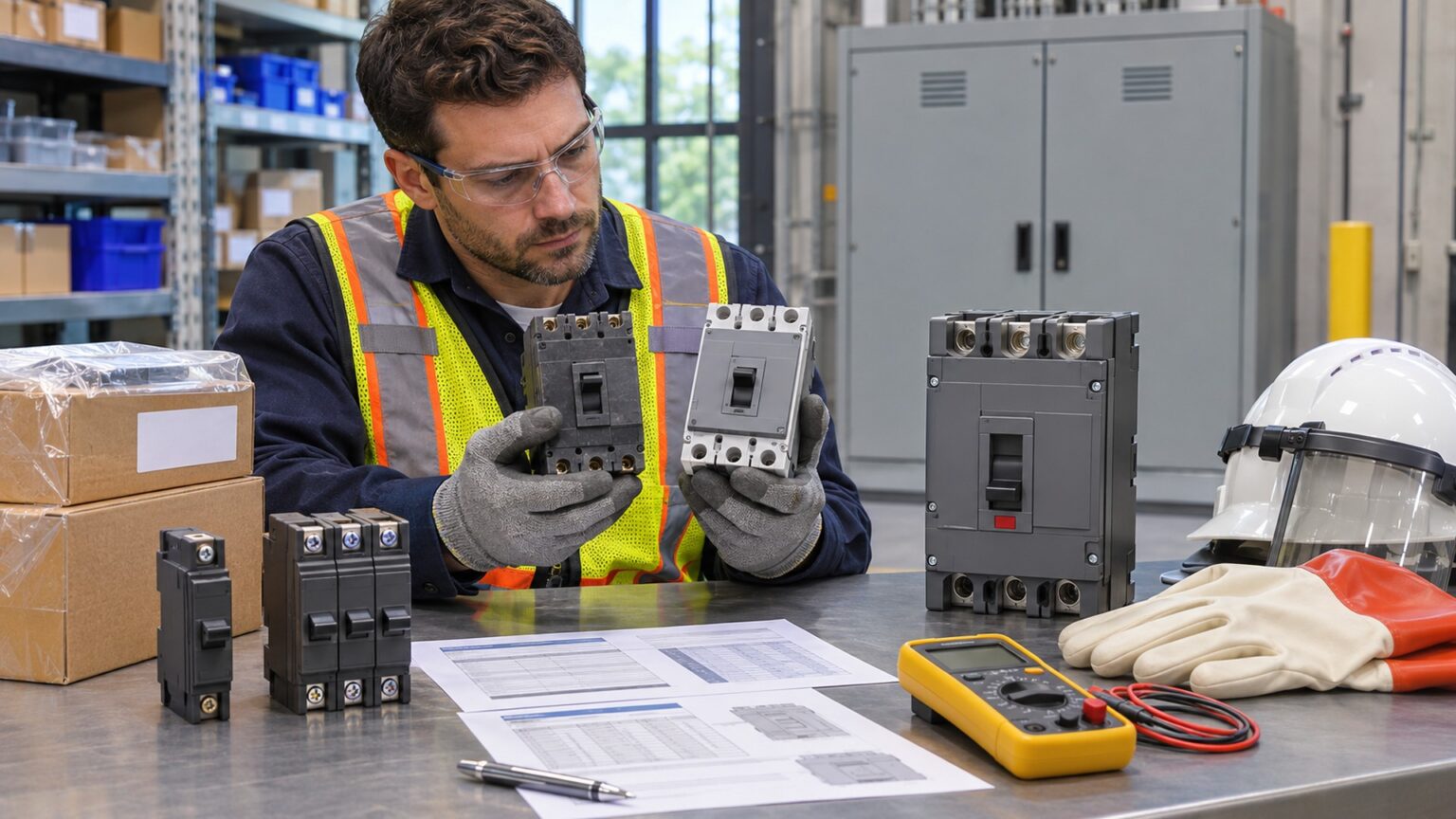
Buying replacement circuit breakers from Essential Electric Supply should begin with an accurate equipment match, not a guess based on appearance. A breaker protects a circuit by interrupting current under specified fault conditions, so choosing the wrong model can create serious hazards. Essential Electric Supply advertises new, surplus, recertified, and hard to find electrical components for residential, commercial, and industrial applications. Each purchasing option deserves careful review. This guide explains how to identify the correct product, understand important ratings, assess older equipment, and order with more confidence.
A replacement may be needed because a breaker has failed, an approved component is no longer manufactured, or a facility is preparing for scheduled maintenance. Whatever the reason, a qualified electrical professional should confirm the cause of the problem before selecting equipment. A new breaker cannot fix damaged wiring, an overloaded circuit, or deteriorated panel components.
Buying replacement circuit breakers from Essential Electric Supply: what matters most
The safest starting point is the existing panel or switchgear identification. Breakers are part of a tested electrical assembly, not universal accessories. The replacement must have appropriate markings, compatible mounting and connections, and electrical ratings that suit the system. Physical fit alone does not establish approval.
Essential Electric Supply lists several breaker categories and multiple manufacturers, including Eaton, Siemens, Square D, Schneider Electric, ABB, and General Electric. The business also advertises access to discontinued product lines. That inventory breadth can be useful when an older installation needs an exact part, but availability should never replace a documented compatibility check.
Understand the supplier’s role
A parts supplier helps customers locate equipment and clarify order details. The electrician or responsible engineer must still establish suitability for the specific installation. Ask the seller for documentation, photographs, condition details, and the exact catalog designation. Keep those records with the maintenance file.
Seven Proven Checks Before Ordering a Replacement Breaker
1. Start With the Panel and Original Part Number
Look for the manufacturer’s name, panel model, accepted breaker types, and electrical ratings in the equipment documentation. A qualified person can collect safe identification information without exposing untrained people to live parts. If labels are missing or unreadable, involve an electrician rather than opening an energized enclosure yourself.
The original breaker may have a full catalog number, frame designation, and optional suffixes. Those details can represent connection style, trip features, or accessories. Two breakers in the same broad family may not serve the same application.
Use photographs to reduce ordering errors
Take clear photos of accessible labels and the old breaker’s external markings when the equipment is safely available for inspection. Do not photograph inside an energized panel unless a qualified person is following the required safety procedure. Send the model information along with the panel identification when requesting a quote.
2. Confirm Electrical Ratings and Protection Functions
An appropriate ampere rating matters, but it is only one variable. The qualified installer must check voltage, number of poles, interrupting rating, and the applicable trip characteristics. Commercial equipment may also involve adjustable trip settings and coordination with upstream protective devices.
Do not install a breaker with a higher ampere rating simply because the previous device tripped. The wiring and connected equipment may not support that change. Repeated tripping can indicate a condition that needs diagnosis, not a bigger breaker.
Check fault current capability
Interrupting rating describes the maximum prospective fault current the breaker is designed to interrupt under its applicable conditions. The replacement must be suitable for the available fault current and any approved series rated arrangement. A licensed professional should verify this rather than infer it from the breaker size.
3. Verify Listed or Classified Compatibility
Matching the brand can be helpful, but the complete product designation and panel instructions govern the decision. Some replacement breakers are specifically Classified for certain panels made by other manufacturers. These products require a compatibility list identifying the accepted panel models and operating limits.
A similar shape, matching slot, or common nickname does not prove compatibility. Check the relevant certification markings and manufacturer instructions. If the allowed replacement is unclear, request a documented determination from the manufacturer or a qualified engineer before ordering.
4. Decide Whether New or Surplus Stock Is Appropriate
New equipment may offer a straightforward sourcing path when the correct part remains in production. Surplus stock can sometimes help locate an older model that is no longer offered through standard distribution. However, surplus does not describe one uniform condition.
Ask whether the unit is unused old inventory, previously installed equipment, or an item that has undergone work. Confirm its label condition, origin, included accessories, and any available inspection reports. A lower price is not enough if traceability is poor.
5. Examine Any Recertified or Reconditioned Claims
Essential Electric Supply describes some inventory as recertified and says these items receive testing. Buyers should ask what that specific term means for the actual part. Seller testing is not automatically equivalent to an independent product listing or an approved rebuilding program.
Electrical codes restrict reconditioning for some device types. In particular, molded case circuit breakers are subject to restrictions against reconditioning under relevant editions of the National Electrical Code. Equipment condition and code acceptance require careful review by qualified professionals and the local authority.
Get the exact condition in writing
Request the product’s condition category, test documentation when available, warranty terms, and applicable certification details. If a listing uses ambiguous terms, ask for clarification before purchase. Never assume a used or altered breaker is acceptable because it still operates mechanically.
6. Confirm Stock, Delivery, and Return Terms
Essential Electric Supply advertises fast fulfillment and same day shipping for qualifying inventory. Actual delivery depends on stock, order timing, destination, carrier service, and the specific item. A shutdown schedule should be based on written availability, not a general shipping slogan.
Before payment, confirm the exact part number, condition, total cost, dispatch date, return eligibility, and any restrictions on special orders. Ask who pays for return shipping when a product does not match the documented order.
7. Arrange Qualified Installation and Verification
Circuit breaker work can expose people to electric shock, arc flash, and unexpected energization. Purchase planning should include the qualified installer, required shutdown arrangements, and the facility’s established electrical safety procedures. For workplace systems, appropriate isolation and verification steps are essential.
The installer must confirm suitability and assess the equipment condition before energizing it. If damage exists at the bus connection, enclosure, wiring, or protective system, simply changing the breaker may not resolve the underlying hazard.
Which Replacement Circuit Breaker Type Do You Need?
The term circuit breaker covers several product families. Essential Electric Supply advertises molded case, insulated case, air, miniature, and protective function breakers. Their construction and intended applications differ. Identify the equipment class before comparing prices.
Molded Case Circuit Breakers
Molded case units are widely used in commercial distribution and some industrial systems. They are enclosed in an insulating housing and may use thermal magnetic or electronic trip mechanisms. Available frame sizes, settings, and accessories vary substantially.
For a replacement, check the frame, interrupting rating, terminals, trip unit, and application approval. A visually similar enclosure may conceal a very different specification.
Insulated Case and Air Circuit Breakers
Larger facilities may use insulated case or air circuit breakers in switchboards or distribution equipment. These applications can involve higher currents, mechanical interlocks, drawout arrangements, and detailed maintenance procedures.
A replacement may require an exact frame, cradle, control voltage, and accessory configuration. Request the relevant drawings and identification data. An inexpensive substitute that does not coordinate with the existing assembly can create expensive downtime.
Miniature and Special Function Breakers
Residential and light commercial panels may use compact branch circuit breakers. Some circuits also require ground fault or arc fault protection under applicable rules. These functions should not be omitted when choosing a replacement.
A standard breaker is not automatically equivalent to a GFCI or AFCI model. Confirm whether protection is integrated into the breaker, provided elsewhere, or required by the current approved installation design.
Why Obsolete Breakers Require Extra Caution
Older facilities often contain panels and switchboards built around product families that are difficult to source. Essential Electric Supply advertises stock associated with legacy names such as Westinghouse, ITE, Murray, and others. This may help maintenance teams investigate replacement options for equipment still in service.
An obsolete part number is a research starting point, not proof the installation should remain in service. Some aging panel designs have known safety concerns, deteriorated connections, or limited support. A qualified assessment may conclude that replacing the panel or its interior is safer than replacing one breaker.
Do Not Treat Legacy Brands as Interchangeable
Manufacturers have acquired product lines and changed naming conventions over time. A familiar brand name does not establish that a present day breaker fits an older assembly. Request written compatibility information for the exact panel model and replacement part.
Consider the Cost of Keeping the Existing Equipment
A rare breaker may be expensive while the rest of the system remains worn. Compare the cost and expected service life of an approved part with a planned equipment upgrade. Include outage time, future availability, and maintenance risk in the decision.
How to Compare Product Condition and Warranty Terms
When evaluating replacement circuit breakers from Essential Electric Supply, separate price from condition. New stock, unused surplus, previously installed units, and items described as recertified may have different histories. The seller’s advertised warranty also may vary by product category or transaction.
Request Clear Product Documentation
Ask for the manufacturer’s catalog number, full description, condition statement, and any supporting test or certification records. For large industrial units, additional service history or inspection documentation may be appropriate. Documentation reduces uncertainty but cannot substitute for an installer verifying field suitability.
Read Warranty Exclusions Before Ordering
The supplier advertises warranty coverage on many products, but the written terms control. Ask whether coverage includes replacement parts, shipping, testing, labor, and damage discovered after installation. Also confirm who handles claims and whether a returned unit must be inspected first.
Check Return Eligibility for Special Items
Hard to find equipment and custom configurations may have distinct return conditions. Confirm these before ordering a part for a scheduled shutdown. A correct model delivered late can still create a costly operational problem.
Price Factors Beyond the Advertised Breaker Cost
Breaker pricing depends on current production status, manufacturer, ratings, condition, and market availability. Large or obsolete industrial equipment may cost more than a common residential breaker. A low price can be misleading when essential accessories are missing.
Include the Whole Procurement Cost
Consider shipping, insurance, inspection, installation labor, outage coordination, and any required engineering review. A facility may also need a spare component or a documented upgrade plan. Compare total project cost rather than treating purchase price as the only decision.
Avoid Paying for the Wrong Configuration
A three pole breaker with an accessory package is not equivalent to a simpler unit simply because the case dimensions match. Confirm shunt trips, auxiliary contacts, terminal arrangements, and required mounting hardware before payment. An overlooked accessory can delay commissioning.
Avoid Counterfeits and Misrepresented Components
Counterfeit or mislabeled electrical parts can create serious risk because their markings may not correspond to verified construction. When considering replacement circuit breakers from Essential Electric Supply, review available images and request documentation for unusual, discontinued, or high value stock. Do not rely on a convincing label alone.
Confirm Product Identity
Ask whether the supplier can provide traceable manufacturer information and clear pictures of the exact unit, including markings visible without disassembly. For items with certification marks, a qualified professional can verify the mark and product identity through relevant certification resources.
Escalate Uncertain Purchases
If documents conflict or the part appears altered, pause the order. Ask a qualified engineer or the original manufacturer whether a suitable verified replacement exists. A brief delay is preferable to installing an unverified protective device.
A Better Ordering Workflow for Maintenance Teams
Start with one accurate equipment record. Include the panel nameplate information, existing breaker number, application details, and a short description of the problem. Separate facts that have been confirmed from information that still needs investigation.
Send a Complete Quote Request
When contacting Essential Electric Supply, provide the full part number, manufacturer, quantity, desired condition, delivery location, and required date. Ask whether the proposed item is an exact match or an alternative that requires separate compatibility approval. Request product photos when the item is used or surplus.
Document the Purchase Decision
Save the quote, written compatibility evidence, condition description, warranty, and shipping confirmation. Share this file with the electrician or engineer before installation. Consistent documentation is especially valuable when different staff members handle purchasing and site maintenance.
Inspect the Delivered Item Before the Shutdown
Have qualified personnel compare the received part with the purchase documents while there is still time to resolve an error. Check external condition, identification markings, accessories, and packaging. Set aside questionable equipment rather than installing it to meet a deadline.
A Realistic Example of an Obsolete Breaker Search
Imagine a warehouse with an older distribution board and one breaker that has been identified as defective. The maintenance team has the original catalog number but cannot find the model in ordinary distributor stock. The team is considering replacement circuit breakers from Essential Electric Supply because the supplier advertises legacy inventory.
The purchasing manager collects the panel identification and asks for availability. Meanwhile, a qualified electrical contractor reviews the old assembly, checks compatibility requirements, and determines whether the equipment remains suitable for continued use. The supplier may offer an exact unused part, a possible alternative, or another condition category.
The team reviews the documentation before approving a purchase. If no acceptable replacement exists, it plans a panel upgrade rather than forcing a similar looking breaker into place. This example shows why sourcing and electrical approval must remain separate decisions.
Electrical Safety and Compliance Are Not Optional
Only appropriately qualified personnel should work inside electrical distribution equipment. Turning off a main switch does not necessarily make every part of an enclosure safe to touch. Stored energy, backfeed, and energized service connections require professional assessment.
Follow the Applicable Electrical Rules
The correct code edition and inspection requirements vary by jurisdiction and installation. Product markings, manufacturer instructions, equipment listings, and local authority decisions all matter. A supplier’s catalog description cannot override those requirements.
Never Diagnose a Fault by Repeated Resetting
A breaker that trips repeatedly may be responding to a real electrical problem. Frequent resets or substitution with a higher rated breaker can worsen hazards. Arrange inspection of the load, wiring, and protective device before returning the circuit to service.
Keep Maintenance Records Updated
Record installed part numbers, inspection findings, and any authorized changes to protective settings. Clear labels and updated drawings help future technicians identify equipment correctly. Good maintenance records also reduce emergency sourcing mistakes.
Common Buying Mistakes That Cause Delays
The first mistake is ordering by appearance rather than full catalog designation. Another is confusing a supplier’s condition label with an independent certification. Both can lead to unsuitable parts arriving at a critical time.
A third mistake is ignoring the panel itself. Burned connections or outdated equipment can make a breaker only replacement the wrong repair. Buyers also overlook shipping cutoffs, missing accessories, and special order return terms.
To reduce these risks, involve the qualified installer before ordering, document the exact match, and confirm delivery details in writing. A few careful questions can prevent a rushed purchase from becoming a second outage.
Frequently Asked Questions
Does Essential Electric Supply sell obsolete circuit breakers?
The supplier advertises new and hard to find legacy breakers. Confirm the exact part number, current availability, and suitability before ordering.
Can a different brand of breaker fit my electrical panel?
Only if the product is specifically approved or Classified for that application. Physical fit by itself is not enough.
What specifications matter when replacing a circuit breaker?
Check the exact model, voltage, current rating, poles, interrupting capability, protective features, and panel compatibility with a qualified professional.
Are recertified circuit breakers the same as newly certified products?
No. Ask what the seller’s term means and request relevant records. Testing or marketing language alone does not establish code acceptance.
How quickly can Essential Electric Supply ship a replacement?
The company advertises expedited and same day options for qualifying stock. Confirm the actual availability, cutoff, destination, and carrier service.
Should homeowners replace circuit breakers themselves?
Breaker replacement involves potentially lethal electrical hazards. Use an appropriately qualified electrician to diagnose the fault and perform the work.
Conclusion
Selecting a replacement breaker requires more than finding a familiar brand or an available part number. Verify the electrical ratings, documented panel compatibility, product condition, and installation requirements before placing an order. Essential Electric Supply may be a useful sourcing option for both current and older equipment, but the final safety decision belongs to qualified electrical professionals. Careful documentation and realistic procurement planning can help avoid preventable downtime and unsafe substitutions.
