
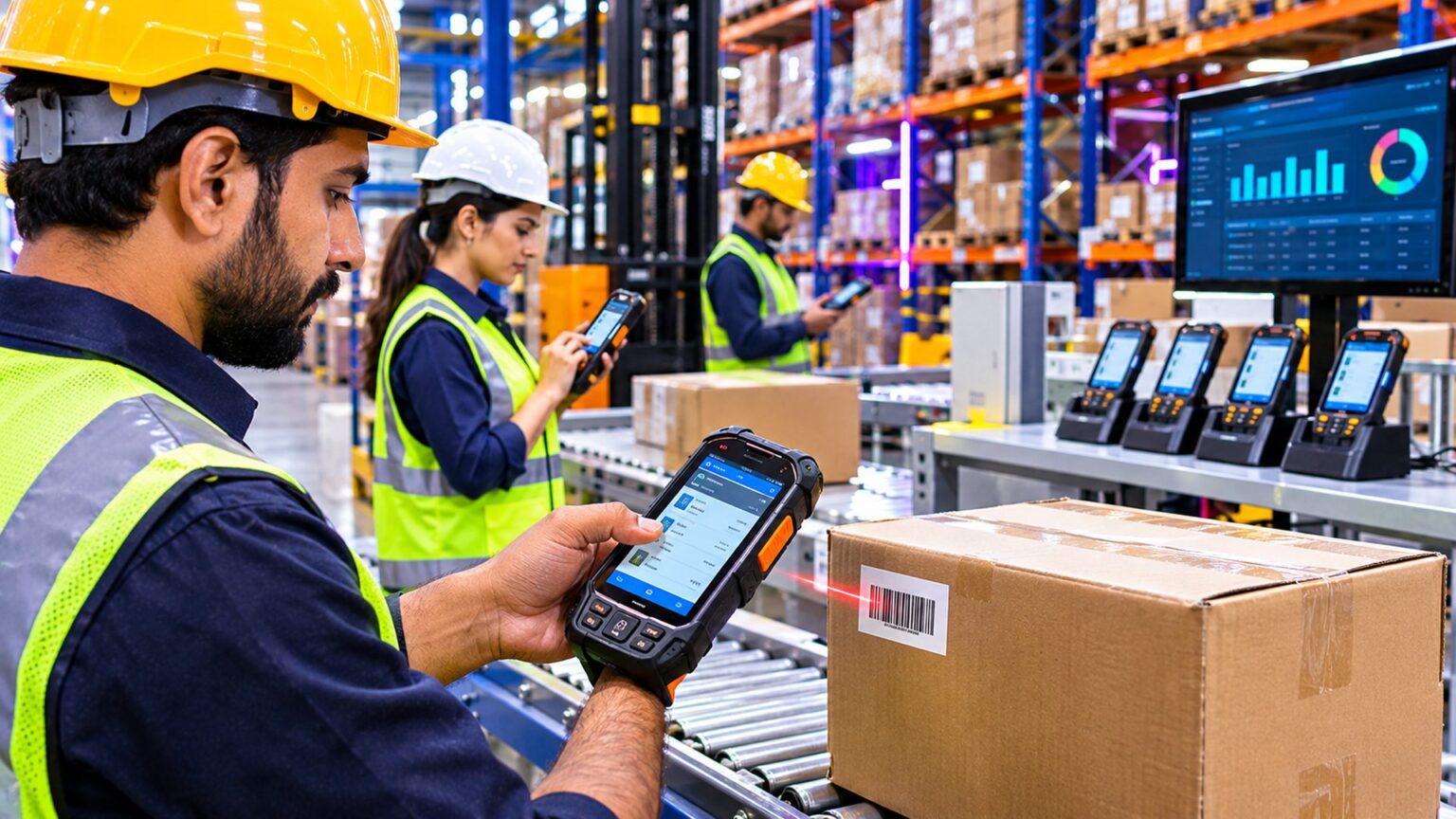
Modern businesses increasingly rely on mobile computing solutions to manage inventory, collect operational information, monitor equipment, and coordinate employees across demanding environments. A rugged PDA provides a durable handheld computing solution designed to support professional activities in warehouses, manufacturing facilities, distribution centers, construction sites, and outdoor working environments.
Unlike ordinary consumer smartphones, rugged handheld computers are engineered to withstand specific environmental challenges, including dust, moisture, accidental drops, vibration, and demanding operating conditions.
These devices often combine advanced barcode scanning, wireless communication, enterprise software compatibility, and reliable battery performance within a portable industrial design.
Understanding their capabilities, technical specifications, practical applications, and purchasing considerations helps businesses select mobile computing solutions that support operational efficiency and long-term productivity.
What Is a Rugged PDA?
A rugged personal digital assistant, commonly known as a rugged PDA, is a portable industrial computer designed for mobile data collection, communication, and professional software applications in challenging environments.
Modern rugged handheld devices frequently operate on Android and include enterprise-grade processors, integrated scanning technology, wireless connectivity, and reinforced protective enclosures.
Businesses use these devices to capture information directly at operational locations rather than manually transferring records to desktop computers.
Common applications include:
- Warehouse inventory management
- Barcode and QR code scanning
- Supply chain management
- Manufacturing operations
- Retail stock management
- Field service reporting
- Transportation and logistics
- Equipment inspections
- Asset identification
- Electronic delivery confirmation
The exact functionality depends on the selected hardware configuration, operating system, installed applications, and integrated accessories.
How Industrial Mobile Computers Work
Industrial handheld computers combine mobile processing capabilities with specialized hardware designed for business activities.
Employees can scan product identifiers, enter operational information, access enterprise databases, and communicate with authorized business applications.
Collected information can be transmitted through supported wireless connections or temporarily stored for synchronization when connectivity becomes available.
This approach helps organizations reduce dependence on handwritten documentation and improve information accessibility.
28 Crucial Features of a Rugged PDA
Selecting an industrial handheld computer requires evaluating more than physical durability. The following twenty-eight features represent important considerations for businesses implementing professional mobile computing solutions.
1. Reinforced Industrial Construction
Rugged handheld computers typically incorporate reinforced housings, protected internal components, and impact-resistant construction.
These design characteristics help devices withstand demanding operational environments where accidental impacts may occur.
Businesses should examine manufacturer testing specifications rather than rely exclusively on descriptions such as industrial-grade or military-grade construction.
2. Dust Resistance
Dust can interfere with electronic components, connectors, and ordinary mobile devices.
Industrial handheld computers often feature sealed enclosures designed to reduce the entry of solid particles.
An appropriate ingress protection rating can be particularly important in manufacturing facilities, construction environments, agricultural operations, and warehouses containing airborne dust.
3. Water Resistance
Rugged devices may provide protection against rain, splashes, water jets, or temporary immersion according to their documented specifications.
Water resistance is particularly useful for outdoor employees and organizations operating in environments where moisture exposure is possible.
However, water-resistant equipment should not automatically be considered completely waterproof under every condition.
4. Drop Resistance
Accidental drops are common in fast-moving industrial environments.
Rugged PDA manufacturers may conduct controlled drop tests to evaluate device durability under specified conditions.
When comparing models, examine the tested drop height, surface material, temperature conditions, and whether protective accessories were required during testing.
5. High-Performance Barcode Scanning
Integrated barcode scanners allow employees to capture product identifiers and operational information without entering every character manually.
Enterprise scanning engines can provide practical advantages over ordinary smartphone cameras in repetitive scanning workflows.
Actual scanning performance depends on barcode quality, scanning distance, lighting conditions, and the selected hardware.
6. Support for 1D and 2D Barcodes
Modern industrial scanners frequently support both traditional linear barcodes and two-dimensional codes.
Supported formats may include Code 128, EAN, UPC, QR Code, and Data Matrix.
Compatibility with existing barcode formats is essential when integrating handheld computers with inventory systems, manufacturing applications, and supply chain platforms.
7. Enterprise Android Operating System
Many modern rugged mobile computers use Android operating systems.
Android provides opportunities to integrate compatible business applications, customize workflows, and manage enterprise devices through supported administrative tools.
Organizations should verify operating system versions, security maintenance commitments, and application compatibility before purchasing devices.
8. Responsive Touchscreen Displays
Industrial handheld devices require displays that remain practical during professional activities.
Touchscreen responsiveness, display brightness, resolution, and physical durability influence usability.
Certain models also support operation with compatible gloves or wet fingers, which can be useful in manufacturing, logistics, and outdoor environments.
9. Sunlight-Readable Screens
Employees working outdoors may encounter difficulties viewing ordinary mobile displays under direct sunlight.
Suitable industrial handheld computers offer display characteristics designed to improve outdoor visibility.
Screen brightness, anti-reflective materials, interface contrast, and power consumption should all be considered when evaluating outdoor usability.
10. Long-Lasting Battery Performance
Reliable battery operation is essential for employees working away from charging facilities.
Battery capacity, processor efficiency, wireless activity, screen brightness, and scanning frequency influence operating time.
Businesses should test devices under representative working conditions rather than rely exclusively on advertised maximum battery life.
11. Replaceable Battery Systems
Some rugged handheld computers provide removable batteries that employees can replace during operational shifts.
Selected models also support hot-swapping, allowing battery replacement without completely interrupting active applications under specified conditions.
These capabilities can be valuable in distribution centers and manufacturing facilities operating extended schedules.
12. Fast and Reliable Charging
Charging accessories help organizations maintain device availability across multiple working shifts.
Compatible charging cradles, multi-device docking stations, and approved vehicle chargers can simplify power management.
Businesses should consider charging infrastructure alongside handheld device purchases to avoid operational interruptions caused by depleted batteries.
13. Enterprise Wi-Fi Connectivity
Industrial handheld computers frequently use Wi-Fi to communicate with warehouse management systems and internal business applications.
Reliable wireless coverage helps employees synchronize inventory records and receive updated operational instructions.
Organizations should evaluate device roaming capabilities, network authentication support, and wireless performance across actual working locations.
14. Cellular Network Support
Certain rugged PDA models support 4G LTE or 5G cellular communication.
This capability allows authorized employees to access compatible business applications outside established Wi-Fi networks.
Cellular connectivity is particularly useful for delivery drivers, field service engineers, transportation companies, and remote inspection teams.
15. Bluetooth Communication
Bluetooth enables compatible handheld computers to communicate with wireless printers, headsets, wearable scanners, and other supported accessories.
Businesses can use these integrations to create more flexible mobile workflows.
Evaluate accessory compatibility, wireless security, battery consumption, and connection reliability before deploying Bluetooth-dependent applications.
16. NFC Technology
Near Field Communication allows compatible devices to exchange information over short distances.
Industrial handheld computers may use NFC for identification, equipment verification, access-related applications, and supported electronic tags.
Organizations should confirm that their selected devices support the particular NFC standards and applications required by their operations.
17. GPS and Location Services
Certain rugged mobile computers include satellite positioning capabilities.
These features can support delivery confirmation, outdoor asset management, navigation, and field service coordination.
Location accuracy varies according to device capabilities and environmental conditions. Businesses should also establish appropriate privacy safeguards when collecting employee or customer location information.
18. Integrated RFID Capabilities
Radio frequency identification allows compatible devices to identify electronic tags through radio communication.
Some industrial handheld computers integrate RFID readers, while others require specialized accessories.
RFID can support inventory verification, asset tracking, and logistics activities. Supported frequencies, tag compatibility, reading distance, and regional requirements should be evaluated.
19. Sufficient Processing Power
Enterprise mobile applications require appropriate processor performance to remain responsive during everyday activities.
Applications involving real-time synchronization, scanning, graphical interfaces, and multiple background services may have different computing requirements.
Select hardware according to the complexity of your business software rather than purchasing devices solely based on processor specifications.
20. Adequate Memory and Storage
RAM supports active applications, while internal storage retains software, documents, photographs, and operational information.
Devices used for offline fieldwork may require additional storage to retain records until network connectivity becomes available.
Businesses should also consider future application updates and software requirements when evaluating storage capacity.
21. Physical Scanning Buttons
Dedicated scanning buttons can simplify repetitive barcode capture.
Employees can activate scanning functionality without repeatedly interacting with touchscreen controls.
Button placement, responsiveness, and ergonomic design are particularly important for workers scanning hundreds of items during ordinary operational activities.
22. Ergonomic Handheld Design
Industrial employees may carry and operate handheld computers throughout extended working shifts.
Device weight, grip design, dimensions, button placement, and accessory compatibility influence comfort.
A well-designed handheld computer should balance durability with practical usability rather than introduce unnecessary weight or physical strain.
23. Wide Operating Temperature Range
Industrial devices may operate in environments significantly colder or hotter than ordinary office spaces.
Manufacturers typically specify supported operating and storage temperature ranges.
Cold-storage facilities may require specialized devices designed to manage condensation and low-temperature battery performance. Always verify suitability for the intended environment.
24. Enterprise Device Management
Mobile device management solutions allow authorized administrators to configure, monitor, and maintain supported handheld computers.
Organizations may use these tools to distribute applications, enforce security settings, restrict unnecessary functionality, and manage software updates.
Centralized administration becomes particularly valuable when businesses operate large device fleets.
25. Business Software Compatibility
A rugged PDA should integrate effectively with the applications employees need to complete their responsibilities.
Common integrations include warehouse management systems, enterprise resource planning platforms, inventory management applications, and field service software.
Confirm scanner integration, operating system compatibility, authentication requirements, and synchronization behavior before deployment.
26. Industrial Camera Functionality
Integrated cameras can support equipment inspections, delivery documentation, incident reporting, and product condition assessments.
Employees may capture relevant images directly within authorized business applications.
Camera resolution, low-light performance, focusing capabilities, and information protection requirements should reflect the intended operational use.
27. Offline Data Collection
Field employees may encounter locations where internet access is unavailable or unreliable.
Applications supporting offline operation can temporarily retain authorized information on handheld devices and synchronize records after connectivity returns.
Reliable synchronization requires appropriate conflict management, secure storage, and protection against unintended duplicate records.
28. Long-Term Technical Support
Industrial handheld computers often represent multi-year business investments.
Evaluate manufacturer warranty arrangements, replacement part availability, operating system updates, repair services, and technical support commitments.
A device with dependable lifecycle support may provide greater long-term value than a less expensive alternative requiring frequent replacement.
Understanding Rugged PDA Durability Standards
Industrial mobile computers are evaluated using different environmental protection and durability testing frameworks.
Understanding these specifications helps businesses select devices suited to actual working conditions.
IP65 Protection
An IP65 rating indicates that an enclosure is dust-tight and provides protection against specified water jet testing conditions.
Devices with this rating may be suitable for warehouses, manufacturing environments, and selected outdoor applications.
IP65 does not establish protection against water immersion.
IP67 Protection
An IP67 rating indicates dust-tight construction and protection against temporary water immersion under defined testing conditions.
Standard IPX7 immersion testing generally involves water exposure for thirty minutes under specified depth conditions.
Businesses should follow manufacturer instructions concerning protective covers, charging ports, and exposure limitations.
IP68 Protection
IP68 provides dust-tight construction and protection against immersion under conditions specified for the particular product.
Immersion depth and duration can differ between manufacturers.
An IP68 device does not automatically satisfy every water jet protection requirement unless the relevant testing and rating are also documented.
MIL-STD-810H Environmental Testing
MIL-STD-810H provides environmental engineering and laboratory testing methods for evaluating equipment under selected conditions.
Relevant tests may address mechanical shock, vibration, humidity, temperature extremes, and other environmental stresses.
Businesses should examine the particular test methods and procedures completed by a device rather than assume that a general MIL-STD-810H claim guarantees resistance to every environmental hazard.
Major Industries Using Rugged PDA Devices
Industrial handheld computers support numerous sectors that require portable information processing and reliable operational communication.
Warehouse and Logistics Management
Warehouse employees use rugged handheld computers to scan incoming shipments, verify product quantities, update inventory records, and prepare outgoing orders.
Integration with warehouse management software can provide more timely visibility into stock movement and order processing.
Manufacturing and Industrial Automation
Manufacturing businesses can use handheld computers to document production activities, identify materials, monitor equipment inspections, and maintain quality control records.
Reliable information collection helps organizations improve coordination between production teams and administrative systems.
Retail and Ecommerce
Retail employees can use industrial PDAs to review product availability, conduct stock counts, verify pricing, and process supported inventory activities.
Ecommerce fulfillment teams may also use scanning devices to improve order verification and shipment preparation.
Transportation and Delivery Services
Delivery personnel can use rugged devices to access route information, scan packages, capture delivery signatures, and update shipment status.
Cellular connectivity and offline capabilities are particularly important when employees operate across different locations.
Construction and Field Service
Construction teams and field technicians may use rugged computers to complete inspections, document equipment conditions, review service orders, and submit operational reports.
Outdoor visibility, battery performance, and suitable environmental protection are important purchasing considerations.
Healthcare and Pharmaceutical Operations
Compatible enterprise handheld computers can support medical inventory management, medication identification, and authorized information collection.
Healthcare organizations should select devices that satisfy relevant cleaning, information security, software compatibility, and clinical workflow requirements.
Rugged PDA Versus Ordinary Smartphones
Consumer smartphones and industrial handheld computers can both support mobile applications, but they are designed around different operational priorities.
Ordinary smartphones typically emphasize multimedia capabilities, consumer communication, and general-purpose mobile experiences.
Rugged handheld computers prioritize professional workflows, documented environmental resistance, scanning capabilities, enterprise management, and operational reliability.
Certain consumer smartphones may be sufficient for occasional barcode scanning or basic business communication. However, organizations with intensive scanning requirements, challenging environments, and extended working shifts may benefit from specialized industrial hardware.
The most appropriate device depends on actual workload requirements and total ownership costs.
Leading Rugged PDA Manufacturers and Devices
Several established manufacturers provide industrial handheld computing solutions.
Zebra Technologies
Zebra offers enterprise mobile computers designed for retail, logistics, manufacturing, and warehouse applications.
Its MC9400 and MC9450 product family includes industrial scanning configurations and documented environmental durability specifications.
Honeywell
Honeywell develops rugged mobile computers supporting professional data collection and enterprise workflows.
Models such as the CK62, CK67, and CT47 provide different combinations of scanning technology, wireless communication, and environmental protection.
Unitech
Unitech provides industrial handheld computers and barcode scanning solutions for commercial applications.
Its rugged mobile computer portfolio includes devices intended for inventory management, logistics, and enterprise information collection.
These manufacturers represent examples for comparison rather than an independent ranking. Verify current model availability, support arrangements, and exact specifications before purchasing.
How to Choose the Best Rugged PDA for Your Business
Start by examining the environment where employees will use the equipment.
Identify expected scanning volumes, physical hazards, software requirements, wireless coverage, battery needs, and operational shift durations.
Request detailed technical specifications and conduct a controlled pilot using representative business workflows.
Employees should evaluate scanning responsiveness, device comfort, screen visibility, software usability, and charging arrangements.
Procurement teams should also examine repair turnaround times, replacement device availability, security maintenance, and integration expenses.
Selecting equipment based on practical operational evidence helps reduce unnecessary purchasing risks.
How Much Does a Rugged PDA Cost?
Industrial handheld computer prices vary according to environmental protection, processing capabilities, barcode scanning hardware, connectivity options, accessories, and support arrangements.
Entry-level devices generally cost less than specialized enterprise computers equipped with long-range scanning engines, cold-storage configurations, or advanced RFID capabilities.
When comparing prices, consider the complete cost of ownership, including:
- Initial hardware purchase
- Charging stations and accessories
- Enterprise software licenses
- Device management subscriptions
- Application integration
- Employee training
- Repairs and battery replacement
- Technical support
- Future hardware upgrades
An inexpensive device may become more costly over time if it experiences frequent operational failures or requires premature replacement.
The Future of Rugged Mobile Computing
Industrial mobile computing continues evolving through improvements in artificial intelligence, wireless communication, battery technology, scanning performance, and enterprise software integration.
Future handheld devices may provide more advanced automated information capture, intelligent workflow assistance, and improved connectivity with industrial IoT infrastructure.
However, successful adoption will continue to depend on practical reliability, information security, software compatibility, and employee usability.
Organizations should evaluate emerging capabilities according to measurable operational benefits rather than technology trends alone.
Frequently Asked Questions
What is a rugged PDA?
A rugged PDA is a durable handheld industrial computer designed for mobile data collection, barcode scanning, communication, and professional applications in challenging environments.
What is the difference between a rugged PDA and a smartphone?
Rugged PDAs generally prioritize industrial durability, integrated scanning, enterprise management, and professional workflows, while ordinary smartphones focus on general consumer applications.
Is a rugged PDA waterproof?
Water resistance depends on the device’s documented IP rating and manufacturer-specified testing conditions. No rating guarantees protection against every type of water exposure.
Can rugged PDAs scan QR codes?
Yes. Devices equipped with compatible 2D scanning engines can generally read QR codes, Data Matrix codes, and supported traditional linear barcodes.
Which industries use rugged handheld computers?
Warehousing, logistics, manufacturing, retail, ecommerce, transportation, construction, healthcare, and field service organizations commonly use industrial handheld computers.
Can a rugged PDA work without an internet connection?
Yes. Compatible applications can support offline data collection and synchronize stored information when network connectivity becomes available.
Conclusion
A rugged PDA provides businesses with a dependable mobile computing solution for industrial data collection, inventory management, and field operations. Selecting appropriate durability ratings, scanning capabilities, enterprise software compatibility, and lifecycle support can improve operational reliability. With thoughtful implementation and continuous device management, organizations can establish more efficient and sustainable mobile workflows.
