
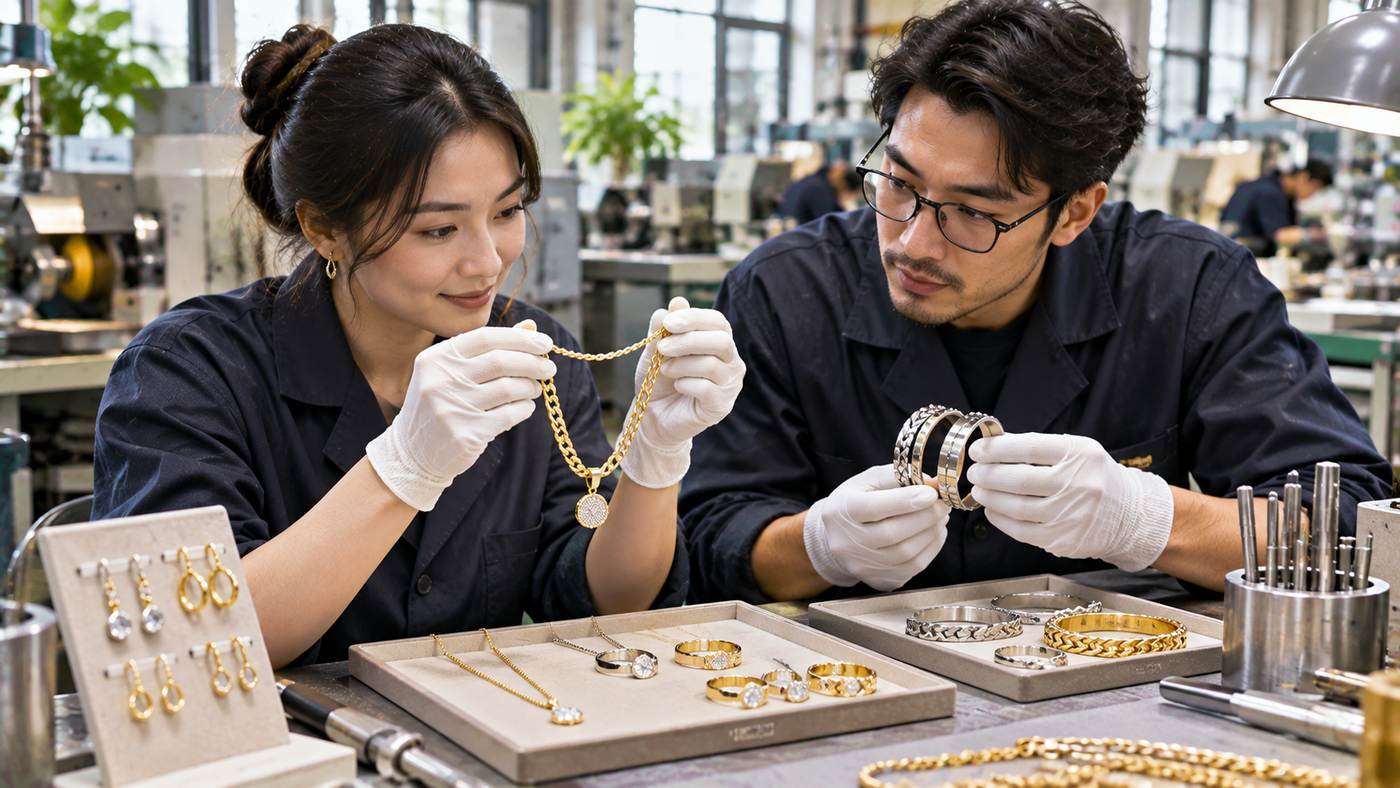
The global jewelry industry continues to evolve as fashion brands, independent designers, and online retailers search for distinctive products that reflect their identities. Customers increasingly expect attractive designs, reliable materials, consistent finishes, and jewelry that offers a satisfying balance between appearance and value.
For businesses entering this competitive market, producing jewelry involves much more than creating a beautiful design. Manufacturers must consider materials, production feasibility, sampling, plating durability, quality assurance, packaging, and supply chain reliability.
Star Harvest is a custom jewelry manufacturer specializing in brass and stainless steel jewelry production for international brands. The company provides original equipment manufacturing (OEM) and original design manufacturing (ODM) services, helping businesses transform design concepts into finished collections.
Founded in 2005, the manufacturer describes more than two decades of experience in jewelry production, with capabilities covering product development, manufacturing, surface finishing, testing, and customized packaging.
Understanding how a professional jewelry manufacturing partner operates can help businesses make informed sourcing decisions, reduce production challenges, and establish more dependable product development processes.
This guide explores custom jewelry manufacturing, the differences between OEM and ODM services, seven important benefits of professional production, and practical factors brands should consider before selecting a supplier.
What Is Custom Jewelry Manufacturing?
Custom jewelry manufacturing is the process of developing and producing jewelry according to a business’s design specifications, material requirements, and branding needs.
Rather than purchasing finished products from an existing wholesale catalog, companies may collaborate with manufacturers to create distinctive collections.
The process can include initial sketches, technical drawings, material selection, prototypes, tooling, production, finishing, and packaging.
Custom manufacturing is commonly used by fashion labels, online jewelry businesses, designers, and retailers seeking products that match their market positioning.
Understanding OEM Jewelry Production
Original equipment manufacturing involves producing jewelry based on designs or specifications supplied by the customer.
For example, a fashion brand may provide a necklace design, desired materials, dimensions, and finishing instructions.
The manufacturer evaluates the design and develops the production process necessary to reproduce it consistently.
OEM manufacturing can be useful for businesses with established creative teams that need reliable production capabilities.
Understanding ODM Jewelry Production
Original design manufacturing generally involves a manufacturer contributing more directly to product design and development.
A brand may choose an existing concept, request modifications, or collaborate with the manufacturer to develop new styles.
This approach may reduce some of the initial design work required from the customer.
However, brands should clarify ownership, exclusivity, and intellectual property arrangements before beginning production.
Why Manufacturing Quality Matters
Jewelry must maintain its appearance and structural integrity through ordinary wear.
Poorly secured stones, weak clasps, uneven plating, and inconsistent dimensions can lead to customer dissatisfaction.
Reliable manufacturing processes help reduce these problems.
Quality expectations should be documented before production begins, rather than evaluated only after finished goods arrive.
Seven Benefits of Working With an Experienced Jewelry Manufacturer
Choosing the right production partner can influence product quality, operational efficiency, and customer satisfaction.
1. Access to Specialized Manufacturing Expertise
Experienced manufacturers understand how material characteristics, product geometry, tooling, and finishing processes interact.
A design that looks attractive in a drawing may require technical adjustments before it can be produced consistently.
For example, a delicate pendant may need reinforcement to maintain its shape.
A decorative bracelet clasp may need modification to improve usability.
Manufacturing specialists can help identify these issues during product development.
Star Harvest describes experience in brass and stainless steel jewelry production, supported by dedicated technical and production teams.
For brands without extensive internal manufacturing expertise, this type of support can be valuable.
2. More Flexible Product Customization
Different jewelry brands have different design requirements.
Some focus on minimalist necklaces, while others produce bold bracelets, statement earrings, or men’s accessories.
Professional OEM and ODM services can support customization across multiple product characteristics.
These may include material selection, dimensions, surface textures, engraving, decorative elements, and packaging.
The objective is to develop jewelry that fits the brand rather than requiring every business to sell identical products.
3. Structured Product Development
A clearly defined product development process helps reduce uncertainty.
Design concepts can move through technical evaluation, modeling, prototyping, testing, and production approval.
This provides opportunities to identify potential problems before manufacturing large quantities.
For growing brands, structured development is particularly useful because unsuccessful samples can be corrected before significant production investment.
4. Consistent Quality Control
Jewelry quality involves appearance, function, and safety.
A manufacturer should establish inspection procedures covering important product characteristics.
These may include dimensional accuracy, surface finishing, plating consistency, stone security, and clasp performance.
Star Harvest describes an internal quality management process involving material checks, manufacturing inspections, and testing.
Buyers should request applicable testing documentation and agree on acceptance criteria before placing orders.
5. Access to Different Jewelry Materials
Brass and stainless steel are widely used in contemporary fashion jewelry.
Each material offers different characteristics.
Stainless steel is commonly valued for its corrosion resistance and structural durability.
Brass offers useful shaping and decorative finishing possibilities.
The appropriate choice depends on the product design, intended market, skin-contact requirements, and desired appearance.
A manufacturer experienced with both materials can help brands evaluate suitable options.
6. Support for Scaling Production
A small jewelry brand may initially order limited quantities to test customer interest.
As demand increases, the business may require larger production runs and more predictable delivery schedules.
An established manufacturer can support this transition when its capacity and processes match the brand’s requirements.
However, production capability should be verified through current quotations and realistic delivery commitments.
Businesses should not assume that every manufacturer can scale every design equally quickly.
7. More Coordinated Supply Chain Management
Jewelry production includes several interconnected activities.
Materials must be sourced, components manufactured, finishes applied, products inspected, and orders packaged.
A coordinated production system can reduce the administrative effort involved in managing separate suppliers.
Star Harvest describes an integrated approach extending from research and development through production and packaging.
For brands selling internationally, this coordination can help simplify communication and production planning.
Exploring Star Harvest’s Custom Jewelry Services
Businesses looking for a custom jewelry production partner can explore Star Harvest, which specializes in brass and stainless steel OEM and ODM manufacturing.
The company’s website describes services for international jewelry brands, e-commerce businesses, and wholesale customers.
Its capabilities include product development, CAD design, mold production, metalworking, plating, inspection, and packaging customization.
Brass Jewelry Manufacturing
Brass is an alloy primarily composed of copper and zinc.
It is used in fashion jewelry because it can be formed into different shapes and finished using various decorative processes.
Brass jewelry may be plated to achieve gold-tone, silver-tone, or other appearances.
However, plating durability depends on the coating process, thickness, maintenance, and conditions of use.
Manufacturers should explain the base material and finishing specifications clearly.
Stainless Steel Jewelry Manufacturing
Stainless steel is another important material in fashion jewelry.
Its corrosion resistance and mechanical characteristics make it suitable for many types of accessories.
Products may include rings, necklaces, bracelets, chains, and earrings.
The exact material grade and surface finish influence performance.
Brands should confirm the steel specification and any relevant testing requirements rather than assuming that all stainless steel products are identical.
Private Label Jewelry
Private label manufacturing allows businesses to sell jewelry under their own brand identity.
Depending on the agreement, customization may involve product designs, branded packaging, labels, or engraved elements.
This can help an e-commerce company establish a consistent presentation across its collection.
However, ownership and exclusivity arrangements should be documented carefully.
How the Custom Jewelry Production Process Works
Jewelry production involves several technical stages.
The exact sequence depends on the material and design.
Design Consultation
The process begins with a discussion of the intended product.
The brand may provide sketches, reference images, technical specifications, and information about its target customers.
Important details include dimensions, materials, finishing preferences, and order quantities.
CAD Design and Technical Development
Computer-aided design software allows technical teams to develop detailed digital representations of jewelry.
These models can help establish product geometry and assess manufacturability.
CAD files may also support prototype development and tooling.
Mold Making and Tooling
Some jewelry designs require molds or specialized production tools.
Tooling influences dimensional accuracy and manufacturing consistency.
The appropriate method depends on the design and manufacturing process.
Sample Production
Sampling allows the brand to examine a physical version before approving mass production.
The sample should be evaluated for dimensions, appearance, fit, comfort, and finishing quality.
If necessary, adjustments can be made.
Manufacturing and Assembly
After approval, production begins according to the agreed specifications.
Different items may require casting, stamping, forming, welding, assembly, or other operations.
Consistency across production batches is an important quality objective.
Surface Finishing
Jewelry finishing can involve polishing, electroplating, brushing, texturing, and other decorative treatments.
Finishing affects both the visual appearance and practical performance of the product.
Inspection and Packaging
Finished items should be inspected according to agreed quality requirements.
Packaging then prepares the products for transportation and retail presentation.
Brands may request customized packaging to reflect their identity.
Understanding Jewelry Electroplating
Electroplating is a common finishing process used in fashion jewelry manufacturing.
It involves depositing a metal coating onto a suitable base material using an electrochemical process.
The final appearance and performance depend on several factors.
Plating Thickness
Coating thickness can influence durability.
However, thicker plating is not automatically appropriate for every design.
The manufacturer should recommend specifications based on the desired appearance and intended use.
Surface Preparation
Proper cleaning and preparation are important for coating adhesion.
Contamination can contribute to inconsistent finishes or premature deterioration.
Wear and Corrosion Testing
Testing may help assess how a finish performs under defined conditions.
For example, salt spray testing can provide information about corrosion resistance.
However, laboratory test results should not be presented as a precise prediction of how long every piece will last during normal use.
Maintaining Consistent Colors
Gold-tone and other decorative finishes can vary between production batches.
Manufacturers should establish approved color references and inspection procedures.
This is especially important for brands selling matching jewelry sets.
Why Sampling Is Important Before Bulk Orders
Ordering a large quantity without reviewing samples can create unnecessary risk.
A sample provides an opportunity to evaluate the design in physical form.
Checking Dimensions
Jewelry dimensions can affect comfort and appearance.
A necklace pendant may look balanced in a digital rendering but feel too large when worn.
Sampling helps identify such differences.
Evaluating Clasps and Connections
Bracelets, necklaces, and other accessories often contain functional components.
These should be evaluated for usability and durability.
Reviewing Surface Finishes
Brands can compare actual plating and polishing results against design expectations.
Confirming Packaging
Packaging should accommodate the finished jewelry and protect it during handling.
A sample package can reveal whether adjustments are necessary.
How to Evaluate Jewelry Manufacturing Quality
Quality control should be based on documented requirements rather than general marketing claims.
Material Verification
Confirm the specified base metals and any applicable restrictions on substances such as nickel, lead, or cadmium.
Regulatory requirements vary by destination market and product type.
Dimensional Inspection
Consistent measurements help ensure that finished items match approved specifications.
Surface Quality
Inspect for scratches, discoloration, uneven finishes, and other visible defects.
Functional Testing
Clasps, hinges, chains, and stone settings may require specific performance checks.
Batch Traceability
Traceability helps identify which materials and production processes were associated with particular orders.
This can be useful when investigating quality complaints.
Star Harvest publishes information about its internal testing and quality assurance procedures. Buyers should obtain relevant reports and verify any certifications that are important to their purchasing requirements.
Understanding Minimum Order Quantities
Minimum order quantity, commonly called MOQ, is the smallest production quantity a manufacturer generally accepts under specified conditions.
Star Harvest advertises a minimum order quantity starting at 200 pieces per item for certain OEM projects.
However, actual requirements may vary according to materials, design complexity, tooling, and customization.
Why Manufacturers Set Minimum Orders
Production setup requires time and resources.
Molds, equipment preparation, material procurement, and inspection processes all contribute to manufacturing costs.
Larger production quantities may allow these costs to be distributed across more units.
Choosing an Appropriate Order Size
Brands should consider customer demand, inventory budgets, and expected product performance.
Ordering too much stock can create storage and cash flow problems.
Ordering too little may increase per-unit manufacturing costs or limit availability.
A practical approach begins with realistic sales forecasts.
Packaging and Brand Presentation
Packaging contributes to the customer experience.
It also helps protect jewelry during transportation and storage.
Custom Jewelry Boxes
Branded boxes can support a consistent retail presentation.
Materials and construction should match the product’s price positioning.
Protective Packaging
Jewelry may require protection against scratching, movement, and moisture during transportation.
Labels and Product Information
Product information should accurately describe materials and care requirements.
Brands selling internationally should review applicable labeling regulations.
Sustainability Considerations
Some brands prefer packaging designed to reduce unnecessary material use.
Environmental claims should be supported by credible evidence rather than broad promotional language.
Choosing a Jewelry Manufacturer for International Markets
Brands selling in the United States, Australia, Europe, and other regions may face different product requirements.
Understand Material Regulations
Skin-contact jewelry can be subject to restrictions on certain substances.
For example, European REACH requirements address specified chemical substances and conditions.
Businesses should confirm the rules applicable to their destination markets.
Evaluate Manufacturing Documentation
Request appropriate product specifications, inspection reports, and relevant certification evidence.
Discuss Delivery Terms
International purchasing agreements should clarify transportation responsibilities, customs arrangements, and shipping terms.
Protect Intellectual Property
Custom designs may represent valuable business assets.
Contracts should address ownership, confidentiality, and permitted reuse of designs.
Maintain Clear Communication
Regular updates during sampling and production can help identify delays or technical concerns early.
Common Mistakes When Sourcing Custom Jewelry
Choosing a supplier based only on the lowest unit price is a common mistake.
A low quotation may exclude tooling, packaging, testing, or other important services.
Another mistake is approving production without carefully reviewing samples.
Brands should also avoid providing incomplete specifications.
Unclear dimensions, materials, or finishing requirements can lead to inconsistent expectations.
Finally, businesses should consider total landed costs rather than factory prices alone.
Shipping, duties, inspections, and inventory management all influence the final commercial outcome.
Building a Long-Term Manufacturing Partnership
A dependable supplier relationship develops through consistent communication and clear standards.
Establish Product Specifications
Document materials, dimensions, finishes, and acceptance criteria for each product.
Monitor Production Performance
Track delivery reliability, defects, and responsiveness to technical questions.
Review Customer Feedback
Customer complaints can reveal problems that were not identified during factory inspection.
Plan Future Collections
Sharing realistic product forecasts can help manufacturers prepare materials and production capacity.
Reassess the Partnership
Even long-standing suppliers should be evaluated periodically.
The goal is to maintain a relationship that continues meeting the brand’s needs.
Frequently Asked Questions
What does Star Harvest manufacture?
Star Harvest specializes in OEM and ODM custom jewelry manufacturing, particularly brass and stainless steel products such as necklaces, bracelets, rings, and other fashion accessories.
Does Star Harvest provide private label jewelry services?
Yes. Its published services include customization options for jewelry products and packaging intended for businesses developing their own brands.
What is the minimum order quantity?
Star Harvest advertises minimum orders starting at 200 pieces per item for certain projects. Actual requirements should be confirmed for each design and specification.
Why is sampling important in jewelry manufacturing?
Sampling allows brands to evaluate design accuracy, comfort, materials, finishes, and functional components before approving larger production quantities.
Conclusion
Custom jewelry manufacturing plays an important role in helping fashion brands transform creative concepts into commercially viable products.
Star Harvest provides OEM and ODM manufacturing services focused on brass and stainless steel jewelry, with capabilities covering design development, sampling, production, finishing, quality control, and packaging.
For businesses developing new collections, the value of a manufacturing partner extends beyond the ability to produce large quantities.
Clear technical communication, reliable quality standards, suitable materials, and realistic delivery planning are essential to building a successful product line.
Brands should evaluate prospective manufacturers according to documented capabilities, sample quality, commercial terms, and compliance requirements.
By combining distinctive designs with thoughtful sourcing decisions and consistent quality assurance, jewelry businesses can develop collections that better meet customer expectations and support sustainable commercial growth.
