
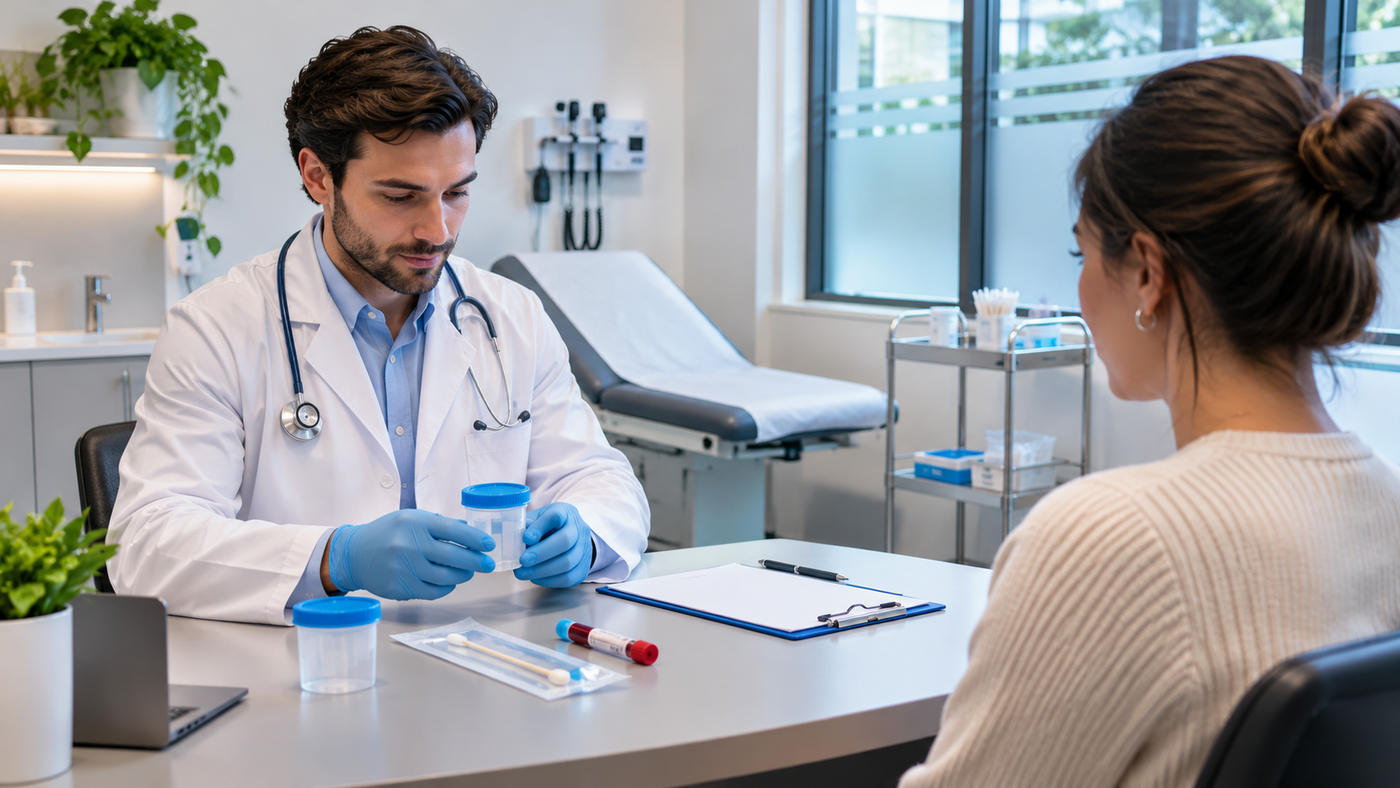
Taking care of sexual health is an important part of overall well-being. However, many sexually transmitted infections develop without obvious symptoms, which means someone can have an infection without knowing it. Regular STI testing helps identify infections, supports timely treatment, and reduces the risk of passing infections to others.
Sexually transmitted infections, often called STIs, can affect people of different ages, genders, and relationship statuses. Some are caused by bacteria and can usually be cured with appropriate treatment. Others are caused by viruses and may require ongoing management. Many infections are treatable, and early diagnosis can help prevent complications.
People sometimes delay screening because they feel uncomfortable discussing sexual health, worry about their results, or do not know which tests they need. In reality, testing is a routine part of healthcare, and professionals can explain the process confidentially and without judgment.
This guide covers common types of STI tests, recommended screening situations, testing window periods, home testing options, and the steps to take after receiving results. It is intended as general health information; individual testing and treatment decisions should be made with a qualified healthcare professional.
What Is STI Testing?
STI testing refers to medical tests used to detect infections that can spread through sexual contact.
Depending on the suspected infection, healthcare professionals may collect urine, blood, or swab samples. Some tests identify the organism responsible for an infection, while others detect antibodies or antigens associated with infection.
The correct test depends on symptoms, possible exposures, anatomy, sexual practices, and relevant medical history.
What Is the Difference Between an STI and an STD?
The terms STI and STD are often used interchangeably.
STI stands for sexually transmitted infection, while STD stands for sexually transmitted disease.
An infection may exist without causing noticeable disease or symptoms. For this reason, STI is commonly used in public health guidance.
Both terms refer to health conditions that deserve appropriate medical assessment.
Why Testing Matters Even Without Symptoms
Many STIs do not cause immediately noticeable changes.
An untreated infection may still affect reproductive health or be transmitted to a partner.
Some infections can contribute to pelvic inflammatory disease, infertility, pregnancy complications, or other health concerns.
STI testing can identify certain infections before symptoms or complications develop.
Which Infections Can STI Tests Detect?
There is no single universal test that detects every sexually transmitted infection.
A healthcare professional may recommend several tests based on your circumstances.
| Infection | Common testing method | Important consideration |
|---|---|---|
| Chlamydia | Urine or appropriate swab using a molecular test | Often has no symptoms |
| Gonorrhea | Urine or swabs from relevant exposure sites | Throat and rectal testing may be needed |
| Syphilis | Blood testing, sometimes lesion testing | Results may require additional interpretation |
| HIV | Blood or oral-fluid testing, depending on the method | Detection depends on the testing window |
| Trichomoniasis | Vaginal swab, urine, or other suitable specimen | Testing depends on symptoms and risk |
| Genital herpes | Swab from a visible lesion; blood tests in selected situations | Routine blood screening is not recommended for most people without symptoms |
| Hepatitis B | Blood tests | Vaccination can provide protection |
| Hepatitis C | Blood tests | Screening recommendations depend on guidelines and risk |
Testing for HPV is generally approached through cervical screening recommendations and the evaluation of relevant symptoms, rather than being included automatically in every routine STI panel.
Why Test Selection Matters
A package advertised as a complete STI screening panel may not include every infection or every relevant anatomical site.
For example, a urine test may not identify an infection present only in the throat or rectum.
Tell the clinician about relevant exposure sites so the appropriate specimens can be selected.
Who Should Consider STI Testing?
Screening recommendations vary by age, anatomy, pregnancy status, sexual practices, symptoms, and exposure history.
Guidance also differs between countries.
Sexually Active Adults
The US Centers for Disease Control and Prevention recommends that everyone aged 13 to 64 receive an HIV test at least once.
Additional testing may be appropriate based on personal circumstances.
Having a new sexual partner, receiving notification that a partner has an STI, or experiencing symptoms are common reasons to seek advice.
Younger Sexually Active Women and People With a Cervix
CDC guidance recommends annual chlamydia and gonorrhea screening for sexually active women younger than 25.
For women aged 25 and older, screening is recommended when risk factors are present.
Clinicians should adapt relevant screening recommendations to a person’s anatomy and exposures, including for transgender and gender-diverse patients.
People With Multiple or New Partners
More frequent STI testing may be appropriate when sexual partners or exposure patterns change.
The recommended frequency depends on the infections being considered and individual risk.
Rather than choosing an arbitrary testing schedule, discuss your circumstances with a healthcare professional.
Men Who Have Sex With Men
CDC guidance recommends at least annual screening for several infections among sexually active men who have sex with men.
More frequent screening, often every three to six months, may be appropriate for those at increased risk.
Tests may include blood, urine, throat swabs, and rectal swabs depending on exposure.
Pregnant Patients
Testing is a particularly important part of prenatal care.
CDC guidance recommends screening for HIV, syphilis, hepatitis B, and hepatitis C early in pregnancy, with additional chlamydia or gonorrhea testing according to age and risk.
Some patients require repeat testing later in pregnancy.
Prompt diagnosis and appropriate treatment can protect both the pregnant patient and the baby.
12 Essential STI Testing Tips for Better Sexual Health
Understanding how screening works can make the experience less confusing and help ensure that important infections are not missed.
1. Do Not Wait for Symptoms to Appear
A person may have chlamydia, gonorrhea, HIV, or another infection without noticing obvious symptoms.
An absence of discomfort does not establish that someone is infection-free.
Regular screening according to personal risk and clinical recommendations helps identify infections that might otherwise go unnoticed.
If you have recently been exposed to an STI, ask a clinician when testing should take place.
2. Discuss Your Sexual Health History Openly
Healthcare professionals use information about symptoms, recent partners, and exposure sites to recommend suitable tests.
Provide accurate information about the types of sexual contact involved.
This helps determine whether urine, vaginal, throat, rectal, or blood testing is appropriate.
You do not need to give unnecessary details, but relevant medical information improves test selection.
A good sexual health consultation should be respectful and nonjudgmental.
3. Understand the Testing Window Period
A window period is the time between acquiring an infection and when a particular test can reliably detect it.
Testing too early can produce a negative result even if an infection is developing.
Different infections and test methods have different window periods.
For STI testing after a recent exposure, ask whether immediate testing, repeat testing, or both are appropriate.
Do not assume that one negative result obtained shortly after contact rules out every infection.
4. Choose the Appropriate Sample Type
Different infections require different specimens.
Chlamydia and gonorrhea are commonly diagnosed using nucleic acid amplification tests, often called NAATs.
These tests can use urine or swabs from relevant sites.
Syphilis and HIV are commonly assessed through blood testing, while suspected genital herpes is often evaluated using a swab from a fresh lesion.
A healthcare professional can explain why a particular sample is needed.
5. Ask About Throat and Rectal Testing
Some infections can occur in the throat or rectum without causing symptoms.
A urine sample does not necessarily detect infections at those sites.
If oral or anal sexual contact is relevant, discuss the possibility of throat or rectal testing with your clinician.
Site-specific testing can be an important part of comprehensive STI testing.
6. Know When Immediate Medical Care Is Needed
Routine screening is different from evaluating a possible recent HIV exposure.
If a potentially significant HIV exposure occurred within the last 72 hours, seek urgent medical assessment for post-exposure prophylaxis, known as PEP.
PEP should be started as soon as possible when indicated, ideally within 24 hours and no later than 72 hours after exposure.
Do not wait for a routine testing appointment before seeking this assessment.
Severe pelvic or abdominal pain, fever with genital symptoms, sudden testicular pain, or concerns following sexual assault also warrant prompt professional care.
7. Consider Confidential Testing Services
Many sexual health clinics provide confidential consultations and screening.
However, privacy laws, parental consent requirements, billing records, and reporting obligations vary by location.
Before booking, ask how personal information and results are handled.
If privacy is especially important, consider whether insurance billing or messages sent to a shared phone number might reveal information.
Confidential STI testing should be arranged through a trustworthy healthcare provider or laboratory.
8. Compare At-Home and Clinic-Based Testing
Some home tests provide a result directly, while others involve collecting a sample and mailing it to a laboratory.
These are different testing approaches.
At-home collection can be convenient, but accuracy depends on the specific product, specimen collection, and laboratory procedures.
Use products approved or appropriately regulated in your location.
If a result is positive, inconclusive, or inconsistent with symptoms, seek professional advice about confirmation and treatment.
9. Follow Sample Collection Instructions Carefully
Incorrect specimen collection can affect test quality.
For example, some urine-based STI tests require the first portion of the urine stream rather than an ordinary midstream sample.
Vaginal swab collection methods also depend on the test.
Read the instructions supplied by the laboratory or clinician.
Do not assume that instructions for a routine urine infection test are identical to those for chlamydia or gonorrhea testing.
10. Understand What Positive and Negative Results Mean
A positive result may require additional testing, treatment, or partner notification.
Certain screening methods use confirmatory testing to establish the diagnosis.
A negative result is reassuring only within the limitations of the test and its timing.
If STI testing was performed before the relevant window period ended, a clinician may recommend repeating it.
Ask for an explanation of the result rather than relying on a simple positive or negative label without context.
11. Follow Treatment and Retesting Advice
Several bacterial STIs can usually be cured with appropriate prescription medication.
Treatment should follow current medical guidance, taking pregnancy status, allergies, the infection site, and other factors into account.
Do not use leftover antibiotics or purchase treatment from an unverified source.
CDC guidance recommends retesting approximately three months after treatment for chlamydia or gonorrhea to check for reinfection.
Some circumstances require additional testing at different intervals.
For example, chlamydia during pregnancy has specific test-of-cure recommendations.
12. Include Partner Communication and Prevention
An STI diagnosis can affect more than one person.
A clinician can explain whether current or recent sexual partners should be notified, tested, or treated.
Partner services may be available through local health departments and clinics.
Use recommended prevention strategies, including condoms or other barriers, relevant vaccinations, and HIV prevention medication when appropriate.
STI testing works best as part of a broader approach to sexual health rather than a one-time response to symptoms.
How Is STI Testing Performed?
The process is usually straightforward, although the number of samples depends on the tests ordered.
Urine Testing
A urine sample is commonly used to detect certain bacterial STIs, particularly chlamydia and gonorrhea.
The laboratory analyzes the sample for genetic material associated with the infection.
Collection instructions vary, so follow the directions provided by the testing service.
Blood Testing
Blood samples are commonly used for HIV, syphilis, and hepatitis screening.
Some tests detect antibodies, while others identify antigens or viral genetic material.
The chosen test and time since exposure affect interpretation.
Swab Testing
Swabs collect material from a particular body site.
Depending on symptoms and sexual exposure, samples may come from the vagina, throat, rectum, or a visible lesion.
Some approved tests allow patients to collect their own samples.
Physical Examination
A clinician may recommend an examination when symptoms include sores, discharge, pain, or unusual skin changes.
Not everyone attending a routine screening appointment needs a genital examination.
The procedure should be explained, and consent is important.
Does STI Testing Hurt?
Many tests involve only urine collection or a swab.
A blood test may cause brief discomfort.
Some examinations or swabs can feel uncomfortable, but patients can discuss concerns and ask the clinician to explain each step.
STI Testing Window Periods Explained
Timing is one of the most important parts of screening.
A test cannot reliably detect an infection before the relevant biological markers become detectable.
HIV Testing Windows
CDC guidance provides different detection windows for different HIV tests.
| HIV test type | Typical detection window after exposure |
|---|---|
| Nucleic acid test (NAT) | 10–33 days |
| Laboratory antigen/antibody test using venous blood | 18–45 days |
| Rapid antigen/antibody finger-stick test | 18–90 days |
| Antibody test | 23–90 days |
These are typical windows, not guarantees for an individual person.
Use of antiretroviral medicines such as PEP or PrEP may affect testing interpretation and follow-up.
A healthcare professional should recommend the appropriate testing schedule.
Chlamydia and Gonorrhea
NAATs are highly useful for detecting these infections, but testing immediately after exposure may be too early.
Many sexual health services use an interval of approximately two weeks after exposure for routine asymptomatic testing, although specific recommendations differ.
If symptoms develop or a partner is diagnosed, seek advice promptly rather than delaying all care until a particular date.
Syphilis
Syphilis blood tests may not become positive immediately after infection.
The appropriate testing and repeat-testing interval depends on the exposure, symptoms, and type of test.
A clinician may recommend further testing after an initially negative result when recent exposure is suspected.
Herpes
A swab from a fresh lesion may help diagnose herpes when symptoms are present.
Blood tests have important limitations, including false-positive results in some circumstances.
CDC does not recommend routine herpes blood screening for most people without symptoms.
Why a Full STI Panel May Need Follow-Up
A full panel is not a guarantee that every infection has been excluded.
Different tests detect different conditions, and some infections require additional sampling or later testing.
Discuss the date of possible exposure and the specific tests performed before interpreting the results as definitive.
What Happens After a Positive STI Test?
Receiving a positive result can be worrying, but it provides information needed to make a treatment plan.
The next step depends on the infection and test method.
Confirm the Diagnosis When Required
Some infections require supplementary testing after an initial screening result.
A healthcare professional should explain whether a result is confirmed or requires follow-up.
Begin Appropriate Treatment
Chlamydia, gonorrhea, syphilis, and trichomoniasis can generally be treated with prescribed medication, although treatment decisions must reflect current clinical guidance.
Other infections, including HIV and herpes, have effective treatments that manage the condition.
Never assume all STIs require the same medication.
Ask About Sexual Contact During Treatment
Depending on the infection, clinicians may advise avoiding sexual contact until treatment is completed and recommended conditions are met.
For certain infections, partners also need treatment to prevent reinfection.
Follow the advice specific to your diagnosis.
Arrange Retesting and Follow-Up
Retesting is not the same as checking whether the original treatment worked.
A test of cure evaluates treatment success in selected situations.
Retesting for reinfection is often recommended after treatment for chlamydia or gonorrhea.
The correct schedule depends on the infection and patient circumstances.
What Does a Negative STI Test Mean?
A negative result means the test did not detect the infection under the conditions in which it was performed.
It does not necessarily mean that no STI is present anywhere in the body.
For example, a urine test may be negative even when an infection exists at an untested throat or rectal site.
Likewise, an early HIV test may be negative before the end of its detection window.
If symptoms continue, a partner receives a diagnosis, or recent exposure remains a concern, discuss further testing with a healthcare professional.
At-Home STI Testing vs. Sexual Health Clinic Testing
Both approaches can be useful when the test is appropriate and the result is interpreted correctly.
| Consideration | Home testing | Clinic testing |
|---|---|---|
| Convenience | Can be completed privately at home | Requires appointment or clinic visit |
| Sample collection | Self-test or self-collected sample | Clinician-collected or self-collected sample |
| Test availability | Depends on approved products | Often broader access to different tests |
| Result timing | Varies by test | Varies by laboratory and service |
| Medical advice | May require separate follow-up | Professional advice may be available directly |
| Treatment access | Often requires another service | Some clinics provide assessment and treatment |
Choosing a Reliable Home Test
Check the manufacturer, regulatory approval, intended infection, specimen type, and instructions.
Determine whether the test provides results at home or sends samples to a laboratory.
Look for clear guidance on positive results and access to follow-up care.
When Clinic Testing Is Preferable
Professional assessment is especially important for symptoms, pregnancy, suspected recent HIV exposure, complicated medical history, or uncertainty about the correct test.
Clinics can also help when multiple anatomical sites need testing.
How Much Does STI Testing Cost?
The price depends on the country, healthcare system, number of tests, laboratory, and whether the service is public or private.
Some public clinics provide free or low-cost screening.
Private laboratories may charge for individual tests or a package.
Insurance coverage can vary.
What Affects Testing Costs?
A simple chlamydia and gonorrhea test may have a different price from a broader panel including HIV, syphilis, and hepatitis testing.
Consultation fees and follow-up services may also affect the total.
Questions to Ask Before Booking
Ask which infections are included, whether testing covers the relevant body sites, how results are delivered, and whether treatment or confirmatory testing involves additional fees.
A transparent provider should explain the scope of the service before payment.
Is STI Testing Confidential?
Many clinics offer confidential sexual health services, but privacy protections depend on local law and provider practices.
Healthcare professionals generally handle sexual health information as sensitive medical information.
However, certain infections must be reported to public health authorities under applicable rules.
Confidentiality and Anonymous Testing
Confidential testing means information is handled under applicable privacy protections.
Anonymous testing, where available, uses a process that does not require the same identifying details.
The two terms are not interchangeable.
Protecting Personal Information
If you use an online provider, review how results are stored and delivered.
Consider whether notifications could appear on a shared device or whether insurance correspondence could reveal a medical visit.
Ask the provider about available privacy arrangements.
Common STI Testing Mistakes to Avoid
Understanding common mistakes can help reduce confusion and unnecessary delays.
Testing Too Soon
A negative result obtained during a window period may not exclude infection.
Ask whether repeat testing is needed.
Assuming No Symptoms Means No Infection
Many STIs are asymptomatic.
Screening decisions should account for exposure and relevant guidelines.
Using the Wrong Test
A urine sample does not necessarily evaluate throat or rectal infections.
Choose appropriate specimens with professional guidance.
Believing Every STI Is Included in One Panel
A package may omit herpes, trichomoniasis, hepatitis, or other infections.
Check the exact list.
Ignoring Follow-Up Recommendations
Treatment may require partner management, repeat testing, or further medical care.
Do not treat the laboratory report as the end of the process.
How to Reduce the Risk of Sexually Transmitted Infections
Testing is important, but it does not prevent exposure by itself.
A comprehensive prevention approach includes appropriate barrier use, vaccination, communication, and preventive healthcare.
Use Condoms and Other Barriers Correctly
Condoms can reduce the risk of many STIs when used consistently and correctly.
They do not eliminate every risk, particularly for infections transmitted through contact with uncovered skin.
Consider Recommended Vaccinations
Vaccines are available to help prevent HPV and hepatitis B.
Eligibility and schedules depend on age, vaccination history, and local recommendations.
Learn About HIV PrEP and PEP
PrEP is medication used to prevent HIV before potential exposure in appropriate situations.
PEP is an emergency preventive treatment used after certain possible exposures and must be started promptly.
These medications do not prevent every other STI.
Communicate With Partners
Discuss testing, symptoms, and any known diagnoses with sexual partners.
Clear communication makes it easier to seek testing or treatment when needed.
Frequently Asked Questions
1. How often should I get STI testing?
The appropriate frequency depends on age, sexual history, anatomy, partner changes, symptoms, and other risks. Some people need annual screening, while others may need testing every three to six months.
2. Can I have an STI without symptoms?
Yes. Many sexually transmitted infections cause no noticeable symptoms, which is why screening may be recommended even when a person feels healthy.
3. How soon after sex should I get tested?
The timing depends on the infection and test method. Some exposures require immediate medical advice, while certain tests need to be repeated after a window period.
4. Is STI testing painful?
Many tests require only urine, blood, or a swab sample. Some collection methods may cause brief discomfort, but the procedure is generally straightforward.
5. Can I do STI testing at home?
Yes. Approved home-testing and self-collection options are available for certain infections. Check product quality and arrange clinical follow-up when results require it.
6. What should I do if my STI test is positive?
Contact a qualified healthcare professional for interpretation, any necessary confirmation, treatment, partner advice, and follow-up testing. Avoid self-medicating.
Conclusion
STI testing is an important part of preventive healthcare because many infections can develop without obvious symptoms. Choosing the right tests, understanding window periods, and following medical advice can support early diagnosis and effective treatment. Confidential clinics and reliable home-testing options can make screening more accessible, while partner communication and prevention strategies help reduce future risks. Anyone with symptoms, a known exposure, or uncertainty about their results should seek guidance from a qualified healthcare professional.
