
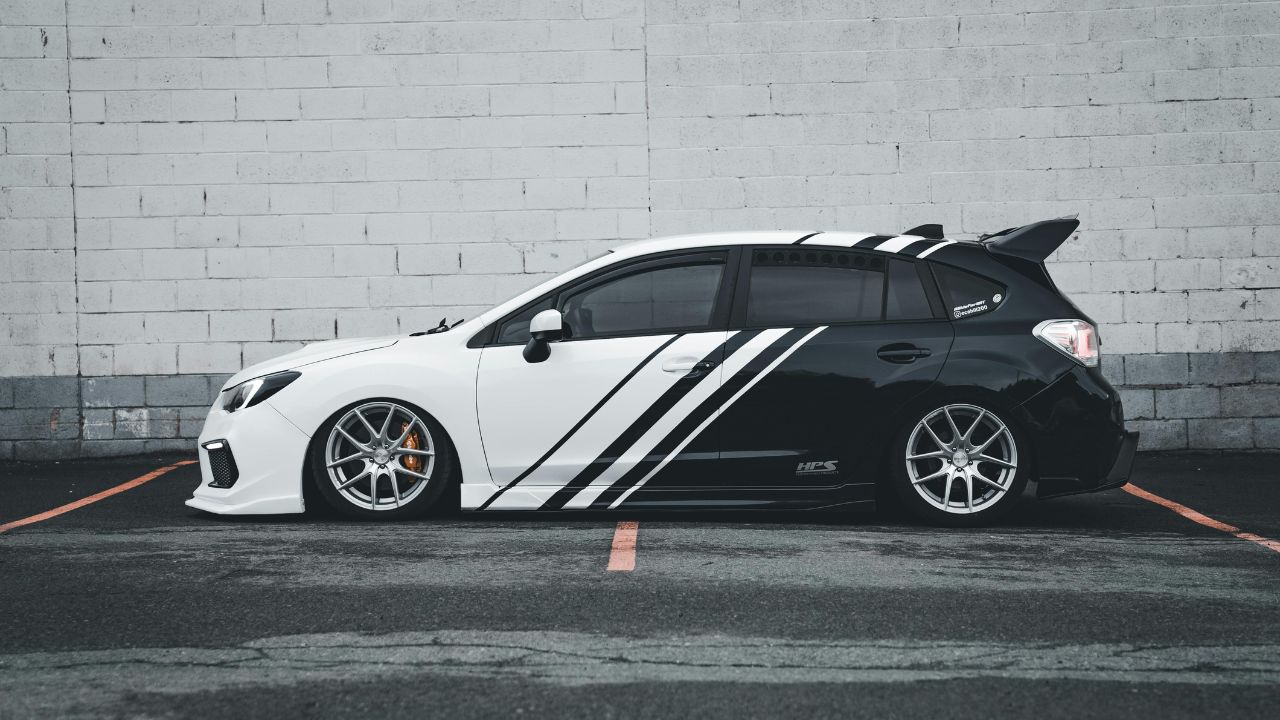
Every year, thousands of vehicle owners, small fleet managers, and business operators make the same decision: they choose the cheapest sticker option available, apply it to their vehicles, and expect it to hold. For a while, it does. Then the edges begin to lift. The color shifts. The adhesive leaves a residue that takes hours to remove. What looked like a savings decision at the point of purchase becomes a recurring operational problem with real costs attached to it.
This pattern is not unique to any one industry. It happens across personal vehicles, company fleets, construction equipment, and commercial vans alike. The issue is not that buyers are careless — it is that the true cost of vehicle stickers is rarely presented in a way that accounts for what happens after installation. The upfront price is only one part of a longer equation that most buyers do not see until they are already dealing with the consequences.
What Car Stickers Price Actually Includes — and What It Often Leaves Out
The sticker price for a set of car stickers rarely reflects the full cost of ownership. Most buyers compare unit pricing or per-sheet costs and make decisions based on that number alone. What that figure does not capture is durability under exposure, the quality of adhesive used, compatibility with different vehicle surfaces, or the labor required to replace stickers that fail ahead of schedule. A proper Car Stickers Price guide accounts for more than production cost — it factors in material grade, intended use environment, and the realistic lifespan of the product under real-world conditions.
When buyers skip this level of evaluation, they tend to make decisions that appear cost-efficient in the short term but compound into larger expenses over time. A sticker that peels after three months on a company vehicle does not just look unprofessional — it requires someone to remove it, order replacements, and re-apply them. If that cycle repeats, the total cost of the “cheap” option can exceed what a durable product would have cost from the start.
The Role of Material Quality in Long-Term Performance
Not all vinyl is produced to the same standard. Entry-level materials used in low-cost stickers are often thinner, less UV-resistant, and more prone to shrinking or cracking when exposed to temperature changes. In regions where vehicles face direct sun for extended periods, or where temperatures swing sharply between seasons, this difference in material quality becomes immediately apparent. The sticker that looked sharp in an indoor setting begins to degrade within weeks of outdoor use.
Higher-grade materials, by contrast, are engineered with specific exposure conditions in mind. They are laminated to resist UV breakdown, formulated to remain flexible across temperature ranges, and produced with adhesive layers that bond to vehicle paint without causing damage upon removal. The difference in raw material cost between these two categories is modest — but that difference is often where budget suppliers cut to offer lower unit pricing.
Adhesive Failure and the Cost of Residue
One of the most underestimated problems with cheap car stickers is adhesive failure. This can take two forms: the adhesive loses grip and the sticker peels away from the surface, or the adhesive holds too aggressively and leaves behind a sticky residue when the sticker is eventually removed. Both outcomes create additional work and, in fleet contexts, can require professional detailing to resolve without damaging the vehicle finish.
For businesses that wrap or brand their vehicles as part of a professional image, adhesive residue on a company vehicle is not a minor inconvenience. It affects how the vehicle presents to clients and, depending on the severity, may require repainting or surface correction. These are costs that never appear in the original sticker quote but become part of the total expenditure when the product fails.
Why Cheap Stickers Create Compounding Problems for Business Owners
For individual vehicle owners, a sticker that fades or peels is a cosmetic frustration. For business owners and fleet operators, it is an operational and reputational problem. Vehicles that carry company branding are a visible extension of the business. When that branding deteriorates — whether through fading logos, lifting edges, or color inconsistency across multiple vehicles — it sends a signal about the standards the business maintains across its operations.
This matters more than most operators initially recognize. Studies in consumer perception consistently show that vehicle presentation influences how businesses are perceived, particularly in service industries where the vehicle is the first point of contact with a client. According to research published and referenced by the American Psychological Association, visual consistency and presentation quality directly influence trust perceptions in professional contexts — a principle that applies directly to how branded vehicles are received.
The Hidden Labor Cost in Replacement Cycles
When a sticker fails, someone has to manage the replacement process. In a small business, that often means the owner or a staff member spends time sourcing new stickers, coordinating application, and handling removal of the failed ones. In a larger fleet operation, it may mean pulling vehicles from rotation to address branding inconsistencies.
None of this labor cost appears on the original sticker invoice. But across a year of managing low-quality stickers on multiple vehicles, the accumulated hours add up. This is the most invisible part of the true car stickers price — not the material itself, but the human time spent managing failures that a more reliable product would have prevented.
Inconsistency Across a Fleet
Another issue specific to fleet operators is visual inconsistency. When stickers from the same batch age at different rates — due to varying sun exposure, surface conditions, or minor differences in application — a fleet that once looked uniform begins to look mismatched. Some vehicles carry vibrant, clean branding. Others carry faded or partially peeling versions of the same design. From the outside, this looks like a company that does not pay attention to detail.
Sourcing stickers from a supplier who uses consistent, tested materials reduces this risk significantly. When all units in a fleet are produced to the same specification and perform similarly under real conditions, the branding remains cohesive for longer — and the replacement cycle becomes more predictable and manageable.
How American Drivers Are Reevaluating What Value Actually Means
There has been a gradual but noticeable shift among vehicle owners and fleet operators in how they evaluate sticker purchases. The conversation has moved away from unit price toward total cost of ownership — a framework that is common in equipment purchasing but has taken longer to reach the sticker and decal category. As more buyers experience the full cost cycle of cheap products, the appetite for slightly higher upfront investment in return for reliable performance has grown.
This shift is particularly visible in sectors where vehicle branding directly supports revenue — real estate, home services, delivery operations, and skilled trades. In these industries, the vehicle is not just transportation. It is a working marketing asset that operates in public every day. The economics of maintaining that asset in good condition are straightforward: a sticker that lasts three times as long and requires no residue cleanup is worth considerably more than its price difference suggests.
The Move Toward Supplier Accountability
One of the clearest signals of this shift is that buyers are asking more detailed questions before purchasing. They want to know what materials are used, how long the product is expected to last under outdoor conditions, and what the removal process looks like. These are questions that were rarely asked when stickers were seen as low-stakes consumables. Today, they are part of a more deliberate buying process.
Suppliers who can answer these questions clearly — with specific information about material grades, intended use conditions, and realistic lifespan expectations — are gaining credibility with buyers who have already experienced the cost of vague or misleading product descriptions. The market is self-correcting, slowly but consistently, toward accountability over low pricing.
Blueprint Press and the Case for Transparent Pricing
Blueprint Press has positioned itself within this shift by offering pricing structures that account for material quality and application context rather than simply competing on unit cost. For buyers who have previously been burned by products that failed ahead of schedule, this approach to car stickers price — one that connects cost to specification and expected performance — is a meaningful distinction. It reduces the guesswork that has historically made sticker purchasing more expensive than it needed to be.
Closing Thoughts
The true cost of car stickers is rarely what appears on the invoice. For individual drivers, the difference between a reliable product and a cheap one may be measured in frustration and wasted weekends. For business operators and fleet managers, that difference is measured in labor hours, reputational risk, and the compounding cost of repeated replacement cycles.
Understanding what drives car stickers price — material quality, adhesive grade, durability under real conditions, and the realistic lifespan of the product — allows buyers to make decisions that hold up over time. The switch happening among American drivers is not about brand loyalty or marketing. It is about recognizing that the cheapest option at the point of purchase is rarely the most cost-efficient option across the life of the vehicle. Once that calculation becomes clear, the buying decision becomes a great deal simpler.
