
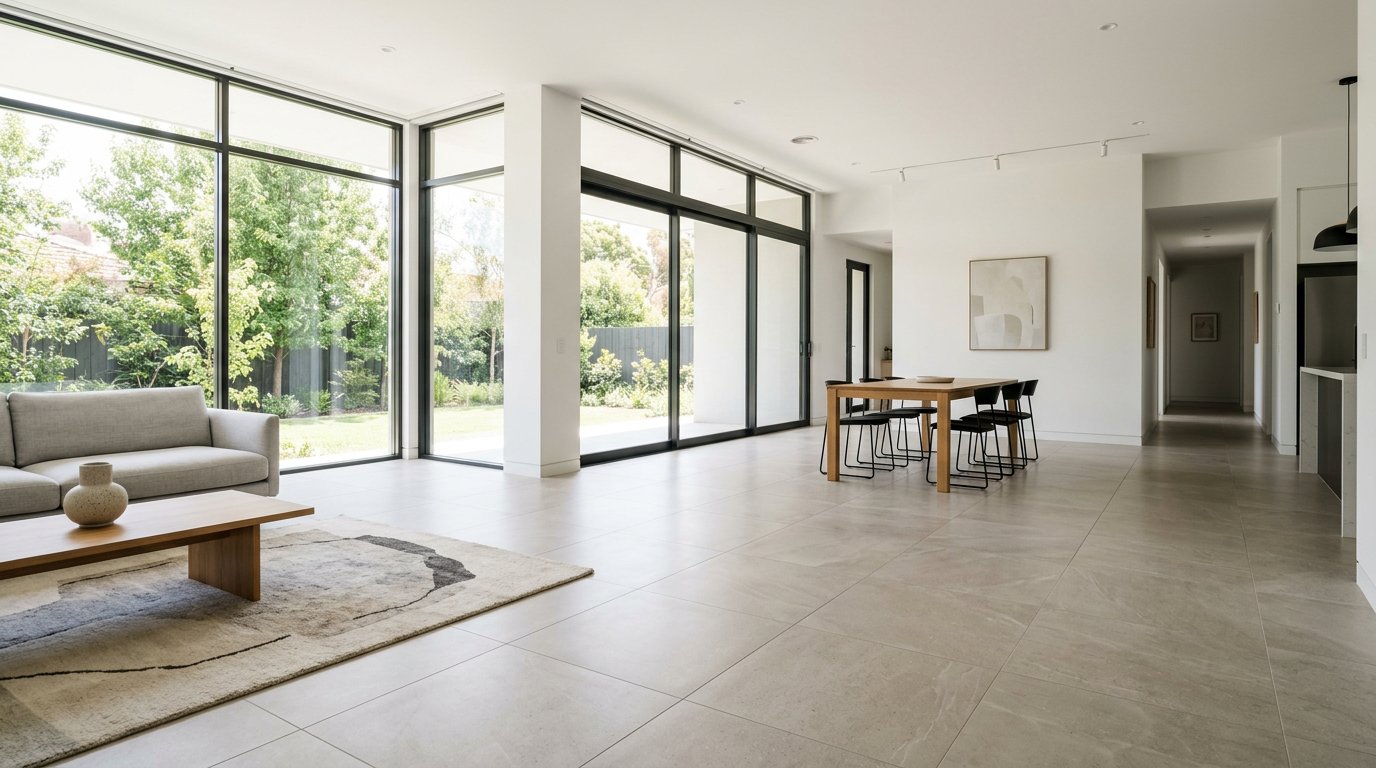
A floor carries more weight, more traffic, and more scrutiny than almost any other surface in a home, and the material you put down determines how the room feels for years afterward. Tile installation in Denver for flooring is a decision that rewards care, because a tile floor is both the most durable flooring option available and the one most exposed to installation error. Done correctly, a tile floor resists decades of foot traffic, moisture, and seasonal change while looking intentional from day one. Done poorly, it cracks, shifts, and develops lippage long before its time. This guide focuses specifically on floor tile, covering the material choice, the installation process beneath the surface, room-by-room guidance, Colorado-specific factors, and how Meza Tile and Stone installs floor tile across the Denver metro area.
Why Floor Tile Earns Its Place in Denver Homes
Flooring decisions live with a household for decades, and tile’s case rests on a combination of performance and longevity that few other materials can match.
Durability is the headline. A properly installed tile floor handles constant foot traffic, furniture movement, spills, pets, and routine cleaning without the premature wear that shows up in carpet, wood, or laminate. For busy Denver households, that resilience is the difference between a floor that is maintained and one that is replaced.
Moisture resistance is the second pillar. In kitchens, bathrooms, laundry rooms, mudrooms, and below-grade spaces, tile outperforms carpet and wood, because it does not absorb the water those environments bring. This is also why tile is one of the best flooring options for finished basements, where concrete subfloors and occasional moisture rule out most alternatives.
Design flexibility completes the case. Tile spans classic to contemporary, from warm ceramics to large-format porcelain that creates a seamless look across open-plan spaces. The same material can read traditional in one room and modern in the next, which is why it remains the most versatile hard surface in residential design.
Porcelain vs Ceramic: The Floor Tile Decision
The first real decision in any floor tile project is the material, and for floors the choice almost always comes down to porcelain or ceramic.
Porcelain tile is the stronger performer for floors. It is denser, harder, and less porous than ceramic, which means it resists moisture, staining, and wear more effectively, and it holds up in high-traffic and wet environments where ceramic would be pushed. For entryways, kitchens, bathrooms, basements, and anywhere the floor faces real use, porcelain is the standard recommendation.
Ceramic tile is the versatile, cost-conscious alternative. It is available in a wider array of colours and patterns at a more accessible price, and it performs well on floors with light to moderate traffic and limited moisture exposure. The practical rule is that ceramic earns its place in rooms where cost efficiency and design variety matter more than maximum durability, while porcelain earns its place wherever the floor will genuinely work for a living.
The two materials look similar at a glance, which is why the decision should be made on porosity and density rather than appearance alone. A contractor who explains the difference in terms of where the tile will live, rather than simply quoting the cheaper option, is doing the job properly.
Where Floor Tile Belongs in the Home
Floor tile is not one product used everywhere; it is a family of materials matched to the demands of each room.
Kitchens pair moisture resistance with easy cleanup, and floor tile handles both, whether as a durable field of porcelain or a coordinated surface alongside a backsplash. Bathrooms add the complication of water exposure and slip resistance, which makes material selection and the waterproofing beneath the tile equally important.
Entryways and mudrooms are the hardest-working floors in a Colorado home, taking on dirt, shoes, grit, and seasonal moisture. Dense porcelain is the natural answer, because these floors need to resist wear and hide the evidence of heavy use. Laundry rooms face detergent spills and moisture, and tile removes the worry that comes with a water event in that room.
Living areas and open-plan spaces show tile’s modern side, where large-format porcelain laid across a wide room creates a seamless, low-maintenance surface that flows through the space. And basements, where concrete subfloors and below-grade moisture rule out wood and carpet, are where tile’s moisture resistance is most clearly the only sensible choice.
The Installation That Happens Beneath the Surface
What makes a tile floor last is almost entirely invisible, and understanding it is the key to evaluating any contractor’s work.
The subfloor comes first. Before a single tile is set, the surface beneath it must be evaluated, cleaned, and leveled, because an uneven or unstable subfloor translates directly into cracked and loose tiles later. This is the step where the difference between a floor that lasts twenty years and one that fails in five is decided, and it is also the step that careless installers rush.
Leveling and lippage control follow. Lippage, the height difference between adjacent tiles, is both a visual flaw and a trip hazard, and preventing it requires a level substrate, consistent setting methods, and care at every tile. A floor that is flat and even is the visible signature of the preparation that happened underneath it.
Grout lines and pattern flow are the final craft detail. Consistent spacing, straight lines that flow across the room, and clean transitions where tile meets wood, carpet, or other flooring all separate a professional floor from an adequate one. These are the details a homeowner notices every day without quite knowing why the room looks right.
Waterproofing is the additional step in wet areas, protecting the structure beneath the tile in bathrooms and laundry rooms where water will inevitably find the floor. A floor that looks dry and sound can hide years of damage beneath it if that layer was skipped.
Colorado Conditions and Why They Matter
Denver’s climate puts specific demands on floor tile, and local experience matters here in a way it does not in milder regions.
Dry air and seasonal temperature swings cause the materials beneath a tile floor to move, and that movement can telegraph through the tile if the installation does not account for it. Proper adhesive selection, correct joint placement, and the right allowance for movement are what let a floor expand and contract without cracking. A contractor who has installed floors across the Denver metro for years has already learned which approaches survive the climate and which do not, and that accumulated knowledge is exactly what a homeowner is paying for.
Meza Tile and Stone makes the point directly: Centennial homeowners need materials that handle active households, seasonal temperature changes, and everyday wear, and tile flooring is a practical answer only when it is installed with care from the subfloor up. The climate argument is not marketing; it is the reason a floor that performs beautifully in one region can fail in another when the installation ignores local conditions.
How to Choose a Floor Tile Contractor in Denver
The contractor determines the outcome more than the tile does, and the checks are straightforward.
Licensing and insurance come first, because tile work in wet areas and over large surfaces is structural work, and an uninsured installer is a liability the homeowner is quietly absorbing. Experience is second, both the technical command of installation and the design judgment to help with material, size, and layout choices. The breadth of the team’s skills is third, because a floor rarely exists in isolation, and a contractor whose experience spans tile, stone, plumbing, and carpentry can handle the floor as part of the room rather than an isolated patch.
Finally, look at finished work and real reviews, because a tile floor is a visual, tactile result that photographs and testimonials describe better than any sales language. A contractor who maintains a gallery of completed floors and a page of client reviews is inviting exactly the scrutiny a homeowner should apply.
A Denver Metro Option: Meza Tile and Stone
For homeowners in the Denver area, Meza Tile and Stone is a Centennial-based, licensed and insured tile contractor with more than 23 years of residential tile and remodeling experience. The company installs floor tile in kitchens, bathrooms, entryways, mudrooms, laundry rooms, living areas, and basements, and it offers tile repair services for existing floors showing signs of wear before new flooring goes in.
Meza Tile and Stone describes its floor tile work as focused on durability, precision, and design, with close attention to subfloor preparation, leveling, and installation methods, and it pairs floor installation with full tile services and basement remodeling for larger projects. The company can be reached at (720) 936-8701, and it offers consultations and estimates. As with any contractor decision, confirming current licensing, insurance, and pricing directly with the company is the sound approach.
What to Expect From the Process
Knowing the sequence removes the uncertainty, and a professional floor tile installation follows a consistent path.
It begins with consultation and measurement, where the contractor evaluates the subfloor, discusses materials and layout, and provides an estimate based on the specific room. Material selection follows, with the contractor guiding the choice between porcelain and ceramic, tile size, and finish based on where the floor will live and how it will be used.
Preparation and installation are the heart of the project. The subfloor is leveled and prepared, waterproofing goes in where required, and the tile is set with consistent spacing and careful attention to lippage and pattern. The job ends with grouting, transitions, and finishing, when the floor is cleaned and the details, edges, thresholds, and grout lines, are brought to final quality.
The timeline depends on scope, with a single room taking days and a multi-room or open-plan project taking longer, and a good contractor provides a schedule and sticks to it. The finished floor should be flat, even, and clean, with grout lines that flow and transitions that look deliberate.
Getting the Most From Your Tile Floor
A few homeowner decisions protect the investment long after the installer leaves.
Choose the material for the room, not the showroom. The porcelain that looks right in a catalog may be wrong for a moderate-traffic room where ceramic would do, and matching material to use is the decision that determines how the floor ages.
Prioritise the subfloor over the surface. The preparation that happens before the tile is where durability is won, and a contractor who insists on doing it properly is protecting the floor, not padding the schedule.
Ask about movement and joints. In Colorado’s climate, the allowance for expansion and contraction is not optional, and a contractor who can explain how the floor is designed to move is one who understands the failure modes.
And maintain it lightly. A properly installed tile floor needs routine cleaning and, for grout, occasional sealing, which is exactly why it remains one of the lowest-maintenance flooring investments a homeowner can make.
Conclusion
Tile installation in Denver for floors is an investment in the surface every room is built around, and it rewards the homeowner who understands that the visible tile is only half the story. The material choice, porcelain or ceramic, matched to the room’s demands, and the installation quality, from subfloor preparation through leveling, lippage control, and transitions, determine whether the floor performs for decades or disappoints within years. Colorado’s dry air and seasonal swings make local experience a genuine advantage rather than a marketing point, because the failure modes are specific and learned the hard way. For Denver-area homeowners, a contractor such as Meza Tile and Stone, with more than two decades of residential experience and a floor-focused installation process, represents the kind of specialist worth consulting. The floor is the foundation of every room above it; getting it right the first time is the cheapest form of confidence a home can have.
Frequently Asked Questions
1. How much does floor tile installation cost in Denver?
Costs vary by room size, material, and subfloor condition, so an itemised estimate from a licensed contractor is the reliable way to price a specific floor.
2. Is porcelain or ceramic better for floors?
Porcelain is denser and more moisture-resistant, making it the better choice for high-traffic and wet floors, while ceramic is cost-effective for moderate-traffic, low-moisture areas.
3. What is the best tile for a Denver entryway?
Dense porcelain tile is the standard choice for entryways and mudrooms, because it resists dirt, grit, and seasonal moisture without showing premature wear.
4. Can tile flooring be installed in a basement?
Yes, tile is one of the best flooring options for basements because of its moisture resistance and its compatibility with concrete subfloors.
5. What is lippage in a tile floor?
Lippage is the height difference between adjacent tiles, a visual flaw and potential trip hazard that proper leveling and installation methods prevent.
6. How long does floor tile installation take?
Timelines depend on the scope, with a single room taking days and larger open-plan or multi-room projects taking longer; a contractor provides a schedule up front.
