
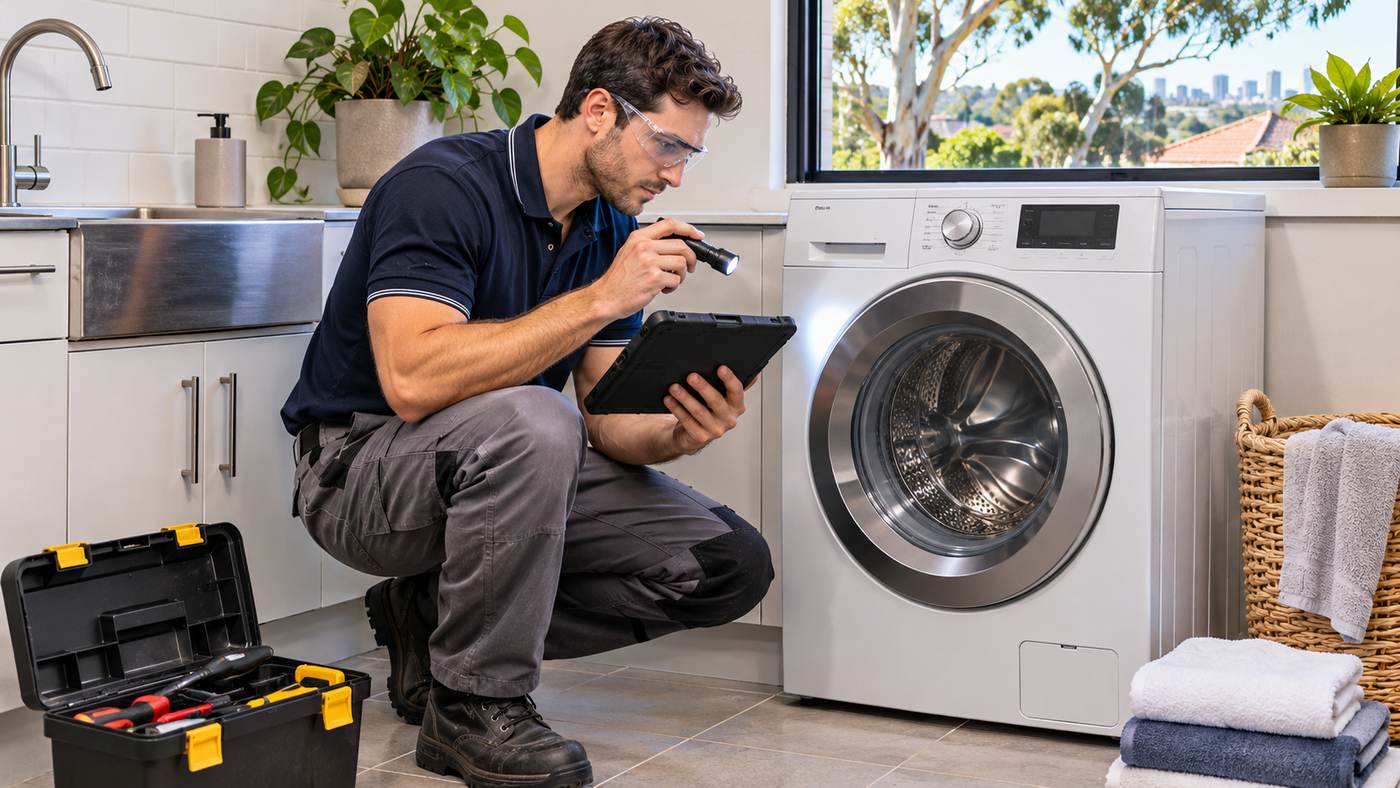
A faulty washing machine can quickly disrupt the daily routine of any household. Whether the appliance stops draining, begins leaking water, refuses to spin, or makes unusual noises, understanding the likely problem can help you decide what to do next. For homeowners looking for washing machine repairs Adelaide, the priority should be safe diagnosis, transparent pricing, and a repair that offers reasonable long-term value. Adelaide households use many different front-loading and top-loading models, and the correct solution depends on the appliance’s brand, age, design, and condition. This comprehensive guide explains nine common washing machine problems, safe troubleshooting steps, typical repair considerations, and how to choose a dependable local technician in 2026.
Why Professional Washing Machine Repairs Matter
Modern washing machines combine mechanical components, electrical controls, sensors, motors, pumps, and water connections. A problem that appears simple can sometimes have several possible causes.
For example, a machine that fails to drain may have a blocked filter, a restricted hose, or a faulty pump. Replacing parts without identifying the underlying cause can lead to unnecessary expenses.
Professional technicians can inspect the appliance, evaluate fault codes, test appropriate components, and recommend suitable repairs.
However, not every problem requires an immediate service visit. Some issues can be resolved by checking programme settings, the laundry load, or an accessible hose.
The important distinction is between safe user-level checks and repairs that require professional expertise.
If an appliance shows signs of electrical damage, produces smoke, trips a safety switch repeatedly, or leaks near electrical connections, stop using it and seek qualified assistance.
9 Common Washing Machine Problems and What They Mean
1. Washing Machine Not Draining Properly
A washing machine that retains water at the end of its cycle can leave clothing soaking wet and prevent the next load from starting.
Possible causes include a blocked drain filter, restricted outlet hose, or malfunctioning drain pump.
Small objects such as coins, lint, and other debris can sometimes obstruct drainage pathways.
Safe Checks Before Booking a Repair
Check whether the selected programme includes a drain or spin function. If accessible without moving or opening the machine, look for visible kinks in the external drain hose.
Consult the manufacturer’s manual before attempting filter maintenance, since opening a filter may release substantial water.
Never open electrical panels or reach into internal pump components.
If the machine repeatedly fails to drain, an experienced technician can investigate the fault and determine whether a component requires repair or replacement.
2. Washing Machine Leaking Water
Water leaks should be addressed promptly because they can damage flooring, cabinetry, and surrounding electrical equipment.
Common causes include damaged door seals, loose hose connections, detergent drawer problems, and internal component failures.
Front-loading machines may develop leaks around the door gasket, particularly when the seal becomes damaged or debris prevents the door from closing correctly.
Top-loading models can also leak from hoses and internal water systems.
If you notice water escaping, stop the cycle where safe and isolate the water supply.
Avoid touching plugs, switches, or the appliance if standing water creates an electrical hazard. Arrange qualified help instead.
For persistent leaks, professional washing machine repairs Adelaide services can help identify whether the problem involves an accessible connection or an internal failure.
3. Washer Not Spinning or Clothes Remaining Wet
A machine may complete the washing stage but fail to spin efficiently.
This can occur when the laundry load is unbalanced, the selected programme restricts spinning, or the machine detects a drainage problem.
A worn drive component, motor fault, or faulty sensor may also affect operation.
What You Can Check
Start by reviewing the cycle settings and the manufacturer’s loading instructions.
A single heavy blanket or towel can sometimes cause an uneven load.
Redistributing the laundry and using an appropriate programme may resolve occasional imbalance issues.
However, recurring failures involving unusual noises, error messages, or a drum that does not rotate require professional assessment.
Avoid repeatedly forcing the machine to restart if it continues to stop during the spin cycle.
4. Washing Machine Making Loud or Unusual Noises
Washing machines naturally produce some noise during operation, especially during high-speed spinning. However, grinding, scraping, banging, or persistent rattling may indicate a problem.
An unbalanced load can cause excessive movement. Objects trapped around the drum, worn bearings, or damaged suspension components may also produce unusual sounds.
If the appliance begins making a new noise, stop the cycle and inspect the load only when the drum has completely stopped.
Check that the appliance stands securely and that its feet are adjusted according to the manufacturer’s instructions.
Avoid opening internal panels or attempting to replace bearings without appropriate training.
A technician can assess whether the noise is caused by normal vibration, a worn mechanical component, or a more serious fault.
Early diagnosis may prevent additional component damage.
5. Washing Machine Not Starting
A washing machine that refuses to start can create confusion, especially when its control panel still appears functional.
Possible explanations include an incorrectly closed door, a selected delay-start feature, a control-lock setting, or an electrical fault.
Before arranging washing machine repairs Adelaide, check the manufacturer’s operating instructions and ensure the correct programme has been selected.
If the appliance is completely unresponsive, safely check whether other devices on the same household circuit have power.
Do not repeatedly reset a circuit breaker that trips when the washing machine operates.
Similarly, never bypass door locks or protective switches to force the machine to run.
An appliance that repeatedly loses power or shows signs of electrical damage should remain unused until inspected by an appropriately qualified professional.
6. Washer Not Filling With Water
When a washing machine does not fill correctly, it may pause, display an error code, or end the programme without washing the clothes.
Possible causes include an interrupted water supply, a restricted inlet hose, a blocked inlet filter, or a defective water inlet valve.
A household can begin by checking whether water is available at other taps.
If safely accessible, the external inlet hose can also be visually inspected for obvious kinks.
Avoid disconnecting pressurised water connections without understanding the manufacturer’s instructions.
Internal valve and electrical testing should be left to a competent repair professional.
A clear diagnosis helps distinguish a simple water supply issue from a failed machine component.
7. Washing Machine Door Not Opening
A locked washing machine door can be frustrating when clothes are trapped inside.
Many front-loading models automatically prevent the door from opening while the drum is moving or water remains inside.
This is an important safety feature.
If a programme has just finished, consult the manual to determine whether the machine requires a short waiting period before unlocking.
If water remains visible inside the drum, the underlying problem may involve drainage.
Never force the door open or dismantle the locking mechanism.
A damaged door lock, faulty sensor, or control problem may require a professional repair.
Technicians providing washing machine repairs Adelaide can inspect the machine and determine the correct approach without unnecessarily damaging the door assembly.
8. Washing Machine Producing Unpleasant Odours
Unpleasant smells commonly develop when moisture, detergent residue, and debris accumulate inside a washing machine.
Front-loading appliances can be especially vulnerable to residue around the door seal and detergent drawer.
Fortunately, many odour problems can be improved through appropriate maintenance.
Follow the manufacturer’s recommendations for cleaning the detergent dispenser, door gasket, and drum.
Use the specified cleaning programme if the machine provides one.
Avoid mixing household cleaning chemicals, particularly bleach with other products.
After washing, allowing appropriate ventilation can help reduce lingering moisture.
If unpleasant odours continue alongside drainage problems or visible contamination, further inspection may be necessary.
9. Error Codes and Electronic Control Problems
Modern washing machines use electronic systems to monitor operating conditions.
When the system detects an abnormality, it may display an error code.
The code might relate to drainage, water supply, motor operation, temperature, or door security.
Error codes are not universal across manufacturers.
A code used by one brand may have a completely different meaning on another model.
Consult the correct user manual before assuming a particular part has failed.
If an error persists after safe, manufacturer-approved checks, professional washing machine repairs Adelaide services can help identify the underlying problem.
Electronic repairs may involve control boards, sensors, wiring, or other components that should not be handled by untrained householders.
How Much Do Washing Machine Repairs Cost in Adelaide?
Repair costs depend on the fault, appliance model, labour requirements, and replacement parts.
An accessible blockage or minor component replacement may be less expensive than a damaged control board or bearing assembly.
Published Australian appliance repair cost guides suggest that many ordinary repair jobs fall approximately within the A$150–A$450 range, although major repairs can exceed this amount. These are broad estimates rather than guaranteed Adelaide prices. Yakka Labour+1
When comparing washing machine repairs Adelaide providers, ask whether the quotation includes diagnosis, GST, labour, parts, and any additional visits.
For example, Quality Appliance Repairs publishes a domestic on-site service call price of A$198 including GST, covering up to 30 minutes of initial diagnosis or qualifying repair work. Its published schedule also lists additional labour charges and separately billed parts. Customers should confirm current terms and location-specific applicability before booking. QAR
A transparent quote makes it easier to determine whether the proposed repair represents reasonable value.
How to Choose a Reliable Local Washing Machine Repair Service
Selecting the right technician involves more than finding the lowest advertised fee.
Check Relevant Experience
Ask whether the service provider regularly repairs your particular brand and model.
Front-loading, top-loading, and commercial washing machines can have different technical requirements.
Verify Qualifications and Safety Practices
Choose a provider with appropriately qualified personnel for the work involved.
South Australia regulates specified electrical work through its licensing framework. Businesses should establish which qualifications and authorisations apply to the proposed repair. sa.gov.au
Request Clear Pricing
A trustworthy provider should explain diagnostic charges, likely additional costs, and the process for approving repairs.
Understand Warranty Conditions
Ask whether labour and replacement parts receive warranty coverage.
Request written confirmation of exclusions and how a repeat fault would be handled.
Evaluate Communication
A useful repair service should explain the diagnosis clearly and provide realistic information about part availability and appointment times.
Reliable communication can be as important as speed.
Finding Washing Machine Repair Services Across Adelaide
Residents in Adelaide and surrounding suburbs may prefer a technician who can assess the appliance at home.
This can avoid the inconvenience of transporting a heavy washing machine to a workshop.
For example, the local service for washing machine repairs Adelaide page from Quality Appliance Repairs describes on-site diagnosis and repairs across metropolitan Adelaide.
The company advertises front-loader and top-loader servicing, fault diagnosis, and same-day appointments subject to availability. Its published service terms also describe a three-month labour warranty and twelve-month parts warranty, subject to the applicable conditions. Same-Day Service+1
Before choosing any provider, confirm that your suburb is covered, your appliance brand is supported, and the proposed appointment time is available.
Is It Better to Repair or Replace a Washing Machine?
The decision depends on the machine’s age, condition, likely remaining lifespan, and cost of repair.
A relatively new appliance with one defective component may be economical to repair.
An older washing machine requiring several major replacement parts may be less attractive financially.
Compare the complete repair quote with the cost of an equivalent replacement machine, including delivery, installation, and disposal where relevant.
Australian consumer organization CHOICE recommends considering the appliance’s expected lifespan, purchase price, and repair cost rather than automatically replacing a faulty machine. CHOICE
Also check whether the appliance is protected by a manufacturer warranty or Australian Consumer Law guarantees.
The ACCC explains that consumers may be entitled to remedies for faulty goods, depending on the circumstances and seriousness of the problem. These rights can extend beyond a manufacturer’s express warranty. ACCC
Obtaining professional advice before purchasing a replacement can prevent unnecessary expenditure.
Simple Maintenance Tips to Reduce Future Problems
Regular maintenance can help keep a washing machine operating more reliably.
Avoid overloading the drum, because excessive laundry can affect balance and mechanical operation.
Use detergent according to the appliance and detergent manufacturer’s instructions.
Check accessible hoses periodically for visible wear or damage.
Keep the door seal and detergent drawer clean, and follow the recommended drum-cleaning programme.
If your appliance has a user-serviceable filter, maintain it according to the manual.
Do not attempt to inspect internal electrical components, remove secured panels, or repair damaged wiring yourself.
Professional washing machine repairs Adelaide specialists may also provide maintenance guidance suited to the appliance’s particular model and operating conditions.
Frequently Asked Questions
1. How much does washing machine repair cost in Adelaide?
Many routine appliance repairs in Australia are estimated at approximately A$150–A$450, but the actual price depends on the problem, labour, parts, and service provider. Request a written quotation.
2. Can a washing machine be repaired on the same day?
Some Adelaide repair providers advertise same-day appointments. Actual availability depends on technician schedules, the fault, and whether suitable parts are in stock.
3. Why is my washing machine not draining?
Possible causes include a restricted hose, blocked filter, or failed drain pump. Follow safe manufacturer-approved checks, and arrange professional diagnosis if the problem persists.
4. Is repairing an old washing machine worthwhile?
It can be worthwhile when the appliance is otherwise in good condition and the repair is reasonably priced. Major failures in older machines may make replacement more economical.
5. Can I repair my washing machine myself?
Simple tasks described in the user manual, such as checking settings or cleaning accessible parts, may be appropriate. Electrical repairs, internal component testing, and hazardous water-related faults require professional attention.
6. What should I ask before booking a repair technician?
Confirm service coverage, brand experience, diagnostic fees, repair quotations, parts availability, appointment timing, and warranty terms.
Conclusion
A malfunctioning washing machine does not always need to be replaced, and many common problems can be resolved after an accurate diagnosis. Understanding the warning signs, following safe troubleshooting practices, and comparing transparent repair quotations can help Adelaide households make informed decisions. Whether the issue involves drainage, leaking, spinning, or electrical controls, the right repair approach should prioritize safety, reliability, and long-term value. Choosing an experienced local technician can help restore normal laundry routines while avoiding unnecessary costs.
