
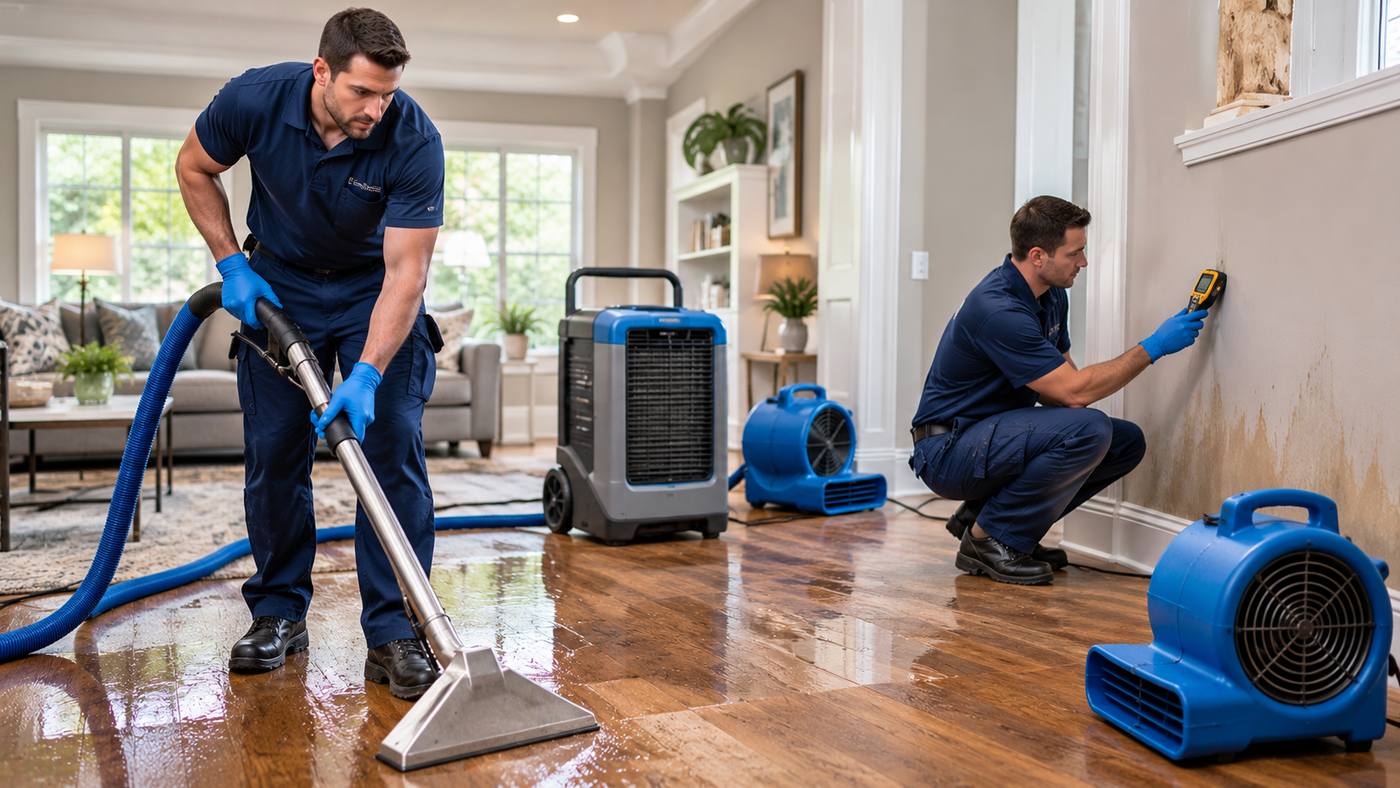
Unexpected water inside a home can turn an ordinary day into an urgent property problem. A leaking supply pipe, overflowing appliance, damaged roof, or severe storm can soak floors, walls, furniture, and insulation before the full extent becomes visible. Water Damage Restoration is the organized process of assessing that damage, removing unwanted water, drying affected materials, addressing contamination, and repairing what cannot be saved. The priority is not simply making a room look dry. It is returning the property to a safe, functional condition while limiting avoidable secondary damage.
What Is Water Damage Restoration?
Water Damage Restoration combines emergency mitigation and later repair work after water enters a building where it does not belong. Mitigation focuses on preventing further damage through source control, extraction, careful removal of unsalvageable materials, and controlled drying. Restoration may then include rebuilding damaged walls, replacing flooring, cleaning contents, and restoring the room to usable condition.
The process varies significantly with the source of the water. A recently discovered clean supply line leak creates a different set of concerns from sewage backup or floodwater that may contain microorganisms and chemicals. Water can also migrate behind baseboards, beneath floor coverings, and into wall cavities, so a dry surface is not proof that all affected materials are dry.
Common Causes of Residential Water Damage
Water Damage Restoration may follow household incidents including burst pipes, loose plumbing connections, water heater failures, appliance hose leaks, overflowing sinks, and roof damage. Heavy rainfall, rising groundwater, and drainage failures can lead to more widespread losses. The cause determines which trades may be needed and whether the structure can be occupied safely during cleanup.
Early Signs That Moisture Has Spread
Watch for swollen flooring, damp carpet, peeling paint, staining, musty odors, soft drywall, or unexplained changes in humidity. These signs do not establish the source on their own. A qualified inspector may need to check moisture behind finished surfaces to distinguish an active leak from earlier damage.
Why Surface Dryness Can Be Misleading
Porous materials absorb water and release it at different rates. A wall may feel dry to the touch even when the insulation behind it remains wet. Effective Water Damage Restoration relies on inspection and repeat moisture measurements, not appearance alone.
7 Essential Steps in the Water Damage Restoration Process
1. Make the Property Safe Before Entering Affected Areas
If water is near outlets, a breaker panel, appliances, or exposed wiring, stay out of the affected area until a qualified person confirms that electrical hazards are controlled. Never stand in water to operate switches or unplug equipment. If the building has significant structural damage, a suspected gas leak, or floodwater containing unknown hazards, leave the area and contact the appropriate emergency service.
When safe access is possible, keep children and pets away from wet materials. Floodwater and sewage can contain harmful contaminants, and moldy debris may irritate the eyes and respiratory system. Protective equipment may be required for cleanup, but gloves and a mask do not make a dangerous site safe for untrained occupants.
Situations That Require Immediate Professional Help
Seek urgent assistance for contaminated water, widespread flooding, unstable ceilings, compromised electrical systems, or water entering heating and cooling equipment. Contact emergency services if there is an immediate threat to people. Do not assume that a minor looking leak is harmless when moisture is reaching energized equipment or concealed structural spaces.
2. Stop the Water Source and Document the Loss
For a plumbing leak, close the appropriate water valve if you can reach it safely. A failed roof, drainage problem, or external flood may require a roofer, plumber, utility provider, or emergency contractor instead. Restoration equipment cannot solve an ongoing leak, so fixing the cause is a critical part of lasting recovery.
Before moving damaged items, take photographs or videos when it is safe. Include room overviews, close views of affected materials, visible water levels, and the suspected source. Keep receipts for emergency expenses and make a simple written timeline of when the incident was noticed and what actions followed.
Water Damage Restoration companies may document damaged materials and moisture conditions, but the property owner should also retain an independent record. Notify the insurer promptly and ask what the policy requires for emergency mitigation, inspection, and proof of loss. Do not delay reasonable safety measures solely to wait for an adjuster, but do not discard major items without documenting them unless immediate health or safety requires removal.
3. Arrange a Thorough Moisture and Contamination Assessment
A professional assessment identifies affected rooms, probable moisture pathways, building materials, and risks from the water source. Technicians may use moisture meters, humidity measurements, and thermal imaging as supporting tools. Thermal images show temperature differences, not water directly, so suspicious areas should be checked with appropriate measurements.
Water Damage Restoration planning also considers how long materials have been wet, whether water passed through contaminated areas, and whether a building assembly can be dried safely. Water initially considered relatively clean can deteriorate after contact with soil, building contents, or other contaminants. A visible color or lack of odor cannot reliably establish that water is sanitary.
Understanding Different Water Conditions
Professionals classify water losses according to contamination risk, often distinguishing relatively clean sources from water with significant contamination and severely contaminated water. The exact classification depends on conditions at the site. Sewage and outside floodwater deserve particular caution, and materials exposed to them may need removal rather than simple drying.
4. Extract Standing Water and Protect Salvageable Contents
Once the area is safe and the incoming source has been controlled, extraction can reduce the quantity of water that building materials must release during drying. Depending on the incident, professionals may use pumps, extraction tools, and equipment suited to flooring or confined spaces. Wet carpets and padding require assessment before decisions about cleaning or removal.
Move undamaged possessions away from wet areas when this can be done safely. Separate furniture legs from damp flooring using appropriate barriers if advised by the restoration team. Some materials, including untreated wood, paper, and upholstered furniture, absorb water readily and may require specialist care. Items exposed to sewage or floodwater may be unsafe to retain, particularly if they cannot be cleaned and dried effectively.
5. Dry the Building With Controlled Airflow and Dehumidification
After extraction, remaining moisture must be removed from surfaces and building materials. Professionals may position air movers and dehumidifiers according to the room layout, temperature, humidity, and material condition. They monitor drying progress and adjust equipment rather than leaving machines running for an arbitrary number of days.
The United States Environmental Protection Agency and Centers for Disease Control and Prevention recommend cleaning and drying wet materials within 24 to 48 hours when possible to reduce mold risk. This is an urgency target, not a promise that a saturated wall or floor can always reach an acceptable moisture condition in two days.
In Water Damage Restoration, repeat measurements help determine whether materials are drying toward appropriate targets. Affected insulation, saturated wallboard, and certain floor layers may need removal if they cannot be cleaned or dried safely. Fans should not be directed at visible mold contamination without suitable controls because airflow may spread particles.
How Professionals Verify Drying Progress
A defensible drying record may include moisture readings from affected and unaffected comparison areas, indoor humidity, temperature, and notes about removed materials. Equipment should be taken away based on acceptable documented conditions, not only because a surface looks clean.
6. Clean Affected Areas and Address Mold Correctly
Drying alone may not remove dirt, microorganisms, or residues left behind by contaminated water. The cleaning method should match the contamination level and the materials involved. Hard surfaces can sometimes be cleaned with detergent and water, while sewage affected porous materials may require removal. Disinfectants are not substitutes for cleaning, and their use should follow product directions and professional assessment.
For Water Damage Restoration involving visible mold, identify and correct the moisture source before rebuilding. Painting over mold or covering a damp wall does not correct the problem. Large mold growth, recurring contamination, or work affecting vulnerable occupants may require qualified remediation specialists and appropriate containment.
Never mix bleach with ammonia or other cleaners. Mixing chemicals can release dangerous vapors. People with asthma, compromised immunity, or other relevant health concerns should avoid direct participation in contaminated cleanup and seek personalized health advice when needed.
7. Repair Damaged Materials and Confirm the Source Is Resolved
Reconstruction should begin only after contamination has been addressed and retained materials have reached appropriate drying conditions. Depending on the loss, repairs may include replacement of drywall, insulation, baseboards, cabinets, floor coverings, and damaged finishes. A licensed trade professional may be needed for plumbing, electrical, or structural work under local requirements.
Before approving the final stages, request a clear scope showing what was removed, what was retained, and how moisture conditions were verified. Examine invoices for equipment, labor, cleaning, and repair activities so the work performed is understandable. Water Damage Restoration is complete only when the underlying cause has been addressed and affected spaces are suitable for their intended use.
What Affects the Cost of Water Damage Restoration?
The price of Water Damage Restoration depends on the amount and type of water, the size of the affected area, how deeply moisture has spread, and the materials involved. A small supply line leak discovered quickly may require limited drying and repairs. A long standing leak involving concealed insulation, extensive flooring, or contaminated water can require much more work.
Key Factors in a Restoration Estimate
Costs can include emergency response, water extraction, moisture testing, dehumidification, equipment monitoring, debris disposal, specialist cleaning, and reconstruction. Access difficulties, damaged electrical equipment, and the need to protect other rooms may increase complexity. Local labor rates and material costs also vary.
Ask for an itemized estimate that distinguishes mitigation from repairs. A low initial price may not cover reconstruction, while a larger quotation may include services that another contractor has excluded. Comparing the same scope is more meaningful than judging the total alone.
How Long Does the Work Take?
Water Damage Restoration does not follow a universal schedule. Extraction may happen early, while drying can take several days or longer depending on materials and conditions. Reconstruction can extend the timeline, particularly if specialized trades, inspections, or replacement materials are needed. A credible provider explains the factors affecting timing and updates the plan when measurements change.
Insurance Considerations and Documentation
Insurance coverage depends on the cause of damage and the wording of the policy. Some homeowners policies may cover sudden and accidental water damage from an internal plumbing failure, while excluding maintenance related seepage or flooding from outside. Separate flood coverage may be necessary for particular events. Neither coverage nor payment should be assumed without reviewing the policy.
For Water Damage Restoration claims, save the initial photos, contractor reports, invoices, communications, and a list of damaged possessions. Ask the insurer how mitigation bills, deductibles, depreciation, and rebuilding costs will be handled. If the source is uncertain, avoid describing the incident as a covered loss before it has been investigated.
Avoiding Disputes About Emergency Work
Obtain written authorization for work and ask who is responsible for charges if insurance pays less than expected. Be cautious about broad contracts that transfer rights or authorize major reconstruction before you understand the terms. A contractor can document conditions, but the insurer determines coverage under the policy, subject to applicable law and claims review procedures.
How to Choose a Qualified Restoration Company
Look for experience with the specific type of loss, a clear assessment process, and technicians trained in safe drying and contamination practices. The ANSI/IICRC S500 standard provides a recognized framework for professional water damage restoration procedures. Ask how the company uses relevant standards, tracks moisture, and documents completed work rather than accepting a generic claim of certification.
Questions to Ask Before Hiring
Request a written scope, an explanation of contaminated material handling, and evidence of appropriate insurance. Ask which work is performed by employees and which is subcontracted. Check whether licensing or permits are required for plumbing, electrical, remediation, or construction work in your location. Transparent Water Damage Restoration providers should explain how they decide whether materials can be saved, how often they monitor drying, and what happens if new damage is discovered.
Warning Signs of Unreliable Service
Be cautious of guaranteed mold free results, pressure to sign incomplete forms, unexplained charges, or contractors who recommend rebuilding before inspecting hidden moisture. A reliable plan should describe both what is known and what still needs investigation. Customer reviews can add context, but they cannot replace documented qualifications and a credible work plan.
Preventing Future Water Damage at Home
Preventive maintenance cannot eliminate storms or mechanical failures, but it can reduce avoidable losses. Inspect supply hoses and visible plumbing connections, repair roof or window leaks promptly, and keep gutters and drainage systems maintained. Consider water leak alarms near appliances or plumbing fixtures where appropriate. Learn where the main water shutoff is located before an emergency occurs.
After Water Damage Restoration, ask what caused the incident and which preventive changes would meaningfully reduce recurrence. These might include replacing a deteriorated hose, correcting drainage, maintaining a sump pump, or monitoring a previously affected area. The best approach addresses the actual source rather than relying on cosmetic improvements.
When to Seek Help Instead of Attempting Cleanup Yourself
A minor, recent spill on a clean, hard surface may be manageable with safe household cleaning. Professional assessment is advisable when water has reached electrical systems, multiple rooms, hidden cavities, insulation, or contaminated materials. Avoid attempting major demolition or operating drying equipment in unsafe spaces. If in doubt, prioritize personal safety over preserving possessions.
Frequently Asked Questions
1. What is Water Damage Restoration?
Water Damage Restoration involves assessing a water loss, stopping its source, removing excess water, drying affected materials, addressing contamination, and repairing damage where necessary.
2. How quickly should water damage be addressed?
Respond as soon as it is safe. Public health guidance recommends cleaning and drying wet materials within 24 to 48 hours when possible to help reduce mold growth.
3. Can water damaged drywall be saved?
It depends on water contamination, exposure duration, and material condition. Drywall affected by sewage, severe saturation, or mold may require professional removal.
4. Does homeowners insurance cover water damage?
Coverage varies by cause and policy. Sudden internal leaks may be covered under some policies, while outside flooding and gradual maintenance issues are often treated differently.
5. How long does professional structural drying take?
Drying may take several days or longer. Technicians should use moisture measurements and site conditions rather than a fixed timetable to decide when retained materials are dry.
6. Can I stay in my home during restoration?
Sometimes, but occupancy depends on electrical safety, structural conditions, contamination, and the location of the work. Follow qualified professional and local authority guidance.
Conclusion
Water Damage Restoration requires a careful sequence of safety checks, source control, extraction, drying, cleaning, and appropriate repairs. Prompt action can limit secondary damage, but rushing into reconstruction before moisture and contamination are resolved may create recurring problems. Accurate documentation and qualified contractors make decisions clearer for homeowners and insurers alike. A successful recovery restores a safe, usable space while addressing the conditions that caused the original loss.
