
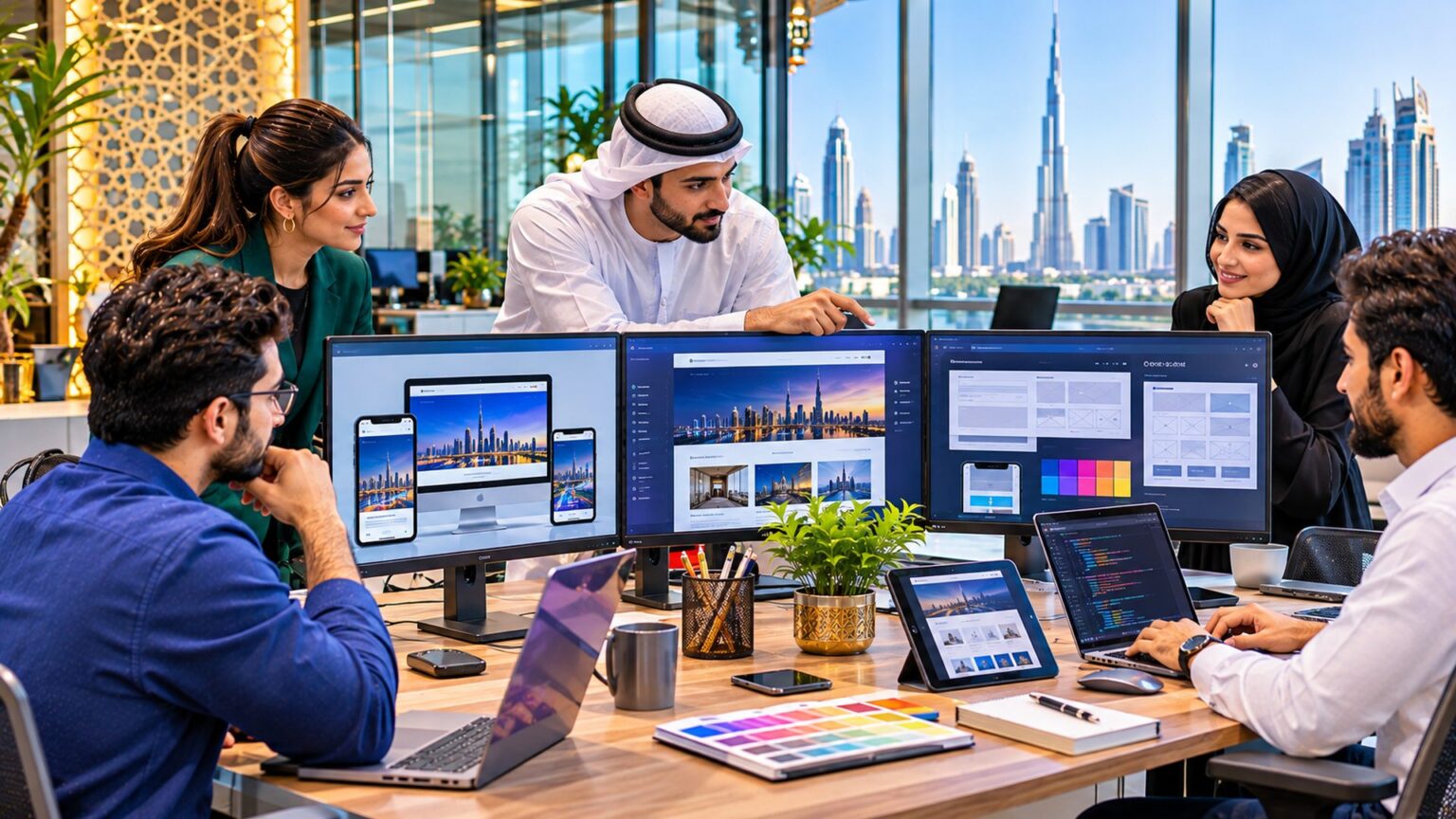
Dubai has become an important destination for business innovation, entrepreneurship, ecommerce, and digital transformation. Businesses searching for Web designer dubai services need professionals who can create visually attractive, technically reliable, and customer-focused websites that support long-term commercial objectives.
A professional website represents more than an online business introduction. It provides opportunities to attract potential customers, communicate brand values, generate qualified leads, and establish credibility in competitive markets.
From luxury real estate companies and financial institutions to ecommerce stores and emerging startups, organizations across Dubai require digital experiences tailored to their specific audiences.
Selecting the right website designer involves evaluating creative capabilities, technical expertise, industry experience, search engine optimization, and ongoing support.
This comprehensive guide explores thirty-five practical tips for selecting professional web design services in Dubai and building a website that supports sustainable business growth.
What Does a Professional Web Designer in Dubai Do?
A professional web designer creates and improves the visual appearance, functionality, navigation, and overall user experience of websites.
Depending on their expertise and project scope, website designers may collaborate with developers, content writers, SEO specialists, graphic designers, and digital marketing consultants.
Their primary objective is to develop digital experiences that communicate business information effectively and help visitors complete meaningful actions.
Essential Web Design Services
Professional website design services may include:
- Custom website design
- Responsive web development
- UI and UX design
- Ecommerce website development
- WordPress development
- Website redesign
- Landing page design
- Multilingual website development
- Digital branding
- Technical SEO
- Website maintenance
- Performance optimization
The appropriate combination of services depends on business requirements, technical complexity, and available resources.
1. Establish Clear Website Objectives
Before hiring a website designer, determine what your business needs its website to accomplish.
Different organizations require different approaches to digital development.
Identify Your Primary Business Goals
Your objectives may include generating customer inquiries, selling products, receiving appointment bookings, publishing information, or strengthening brand awareness.
Clear objectives help designers prioritize relevant functionality and avoid unnecessary development expenses.
2. Understand Dubai’s Competitive Digital Market
Dubai’s business environment includes international companies, regional enterprises, luxury brands, and emerging technology startups.
A successful business website needs to communicate a distinctive value proposition within this competitive environment.
Research Relevant Competitors
Review competing websites to understand their navigation, service presentation, branding, and customer communication methods.
Use these findings to identify opportunities for differentiation rather than copying existing designs.
3. Choose a Designer With Relevant Industry Experience
Website requirements vary significantly between industries.
A real estate website may require searchable property listings, while a healthcare platform may need appointment scheduling and appropriate privacy safeguards.
Review Industry-Specific Expertise
Ask prospective designers about previous projects involving similar business models.
Relevant experience can help designers understand customer expectations and anticipate technical requirements more effectively.
4. Examine the Designer’s Portfolio
A professional portfolio provides valuable information about a designer’s creative abilities and previous project experience.
However, attractive screenshots alone do not demonstrate complete website quality.
Review Published Websites
Where possible, examine completed websites on actual devices.
Evaluate navigation, loading performance, visual consistency, accessibility, and functionality.
Ask the designer to explain their responsibilities within each relevant project.
5. Prioritize Responsive Website Design
Modern customers access websites through smartphones, tablets, laptops, and desktop computers.
Responsive website design enables layouts to adapt to different screen dimensions.
Deliver Consistent Mobile Experiences
Ensure that navigation menus, buttons, images, contact forms, and important information remain accessible across devices.
Google recommends responsive web design as a practical approach to supporting mobile experiences and website maintenance.
6. Focus on User Experience Design
User experience design, commonly known as UX design, focuses on how people interact with digital products.
A successful website should make information easy to locate and essential activities straightforward to complete.
Simplify Customer Journeys
Identify the steps visitors follow when researching services, comparing products, requesting quotations, or completing purchases.
Remove unnecessary obstacles that may discourage customers from taking action.
7. Invest in Professional User Interface Design
User interface design concerns the visual and interactive elements of a website.
These elements include typography, colour schemes, navigation controls, buttons, forms, and content layouts.
Establish a Clear Visual Hierarchy
Important information should receive appropriate visual emphasis.
Consistent spacing and recognizable interface patterns can make website content easier to understand.
Professional design should balance creativity with practical functionality.
8. Create a Distinctive Digital Brand Identity
Dubai businesses frequently compete with organizations offering similar products and services.
A consistent digital brand identity can help customers recognize and remember a business.
Maintain Visual Consistency
Establish suitable brand colours, typography, imagery, logo placement, and communication guidelines.
These elements should remain consistent across the website, social media profiles, digital advertisements, and other marketing materials.
9. Evaluate Custom Website Design Options
Custom website design provides greater flexibility than relying exclusively on predefined templates.
It can be valuable for organizations requiring distinctive layouts or specialized functionality.
Balance Customization and Development Costs
Not every project requires a fully customized design.
A professionally configured template may be appropriate for straightforward business websites, while more complex projects may justify dedicated design and development.
10. Consider WordPress Website Development
WordPress is a popular content management system that supports business websites, blogs, portfolios, and ecommerce functionality through compatible extensions.
Evaluate Content Management Requirements
WordPress can provide businesses with convenient access to website content and administrative functionality.
However, owners must maintain software updates, backups, security configurations, and compatible plugins.
Choose Reliable Hosting
Select a hosting environment that supports appropriate performance, security, and technical maintenance requirements.
11. Explore Shopify for Ecommerce Businesses
Shopify provides a managed ecommerce environment that supports online storefronts, product organization, and order management.
Businesses selling products online may find it suitable depending on their commercial requirements.
Review Ecommerce Capabilities
Evaluate payment gateway compatibility, inventory management, shipping arrangements, subscription expenses, and customization options.
A visually attractive online store should also provide a reliable purchasing experience.
12. Develop Professional Ecommerce Websites
Ecommerce website design requires careful coordination between product presentation, customer navigation, checkout functionality, and operational processes.
Simplify the Purchasing Process
Provide accurate product descriptions, clear prices, suitable images, understandable delivery information, and accessible customer support.
Avoid unnecessary checkout steps and disclose relevant charges before customers complete their purchases.
13. Support Arabic and English Website Content
Dubai serves a diverse population of residents, international businesses, tourists, and regional customers.
Multilingual websites can help organizations communicate with different audience groups.
Implement Right-to-Left Design
Arabic content requires appropriate right-to-left layout support.
Navigation, forms, typography, and interface components should be tested in each supported language.
Professional translation and cultural adaptation provide greater value than relying exclusively on automated translation.
14. Implement Local Search Engine Optimization
Local SEO helps businesses become discoverable when potential customers search for services within relevant geographical areas.
Website structure and content can support local search visibility.
Create Relevant Location-Based Content
Develop useful service pages that accurately describe business offerings and the areas served.
Maintain consistent contact information and avoid generating repetitive location pages that provide little meaningful value.
15. Optimize Website Metadata
Search engine metadata helps communicate the subject and purpose of individual website pages.
Professional website development should include support for editable SEO elements.
Establish Essential Metadata Controls
Ensure that website administrators can update page titles, meta descriptions, URL slugs, and other relevant indexing settings.
These elements should accurately describe page content.
No metadata configuration can independently guarantee higher search engine rankings.
16. Improve Website Loading Performance
Slow websites can frustrate visitors and interfere with important customer activities.
Website designers should consider performance throughout the development process.
Optimize Website Resources
Compress images, minimize unnecessary scripts, and evaluate hosting performance.
Use appropriate caching arrangements and avoid excessive visual effects that create unnecessary loading delays.
17. Monitor Core Web Vitals
Core Web Vitals provide measurements related to website loading, interaction responsiveness, and visual stability.
The principal metrics include:
- Largest Contentful Paint
- Interaction to Next Paint
- Cumulative Layout Shift
Evaluate Real User Experiences
Test representative website pages across different devices and network conditions.
Good performance measurements contribute to user experience but do not guarantee top positions in search results.
18. Build Accessible Websites
Website accessibility helps individuals with different abilities navigate digital information and complete online activities.
Accessibility should remain a consideration throughout design and development.
Follow Recognized Accessibility Practices
Use readable typography, sufficient colour contrast, descriptive image alternatives, accessible form labels, and keyboard-friendly navigation.
Conduct Manual Accessibility Testing
Automated testing tools can identify certain issues, but manual evaluation remains necessary for assessing more complex accessibility requirements.
19. Strengthen Website Security
Business websites may contain customer information, administrative accounts, payment integrations, and confidential operational data.
Security should be considered from the beginning of development.
Establish Essential Security Controls
Use HTTPS, strong authentication, supported software, secure hosting, appropriate access permissions, and reliable backups.
Maintain an ongoing security update process after the website launches.
20. Understand UAE Data Protection Requirements
Businesses collecting personal information through websites should evaluate applicable privacy and data protection obligations.
The UAE has federal personal data protection legislation, while some jurisdictions, including the Dubai International Financial Centre, have separate regulatory frameworks.
Protect Customer Information
Review contact forms, analytics platforms, customer databases, and external integrations.
Collect only necessary information and provide appropriate privacy disclosures.
Seek qualified legal guidance when determining which requirements apply to your business.
21. Review UAE Ecommerce Requirements
Businesses selling products and services online should understand applicable commercial licensing, consumer protection, and electronic transaction requirements.
Website development alone does not establish authorization to conduct commercial activities.
Maintain Transparent Business Information
Provide accurate company details, pricing information, purchasing conditions, delivery arrangements, and relevant return policies.
Confirm applicable licensing requirements with the appropriate UAE authority before launching commercial activities.
22. Integrate Secure Online Payment Systems
Ecommerce websites need dependable payment processing arrangements that support customer requirements.
Payment gateway selection should reflect the business location, supported currencies, transaction types, and commercial agreements.
Evaluate Payment Provider Compatibility
Compare transaction charges, settlement arrangements, available payment methods, refund procedures, and technical integration requirements.
Avoid unnecessarily storing sensitive payment card information within the website.
23. Use Professional Website Photography
High-quality imagery can communicate professionalism and help businesses present their products, employees, and services accurately.
Original photography may be particularly valuable for real estate, hospitality, retail, and luxury brands.
Maintain Authentic Visual Content
Use images that accurately represent the business.
Artificial intelligence can assist with visual concepts, but generated imagery should not misrepresent actual properties, products, facilities, or customer experiences.
24. Create Effective Website Landing Pages
Landing pages are designed around specific customer needs or marketing objectives.
They may support advertising campaigns, service promotions, product introductions, and lead generation.
Establish a Clear Call to Action
Each landing page should explain its purpose and provide an appropriate next step.
Avoid misleading urgency, unnecessary distractions, and unsupported promotional claims.
Test landing page performance using meaningful conversion measurements.
25. Integrate Customer Relationship Management Software
Customer relationship management platforms help businesses organize inquiries, sales opportunities, and communication histories.
Website integration can reduce manual administrative work.
Connect Website Forms With Business Workflows
Ensure that customer inquiries reach appropriate employees or departments.
Verify data synchronization, notification settings, and privacy controls before activating automated lead management.
26. Provide Convenient Customer Communication
Dubai businesses often serve customers through multiple communication channels.
Website visitors should be able to contact the organization using suitable and accessible methods.
Offer Relevant Contact Options
Depending on the business, these may include telephone calls, email, contact forms, live chat, WhatsApp Business, or appointment booking systems.
Provide accurate business hours and realistic expectations regarding response times.
27. Evaluate AI-Powered Website Design Tools
Artificial intelligence can assist designers with layout generation, content development, image creation, and coding activities.
These technologies may reduce repetitive development work.
Maintain Professional Design Oversight
AI-generated websites may contain inaccurate content, accessibility problems, generic layouts, or technical weaknesses.
A qualified designer should evaluate generated materials before publication.
Automation should support professional expertise rather than replace quality assurance.
28. Compare Freelance Designers and Web Design Agencies
Businesses searching for a Web designer dubai solution can choose between independent professionals and established development agencies.
Each arrangement offers different advantages.
Freelance Web Designers
Freelancers may provide flexible communication and lower administrative overhead for suitable projects.
Professional Web Design Agencies
Agencies may offer broader expertise involving design, development, SEO, content production, and technical support.
Choose according to project complexity, available resources, and ongoing maintenance requirements.
29. Understand Website Design Costs in Dubai
Website development prices vary according to design complexity, functionality, content requirements, technical integrations, and professional expertise.
Compare Complete Project Quotations
Request written proposals that explain:
- Design and development deliverables
- Number of website pages
- Multilingual content requirements
- Ecommerce functionality
- Hosting arrangements
- Revision policies
- Testing responsibilities
- Maintenance and technical support
Comparing complete project scope provides a more reliable assessment than comparing headline prices alone.
30. Establish Clear Development Timelines
Website development schedules depend on project requirements, content preparation, stakeholder availability, and technical complexity.
A basic informational website may require less development time than a customized ecommerce or enterprise platform.
Agree on Project Milestones
Establish clear stages covering research, design approval, development, content integration, testing, and launch.
Document responsibilities to reduce avoidable delays and misunderstandings.
31. Protect Website Ownership and Intellectual Property
Businesses should understand who owns their domain name, website content, design materials, and source code.
Unclear ownership arrangements can create difficulties when changing service providers.
Review Contractual Ownership Terms
Confirm administrative access, design licensing conditions, software dependencies, and migration arrangements.
Maintain Business-Controlled Accounts
Where appropriate, register essential domain, hosting, and analytics accounts under the organization’s control.
Ensure that authorized administrators retain access after project completion.
32. Conduct Comprehensive Website Testing
A website should undergo appropriate testing before becoming publicly available.
Testing helps identify technical and usability problems that may affect customer experiences.
Review Essential Website Functionality
Test contact forms, navigation menus, payment processes, mobile layouts, language switching, account functionality, and important integrations.
Correct identified problems before launching the website.
33. Implement Website Analytics
Analytics tools help organizations understand website traffic, customer interactions, and marketing performance.
Useful measurements depend on the website’s intended business objectives.
Track Meaningful Performance Indicators
Consider qualified inquiries, completed purchases, appointment bookings, engagement, loading performance, and customer acquisition costs.
Configure analytics according to relevant privacy requirements and avoid collecting unnecessary personal information.
34. Arrange Ongoing Website Maintenance
Website development does not end when the website launches.
Software updates, security monitoring, content changes, and technical maintenance remain important throughout its operating lifecycle.
Establish a Maintenance Agreement
Clarify responsibilities for backups, updates, technical troubleshooting, performance reviews, and content modifications.
Reliable maintenance arrangements can help businesses reduce avoidable disruptions and unexpected expenses.
35. Develop a Long-Term Digital Growth Strategy
A professional website should support the organization’s broader business and marketing objectives.
Combining website development with SEO, content marketing, customer engagement, and performance analysis can help businesses improve their digital presence.
Review Website Performance Regularly
Evaluate customer feedback, conversion measurements, technical performance, and emerging business requirements.
Make improvements according to verified information rather than changing website designs solely because of temporary industry trends.
Industries That Benefit From Professional Web Design in Dubai
Different industries require website designs tailored to their customer expectations and operational responsibilities.
Real Estate and Property Development
Real estate websites may require searchable property listings, professional photography, inquiry forms, and location information.
Property descriptions should remain accurate and comply with relevant advertising requirements.
Hospitality and Tourism
Hotels, restaurants, and tourism businesses can benefit from multilingual content, booking functionality, visual storytelling, and convenient customer communication.
Healthcare and Wellness
Healthcare websites require accessible information, secure communication, appropriate appointment functionality, and responsible handling of personal information.
Ecommerce and Retail
Online retailers benefit from intuitive product navigation, transparent pricing, reliable checkout systems, and mobile-friendly shopping experiences.
Corporate and Professional Services
Consultancies, financial firms, legal practices, and technology companies can use professional websites to explain their expertise, communicate services, and generate qualified inquiries.
Major Benefits of Hiring a Professional Web Designer in Dubai
A well-planned website can provide several important commercial advantages:
- Stronger digital brand identity
- Improved customer experience
- Better mobile accessibility
- More effective lead generation
- Greater website functionality
- Improved technical SEO foundations
- Enhanced online business credibility
- More organized customer communication
- Better opportunities for long-term digital growth
Actual results depend on website quality, business strategy, customer demand, marketing investment, and ongoing maintenance.
Common Website Design Mistakes to Avoid
Businesses sometimes select website designers based exclusively on the lowest available quotation.
Other common mistakes include overlooking mobile responsiveness, publishing inaccurate content, neglecting website security, and failing to establish ownership arrangements.
Organizations should also avoid excessive animations, complicated navigation, and unnecessary software integrations.
An effective website combines attractive presentation with meaningful content, reliable functionality, appropriate security, and clear commercial objectives.
The Future of Web Design in Dubai
Dubai’s digital business environment continues to evolve through artificial intelligence, cloud computing, ecommerce innovation, and connected customer experiences.
Future website development may involve more sophisticated personalization, intelligent design assistance, automated content management, and advanced performance optimization.
Nevertheless, businesses will continue to require professional creativity, technical expertise, accessibility, accurate information, and responsible data management.
Organizations that combine modern technology with established web development principles can build digital experiences capable of supporting changing customer expectations.
Frequently Asked Questions
How do I find the best web designer in Dubai?
Review portfolios, relevant industry experience, technical capabilities, customer feedback, project quotations, and ongoing support arrangements.
How much does website design cost in Dubai?
Costs vary according to project complexity, page numbers, customization, ecommerce functionality, multilingual requirements, and maintenance services.
Is WordPress suitable for Dubai businesses?
Yes. WordPress can support business websites, blogs, and ecommerce projects when configured, maintained, and secured appropriately.
Can a web designer in Dubai create bilingual websites?
Yes. Experienced designers can develop Arabic and English websites with suitable translation, right-to-left layouts, and multilingual navigation.
How long does professional website development take?
Development timelines depend on website complexity, content availability, technical integrations, design revisions, and stakeholder approval processes.
Do web design services include SEO?
Some designers provide foundational on-page and technical SEO, while comprehensive search engine optimization may require a separate service agreement.
Conclusion
Selecting the right web designer in Dubai helps businesses establish attractive, functional, and competitive digital experiences. Combining responsive design, professional branding, local SEO, accessibility, and dependable website security provides a strong foundation for online growth. By investing in suitable development services and continuous improvement, organizations can build websites that support meaningful customer relationships and sustainable commercial success.
