
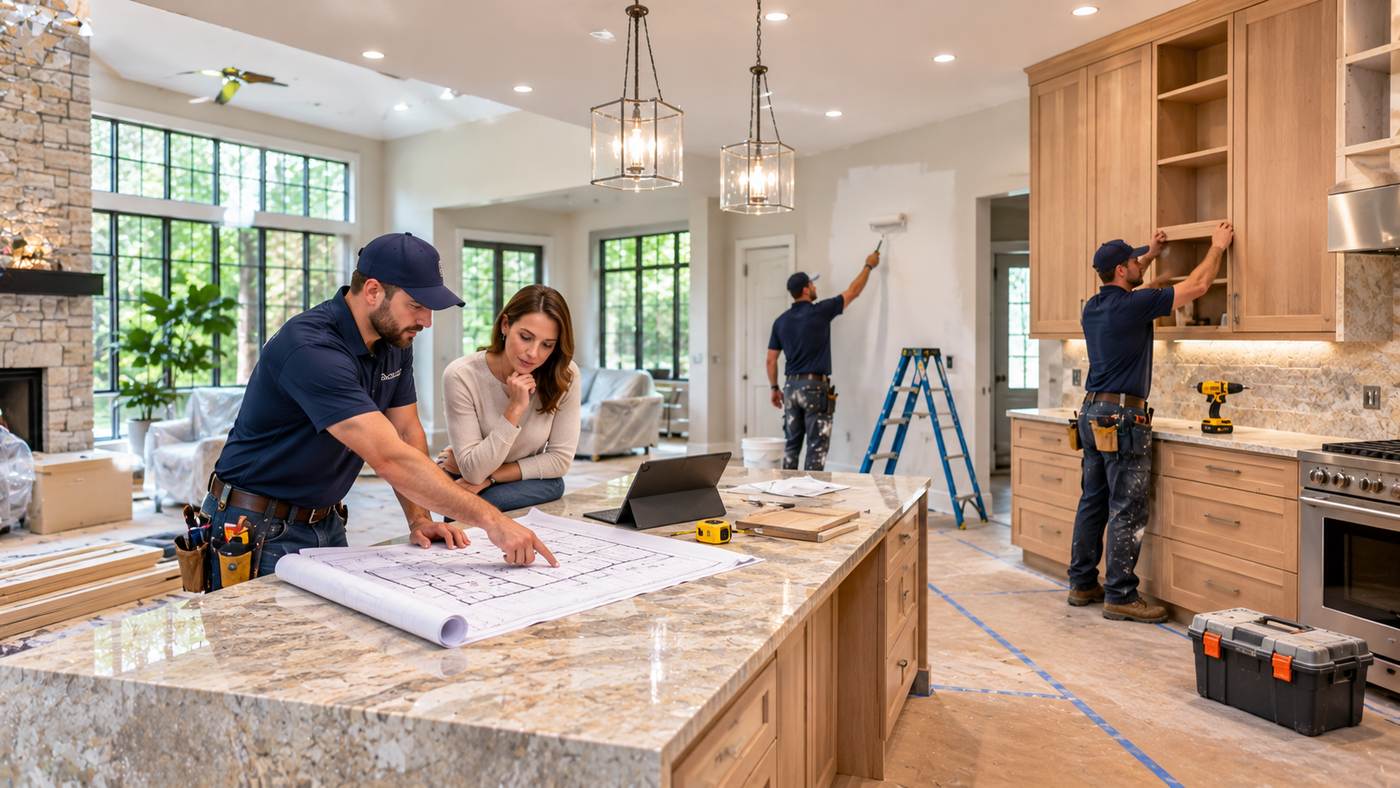
Renovating an entire house is a substantial undertaking that affects how a family lives, uses its space, and maintains its property. Choosing whole home remodeling contractors involves more than comparing attractive portfolios or accepting the lowest estimate. An effective renovation requires coordinated design decisions, realistic budgeting, qualified trades, clear contracts, and careful oversight from demolition through final inspection. The right team should be able to explain what is achievable within the home’s existing structure and where specialist input is necessary.
A comprehensive remodel might include a redesigned kitchen, updated bathrooms, improved floor plans, new electrical systems, insulation work, and refreshed finishes. Not every project needs all of these changes. This guide explains seven practical decisions that help homeowners evaluate professionals, manage risks, and pursue a result that serves their daily needs rather than following temporary design trends.
What Do Whole Home Remodeling Contractors Do?
Whole home remodeling contractors oversee substantial changes across multiple rooms or building systems. Depending on their business model and contract, they may arrange demolition, carpentry, plumbing, electrical work, heating and cooling upgrades, drywall installation, flooring, painting, and finishing. They coordinate schedules and subcontractors, order materials, and help keep the construction work aligned with approved drawings.
A general contractor normally manages construction, while an architect or residential designer may develop the plans. Some remodeling companies offer a design and build arrangement with design and construction services under one contract. Others work with an independent design professional selected by the homeowner. Neither model is automatically superior; responsibilities and communication arrangements matter more than the label.
Remodeling Versus Renovating or Rebuilding
Renovation often describes repairing or updating an existing space, whereas remodeling can change its layout or function. These terms overlap in everyday use. A complete remodel generally retains substantial portions of the original building, unlike demolition and new construction. The exact scope should be stated in drawings and specifications rather than inferred from terminology.
When a Whole Home Project Makes Sense
A coordinated project can be useful when several rooms require work and building systems need upgrading together. It may reduce repeated disruption from separate projects, although it can also involve greater planning demands and temporary relocation. Ask whole home remodeling contractors whether the proposed work can be phased safely or whether construction across the property should be scheduled as one project.
7 Essential Decisions Before Hiring a Remodeling Team
1. Define Your Goals Before Requesting Estimates
Start with the problems the current house does not solve. Perhaps the kitchen has inadequate storage, the bathrooms are difficult to access, or the household needs a different arrangement of shared and private rooms. Write down daily frustrations, safety concerns, and desired improvements. Separate must have changes from optional upgrades.
Before meeting whole home remodeling contractors, gather existing floor plans, photographs, and any available records of previous repairs. Identify walls you hope to remove, rooms you want to enlarge, and systems that may need assessment. An initial wish list helps establish a common understanding, but it should not be treated as proof that a change is structurally possible.
Prioritize Function Alongside Appearance
Consider circulation, lighting, storage, accessibility, privacy, and future maintenance. An open concept layout may seem attractive, yet removing walls can affect structural support, sound control, and heating or cooling. A professional assessment should explain tradeoffs before the design is finalized. Well chosen improvements support everyday use rather than simply creating an impressive photograph.
2. Verify Licensing, Insurance, and Relevant Experience
Contractor licensing requirements vary by state and locality. Check the business registration and the licenses required for the actual work with the responsible government authority. Ask for current evidence of liability insurance and workers compensation coverage where applicable. Verify the information independently rather than relying solely on a website badge.
Experienced whole home remodeling contractors should be able to describe projects of comparable size and complexity. Ask how they handled occupied homes, older structures, structural alterations, and coordination among multiple trades. Request recent references, then ask former clients about communication, change orders, site cleanliness, and how problems were resolved.
Online reviews may provide useful clues, but a single rating cannot establish competency. Look for patterns in feedback and ask to see examples showing completed spaces rather than only carefully styled design images.
Special Safety Considerations in Older Houses
In the United States, paid renovation work that disturbs painted surfaces in many homes built before 1978 may be covered by the Environmental Protection Agency’s Renovation, Repair and Painting Rule. Covered firms and renovators must meet applicable certification and lead safe work practice requirements. State administered programs and exemptions can affect implementation. Older materials may also warrant assessment for asbestos or other hazards before disturbance. Do not permit unassessed demolition merely to accelerate the schedule. Ask whole home remodeling contractors how they identify potential hazards and coordinate any required specialist assessments.
3. Establish a Realistic Budget and Compare Detailed Quotes
A whole house renovation involves more than visible materials and labor. Design fees, permits, temporary utilities, structural repairs, debris removal, delivery charges, and accommodations during construction may all affect the total. Create a spending limit that includes room for unexpected conditions discovered after opening walls or floors.
Ask at least several qualified whole home remodeling contractors to quote the same defined scope. Estimates should identify materials, labor assumptions, exclusions, projected milestones, allowances for selections that have not been finalized, and the process for approving additional costs. A quotation prepared from incomplete plans is less reliable than one based on documented decisions.
Understand Allowances and Change Orders
An allowance reserves a stated amount for a product or service not yet selected, such as tiles or fixtures. If the final choice exceeds that allowance, the budget may increase. A change order documents an approved modification to the scope, price, or schedule. Ask whole home remodeling contractors to provide written changes before performing extra work, except where immediate safety action is required and the contract addresses that situation.
An unusually inexpensive quote may omit essential preparation or rely on unrealistic allowances. Conversely, the highest quote is not proof of superior workmanship. Compare what is included, the proposed materials, the company’s responsibilities, and the clarity of the terms.
4. Complete Design and Permitting Decisions Before Major Work
The design stage turns broad ideas into dimensions, specifications, and a buildable plan. An architect, designer, or qualified professional may identify structural constraints, ventilation requirements, and accessibility considerations. Obtain the engineering input needed for load bearing changes or other complex alterations. Finish selections early enough to avoid unnecessary purchasing delays.
Reputable whole home remodeling contractors should explain which activities require permits and who will apply for them. Requirements depend on the jurisdiction and project type. Structural work and many electrical, plumbing, or mechanical changes commonly trigger permit review, while some cosmetic replacements may not. Confirm the rules with the local building department rather than assuming a contractor’s general experience covers every local requirement.
Review the Complete Drawing Set
Ask for plans that describe room layouts, major dimensions, electrical and lighting locations, plumbing fixtures, cabinetry, flooring transitions, and relevant material specifications. Check how existing utilities will connect to new work. Homeowners should understand what is being built before construction begins, even when they are not responsible for producing technical drawings.
If a contractor encourages you to conceal permit required work, treat that as a serious warning. Missing approvals can cause safety issues, inspection problems, and complications during a later property transaction.
5. Coordinate the Construction Schedule and Household Logistics
An entire home renovation requires a sequence of dependent tasks. Demolition and investigation typically precede rough plumbing, electrical, and mechanical work. Inspections may be required before walls are enclosed. Cabinets, finishes, and final fixtures generally follow the appropriate preparation stages. Ordering delays can affect the sequence even when the labor team is available.
Ask whole home remodeling contractors for a milestone schedule identifying major activities, material decisions, inspections, and expected access restrictions. A schedule is a planning tool rather than an unconditional guarantee. Weather, hidden damage, supply availability, and approved changes may require revisions.
Decide Whether to Stay in the Property
Living in an active construction site may expose occupants to noise, dust, reduced access to kitchens or bathrooms, and safety hazards. For extensive work, temporary accommodation may be more practical. Discuss construction barriers, ventilation, protected walkways, working hours, and arrangements for children and pets. Do not assume that plastic sheeting alone controls all demolition dust or hazardous materials.
Assign one primary contact for daily decisions and establish how often progress updates will be provided. Consistent communication prevents small questions from turning into costly delays. Reliable whole home remodeling contractors should explain how schedule updates reach every affected trade.
6. Choose Durable Materials and Plan Whole House Performance
A successful remodel should consider how building systems interact. Improved insulation and air sealing may alter heating and cooling demands, so equipment sizing should reflect the home’s updated characteristics. Energy Star guidance recommends professional heating and cooling design rather than relying on simple rules of thumb. Oversized equipment can affect comfort and efficiency.
When evaluating whole home remodeling contractors, discuss whether they coordinate with appropriately qualified HVAC, electrical, plumbing, and insulation professionals. Ask about ventilation in bathrooms and kitchens, moisture management, and any existing water intrusion. Cosmetic finishes should not conceal damp walls or unresolved plumbing problems.
Balance Style, Maintenance, and Replacement Needs
Consider flooring suited to traffic and moisture exposure, cabinetry with serviceable hardware, durable countertop surfaces, and lighting appropriate to each room’s function. Products marketed as premium are not necessarily the most practical for a household with children, pets, or accessibility needs.
Ask whole home remodeling contractors to provide manufacturer information and explain cleaning, repair, and warranty requirements. Make decisions using actual product specifications, not unsupported promises of lifetime performance or guaranteed savings. Thoughtful choices can reduce maintenance frustration while preserving a cohesive appearance across rooms. Qualified whole home remodeling contractors can help identify when product decisions require specialist confirmation.
7. Protect the Project With a Clear Contract and Final Inspection
The written agreement should identify the legal business, project address, scope of work, drawings, materials, estimated start and completion dates, payment schedule, procedures for changes, cleanup responsibilities, and dispute resolution terms. Applicable contract requirements vary by jurisdiction. Read the entire agreement and resolve blank fields or unclear language before signing.
Federal Trade Commission consumer guidance recommends checking licenses and insurance, obtaining multiple written estimates, and avoiding full payment upfront. Some states limit deposits, so ask the relevant consumer agency about local protections. Document payments with receipts and match progress payments to clearly defined work milestones.
Before making final payment, walk through the property with the contractor and prepare a list of incomplete items or defects. Check whether required inspections and approvals are complete. Request warranties, manuals, product details, and relevant records for your files. Reliable whole home remodeling contractors should have a practical process for addressing justified punch list items and documenting project closeout.
How Much Does a Whole Home Remodel Cost?
The cost varies widely according to location, floor area, structural complexity, existing conditions, and finish selections. Reconfiguring kitchens and bathrooms or replacing multiple building systems generally changes the budget more than painting and flooring alone. Site conditions that become visible after demolition can add work even when the initial assessment was careful.
For a realistic comparison, whole home remodeling contractors need an agreed description of which rooms and systems are included. Ask whether estimates cover design services, demolition, disposal, new fixtures, electrical work, plumbing, permits, and final cleaning. A price per square foot can be useful as a rough discussion point but cannot substitute for a project specific scope.
How to Manage Contingency Funds
Keep a separate amount for unplanned but necessary work, rather than treating every available dollar as a finish allowance. The appropriate amount depends on the home’s age, known defects, and how much investigation occurred before pricing. Consult the design team and contractor about realistic uncertainty. Do not approve optional upgrades until you understand their effect on remaining funds.
The Whole Home Remodeling Process From Start to Finish
A typical project begins with a feasibility discussion and assessment of existing conditions. Design development follows, then detailed selections, estimates, permits where required, and a signed contract. Construction proceeds through demolition, rough installations, required inspections, enclosure, finishes, and final commissioning or testing of affected systems.
Whole home remodeling contractors may organize these phases differently depending on the project and delivery model. What matters is that responsibilities and decision points are clear. Homeowners should know when they must approve materials, review changes, provide access, and check completed work. Maintain a shared record of key decisions, including revised drawings and approved change orders.
How to Keep Communication Productive
Choose a regular meeting or update schedule and keep questions in writing when they affect cost or specifications. Ask for photographs of concealed work before walls are closed when appropriate. Avoid directing subcontractors independently if the contract assigns coordination to the general contractor. A single agreed communication process reduces conflicting instructions. Ask whole home remodeling contractors how decisions are recorded and shared across the project team.
Common Warning Signs When Choosing a Contractor
Be cautious of a business that refuses to provide written terms, pressures you to sign immediately, cannot explain its licensing status, or demands payment through unusually risky methods. Vague allowances and repeated promises that permits are unnecessary can also justify closer scrutiny.
Professional whole home remodeling contractors should be willing to describe who will supervise the job, which trades will perform regulated work, and how changes will be approved. Be wary of guarantees that every hidden condition is known before demolition. Competent professionals acknowledge uncertainty and explain how discoveries will be handled.
A strong working relationship does not mean disagreements will never happen. It means there is a clear method for documenting concerns, discussing alternatives, and resolving problems before they grow.
Frequently Asked Questions
1. What do whole home remodeling contractors typically handle?
They coordinate extensive renovations involving multiple rooms and trades, including scheduling, subcontractors, materials, and construction work. Design and permit responsibilities depend on the contract and local requirements.
2. How do I verify a whole home remodeling contractor?
Check required state or local licensing, insurance, relevant experience, recent references, and written project details. Confirm credentials independently with the responsible authority.
3. Should I hire a design and build company or a general contractor?
Either model can work. Compare who prepares drawings, manages construction, handles changes, and accepts responsibility for design coordination before choosing.
4. Do whole home renovations require building permits?
Many structural and building system changes require permits, but the rules vary by location and scope. Confirm requirements with the local building department before starting.
5. Can my family live at home during a major remodel?
Sometimes, but safety, dust, noise, utility interruptions, and access to essential rooms may make temporary accommodation preferable. Discuss a realistic occupancy plan with the contractor.
6. What should I receive when the renovation is finished?
Request completed inspections where required, a resolved punch list, warranties, product manuals, receipts, and relevant closeout documents. Confirm all contractual obligations are addressed.
Conclusion
Choosing whole home remodeling contractors is easier when you begin with a clear scope, verified credentials, and realistic financial expectations. Detailed design documents, safe construction practices, and written change procedures help homeowners manage complexity without sacrificing essential quality. Staying involved through inspections and final handover gives the renovation a stronger foundation. The most successful result is a home that functions well, remains maintainable, and reflects the people who live in it.
