
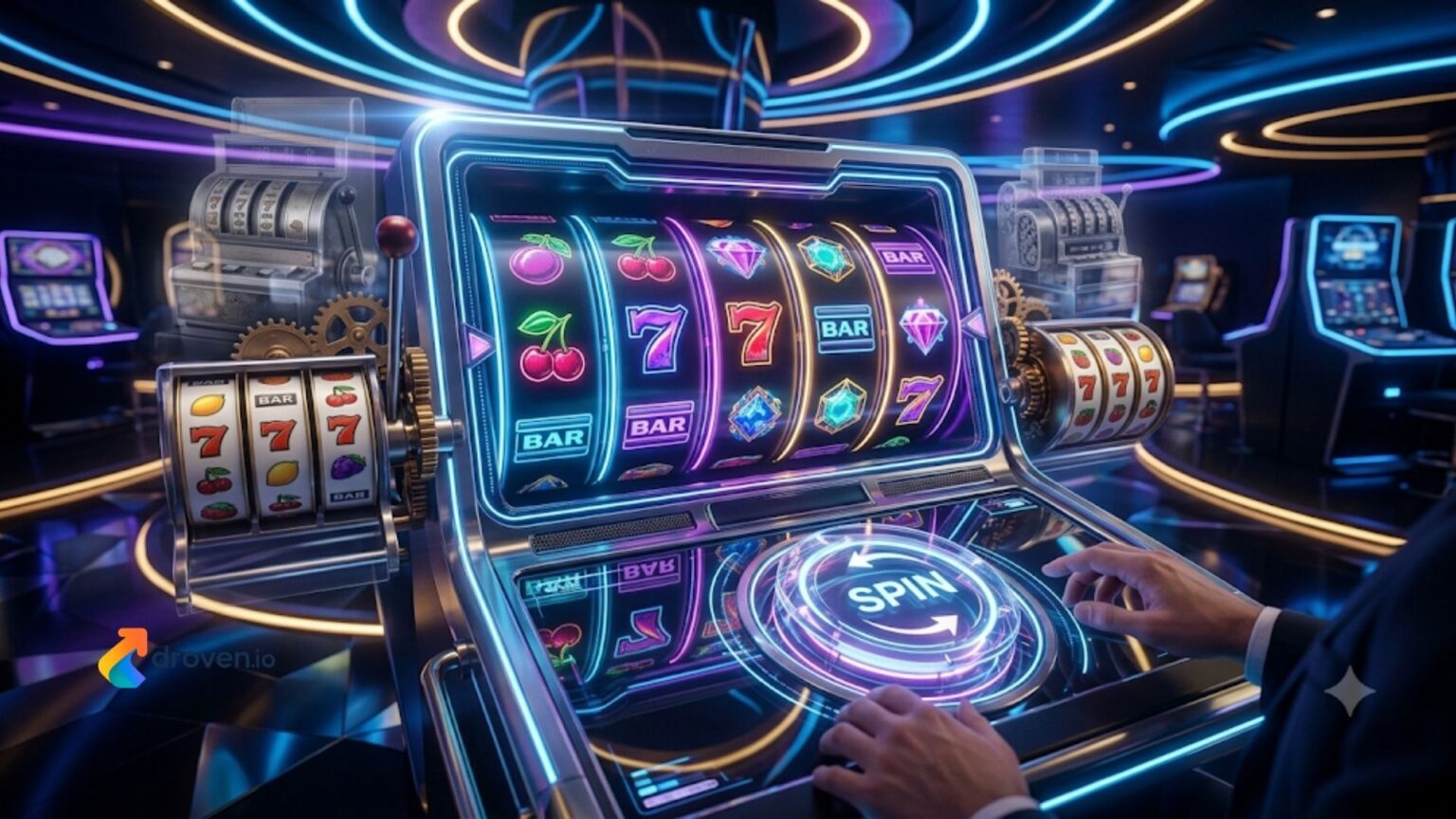
The mechanics of slot games have changed dramatically over the decades, yet one element has remained remarkably consistent: the button that sets everything in motion. Whether a player interacts with a physical cabinet or a touchscreen, the act of pressing to spin represents the moment when anticipation meets outcome. This single point of interaction carries more design weight than most people realize, connecting the earliest mechanical reels to the sophisticated software running behind modern displays.
From the Lever to the Modern Spin Button
Early slot machines relied on a lever, which is why the nickname “one-armed bandit” persists in gambling vocabulary. Pulling the lever engaged a spring mechanism that released the reels, creating a tactile sensation tied directly to the physical machine. As technology advanced, manufacturers replaced springs with electric motors and eventually with fully digital random number generators, but the lever gave way to a button rather than disappearing entirely.
The shift from lever to button was not purely cosmetic. Buttons allowed for faster play, reduced mechanical wear, and greater reliability across thousands of spins. They also opened the door to more complex features, since a single interface could trigger different bet sizes, paylines, and bonus rounds. Despite these changes, designers retained the core idea that one deliberate action should launch the game, preserving a sense of control that players expect. The table below summarizes how the mechanism has evolved while the core action stayed the same:
| Era | Input Method | Underlying Technology | Player Experience |
| Early machines | Physical lever | Spring mechanism | Strong tactile feedback, slower play |
| Electromechanical | Button or lever | Electric motors | Faster spins, less wear |
| Digital/Online | Spin button or touchscreen | Random number generators | Instant results, feature-rich interface |
Why the Button Endures in Digital Design
In an era of automated features and complex interfaces, the persistence of the spin button reflects a deep understanding of player psychology. The button provides a clear moment of commitment, a threshold between deciding and discovering. This psychological anchor helps players feel involved rather than passive, even when the underlying outcome is determined entirely by software. Removing that moment would strip away part of what makes the experience engaging.
The simplicity of slot mechanics is one of the main reasons these games remain accessible to players with different levels of experience. Many operators offering promotions such as Ice casino 50 free spins understand that the spin button is where value becomes tangible, since each promotional round is activated by the same familiar action that governs standard play. The consistency of this interaction means that whether a spin costs nothing or carries a real wager, the sensory feedback remains identical. That uniformity builds trust, because players learn to associate a single, predictable input with the full range of possible results.
The Psychology Behind a Single Action
The appeal of pressing to spin ties into how the brain processes reward and anticipation. When a player initiates an action and then waits briefly for the result, the pause heightens engagement. This sense of agency, even within a game of chance, is a powerful driver of continued interest. The button becomes a ritual, repeated with each round, reinforcing habit through familiar motion. Several design principles explain why this simple control continues to shape player behavior:
- It creates a clear cause-and-effect relationship between input and outcome.
- It delivers immediate feedback through animation and sound.
- It supports rhythm, allowing players to establish a comfortable pace.
- It minimizes cognitive load, keeping attention on the reels rather than the interface.
These factors combine to make the button far more than a functional element. It serves as the emotional and interactive core of the entire experience, quietly guiding how players perceive each session.
How Interface Design Balances Speed and Control
Modern developers face a tension between speed and deliberation. Features such as autoplay and turbo modes can accelerate rounds, appealing to players who prefer rapid results. Yet these tools are almost always built around the same central button, functioning as extensions rather than replacements. The manual spin remains the default, ensuring that players who want control never lose it.
Responsible design considerations have also influenced how the button behaves. Some jurisdictions require minimum spin durations or limits on rapid repeated play, which reinforces the value of a deliberate action. By keeping the button central, designers can integrate pauses and prompts that encourage awareness without disrupting the familiar flow. This balance demonstrates how a single control can adapt to both entertainment goals and regulatory expectations.
The Quiet Power of One Press
The story of slot games is often told through flashing graphics and elaborate themes, but the button remains the true constant. It links mechanical history to digital innovation, satisfies psychological needs for agency, and supports thoughtful design across countless variations. Its endurance shows that not every element benefits from reinvention, and that the most effective interactions are frequently the simplest ones, refined rather than replaced over time.
