
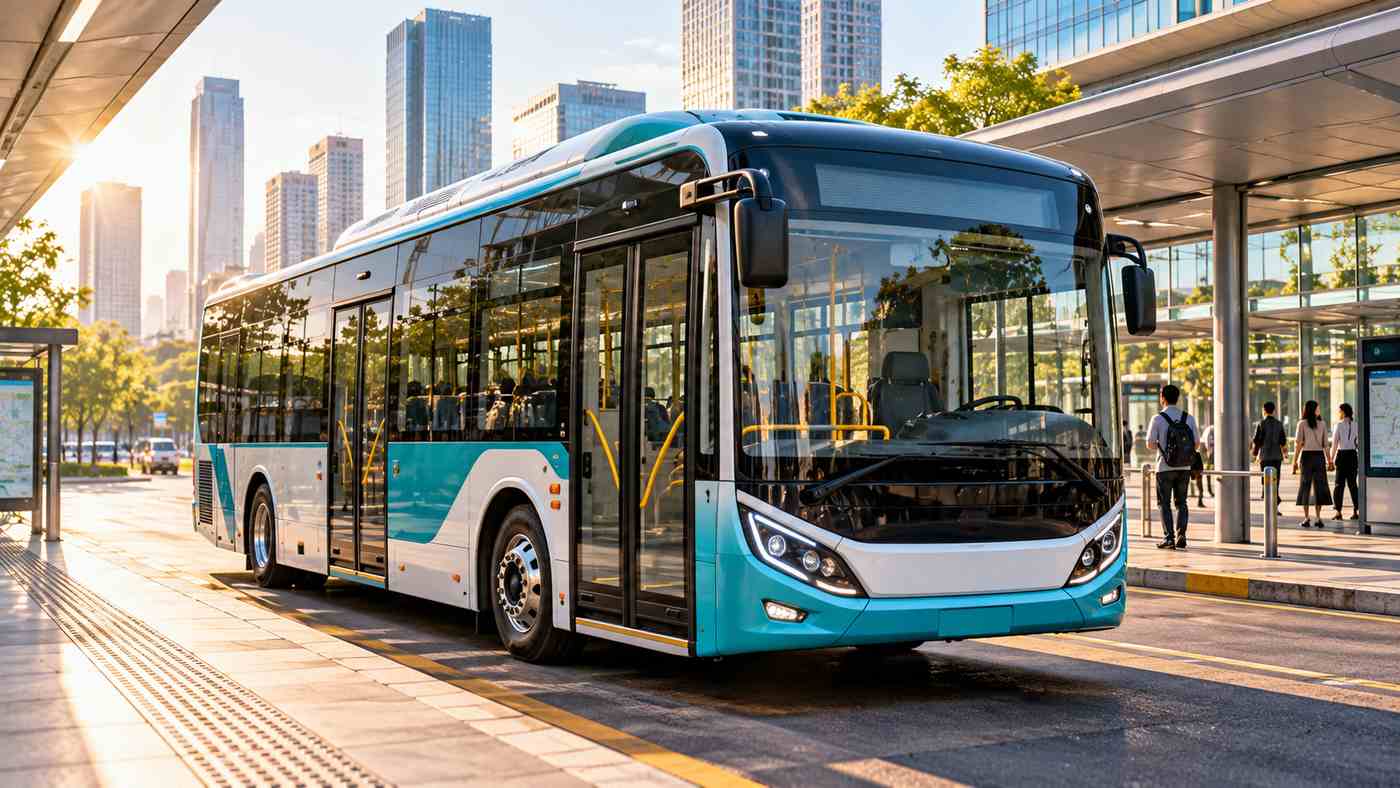
Public transportation is experiencing a significant transformation as cities, governments, and transport operators seek cleaner, more efficient, and more comfortable mobility solutions. Electric buses, intelligent fleet management, and modern passenger vehicle technology are playing an increasingly important role in this transition.
Yutong Bus is a major Chinese bus and coach manufacturer that supplies vehicles for urban public transportation, long-distance travel, tourism, employee transportation, and other passenger mobility applications. Its portfolio includes conventional buses alongside battery-electric and other new energy vehicles designed for different operating environments.
As transport authorities work to reduce local air pollution and improve passenger experiences, manufacturers such as Yutong are developing technologies intended to support modern fleet requirements.
However, selecting the right commercial bus involves more than comparing exterior designs or advertised features. Operators must evaluate passenger capacity, operating conditions, charging infrastructure, maintenance requirements, safety standards, and long-term ownership costs.
This guide explores Yutong’s background, major vehicle categories, electric technology, international presence, and the important considerations involved in choosing buses for modern transportation services.
What Is Yutong Bus?
Yutong Bus Co., Ltd. is a Chinese commercial vehicle manufacturer headquartered in Zhengzhou, Henan Province.
The company’s origins date to the Zhengzhou Bus Repair Factory, established in 1963. Zhengzhou Yutong Bus Co., Ltd. was formally established in 1993, and the business became publicly listed on the Shanghai Stock Exchange in 1997.
Over the following decades, Yutong expanded its manufacturing activities and developed vehicles for domestic and international markets.
Today, its product categories include:
- Electric city buses.
- Conventional city buses.
- Long-distance coaches.
- Electric coaches.
- Tourist coaches.
- Commuter buses.
- School buses.
- Airport apron buses.
- Special-purpose passenger vehicles.
The company supplies different models and configurations according to regional requirements.
Yutong’s Position in the Global Bus Industry
Yutong reports that its buses operate in numerous international markets across Europe, Asia, Africa, Latin America, and other regions.
According to its published operating results, Yutong sold 49,518 buses in 2025, including 18,356 new energy buses.
The company also reports cumulative new energy bus sales exceeding 210,000 vehicles.
These figures illustrate its significant involvement in the commercial passenger transport industry.
However, sales volumes alone do not determine whether a particular model is suitable for an individual operator.
Fleet suitability depends on operating conditions, local support, regulatory approval, and the technical requirements of the intended service.
Understanding the Different Types of Yutong Buses
Yutong manufactures vehicles for several passenger transportation segments.
Each category has different requirements relating to seating capacity, route distance, passenger accessibility, comfort, and operating efficiency.
Electric City Buses
Electric city buses are designed for scheduled urban passenger transportation.
These vehicles use battery-powered electric drivetrains rather than conventional diesel engines.
Yutong offers electric buses across multiple size categories, including compact urban vehicles and larger buses intended for high-capacity routes.
The company’s electric bus portfolio includes vehicles ranging approximately from 5 to 18 meters in length, depending on the model and market.
Important Urban Bus Features
Modern city buses may include low-floor entry designs, passenger information systems, air conditioning, accessibility equipment, and multiple boarding doors.
The specific features depend on the selected configuration.
For transport authorities, vehicle accessibility and passenger flow can be just as important as propulsion technology.
Conventional City Buses
Conventional city buses remain relevant in markets where electric charging infrastructure is limited or operating conditions make fleet electrification difficult.
Yutong’s broader portfolio includes buses using different propulsion technologies.
Selection depends on local fuel availability, emissions requirements, route characteristics, and operational priorities.
Long-Distance Coaches
Long-distance coaches are intended for intercity travel and extended passenger journeys.
Unlike high-frequency urban buses, these vehicles generally prioritize seating comfort, luggage capacity, passenger amenities, and highway performance.
Depending on the model, equipment may include reclining seats, climate control, overhead storage, and additional passenger convenience features.
Electric Coaches
Yutong also offers battery-electric coaches for selected intercity, tourism, and commuter applications.
The company markets electric coaches in several length categories.
For example, its T14E is a 14-meter battery-electric tourist coach with configurations advertised for up to 59 seats.
The official product listing specifies battery capacity options of 621 kWh and 704 kWh.
These specifications are model-specific and should not be applied to every Yutong electric coach.
School and Specialized Buses
Certain markets require dedicated vehicles for school transportation, airport operations, and other specialized services.
These vehicles may involve additional equipment or regulatory requirements.
Availability and specifications vary by country.
7 Powerful Reasons Yutong Buses Are Relevant to Modern Transportation
Modern bus procurement increasingly involves environmental performance, operational efficiency, passenger experience, and fleet reliability.
The following seven factors help explain why Yutong’s vehicle technologies attract attention from transportation operators.
1. Electric Buses Can Reduce Local Exhaust Emissions
One of the main advantages of battery-electric transportation is the elimination of exhaust emissions while the vehicle is operating.
A battery-electric bus does not produce tailpipe emissions of carbon dioxide, nitrogen oxides, or diesel exhaust particles.
This can contribute to improved local air quality, particularly in areas with frequent bus traffic.
However, electric vehicles still have environmental impacts associated with electricity generation, battery production, manufacturing, and eventual disposal.
Understanding the Environmental Benefits
The full environmental benefit depends on how electricity is generated, how efficiently the vehicle operates, and how long it remains in service.
A bus charged using lower-carbon electricity can offer stronger greenhouse gas reductions than one relying on a highly carbon-intensive electricity supply.
Fleet operators should therefore evaluate lifecycle emissions rather than relying only on tailpipe comparisons.
Supporting Cleaner Urban Mobility
Electric buses can be especially relevant for urban routes that pass through densely populated neighborhoods, schools, commercial areas, and transport terminals.
Reducing direct exhaust emissions may help support local air quality objectives.
Still, cleaner vehicles work best alongside broader transportation policies, reliable services, and suitable infrastructure.
2. Improved Passenger Comfort and Travel Experience
Passenger comfort influences how people experience public transportation.
Noise, vibration, temperature, accessibility, and interior layout all affect the quality of a journey.
Electric drivetrains generally produce less engine-related noise than conventional diesel engines.
This can create a quieter environment for passengers and reduce some sources of vibration.
Comfortable Interior Design
Depending on the vehicle configuration, modern Yutong buses may include:
- Climate control systems.
- Ergonomic passenger seating.
- Passenger information displays.
- Accessible boarding arrangements.
- Handrails and standing areas.
- Interior lighting.
- Designated wheelchair spaces.
- USB charging or other optional amenities.
These features are not universal across all models.
Buyers should confirm the actual equipment included in the vehicle specification.
Accessibility and Inclusive Transportation
Accessible transportation benefits passengers with disabilities, older adults, parents traveling with children, and people carrying luggage.
Low-floor layouts, wheelchair spaces, ramps, and suitable passenger information systems can improve usability.
Operators must ensure that selected vehicles comply with local accessibility requirements.
3. A Broad Range of Vehicles for Different Routes
Transportation needs vary significantly between cities and regions.
A compact shuttle operating through narrow streets has different requirements from a large bus serving a busy metropolitan corridor.
Likewise, an airport shuttle differs from a long-distance tourist coach.
Yutong’s broad product portfolio allows operators to evaluate several categories of passenger vehicles.
Matching Vehicle Size to Passenger Demand
Selecting the appropriate bus capacity is important for efficient operations.
Vehicles that are too small may cause overcrowding during peak periods.
Oversized buses may result in unnecessary operating costs on low-demand routes.
Fleet planning should account for passenger numbers, service frequency, accessibility, and expected demand growth.
Considering Route Characteristics
Operators should examine:
- Daily travel distance.
- Road width and turning requirements.
- Passenger boarding frequency.
- Urban congestion.
- Elevation changes.
- Climate conditions.
- Depot capacity.
- Available charging or fueling facilities.
Choosing a bus based on actual route data helps reduce the risk of purchasing equipment that does not fit the operation.
4. Energy Management and Electric Vehicle Technology
Energy efficiency is an important concern for electric bus operators.
Electric drivetrains involve batteries, power electronics, motors, control software, and thermal management systems.
The effectiveness of these components influences usable driving range, energy consumption, and maintenance requirements.
Yutong Electric Architecture
In 2023, Yutong introduced its YEA technology platform.
YEA, or Yutong Electric Architecture, integrates software and hardware systems intended for new energy commercial vehicles.
The platform includes an electronic architecture and an automotive operating system designed to coordinate vehicle functions.
According to Yutong, the approach supports improved integration and management of several vehicle systems.
However, actual efficiency and performance results depend on the specific model and operating environment.
Regenerative Braking
Electric buses commonly use regenerative braking technology.
During suitable braking conditions, the electric motor can operate as a generator and recover a portion of the vehicle’s kinetic energy.
The recovered energy is stored in the battery.
This process can improve energy efficiency, particularly on routes involving frequent stopping and starting.
The amount of energy recovered depends on factors such as speed, battery condition, control settings, and driving conditions.
Regenerative braking does not eliminate the need for conventional braking systems.
5. Vehicle Safety and Battery Protection
Bus safety is essential because commercial passenger vehicles transport many people and operate in complex traffic environments.
Safety evaluation should address vehicle structure, braking performance, stability, passenger protection, driver visibility, and the reliability of onboard systems.
Electric buses introduce additional considerations involving high-voltage equipment and battery systems.
Battery Safety Features
Yutong describes battery protection technologies in its electric vehicle portfolio, including battery monitoring and protective system designs.
Its published information refers to its Electric Safety Standards and nitrogen-based battery protection technology in certain applications.
These are manufacturer-described features and should be evaluated using applicable certification and technical documentation.
No battery system is entirely free from risk.
Operational Safety Measures
Safe bus operation also depends on:
- Qualified drivers.
- Vehicle inspections.
- Scheduled maintenance.
- Appropriate tire condition.
- Effective braking systems.
- Driver training.
- Emergency procedures.
- Passenger safety equipment.
Operators should assess safety features in the specific vehicle configuration and verify compliance with local regulations.
6. Digital Fleet Monitoring and Operational Management
Modern commercial transportation increasingly uses connected vehicle technology.
Fleet management systems can help operators monitor vehicles, organize maintenance activities, and evaluate operational performance.
Yutong offers Internet of Vehicles solutions intended to support fleet management.
Available functions depend on the relevant platform, hardware, subscriptions, and regional services.
Monitoring Vehicle Conditions
Connected systems may help operators review operating information such as vehicle status, energy consumption, or maintenance alerts.
These capabilities can support earlier identification of operational problems.
However, monitoring data must be interpreted correctly.
A digital dashboard does not replace physical inspections or appropriate technical maintenance.
Supporting Maintenance Planning
Fleet managers can use operational data to establish maintenance schedules and identify recurring issues.
For example, comparing energy consumption across similar routes may help reveal differences associated with driving conditions or vehicle operation.
These insights can support better fleet planning when the underlying data is reliable.
Driver Support and Training
Some digital systems can assist with evaluating driving behavior and operational efficiency.
Driver training remains important because aggressive acceleration, unnecessary idling in conventional vehicles, and inefficient route practices can affect fleet costs.
Technology provides useful information, but responsible human management remains essential.
7. International Service and Maintenance Support
Commercial bus operators often retain vehicles for many years.
Therefore, after-sales support can be an important factor in procurement decisions.
Yutong describes international service arrangements involving authorized service organizations, technical training, spare parts support, and maintenance services.
The practical availability of these services differs by location.
Spare Parts Availability
Vehicles may require replacement components throughout their operating lives.
Common maintenance needs include braking components, suspension parts, electrical equipment, interior components, and other service items.
Electric buses also require qualified support for high-voltage systems.
Operators should confirm whether replacement parts can be obtained locally and how long important repairs may take.
Technical Training
Electric buses require technicians with appropriate training in electrical safety and vehicle-specific procedures.
Fleet operators should evaluate the training available for drivers, maintenance personnel, and depot staff.
The availability of qualified technical support can influence vehicle uptime and long-term ownership costs.
Yutong Electric Bus Technology Explained
Electric buses operate differently from conventional diesel vehicles.
Understanding their main components helps transport operators evaluate performance and maintenance requirements.
High-Capacity Battery Systems
Battery-electric buses store electrical energy in rechargeable battery packs.
Battery capacity is usually expressed in kilowatt-hours.
A larger battery may provide additional usable energy, but it can also increase vehicle weight and cost.
The best battery configuration depends on route requirements, passenger capacity, charging opportunities, and vehicle efficiency.
Electric Motors and Power Electronics
Electric motors convert electrical energy into mechanical power.
Power electronics manage the flow of electricity between the battery and propulsion system.
Electric drivetrains can provide strong low-speed torque, making them suitable for repeated acceleration in urban traffic.
However, performance depends on the specific vehicle design and control system.
Thermal Management Systems
Battery temperature influences charging performance, efficiency, and long-term durability.
Electric buses use thermal management systems to maintain suitable operating conditions.
Climate can also affect passenger heating and air-conditioning requirements.
Cold weather may increase energy consumption due to cabin heating and battery conditioning.
Hot climates can create additional cooling demands.
Operators should evaluate expected performance under local weather conditions.
Charging Infrastructure
Reliable charging is essential for electric bus operations.
Depots may use charging systems designed to replenish energy during scheduled downtime.
Some networks may use opportunity charging at terminals or other suitable locations.
Charging strategy depends on electricity supply, battery capacity, available time, and operational scheduling.
The charging system must be compatible with the chosen vehicle.
Yutong Bus Models and Their Applications
Different Yutong models target different transportation needs.
The following examples illustrate several product areas within the company’s portfolio.
Yutong E12PRO
The E12PRO is part of Yutong’s electric bus offerings.
It is relevant to modern urban transportation applications where operators require an electric vehicle designed for passenger service.
Buyers should consult the current regional specification sheet for battery capacity, passenger capacity, charging requirements, and other technical details.
Yutong E9
The E9 is another electric vehicle in Yutong’s passenger transport range.
Its suitability depends on the specific model configuration and operating environment.
Transport operators should compare its dimensions, accessibility features, and energy requirements against the intended route.
Yutong U-Series
Yutong’s U-series represents a newer generation of bus designs in its international product portfolio.
The U15 received the Grand Award Bus recognition at Busworld Europe 2025, according to Yutong’s published awards information.
Such recognition can be useful background, but procurement decisions should still rely on vehicle testing and verified technical requirements.
Yutong T14E
The T14E is positioned as a high-end battery-electric tourist coach.
Its official product information describes a 14-meter vehicle with seating configurations for up to 59 passengers and specified large-capacity battery options.
This category is relevant to operators exploring electric solutions for tourism or other longer-distance services.
Actual range should be assessed under representative operating conditions rather than assumed from battery capacity alone.
How Far Can a Yutong Electric Bus Travel?
There is no single driving range that applies to every Yutong electric bus.
Range depends on several variables.
These include:
- The selected bus model.
- Usable battery capacity.
- Passenger and luggage load.
- Average route speed.
- Road gradients.
- Temperature and weather.
- Heating and air-conditioning use.
- Driving behavior.
- Battery age and condition.
An electric city bus operating on a congested route may consume energy differently from one traveling at relatively consistent speeds.
Therefore, advertised range figures should not be treated as guaranteed daily performance.
Why Real-World Testing Matters
Before purchasing electric buses, operators should conduct route-specific assessments.
A representative evaluation can examine electricity consumption, charging opportunities, passenger demand, and expected seasonal variation.
It should also consider an appropriate operational reserve.
Testing helps determine whether a proposed model can complete its scheduled service reliably.
Yutong Bus Prices and Operating Costs
Bus prices vary substantially according to vehicle type, propulsion system, dimensions, equipment, and destination market.
A small urban shuttle cannot be compared directly with a large battery-electric coach.
Commercial quotations may also involve additional costs associated with importation, taxes, warranty arrangements, training, and service packages.
Consequently, there is no reliable universal purchase price for all Yutong buses.
Initial Purchase Cost
The acquisition cost should reflect the full vehicle configuration.
Important considerations include the battery specification, passenger equipment, accessibility features, safety systems, and other optional components.
Transport agencies should request a detailed quotation from an authorized sales representative.
Energy and Fuel Costs
Electric buses use electricity instead of diesel for propulsion.
The operating cost per kilometer depends on the vehicle’s electricity consumption and the price charged for electricity.
For diesel buses, fuel efficiency and fuel prices influence operating costs.
A meaningful comparison should use actual local prices and comparable route conditions.
Maintenance Expenses
Electric drivetrains generally have fewer mechanical propulsion components than conventional internal combustion systems.
This may reduce certain maintenance requirements.
However, electric buses still need regular servicing of brakes, tires, suspension, steering, cooling systems, and electronic components.
Battery and high-voltage system maintenance must be included in long-term planning.
Total Cost of Ownership
Fleet operators should evaluate total cost of ownership rather than purchase price alone.
A simplified assessment includes:
- Vehicle acquisition cost.
- Charging or fueling infrastructure.
- Electricity or fuel expenditure.
- Preventive maintenance.
- Replacement components.
- Insurance and financing.
- Vehicle downtime.
- Battery-related expenses.
- Residual vehicle value.
The most economical vehicle is the one that meets operating requirements at an acceptable long-term cost.
Yutong’s Global Presence and Market Expansion
Yutong markets buses and coaches internationally, with operations spanning multiple continents.
Different markets have different priorities.
Some cities are investing heavily in electric public transportation, while others continue to require conventional or hybrid solutions.
European Markets
European transport authorities are increasingly evaluating zero-emission public transportation.
Electric bus adoption requires infrastructure planning, procurement frameworks, and appropriate regulatory approval.
Yutong has supplied vehicles to several European markets.
Operators must still examine local certification, service support, and operating requirements.
Asia and the Middle East
Asian markets include a wide variety of operating environments, from densely populated cities to intercity routes.
Vehicle requirements may differ significantly according to road conditions, climate, and passenger demand.
Yutong has introduced products in several regional markets, including Pakistan.
In July 2025, the company announced a 400-electric-bus agreement with a Pakistani operator during an event in Lahore.
The agreement illustrates regional interest in fleet electrification, although an order announcement should not be confused with confirmation that every vehicle has entered service.
Africa and Latin America
Bus transportation remains an important mobility service in many African and Latin American cities.
Operators may prioritize passenger capacity, durability, operating costs, maintenance accessibility, and vehicle availability.
Electrification can offer benefits, but infrastructure and economic conditions must be considered.
Yutong’s international activities include markets across both regions.
How to Choose the Right Yutong Bus for Your Fleet
Purchasing commercial passenger vehicles involves a substantial investment.
Operators should conduct a structured evaluation before selecting a model.
Assess Passenger Demand
Determine the number of passengers likely to use the service during normal and peak periods.
Consider whether seated capacity, standing capacity, or luggage storage is the most important requirement.
Evaluate Route Conditions
Review daily distance, road gradients, traffic patterns, turning areas, and depot access.
For electric buses, assess whether routes can be completed within an appropriate energy budget.
Confirm Local Compliance
Vehicle regulations differ between markets.
Requirements may cover roadworthiness, braking systems, accessibility, emissions, electrical safety, and passenger equipment.
The selected vehicle must meet the applicable local standards.
Investigate Charging Requirements
For electric vehicles, determine the charging equipment, electrical capacity, and installation work needed.
Consider whether the depot can support simultaneous charging of multiple buses.
Charging plans should also account for service schedules and operational disruptions.
Review Warranty and Maintenance Arrangements
Ask for written details about warranty coverage, exclusions, service intervals, and parts availability.
Battery warranty conditions should be examined separately when relevant.
Request Practical Vehicle Demonstrations
Where possible, conduct a real-world demonstration or operational trial.
This allows the operator to evaluate passenger comfort, driver visibility, vehicle handling, accessibility, and energy consumption.
Practical experience often reveals considerations that are not obvious from marketing materials.
Challenges Facing Electric Bus Adoption
Electric buses provide meaningful opportunities, but operators must also address practical challenges.
Charging Infrastructure Investment
Depots may require substantial electrical upgrades.
The cost depends on electricity supply capacity, charger specifications, site layout, and local installation requirements.
Battery Performance Over Time
Rechargeable batteries gradually lose capacity through aging and use.
The rate of degradation depends on battery chemistry, thermal conditions, charging patterns, and operating history.
Operators should evaluate manufacturer warranty terms and documented battery performance expectations.
Vehicle Availability
A fleet must remain available during scheduled service hours.
Charging time, maintenance, spare parts, and unexpected failures can affect availability.
Service plans should include contingency arrangements.
Training and Workforce Development
Electric buses introduce additional technical responsibilities.
Drivers and maintenance teams need training suited to the vehicles and equipment they operate.
High-voltage servicing must be performed according to applicable safety procedures by appropriately qualified personnel.
The Future of Yutong and Sustainable Bus Transportation
The commercial bus industry continues to develop technologies intended to improve efficiency, safety, and operational flexibility.
Yutong is among the manufacturers investing in electric propulsion systems, vehicle electronics, and fleet connectivity.
In 2025, the company presented its EV Long-Life technology initiative, emphasizing durability across batteries, motors, and electronic control systems.
These are manufacturer-stated design objectives that should be assessed using product-specific evidence and applicable warranty conditions.
More Efficient Electric Powertrains
Future improvements may help manufacturers achieve more effective energy management, better component integration, and improved thermal control.
For operators, practical value will depend on how these developments affect actual energy consumption and service reliability.
Smarter Fleet Operations
Connected vehicle technology may support improved diagnostics, maintenance planning, and operational analysis.
Fleet managers can use reliable data to evaluate vehicle efficiency and identify opportunities to improve service.
Greater Emphasis on Lifecycle Sustainability
Sustainable transportation involves more than eliminating exhaust emissions.
Vehicle manufacturing, energy sourcing, battery production, maintenance, and end-of-life management all contribute to environmental performance.
A lifecycle approach can help operators make more balanced procurement decisions.
Frequently Asked Questions
1. What is Yutong Bus known for?
Yutong Bus is known for manufacturing city buses, electric buses, long-distance coaches, tourist coaches, and other passenger transport vehicles for international markets.
2. Where are Yutong buses manufactured?
Yutong Bus is headquartered in Zhengzhou, China. The company also reports international assembly and manufacturing activities in selected markets.
3. Does Yutong manufacture electric buses?
Yes. Yutong produces battery-electric city buses and coaches, alongside other passenger vehicle technologies. Available models vary by market.
4. How much does a Yutong bus cost?
Prices depend on the model, passenger capacity, drivetrain, equipment, destination country, and commercial terms. Buyers should request current quotations from authorized representatives.
5. How long can a Yutong electric bus travel on one charge?
Driving range varies by model, battery capacity, climate, route, passenger load, and other operating conditions. Buyers should consult model specifications and conduct route-specific assessments.
6. Are Yutong buses suitable for public transportation?
Yutong offers several vehicle categories designed for public transport applications. Suitability depends on passenger demand, local regulations, operating conditions, infrastructure, and maintenance arrangements.
Conclusion
Yutong Bus is a significant participant in the international passenger transportation industry, offering vehicles for urban transit, intercity travel, tourism, and specialized operations. Its electric bus technologies and broad product portfolio reflect the wider movement toward cleaner and more connected transportation.
For fleet operators, the right purchasing decision requires careful evaluation of safety, passenger comfort, infrastructure, efficiency, and total cost of ownership. Understanding these factors helps organizations choose vehicles that support reliable services and long-term transportation goals.
