
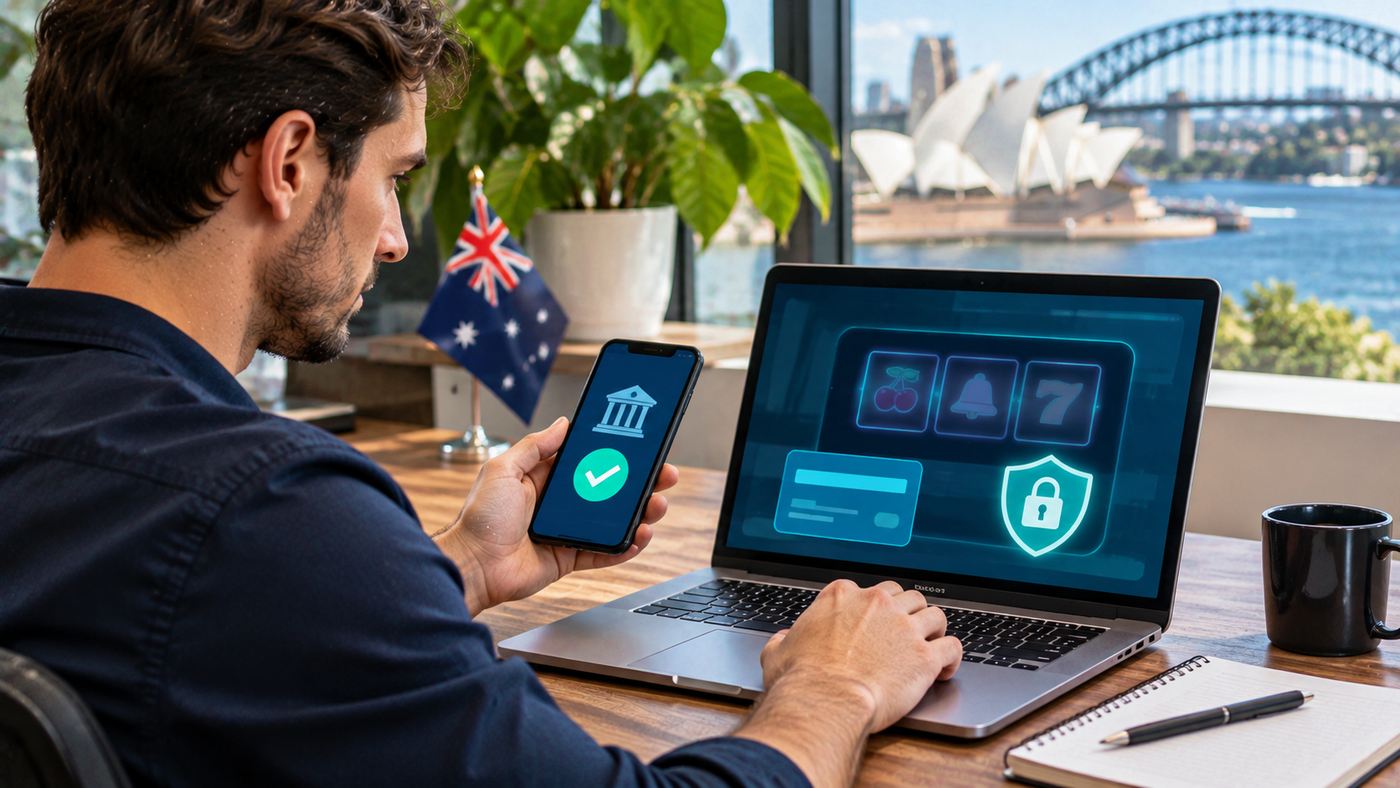
Australia has a well-established digital payments system, with online banking and mobile transfers making everyday transactions more convenient. PayID is one of the services that allows individuals and businesses to transfer money using familiar identifiers rather than traditional bank account details.
At the same time, online searches involving gambling payments have become increasingly common. Some websites advertise gambling-related services that claim to accept fast bank transfers, including those using PayID.
The phrase PayID pokies Australia is frequently used in discussions about online casino payments, gambling websites, deposit methods, and transaction security.
However, there is an important legal distinction that consumers must understand. Australia’s Interactive Gambling Act 2001 prohibits operators from offering real-money online pokies to people physically located in Australia.
The availability of a payment method does not change this restriction.
A gambling website may advertise familiar Australian payment options, but that does not establish that the operator is licensed, trustworthy, or permitted to serve Australian customers.
Understanding how PayID works, how gambling laws apply, and how to recognize suspicious financial requests can help consumers make more informed decisions.
This guide examines PayID technology, Australian gambling regulations, payment security, common scams, consumer protection, and responsible gambling considerations.
What Is PayID?
PayID is an Australian payment identification service that allows people to send money to participating bank accounts using an easy-to-remember identifier.
Rather than manually entering a Bank State Branch number and account number, a sender can use an identifier such as a mobile phone number, email address, Australian Business Number, or eligible organization identifier.
PayID operates through Australia’s New Payments Platform infrastructure.
The service is supported by participating financial institutions and is designed to make bank transfers more convenient.
How PayID Works
A PayID is linked to a bank account through a participating financial institution.
When making an eligible transfer, the sender enters the recipient’s PayID through their banking application.
The bank displays the name associated with that identifier before the transfer is confirmed.
This confirmation step can help reduce certain mistaken payments.
However, it does not guarantee that the recipient is legitimate or that the underlying transaction is safe.
Is PayID a Digital Wallet?
PayID is not a separate digital wallet.
It is an identifier associated with a bank account.
Money is transferred through participating banking infrastructure rather than being stored in a separate PayID account.
This distinction matters when evaluating websites that describe PayID as though it were an independent financial service.
Are PayID Transfers Instant?
Many eligible PayID payments are processed quickly through participating banks.
However, transfer times can vary because of financial institution policies, security checks, payment limits, and other conditions.
Consumers should not assume that every transaction will arrive immediately.
Understanding PayID Pokies Australia
The phrase PayID pokies Australia generally refers to online gambling websites or related informational pages discussing PayID as a possible payment method for digital slot-machine games.
Pokies are electronic gaming machines commonly found in licensed Australian venues.
Online pokies attempt to reproduce similar game mechanics through internet-connected platforms.
However, their legal treatment is different.
Land-Based Pokies Versus Online Pokies
Land-based electronic gaming machines may operate in licensed venues under the relevant state or territory regulatory framework.
These venues must comply with applicable laws and licensing conditions.
Real-money online pokies, by contrast, are prohibited interactive gambling services under Australia’s federal legislation when offered to people located in Australia.
The difference is important because a business operating licensed physical gaming machines does not automatically have permission to offer equivalent games online.
Why Online Pokies Websites Mention PayID
Some offshore gambling websites advertise Australian payment methods to make their services appear familiar and convenient.
A website may refer to PayID, Australian dollars, local banking systems, or Australian customer support.
However, these details do not establish legal authorization.
Financial branding and payment familiarity should never replace independent verification.
Seven Essential Facts About PayID and Online Gambling Safety
Consumers researching online gambling payments should understand several important issues before sharing personal or financial information.
1. PayID Does Not Establish Gambling Legality
PayID is a payment identification system, not a gambling licence.
A website claiming to accept PayID has not demonstrated that it is permitted to provide gambling services in Australia.
The Australian Communications and Media Authority, commonly known as ACMA, administers relevant federal interactive gambling rules.
Under these rules, operators cannot legally offer prohibited online casino-style games, including real-money pokies, to people physically located in Australia.
Consumers should distinguish between the legitimacy of a payment system and the legality of the service requesting payment.
2. Australian Gambling Rules Apply to Offshore Operators
Some websites suggest that operating from another country automatically makes an online casino available to Australian residents.
That is misleading.
Australia’s Interactive Gambling Act applies to relevant services offered to people physically located in Australia.
An offshore operator may therefore breach Australian law even when its servers or corporate registration are located elsewhere.
ACMA can investigate illegal services and request website blocking through internet service providers.
A website’s overseas address is not evidence that its services are permitted.
3. Familiar Payment Methods Do Not Guarantee Security
A recognizable payment method may increase consumer confidence.
However, payment security involves more than the technology used to transfer funds.
The identity and reliability of the recipient are equally important.
For example, a fraudulent website may provide a PayID linked to an account controlled by an unrelated individual.
The transfer itself may function correctly while the recipient misuses the funds.
Always examine the recipient information shown by the bank and avoid making payments to unidentified operators.
4. Fast Deposits Do Not Mean Reliable Withdrawals
Some gambling websites emphasize quick deposits and convenient payment processing.
However, receiving funds and returning funds are separate financial operations.
A website might accept a transfer immediately while imposing unclear withdrawal conditions.
Illegal gambling platforms may provide little meaningful recourse when customer funds are withheld.
Consumers should be particularly cautious about promises of guaranteed or unusually fast payouts.
5. Gambling Websites Can Misrepresent Their Licensing
Some websites display logos, badges, certificates, or claims of international regulation.
These statements should not be accepted without verification.
For gambling services that are legally permitted online in Australia, consumers can consult ACMA’s register of licensed interactive gambling providers.
Importantly, that register does not make prohibited online pokies lawful.
A foreign licence also does not override Australian restrictions.
6. Payment Scams Can Target Gambling Searches
Australian Payments Plus has warned about illegal online gambling payment scams, sometimes described as “scambling.”
These schemes may use familiar payment terminology to persuade people to send money.
Fraudulent operators may promise winnings, bonuses, or access to games but fail to deliver the advertised service.
Some may subsequently request additional transfers before supposedly releasing funds.
Consumers should treat requests for extra payments to unlock winnings as major warning signs.
7. Gambling Carries Financial and Personal Risks
Even when a gambling activity is legally provided, it involves financial risk.
Pokies are games of chance, and their design includes a mathematical advantage for the operator.
Short-term outcomes are unpredictable.
Spending more money does not guarantee that previous losses will be recovered.
People should never treat gambling as a dependable source of income or a solution to financial difficulties.
Exploring Online Information About PayID Pokies
Consumers searching for information about PayID pokies Australia may encounter pages discussing deposit methods, online casino interfaces, and gambling-related payment arrangements.
For example, DV77 publishes information about the use of PayID in the context of online pokies and promotes real-money casino services.
Its material describes potential payment convenience and casino account funding.
However, these promotional descriptions should be viewed in the context of Australian law.
The presence of a PayID payment option does not establish that DV77 is authorised to offer real-money online pokies to Australian customers.
Consumers should not interpret payment information or marketing claims as confirmation of regulatory approval, financial safety, or withdrawal reliability.
Understanding Promotional Payment Claims
Some online gambling pages emphasize speed and convenience.
These claims may focus on familiar banking interfaces, simplified transfers, or quick account funding.
However, such descriptions rarely establish the complete financial risks.
Consumers should consider who receives the money, what protections apply, and whether the underlying service is lawful.
Why Independent Verification Matters
Financial claims should be checked against authoritative information.
For Australian payments, Australian Payments Plus provides official PayID guidance.
For interactive gambling regulation, ACMA is the relevant federal regulator.
Information supplied by a gambling operator should not be treated as independent confirmation of its legitimacy.
Australian Online Gambling Laws Explained
Australia regulates gambling through a combination of federal, state, and territory laws.
The distinction between different gambling products is particularly important.
The Interactive Gambling Act 2001
The Interactive Gambling Act 2001 establishes federal restrictions on certain internet-based gambling services.
Prohibited services include online casino-style games such as slots, blackjack, and roulette.
The law targets providers offering these services to people in Australia.
Online Wagering Versus Online Casino Gaming
Not every online betting service is regulated identically.
Certain licensed online wagering services can operate under applicable Australian laws.
For example, some sports and racing wagering activities may be permitted when the provider holds the required authorization and follows relevant restrictions.
Real-money online pokies belong to the prohibited casino-style category.
A licensed wagering provider should not be confused with an online pokies operator.
ACMA’s Enforcement Role
ACMA can investigate websites suspected of breaching federal interactive gambling requirements.
Its activities include requesting that Australian internet service providers block access to illegal gambling websites.
ACMA also publishes information about illegal operators and consumer protection.
Advertising Restrictions
Australia restricts the advertising of prohibited interactive gambling services.
Promotional materials encouraging Australians to use prohibited casino-style gambling services may create legal concerns.
Businesses and publishers should consider these restrictions when preparing online content.
How to Recognize PayID Payment Scams
PayID itself is a legitimate Australian payment service.
However, scammers may misuse its name or exploit people’s familiarity with bank transfers.
Fake Payment Confirmation Messages
Fraudsters may send messages claiming that a payment has been completed.
Consumers should verify payments through their own banking application rather than relying on screenshots or messages supplied by strangers.
Requests to Upgrade a PayID Account
Scammers sometimes claim that users must upgrade their PayID account before receiving money.
Australian Payments Plus warns that PayID does not request this type of upgrade payment.
Unexpected Recipient Details
Before sending a transfer, the banking application normally displays the name linked to the PayID.
If the name differs from the intended recipient, stop and investigate.
Additional Payments to Release Funds
A suspicious website may claim that a consumer must pay a tax, verification charge, or unlocking fee before receiving money.
Such requests can indicate an advance-fee scam.
Unverified Customer Support
Fraudulent websites may advertise customer support through unfamiliar messaging accounts.
Avoid sharing banking passwords, one-time codes, or identity documents with unverified representatives.
Understanding Pokies Game Mechanics
Online pokies and physical electronic gaming machines share certain general game concepts.
Understanding these concepts can help consumers recognize misleading claims.
Random Number Generators
Modern electronic gaming machines commonly use random number generation to determine outcomes according to the game’s design.
Individual results should not be interpreted as predictable sequences.
Past losses do not guarantee future wins.
Return to Player
Return to Player, often abbreviated as RTP, describes a theoretical percentage of wagers a game is designed to return over a very large number of plays.
For example, a hypothetical 95% RTP does not mean a person will receive $95 after wagering $100.
Individual outcomes can differ substantially from the theoretical average.
RTP is not a promise of short-term returns.
Volatility
Volatility describes how a game’s outcomes may vary in frequency and size.
Some games may generate smaller wins more frequently.
Others may produce less frequent but larger outcomes.
Neither pattern eliminates the underlying financial risk.
Bonuses and Promotions
Promotional bonuses may include wagering requirements, restrictions, or other conditions.
Consumers should be cautious of offers that appear to guarantee money.
For prohibited online casino services, attractive bonuses do not make the underlying activity lawful.
What Happens When an Illegal Gambling Website Withholds Money?
One of the risks associated with illegal offshore gambling websites is the lack of reliable consumer recourse.
Withdrawal Disputes
A website may refuse to process withdrawals or introduce unexpected conditions.
Consumers may find it difficult to establish which legal entity controls the service.
Account Restrictions
An operator may suspend or close an account without providing a meaningful explanation.
Limited Regulatory Assistance
Australian regulators warn that consumers using illegal gambling services may have limited access to protections available through lawful operators.
Cross-Border Difficulties
When an operator is located overseas, recovering money may involve additional legal and practical difficulties.
This is one reason consumers should not rely on an operator’s payment claims as evidence of legitimacy.
How to Protect Yourself When Using PayID
PayID is widely used for ordinary banking and business payments.
Responsible use involves verifying recipient information and maintaining account security.
Use Your Official Banking Application
Initiate payments through your bank’s legitimate website or mobile application.
Avoid unfamiliar links that imitate banking login pages.
Confirm Recipient Details
Check the recipient name displayed before approving a transfer.
Do not continue when the information is inconsistent or suspicious.
Protect Banking Credentials
Never disclose passwords or one-time verification codes to unknown parties.
Monitor Your Account
Review banking transactions regularly.
Report unfamiliar transfers promptly.
Contact Your Bank if Something Goes Wrong
If you believe you have sent money to a scammer, contact your financial institution immediately.
The bank can explain the available dispute, investigation, or recovery procedures.
Recovery is not guaranteed.
Responsible Gambling and Financial Wellbeing
Gambling can cause financial and personal harm.
People may spend more money than intended, experience stress, or attempt to recover losses through further gambling.
Understanding these risks is an important part of consumer protection.
Recognize Warning Signs
Potential warning signs include spending beyond affordable limits, hiding gambling activity, borrowing to gamble, or repeatedly attempting to recover losses.
Avoid Treating Gambling as Income
Gambling outcomes are uncertain.
It should not be used as a financial plan or a way to pay essential expenses.
Understand Emotional Triggers
Stress, boredom, and financial pressure can influence gambling decisions.
Awareness of these triggers may help people recognize when additional support is needed.
Seek Support When Necessary
Australians concerned about gambling harm can contact Gambling Help Online and other appropriate support services.
Confidential support is available for people affected by gambling, including family members.
Evaluating Gambling-Related Websites
Consumers should approach gambling-related websites critically, particularly when they contain promotional payment claims.
Check the Operator’s Identity
A trustworthy financial or gambling-related business should clearly identify the legal entity responsible for its activities.
Verify Relevant Licensing
Do not rely exclusively on logos or badges.
Use official regulator information.
Examine Payment Claims
Claims of guaranteed withdrawals, instant profits, or risk-free participation should be treated with skepticism.
Review Privacy Practices
Avoid providing identity documents or financial details to unverified websites.
Be Careful With Promotional Reviews
Some reviews and comparison articles may have financial relationships with the websites they discuss.
Sponsored content should be identified appropriately.
The Difference Between Payment Convenience and Consumer Protection
Payment convenience is only one part of financial safety.
A transfer may be technically successful while the underlying transaction creates substantial risk.
Payment Infrastructure
PayID helps users address payments to participating bank accounts.
Recipient Reliability
The sender remains responsible for checking the intended recipient.
Service Legality
A legal payment system does not authorize a prohibited business activity.
Consumer Rights
Available protections depend on applicable laws and the nature of the transaction.
Financial Risk
The use of familiar payment technology does not prevent gambling losses.
Consumers should consider these factors separately rather than treating a convenient payment method as proof of overall safety.
The Future of Australian Digital Payments and Gambling Regulation
Australian digital payments continue to evolve through improvements in banking infrastructure and consumer security.
Payment providers are developing systems intended to make transfers more convenient while improving fraud prevention.
At the same time, Australian regulators continue to address illegal offshore gambling services.
ACMA’s enforcement activities demonstrate the importance of distinguishing licensed online wagering from prohibited online casino gaming.
Technology may change how payments are processed, but it does not remove the legal responsibilities of gambling operators.
Consumers should continue relying on official regulatory information when evaluating financial and gambling-related services.
Frequently Asked Questions
What does PayID pokies Australia mean?
The phrase refers to online pokies-related websites or information describing the use of PayID bank transfers. It does not identify a legally approved category of gambling services in Australia.
Are real-money online pokies legal in Australia?
Operators are prohibited from offering real-money online pokies to people physically located in Australia under the Interactive Gambling Act 2001.
Does PayID make an online casino safe?
No. PayID is a legitimate payment identification system, but it does not verify a gambling operator’s legality, reliability, or ability to return customer funds.
What should I do if I suspect a PayID gambling scam?
Stop sending money, preserve relevant transaction records, and contact your bank immediately. You can also report suspected illegal online gambling services to ACMA.
Conclusion
Online payments have become an important part of everyday financial activity in Australia, and PayID provides a convenient way to transfer money through participating banking institutions.
However, discussions about PayID pokies Australia require careful consideration of both payment security and gambling regulations.
Australia prohibits operators from offering real-money online pokies to people located in the country. The existence of a familiar banking option does not change the legal status of an online casino.
Consumers should be cautious of promotional claims, unfamiliar payment recipients, guaranteed withdrawal promises, and websites that fail to provide clear business information.
Official guidance from Australian Payments Plus and ACMA provides a more reliable foundation for understanding payment safety and interactive gambling laws.
By recognizing the difference between legitimate payment infrastructure and unlawful gambling services, Australians can make better-informed decisions, protect their financial information, and avoid unnecessary risks.
