
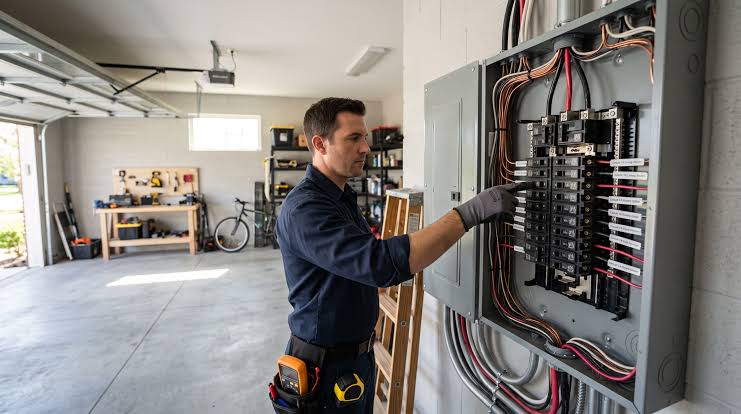
DIY can be perfect for painting a room, replacing cabinet hardware, or putting together a backyard planter. Electrical wiring is a different category entirely. A small mistake can create a shock hazard, damage equipment, fail inspection, or leave a hidden connection capable of overheating long after the project appears finished.
That matters in San Fernando, a city whose residential neighborhoods include homes from multiple eras, including properties associated with the city’s early development and its post-World War II growth. The City of San Fernando’s current historic-preservation survey identified architectural resources spanning periods from the late 19th century through 1979, including Craftsman, Spanish Colonial, Ranch, Minimal Traditional, and Mid-Century Modern properties.
In other words, there is no single “San Fernando wiring system.” Homes can have different generations of electrical work layered together through renovations, additions, panel replacements, and homeowner repairs.
This guide explains why electrical DIY can go wrong, how San Fernando’s permitting process fits into the picture, which safety protections matter, and how homeowners can identify a qualified electrician in San Fernando before work begins. Official resources are included throughout so homeowners can verify the information themselves.
The hidden costs of DIY wiring
Electrical mistakes rarely announce themselves immediately.
A receptacle may still work even though a conductor is loose. A breaker may continue supplying power even though a connection is overheating. An extension cord may appear to solve a shortage of outlets while creating an overloading problem elsewhere.
The U.S. Fire Administration advises homeowners not to overload outlets or power strips, to replace damaged cords, and to replace receptacles when plugs no longer fit securely. The Consumer Product Safety Commission likewise warns that home wiring problems can create fire and shock hazards and specifically cautions consumers without appropriate training against attempting electrical repairs.
The danger becomes greater when a DIY project moves beyond replacing a fixture and into actual wiring: adding a circuit, changing panel equipment, moving an outlet, installing an EV charger, modifying grounding, or connecting backup power.
Those jobs require more than knowing which wire “looks like” it belongs where. The installer has to consider conductor sizing, overcurrent protection, grounding and bonding, box fill, equipment ratings, routing, protection devices, and the home’s overall electrical capacity.
A YouTube video may demonstrate one technique. It cannot evaluate the specific conditions inside your San Fernando home.
Permits in San Fernando: where safety becomes enforceable
Permits are an important part of the electrical process because they create a formal review and inspection trail.
The City of San Fernando Building & Safety Division reviews construction plans for code compliance and inspects permitted construction projects. The city also provides an Online Permit Counter for submitting and tracking applications and plans.
That matters when an electrical project involves more than a simple like-for-like replacement.
A homeowner adding circuits, modifying service equipment, installing equipment with significant electrical demand, or performing electrical work as part of a larger remodel should determine whether a permit is required before starting. The exact requirements depend on the scope of work, so homeowners should confirm them with San Fernando Building & Safety rather than relying on a generic online checklist.
Unpermitted work can also become a practical problem later. If the electrical history of a property is unclear, a future owner, inspector, contractor, or city reviewer may need to determine what was changed and whether it was properly approved.
A permit does not replace good workmanship, but it adds an important layer of accountability and inspection.
Why San Fernando’s electrical context matters
San Fernando residents receive electricity service from Southern California Edison (SCE). The City of San Fernando lists SCE as its electricity provider and directs residents to SCE for electric-service information and outage assistance.
That utility relationship becomes especially relevant when homeowners plan projects involving service changes, backup generation, or new electrical loads.
It is also important to distinguish work inside the property from utility-owned infrastructure. A homeowner should not assume that shutting off a branch circuit makes every part of the service equipment safe to work on.
The city also advises residents to treat downed power lines as energized and dangerous, highlighting why anything involving the utility service, overhead conductors, or utility-side equipment should be left to the appropriate professionals.
And when outages or emergency preparedness enter the conversation, generator installations require particular care. SCE warns that connecting a generator directly to household circuits can create dangerous electrical backfeed.
Code protections DIY often misses
Electrical safety is not only about whether power reaches an outlet. Modern installations use protective devices designed to reduce the risk of shock and fire.
GFCI protection. Ground-fault circuit interrupter protection is designed to shut off power when it detects a difference between current flowing out and current returning, helping protect people from electric shock. CPSC describes GFCIs as devices that protect against severe electrical shock.
This is particularly important around locations where electricity and moisture can meet, including many kitchen, bathroom, garage, outdoor, and other applicable areas. The exact locations and exceptions are determined by the current CEC, not by a generic rule from an old DIY tutorial.
AFCI protection. Arc-fault circuit interrupters are intended to reduce fire risk from hazardous electrical arcing. CPSC explains that AFCIs can provide enhanced protection from fires caused by unsafe arcing and sparking in home wiring.
Whether AFCI protection is required depends on the circuit, location, equipment, and applicable code provisions. A homeowner swapping breakers based solely on appearance can easily choose incompatible equipment or overlook a protection requirement.
Grounding and bonding. Grounding is another area where “the circuit works” is not a sufficient test. A system can deliver power while still having a grounding or bonding problem that needs correction.
These details are precisely why professional electrical work involves more than connecting wires according to color.
Why hiring a licensed pro is safer—and often cheaper overall
A qualified electrical contractor should bring a systematic process to the job.
For San Fernando homeowners, that may include:
· Load calculations before adding major loads such as EV charging, HVAC equipment, kitchen appliances, or other high-demand equipment.
· Circuit and conductor sizing based on the intended load and installation conditions rather than guesswork.
· Correct GFCI/AFCI protection where required by the applicable California Electrical Code provisions.
· Grounding and bonding evaluation when modifying an existing system.
· Panel assessment to determine whether existing equipment can safely support proposed additions.
· Permits and inspections when the project requires them.
California uses the C-10 Electrical Contractor classification for electrical contracting work. The Contractors State License Board provides an online license-checking system that allows homeowners to verify a contractor’s license status and related information before signing a contract.
California also regulates electrician certification. The Department of Industrial Relations states that people performing work as electricians under a C-10 electrical contractor are subject to state certification requirements, with separate certification classifications for different types of electrical work.
In practice, the strongest contractor proposal is not simply the one with the lowest number at the bottom. It is the one that explains what is being installed, why it is necessary, what permitting applies, and how the finished work will be documented.
San Fernando scenarios where DIY backfires fast
1) EV charger additions.
Installing a Level 2 EV charger can involve a substantial new electrical load. The right installation depends on the vehicle and charger requirements, existing panel capacity, circuit configuration, conductor sizing, and applicable code requirements. A professional can determine whether the existing electrical system can support the charger or whether changes are necessary.
2) Older-home remodels.
San Fernando’s housing stock includes many properties from earlier periods, including homes identified in the city’s historic survey. Moving a wall, relocating an outlet, opening a kitchen, or adding a laundry area can uncover wiring that does not match what a homeowner expects from a newer house.
A DIYer may fix the immediate problem without recognizing an older connection, shared circuit, grounding issue, or previous alteration nearby.
3) Outdoor outlets and lighting.
Outdoor installations have additional exposure to moisture, weather, physical damage, and landscaping work. Using an indoor-rated box or improvised connection may leave the system vulnerable even when the light initially works.
4) Panel and breaker changes.
Replacing a breaker is not necessarily a simple matter of matching the amperage printed on the old one. Breakers must be compatible with the panel, properly installed, and appropriate for the circuit and equipment. Panel work also brings you closer to service equipment where serious shock hazards can exist.
5) Backup generators.
This is one area where improvisation can become life-threatening. SCE explicitly warns against connecting a portable generator directly to household circuits because of backfeed risk. For generator systems connected to a home’s wiring, SCE recommends a qualified installer or licensed electrician and appropriate transfer equipment.
How to vet a pro in minutes
1. Run the license. Use the CSLB Check a License service to confirm the contractor’s license status before signing a contract.
2. Ask who will perform the electrical work. California’s Labor Commissioner explains the certification requirements applicable to electricians working under C-10 contractors.
3. Ask about permits. A reputable contractor should be able to tell you whether the planned scope requires a permit and who will handle the city process. San Fernando provides an online permit counter and conducts inspections of permitted construction.
4. Look for an itemized proposal. A good proposal should identify major equipment, circuits or devices being installed, labor, permit-related costs when applicable, and warranty terms. Be wary of a quote that simply says “rewire as needed” without explaining the work.
When to call immediately vs. schedule soon
Call right away when you notice a burning smell from an outlet or panel, visible smoke, sparking or arcing, a receptacle or switch plate that becomes unusually hot, or repeated electrical problems accompanied by unusual sounds or odors. CPSC identifies warm receptacles or switches, burning-plastic smells, flickering, sparks, and similar symptoms as warning signs associated with certain wiring hazards.
Do not open a panel or attempt to investigate energized components yourself.
Schedule an assessment soon for projects such as EV charger installation, adding circuits for a remodel, upgrading a panel, installing outdoor electrical equipment, or planning a permanently connected generator.
These are the situations where trying to “save the electrician fee” can turn into paying for troubleshooting, rework, damaged equipment, or corrective construction later.
The safer path to electrical work
Electrical work becomes much more predictable when homeowners treat it as a systems problem rather than a weekend repair.
Start with the existing installation. Determine what is there. Identify the actual load. Check the applicable California requirements. Confirm the permitting process with the City of San Fernando. Verify the contractor’s credentials. Then have the work installed and inspected appropriately.
That process may take more time than watching a tutorial and making a trip to the hardware store. It also gives you something a DIY shortcut cannot: confidence that the wiring behind the walls was designed, installed, and evaluated as an electrical system rather than as a collection of individual fixes.
San Fernando has a long residential history, and its homes continue to evolve with the people who live in them. The electrical system should evolve too—but safely.
For homeowners, leaving wiring to qualified professionals is not about avoiding DIY for the sake of avoiding DIY. It is about recognizing that electricity is one part of the house where precision, code knowledge, proper equipment, and inspection genuinely matter.
