
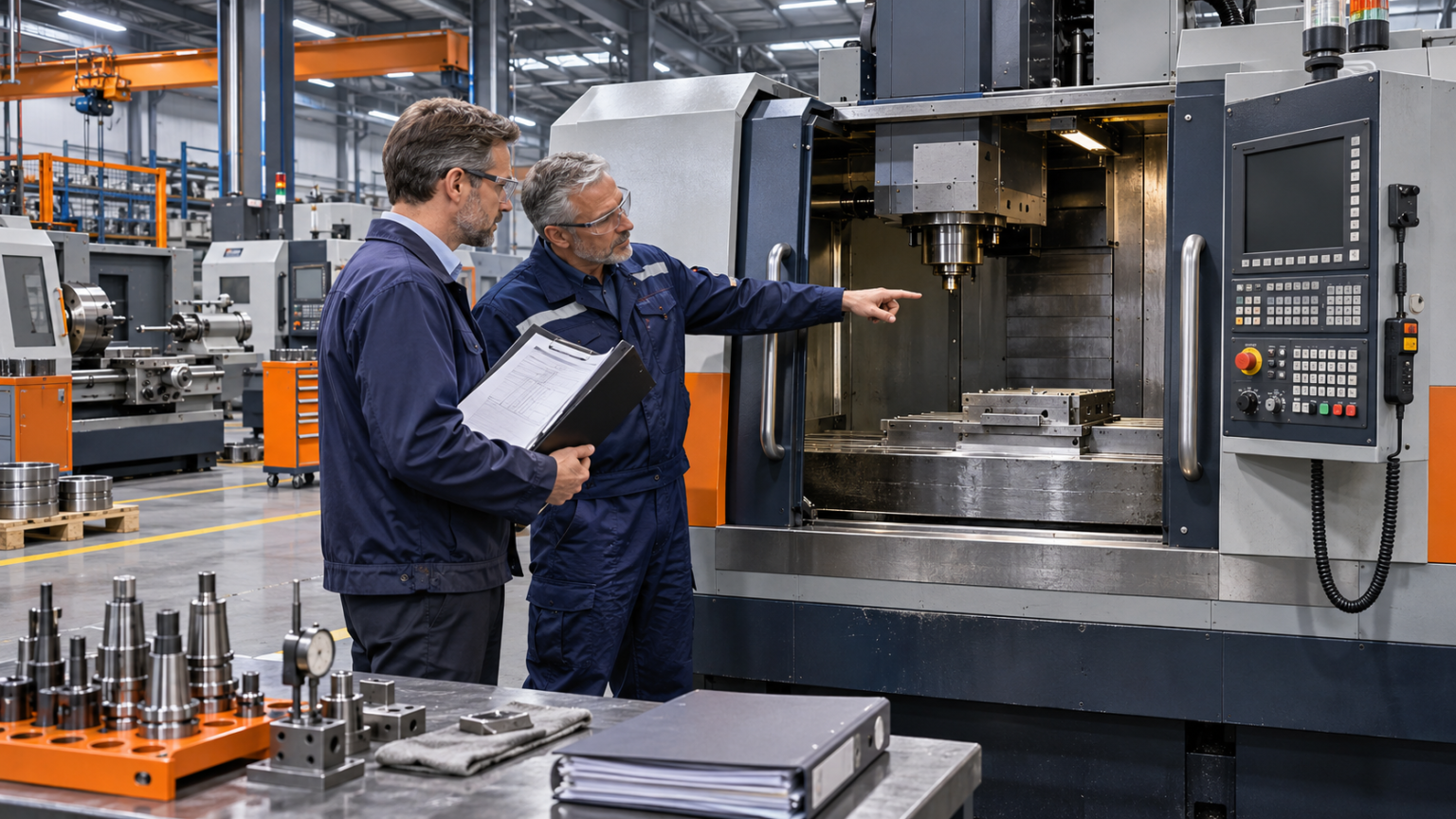
Investing in industrial equipment is an important decision for any business. Manufacturers, construction contractors, and workshop owners need dependable machines to maintain production quality, manage operating expenses, and meet customer demands. However, purchasing brand new equipment can require a substantial financial commitment. Buying used machinery offers an alternative that may provide access to suitable equipment at a lower initial price. Nevertheless, a successful purchase requires careful research, technical inspection, realistic budgeting, and a clear understanding of potential risks.
Previously owned equipment can support business growth when its condition, specifications, and maintenance requirements match the intended application. For example, a well maintained CNC machine may provide valuable production capacity without the purchase cost of a comparable new model.
However, not every inexpensive machine represents good value. Hidden mechanical problems, unavailable replacement parts, and expensive transportation can quickly reduce the financial advantages.
This guide explains how to evaluate used industrial equipment, compare purchasing options, identify warning signs, and make informed decisions that support long term business operations.
What Does Buying Used Machinery Mean?
Buying used machinery involves purchasing equipment that has previously been owned, operated, leased, or installed by another business.
The equipment may come from manufacturing facilities, construction companies, equipment dealers, auctions, or businesses upgrading their operations.
Used machinery includes many different categories.
Common examples include:
- CNC milling machines and lathes
- Industrial cutting and forming machines
- Excavators and construction equipment
- Packaging and processing machinery
- Industrial compressors and pumps
- Welding and fabrication equipment
- Material handling systems
- Agricultural and production machinery
Some machines are sold in their original operating condition. Others receive repairs, refurbishment, or component replacement before resale.
Therefore, buyers should distinguish between used, refurbished, and fully remanufactured equipment.
The seller’s terminology alone does not establish the machine’s actual condition.
Why Do Businesses Consider Used Industrial Equipment?
Businesses often consider previously owned machinery when they need additional capacity but want to manage capital expenditure.
The potential benefits extend beyond the initial purchase price.
Lower Initial Investment
Used equipment may cost less than a comparable new machine.
This can allow companies to preserve funds for staffing, materials, maintenance, or other operational needs.
However, the expected savings should be calculated after accounting for repairs, installation, and operating expenses.
Potentially Faster Equipment Availability
Some used machines are already available for inspection and delivery.
Consequently, purchasing existing inventory may avoid certain manufacturing lead times associated with new equipment.
Nevertheless, dismantling, transportation, and commissioning can introduce delays.
Access to Established Equipment Models
Certain businesses prefer machinery models their employees already understand.
Familiar equipment may simplify training and maintenance when suitable parts and technical support remain available.
However, older models may lack features required by modern production processes.
Flexibility for Business Expansion
A business testing a new product line may prefer to limit its initial machinery investment.
Used equipment can support this approach when it provides suitable performance without introducing excessive operational risk.
The decision should reflect realistic production requirements rather than purchase price alone.
7 Essential Tips for Buying Used Machinery Successfully
Selecting industrial machinery requires a structured evaluation process.
These seven considerations help buyers compare available equipment, understand its condition, and reduce avoidable purchasing mistakes.
1. Define Your Production Requirements Before Searching
The first step is identifying exactly what the machine must accomplish.
A low purchase price offers little value if the equipment cannot meet the business’s production requirements.
Start by examining the intended materials, output capacity, operating conditions, and available workspace.
For example, a manufacturing company searching for a used CNC milling machine should consider working dimensions, spindle characteristics, tooling compatibility, and required machining accuracy.
Meanwhile, a construction contractor may prioritize lifting capacity, operating reach, terrain suitability, and transport requirements.
Create a Machinery Specification Checklist
Important specifications may include:
- Required production capacity
- Material and workload compatibility
- Physical machine dimensions
- Electrical and utility requirements
- Required accuracy or output quality
- Available tooling and accessories
- Operator skill requirements
- Maintenance and service accessibility
Separate essential specifications from optional features.
This helps prevent businesses from purchasing an attractive machine that cannot perform the required work.
Consider Future Capacity
A machine should support realistic production plans.
However, purchasing excessive capacity can create unnecessary expenses.
Therefore, evaluate expected demand and select equipment that offers a suitable balance between current needs and reasonable future growth.
2. Research the Seller and Verify Equipment Ownership
Choosing a trustworthy seller is an important part of machinery purchasing.
Used equipment may be available through established dealers, industrial auction houses, equipment marketplaces, and private businesses.
Each channel has different advantages and responsibilities.
A dealer may provide inspection support or limited warranty arrangements.
Meanwhile, a private seller may offer direct access to the machine’s operating history.
However, these arrangements vary.
Verify Seller Information
Before sending payment, confirm the seller’s identity and business details.
Request the machine’s manufacturer, model number, serial number, and current location.
Where possible, compare those details with identification plates and supporting documentation.
Ask the seller to explain how the equipment was acquired and whether any finance agreements or ownership restrictions remain.
For valuable equipment, an appropriate lien or security interest search may be necessary.
The correct search procedure depends on the jurisdiction and equipment type.
Review the Purchase Documents
A written purchase agreement should identify the exact machine, agreed price, included accessories, and payment arrangements.
It should also clarify ownership transfer, collection responsibilities, and any relevant warranties or conditions.
Avoid making substantial payments solely on the basis of photographs or informal messages.
Independent verification is particularly valuable when purchasing equipment internationally.
3. Inspect the Mechanical and Electrical Condition
A detailed equipment inspection is one of the most important steps in the buying process.
Even machines that appear clean may contain worn components or technical problems.
Therefore, visual appearance should never be the only basis for determining condition.
A qualified technician or independent machinery inspector can help assess important systems.
The inspection should reflect the machine’s design and intended use.
Examine Mechanical Components
For suitable equipment, inspection areas may include bearings, guides, belts, gears, hydraulic systems, structural components, and lubrication arrangements.
Look for evidence of unusual wear, corrosion, fluid leakage, damaged connections, or previous repairs.
However, visible defects do not always reveal the complete condition.
Specialised measurements may be necessary to evaluate accuracy, alignment, or component wear.
Review Electrical and Control Systems
Electrical condition is equally important.
Ask a qualified professional to examine relevant control components, wiring, safety devices, and electrical connections.
For computer controlled machinery, determine whether the controller operates correctly and whether required software and licences can lawfully transfer.
Older control systems may be difficult to repair if replacement components are no longer supported.
Check Structural Integrity
Inspect frames, mounting points, and other structural components for visible damage or questionable modifications.
For machinery subjected to substantial loads, hidden structural defects can create serious safety concerns.
Where necessary, request specialist evaluation rather than relying on an informal visual inspection.
4. Examine Maintenance Records and Spare Parts Availability
Maintenance history provides valuable information about how equipment has been managed.
A machine with documented servicing may be easier to evaluate than one with an unknown operating history.
However, maintenance records should be reviewed critically rather than accepted as proof of perfect condition.
Ask for available service logs, repair invoices, inspection reports, and records of major component replacements.
What Should Maintenance Records Show?
Relevant information may include:
- Routine servicing dates
- Lubrication and fluid changes
- Major mechanical repairs
- Replaced electrical components
- Calibration or accuracy inspections
- Previous fault reports
- Operating hour records where available
Compare the documentation with the equipment’s visible condition.
Large gaps in maintenance records may justify additional investigation.
Confirm Replacement Parts Availability
Even a well maintained machine will eventually require servicing.
Therefore, contact the manufacturer or suitable parts suppliers to confirm whether important components remain available.
Consider replacement motors, sensors, bearings, electronic controls, and other machine specific parts.
Also, investigate access to qualified technicians.
A low cost machine can become expensive if essential repairs require unavailable components or extensive custom modifications.
5. Request a Demonstration Under Realistic Conditions
A machine that powers on is not necessarily ready for reliable production.
Whenever practical and safe, request an operating demonstration using a representative workload.
For example, a CNC machine may need to demonstrate suitable machining performance rather than simply moving its axes.
Similarly, packaging machinery should be evaluated using appropriate materials and operating conditions.
The objective is to assess whether the equipment performs the required work.
Evaluate Performance Carefully
A suitable demonstration may help reveal unusual vibration, inconsistent output, overheating, leaks, or control problems.
However, testing should be performed only by qualified personnel following appropriate safety procedures.
Do not remove protective guards or bypass safety systems to conduct a demonstration.
Consider Independent Technical Testing
For high value machinery, professional testing may include measurements of accuracy, mechanical condition, or output quality.
The appropriate tests depend on the equipment.
Request written findings when possible.
A demonstration provides useful evidence, but it cannot guarantee that hidden defects will never appear.
Therefore, combine operational testing with maintenance history and technical inspection.
6. Evaluate Machinery Safety and Legal Requirements
Safety should be a primary purchasing consideration.
Used machinery can contain hazards involving moving components, electrical systems, stored energy, pressure, or unexpected startup.
Therefore, a buyer must assess whether the equipment can be operated safely in the intended workplace.
In the United States, OSHA’s general machine guarding requirements address hazards involving moving parts, points of operation, and other dangerous machine areas.
OSHA also establishes requirements for controlling hazardous energy during covered servicing and maintenance activities.
Check Essential Safety Features
Depending on the equipment, important components may include:
- Appropriate machine guards
- Functional emergency stop systems
- Safe electrical isolation arrangements
- Required protective interlocks
- Suitable operator controls
- Clear warning labels
- Safe access for operation and maintenance
The applicable requirements depend on the machine and jurisdiction.
Review Documentation and Compliance
The United Kingdom’s Health and Safety Executive advises buyers of secondhand equipment to check safety features, operating instructions, and the condition of protective devices.
It also explains that equipment supplied for workplace use must meet applicable safety obligations.
However, regulations differ between countries.
Therefore, buyers should verify the requirements applying to their own location and equipment category.
A previous owner’s use of a machine does not establish that it meets current workplace requirements.
Plan for Safe Installation
Safety responsibilities continue after purchase.
Before production begins, the receiving business should arrange suitable installation, inspection, risk assessment, and operator training.
Any necessary modifications should be completed by competent professionals.
7. Calculate the Complete Cost of Ownership
The advertised price represents only one part of the machinery investment.
Additional expenses can affect whether the purchase makes financial sense.
For example, a machine may require special transportation, electrical installation, replacement tooling, or initial servicing.
Therefore, buyers should calculate the expected total cost before agreeing to purchase.
Understand the Main Expenses
Potential costs include:
- Machinery purchase price
- Inspection and technical assessment
- Loading and transportation
- Insurance during transit
- Import duties and applicable taxes
- Installation and commissioning
- Initial repairs and spare parts
- Operator training
- Ongoing servicing and energy use
Example of a Used Machinery Purchase
Consider a hypothetical machine priced at $35,000.
Transportation might cost $4,000, while installation and initial servicing could require another $7,000.
Additional training and accessories might cost $1,000.
The total initial investment would then be approximately $47,000.
These are illustrative figures, not market quotations.
Moreover, future maintenance and operating expenses would still need consideration.
Compare this complete investment with suitable new equipment before making a final decision.
Where Can Businesses Buy Used Machinery?
Several purchasing channels are available.
The best option depends on equipment type, available budget, and the level of inspection support required.
Industrial Machinery Dealers
Established machinery dealers may offer equipment descriptions, inspections, and assistance with transportation.
Some also provide refurbished equipment or limited warranties.
However, buyers should verify exactly what those services include.
Industrial Auctions
Auctions may provide access to machinery from manufacturing facilities, business closures, or equipment upgrades.
Nevertheless, auction sales often involve specific payment deadlines, buyer premiums, and collection conditions.
Inspection opportunities may also be limited.
Therefore, review the auction rules before bidding.
Online Equipment Marketplaces
Digital marketplaces allow buyers to compare equipment from different sellers.
They may provide photographs, specifications, and contact details.
However, listings should not replace independent verification.
Before payment, confirm the machine’s location, condition, ownership, and collection arrangements.
Direct Business Sales
A company upgrading its production facilities may sell existing equipment directly.
Such purchases may provide opportunities to review maintenance records and observe the machine in its original operating environment.
However, buyers should still conduct independent checks.
Used Machinery vs New Machinery: Which Is Better?
Both purchasing options have advantages and limitations.
The correct decision depends on the intended workload, available financing, production requirements, and tolerance for maintenance risk.
Advantages of Used Machinery
Used equipment may reduce initial capital expenditure.
It may also provide access to an established machine model at a lower cost.
Additionally, equipment already in stock may be available sooner than a new machine requiring production or delivery.
However, these benefits are not guaranteed.
Advantages of New Machinery
New equipment may provide current technology, manufacturer support, and warranty coverage.
It can also offer features that improve automation, energy efficiency, or integration with modern systems.
However, these advantages come with potentially higher initial costs.
How to Make the Comparison
Compare expected productive output, reliability, maintenance costs, energy requirements, technical support, and financing conditions.
A properly maintained used machine may suit stable production requirements.
Meanwhile, a new machine may be preferable when advanced technology or specific performance capabilities are essential.
The best value comes from suitability and expected performance rather than age alone.
How to Estimate the Long Term Value of Used Equipment
Before purchasing, consider how the machine will contribute to business operations.
A lower purchase price matters only when the equipment can deliver useful production.
Evaluate Productive Capacity
Estimate how often the machine will operate and whether it can meet the required workload.
Consider planned operating hours, maintenance interruptions, and realistic production rates.
Avoid assuming that a machine’s advertised maximum capacity represents its normal sustainable output.
Consider Maintenance and Downtime
Older machines may require more frequent repairs, although actual reliability depends on condition and maintenance history.
Unexpected downtime can affect production schedules and customer commitments.
Therefore, include a realistic maintenance allowance in the financial assessment.
Assess Resale Potential
Some established machinery models retain demand because suitable parts and service support remain available.
However, resale prices can change with market conditions and technological developments.
Do not assume that a machine will retain a particular value.
Common Mistakes to Avoid When Buying Industrial Machinery
One common mistake is choosing equipment solely because the asking price appears attractive.
Another is relying on photographs without arranging an appropriate inspection.
Businesses may also overlook electrical requirements, floor space, or foundation suitability.
These issues can delay installation or require expensive modifications.
Additionally, buyers sometimes underestimate shipping and commissioning expenses.
For computer controlled machinery, failing to verify software availability and technical support can create long term difficulties.
Finally, avoid treating missing safety guards or disabled protection systems as minor issues.
Safety defects must be assessed and corrected before the machinery enters service.
What Should Happen After Purchasing Used Machinery?
The purchasing process does not end when payment is completed.
Proper delivery and commissioning are essential.
Arrange Professional Transportation
Industrial machinery may require specialised lifting, securing, and transportation arrangements.
Use qualified rigging and transport providers where necessary.
Confirm machine dimensions, weight, lifting points, and access requirements.
Complete Installation and Commissioning
After delivery, qualified personnel should install and inspect the equipment.
This may involve electrical connections, alignment, lubrication, calibration, and functional testing.
The machine should not enter production until required safety checks and approvals have been completed.
Train Operators and Maintenance Staff
Employees should receive appropriate instructions covering normal operation, emergency procedures, maintenance responsibilities, and relevant hazards.
Keep operating manuals and service information accessible.
Finally, establish a maintenance schedule based on the manufacturer’s recommendations and the machine’s actual operating conditions.
Frequently Asked Questions
Is buying used machinery a good investment?
It can be a worthwhile investment when the machine meets production requirements, passes appropriate inspections, and offers a competitive total ownership cost.
What should I check before buying used machinery?
Check specifications, ownership, maintenance history, mechanical condition, safety features, spare parts availability, and the complete purchase and installation costs.
How can I verify the condition of a used machine?
Arrange an inspection by a qualified technician, review service records, and request a safe operating demonstration with representative work.
Is refurbished machinery better than ordinary used equipment?
Not necessarily. Refurbished machinery may have repaired or replaced components, but buyers should verify the work completed and any associated warranty.
Can used machinery meet workplace safety standards?
Yes, provided it satisfies the applicable safety requirements. Buyers should assess guarding, controls, documentation, installation, and relevant legal obligations.
What additional costs come with buying used machinery?
Potential expenses include inspection, transport, taxes, installation, repairs, tooling, training, insurance, and ongoing maintenance.
Conclusion
Buying used machinery can help businesses expand production capacity while managing initial equipment expenses. However, a successful purchase depends on accurate specifications, careful inspections, verified ownership, and realistic cost calculations. Evaluating safety, spare parts availability, and long term operating requirements is equally important. With a structured purchasing process and appropriate professional support, businesses can make informed machinery investments that support dependable operations and sustainable growth.
