
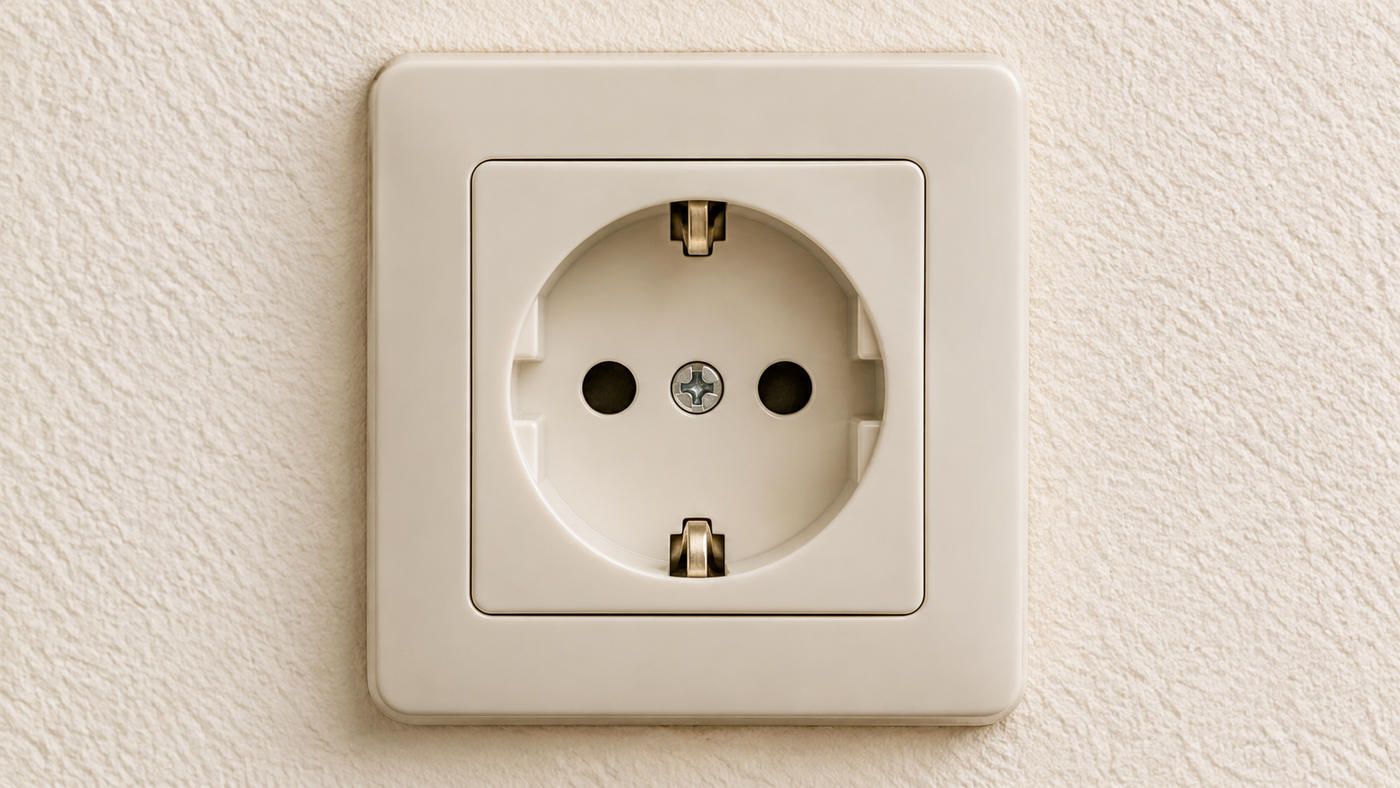
Electrical outlets are familiar household fixtures, yet their appearance can reveal important details about plug compatibility, mounting design, and potential safety concerns. When someone notices two rounded sockets and a visible center screw, they may be looking at a European-style electrical outlet with two circular pin openings and a screw holding part of its faceplate in place. However, similar-looking fittings can have different electrical ratings, grounding arrangements, and installation requirements.
The visible design alone does not establish whether an outlet is grounded, properly wired, or safe for continued use. Older electrical installations may contain fittings that resemble modern products but lack safety features now expected in many locations. Even a recently installed outlet can develop problems if its connections are damaged or the equipment is unsuitable for the circuit.
Understanding the basic components can help homeowners recognize the type of fitting they have, describe it accurately to an electrician, and identify situations requiring professional inspection.
This guide explains common round-pin outlet designs, the purpose of the visible screw, differences between grounded and ungrounded sockets, and seven practical considerations for safe identification and maintenance.
What Does Two Rounded Sockets and a Visible Center Screw Mean?
The description two rounded sockets and a visible center screw is not an official electrical standard or product designation.
It is a visual description that may refer to more than one type of outlet.
For example, a conventional European wall outlet can have two circular openings designed to accept the pins of a compatible plug.
Some outlet models also feature a visible screw between these openings.
In other cases, the description might refer to a wall plate containing two separate round socket mechanisms with mounting hardware positioned between them.
The distinction matters because the physical arrangement affects identification.
A Single Outlet With Two Round Pin Openings
A common European socket has two horizontally arranged circular openings within one recessed outlet.
These openings accept the corresponding conductive pins of a compatible plug.
Certain Schuko-style designs also include grounding contacts and a central faceplate screw.
The screw is a mechanical component. Its presence does not establish that the outlet is correctly earthed.
A Double Outlet With Two Circular Recesses
Some fittings contain two complete socket outlets within one wall-mounted assembly.
Each outlet may have its own pair of pin openings.
A mounting screw may be visible between the two sections or elsewhere on the cover.
This is physically different from a single socket containing two pin openings.
Why Visual Identification Has Limitations
Several electrical standards use round contact openings.
Similar faceplates can conceal different internal components, wiring arrangements, and protective features.
A photograph may help identify the product family, but electrical safety and installation compliance require more than appearance.
Common Electrical Outlet Types With Round Openings
Electrical socket designs differ internationally.
The plug and socket systems used in different countries have distinctive contact arrangements, grounding features, and dimensional requirements.
Type C and Older Unearthed Sockets
Type C is commonly associated with two-pin plugs that have round pins and no protective earth connection.
Older European unearthed socket systems may also feature two circular openings.
Such installations can still be encountered in older buildings.
However, the presence of two holes should not automatically be interpreted as a modern Type C outlet.
The actual mechanism and applicable national standards must be established.
Type E Electrical Sockets
Type E outlets are commonly associated with the French-style grounding arrangement.
They normally feature two round contact openings and a projecting protective-earth pin.
This grounding pin distinguishes them visually from many other round-pin socket designs.
Type E installations are found in several European countries.
Type F or Schuko Sockets
Schuko outlets use a recessed circular socket with two round contact openings.
Their protective-earth arrangement commonly involves metal grounding contacts at opposite sides of the recess.
Some Schuko products also feature a visible center screw securing the cover.
For someone describing two rounded sockets and a visible center screw, a Schuko-style outlet is one possible match, although product identification should never rely solely on that description.
Other Round-Pin Systems
Italy, Switzerland, and several other countries use additional plug and socket arrangements involving round pins.
Some systems have three openings or alternative grounding arrangements.
A plug fitting physically into an unfamiliar socket does not necessarily establish safe electrical or grounding compatibility.
Why Plug Adapters Need Attention
An adapter changes how a plug connects to a socket.
It does not automatically change the electrical voltage, supply frequency, grounding protection, or power rating.
Use only appropriately rated and compatible equipment.
Where compatibility is uncertain, seek advice from a qualified electrician or the appliance manufacturer.
What Is the Purpose of the Visible Center Screw?
A center screw on an electrical outlet may secure a removable faceplate, cover component, or related part of the fitting.
Its precise function depends on the manufacturer and product design.
Some socket mechanisms use a central screw, while others use side mounting screws, clips, or concealed fastening systems.
Faceplate Retention
In certain Schuko-style products, the visible screw helps secure the outlet’s front cover.
The screw is positioned between the two pin openings.
This arrangement can make the screw a distinctive visual feature when identifying the socket.
Mounting Hardware
Other electrical fittings use screws to attach the mechanism or mounting frame to a wall box.
Not every visible screw has the same function.
The type of wall box, mounting arrangement, and outlet design must be considered.
Does the Center Screw Provide Grounding?
No conclusion about grounding can be drawn from the presence of a visible center screw alone.
Grounding is provided through the appropriate protective conductor and compatible socket contacts.
Whether those connections are present and effective requires suitable testing.
Should Homeowners Tighten the Screw?
A loose or damaged outlet should be treated as an electrical safety concern.
Do not attempt to repair a powered fitting by tightening visible screws.
Some fasteners hold components that may expose internal electrical parts when disturbed.
A qualified electrician can isolate the relevant circuit, verify that it is de-energized, and inspect the assembly using appropriate procedures.
7 Essential Tips for Identifying and Evaluating Round Electrical Sockets
When inspecting a fitting that appears to have two rounded sockets and a visible center screw, begin with observations that do not require opening the outlet.
The following considerations can help determine whether further professional evaluation is necessary.
1. Identify the Number of Actual Socket Outlets
First determine whether the fitting contains one socket with two pin openings or two separate socket mechanisms.
A single recessed outlet normally accepts one compatible plug.
A double fitting generally provides two distinct connection positions.
This distinction helps when searching for product documentation or describing the outlet to an electrician.
Take a clear photograph from a safe position without removing any covers.
2. Look for the Grounding Arrangement
Different socket standards use different protective-earth arrangements.
A Schuko outlet commonly has grounding contacts within the circular recess.
A Type E socket generally has a projecting earth pin.
Some older unearthed designs lack these visible features.
However, visible earth contacts do not prove that the protective conductor is properly connected.
A professional electrical test may be necessary, especially in an older installation.
3. Observe the Faceplate Condition
Check the visible surface for cracks, distortion, discolouration, or missing components.
A damaged faceplate may no longer adequately protect internal electrical parts.
A loose outlet can also create mechanical stress during normal plugging and unplugging.
If the fitting appears damaged, stop using it and arrange professional inspection.
4. Check for Warning Signs of Overheating
Burn marks, unusual heat, buzzing, crackling, or a burning smell can indicate electrical problems.
These warning signs should not be ignored.
Electrical Safety First and the Electrical Safety Foundation International recommend qualified professional assessment when outlets show overheating or other abnormal behaviour.
Do not continue using a suspicious fitting while waiting to see whether the problem disappears.
5. Confirm Plug Compatibility
Round-pin outlets may look similar even when they belong to different standards.
Check the manufacturer’s markings and documentation where safely accessible.
Do not force an incompatible plug into an outlet.
Avoid assuming that a plug adapter can compensate for differences in grounding or electrical ratings.
If you are unsure which system is installed, ask a competent electrician.
6. Consider the Age of the Installation
Older electrical accessories are not automatically unsafe.
However, age, wear, previous alterations, and changes in building use can affect their condition.
A property containing older round-pin outlets may benefit from an electrical inspection, particularly when there is no recent record of installation testing.
The appropriate inspection interval depends on jurisdiction, property use, and the condition of the installation.
7. Arrange Professional Testing When Necessary
A visual inspection cannot confirm the integrity of concealed wiring.
A qualified electrician can assess protective-earth continuity, polarity, protective devices, and other relevant characteristics using suitable test instruments.
For two rounded sockets and a visible center screw, a professional assessment is especially useful when the outlet’s origin is unknown or its condition is questionable.
How to Distinguish a Safe-Looking Outlet From a Safe Installation
A clean faceplate does not necessarily mean the electrical system behind it is in good condition.
Electrical safety depends on several components operating correctly.
These include the outlet mechanism, wiring connections, circuit protection, grounding arrangement, and suitability for the connected load.
Outlet Appearance
The exterior should be intact and free from signs of overheating or mechanical damage.
However, visual condition is only one factor.
Internal Connections
Electrical connections must be suitable for the wiring and circuit design.
Loose or deteriorated connections can create resistance and unwanted heating.
These conditions may not be visible from the front.
Protective Devices
Different electrical systems use circuit breakers, residual-current devices, ground-fault circuit interrupters, or other protective measures.
The appropriate arrangements depend on local standards and the installation.
Correct Ratings
Socket outlets have specified electrical ratings.
The rating must be appropriate for the circuit and connected equipment.
A product marked for a particular current or voltage should not be assumed suitable for a different supply.
Why Testing Matters
The IEC 60884-1 standard establishes general requirements for household and similar plug and socket-outlet products within its stated scope.
However, compliance with a product standard does not by itself establish that the outlet has been correctly installed.
Installation requirements and electrical testing remain separate considerations.
Understanding Schuko Socket Design
Schuko is a widely used European plug-and-socket system.
The name comes from the German term associated with protective contact.
The familiar design combines a circular recessed socket area with two pin openings and an earthing arrangement.
The Recessed Socket Shape
The recessed construction helps limit accidental access to the conductive plug pins during insertion and removal.
The exact dimensions and compatible plugs depend on the applicable socket system.
Protective-Earth Contacts
Schuko-style outlets typically have grounding contacts positioned on opposite sides of the recess.
These work with corresponding contacts on compatible plugs.
A working protective-earth connection depends on the entire installation, not only the visible contact pieces.
The Center Screw
Some models place a screw in the center of the faceplate.
This is a possible explanation for the description two rounded sockets and a visible center screw.
For example, manufacturer documentation for certain Busch-Jaeger Schuko products shows two circular contact openings, grounding contacts, and a centrally positioned screw.
Different Manufacturers Use Different Mechanisms
Not all Schuko outlets have the same visible screw arrangement.
Some use alternative cover fastening systems.
For that reason, the screw’s location can help narrow the search for a product but cannot definitively identify its manufacturer or model.
Comparing Grounded and Ungrounded Electrical Outlets
Grounding is a key distinction between many electrical socket designs.
A grounded socket provides an intended protective connection for compatible equipment.
An ungrounded system does not provide that same connection.
| Feature | Grounded outlet | Ungrounded outlet |
|---|---|---|
| Protective-earth connection | Provided by suitable system design | Not provided |
| Visible earth feature | May be present, depending on standard | Generally absent |
| Compatible equipment | Must match plug and socket requirements | Limited by relevant safety requirements |
| Visual identification | Can suggest outlet type | Cannot confirm internal wiring |
| Safety assessment | Installation still requires verification | Suitability requires professional evaluation |
Does Every Appliance Require Grounding?
No.
Some appliances use double-insulated construction and are designed to operate without a protective-earth connection.
Other equipment requires grounding for safety.
Follow the appliance manufacturer’s instructions and use the correct plug-and-socket arrangement.
Why You Should Not Modify a Grounded Plug
Removing or defeating a grounding feature can compromise the protection intended by the equipment manufacturer.
Do not modify plugs to fit an unsuitable socket.
If a plug is incompatible, have the electrical arrangement assessed rather than improvising a connection.
What Can a Loose Center Screw Indicate?
The visible screw may be a normal design element, but abnormal movement of the outlet requires attention.
A faceplate that shifts when a plug is inserted or removed may indicate loose mounting hardware or another mechanical problem.
It does not necessarily identify the precise internal fault.
Loose Faceplate
A loose cover may expose gaps or fail to protect the mechanism as intended.
Do not remove it to investigate while the circuit may be energized.
Worn Mounting Arrangement
Older outlet mounting systems sometimes use different wall-box hardware from modern designs.
Wear or previous improper installation can affect how securely the fitting remains attached.
Damaged Socket Mechanism
If the whole outlet moves, the problem may involve more than the cover screw.
A qualified electrician should inspect the mechanism and its mounting.
When Replacement May Be Necessary
Replacement may be appropriate if the fitting is cracked, overheated, mechanically damaged, unsuitable for the installation, or unable to provide required protection.
The final decision should follow inspection rather than appearance alone.
Electrical Socket Safety in Older Homes
Older properties may contain outlets installed under previous technical requirements.
Some fittings can remain serviceable when appropriately maintained, while others may require attention because of deterioration or inadequate protection.
Historical Round-Pin Designs
Round-pin socket systems have been used in various countries for decades.
Their presence can provide clues about the original electrical installation.
However, a round-pin design is not sufficient evidence to date the wiring.
Components may have been replaced at different times.
Previous Renovations
Electrical systems are sometimes modified during remodeling.
Additional sockets, new circuits, or replacement faceplates may not match the age of the original building.
Ask for available installation records when evaluating an unfamiliar outlet.
Periodic Electrical Inspections
Professional inspections can identify issues that are not apparent during routine household use.
The appropriate scope and timing depend on local rules, occupancy, and installation condition.
For a socket described as two rounded sockets and a visible center screw, an electrician can establish whether the fitting meets the requirements applicable to its location.
How to Choose a Replacement Electrical Socket
Replacing an outlet involves more than choosing a faceplate with a similar appearance.
The replacement must be suitable for the electrical system, mounting arrangement, and intended use.
Confirm the Local Socket Standard
Electrical plug and socket systems differ internationally.
Purchase a product intended for the country and installation where it will be used.
Do not assume products with similar pin openings are interchangeable.
Check Electrical Ratings
The replacement’s rated voltage and current must be appropriate for the installation.
Other specifications may matter, including grounding, protective shutters, and suitability for particular environments.
Consider Environmental Conditions
Bathrooms, outdoor areas, workshops, and other exposed locations may have additional electrical protection requirements.
Moisture and dust exposure can influence the appropriate equipment.
Choose Recognized Products
Select authentic products from established manufacturers and reliable suppliers.
Review product identification, instructions, and relevant conformity information.
A product’s appearance alone is not evidence of suitability.
Use a Qualified Installer
Electrical replacement should be completed by a competent professional in accordance with applicable regulations.
The electrician should verify the circuit and complete appropriate checks before returning the outlet to service.
Common Mistakes When Identifying Round Electrical Sockets
One common mistake is assuming that two circular openings establish a particular plug standard.
Another is treating the visible center screw as proof that the fitting is grounded.
Neither conclusion is reliable.
Mistaking Mounting Hardware for an Electrical Contact
A central faceplate screw and a protective-earth contact have different functions.
Do not assume one substitutes for the other.
Assuming Every European Outlet Is the Same
Different countries and product families use different grounding and compatibility arrangements.
A visual resemblance does not guarantee that equipment can be used safely.
Ignoring Cracks or Heat Damage
Discolouration, burning smells, unusual noises, and hot outlet surfaces should prompt immediate attention.
Continuing to use damaged electrical accessories can increase the risk of electric shock or fire.
Attempting Repairs Without Proper Isolation
Even a simple-looking cover screw can be part of an assembly protecting energized components.
Do not open or work on a socket without the competence and procedures needed to isolate and verify the installation.
Replacing Only the Visible Faceplate
A new-looking cover will not correct damaged wiring, poor contacts, or unsuitable circuit protection.
An electrician should assess the complete issue.
How to Document an Unknown Electrical Socket
When asking for professional advice, clear information helps.
A safe visual record can include a photograph of the front, the surrounding wall, and any readable manufacturer information visible without disassembly.
Describe whether the fitting contains one recessed outlet or two separate outlets.
Also report visible damage, unusual warmth, movement, or previous electrical problems.
What Not to Do
Do not insert metal objects into openings.
Do not remove the cover or expose wiring for a photograph.
Do not attempt to identify terminals by touching internal components.
If there are signs of danger, stop using the fitting and seek qualified assistance.
What an Electrician Can Confirm
A professional can identify the socket standard, examine mounting arrangements, verify suitable electrical ratings, and test the relevant protective connections.
This is particularly useful when the only available description is two rounded sockets and a visible center screw.
Frequently Asked Questions
1. What does two rounded sockets and a visible center screw describe?
It may describe a European-style socket with two round pin openings and a central faceplate screw, or a double fitting with two circular outlets. A photograph and product markings can help distinguish them.
2. Is a socket with two round holes always a Schuko outlet?
No. Several socket systems use round pin openings. Schuko outlets have a particular grounding arrangement and recessed design, which help distinguish them from other products.
3. What is the center screw on an electrical outlet for?
Depending on the product, it may secure the front cover or another mounting component. It does not independently indicate that the outlet is grounded.
4. Can I tighten a loose electrical socket screw myself?
A loose outlet should be inspected by a qualified electrician. Do not tighten or remove components while the circuit may be energized.
5. Are older round-pin sockets dangerous?
Not automatically. Their safety depends on condition, installation, grounding, circuit protection, and applicable requirements. Older or damaged fittings may warrant professional inspection.
6. How can I identify the correct replacement socket?
Have a qualified electrician confirm the existing system, mounting type, voltage and current ratings, protective-earth requirements, and relevant local standards before selecting a replacement.
Conclusion
The description two rounded sockets and a visible center screw can help identify an electrical outlet’s appearance, but it does not establish its exact type or electrical safety. Different socket systems may have similar contact openings while using different grounding and mounting arrangements. Homeowners should pay attention to visible damage, unusual heat, and loose fittings without attempting unsafe repairs. When identification or condition is uncertain, professional inspection is the most reliable next step.
