
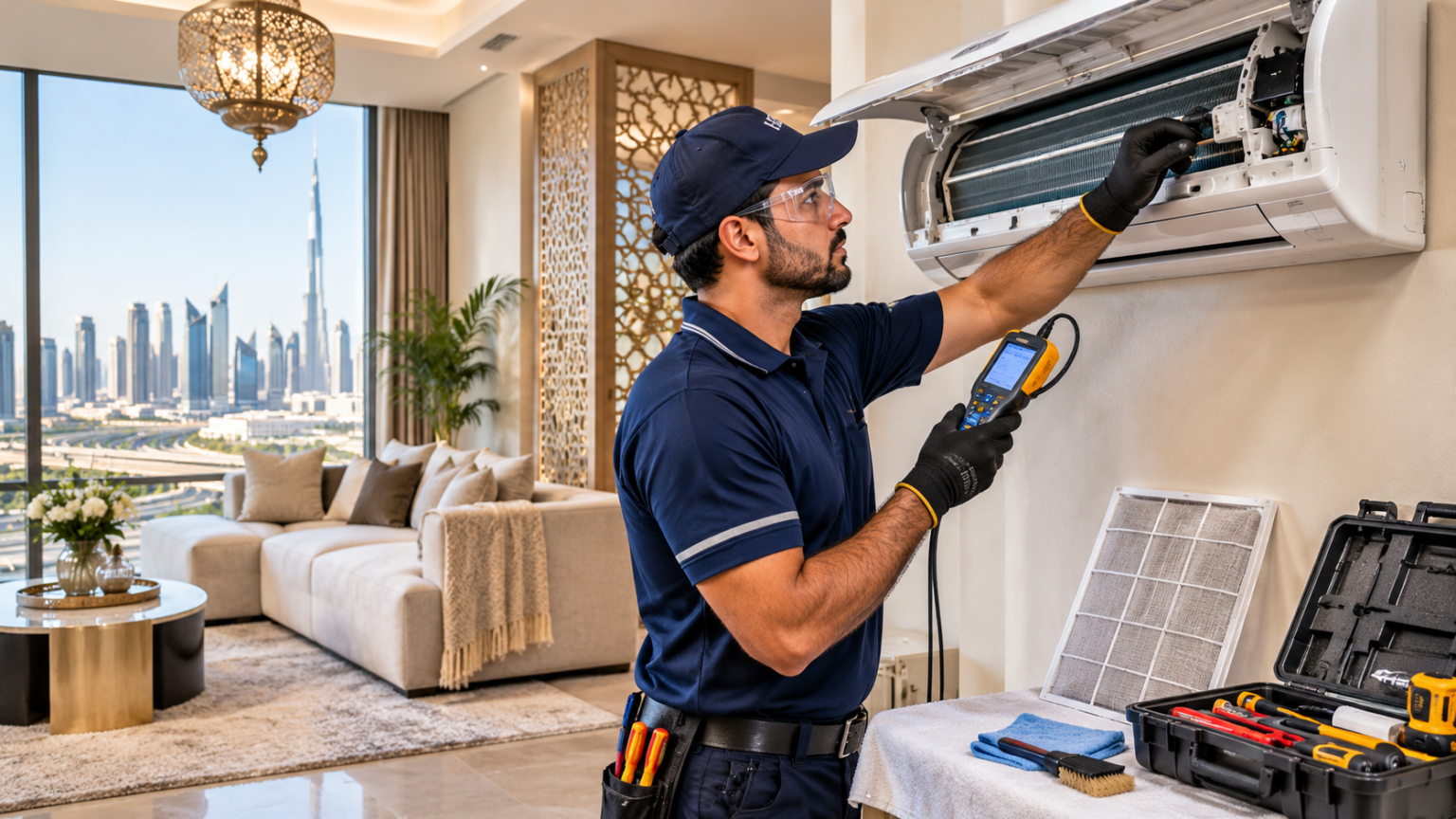
Dubai’s intense summer heat makes reliable air conditioning essential for comfortable indoor living. Whether you live in an apartment, villa, or townhouse, your cooling system works hard throughout much of the year. Regular AC maintenance in Dubai helps homeowners and tenants manage cooling performance, maintain suitable indoor conditions, identify developing equipment problems, and reduce avoidable energy waste.
Air conditioning systems collect dust, experience mechanical wear, and operate under changing temperature and humidity conditions. Without appropriate care, clogged filters, restricted airflow, drainage problems, and worn components can affect performance.
Preventive maintenance involves more than cleaning visible vents. It includes checking important components, evaluating cooling performance, and confirming that the system operates safely.
Understanding what air conditioner maintenance involves, how often servicing is needed, and when to contact a qualified technician can help Dubai residents make informed decisions.
Why AC Maintenance Is Important in Dubai
Dubai’s climate creates demanding operating conditions for residential and commercial cooling systems.
During the hottest months, outdoor temperatures can exceed 40°C. Air conditioning equipment may operate for extended periods, particularly in buildings with high cooling requirements or significant solar heat exposure.
Dust and airborne particles can accumulate on filters and heat exchange surfaces. Coastal humidity can also increase moisture management requirements.
These conditions make regular inspection and cleaning particularly important.
Maintaining Consistent Cooling Performance
An air conditioner should distribute cooled air effectively throughout the intended space.
When filters become blocked or mechanical components deteriorate, airflow and cooling performance may decline.
Residents might notice that rooms take longer to cool, certain areas remain uncomfortable, or the system operates continuously.
Routine maintenance helps identify restrictions and equipment problems before they become more disruptive.
Supporting Energy Efficiency
Cooling equipment generally consumes more energy when it must work against avoidable restrictions or inefficient operating conditions.
Dirty filters, obstructed coils, and incorrect thermostat settings can contribute to unnecessary electricity consumption.
Maintaining suitable airflow and using appropriate temperature settings can support more efficient operation.
A thermostat setting around 24°C is a practical energy conscious starting point for many occupied spaces in Dubai, although individual comfort and building conditions vary.
Protecting Equipment Reliability
Air conditioning systems contain electrical, mechanical, and refrigeration components that require proper operating conditions.
Extended operation with unresolved faults can place additional stress on equipment.
Timely inspections help identify unusual noises, leaking water, abnormal temperatures, and other warning signs.
Not every breakdown is preventable, but scheduled servicing can reduce the likelihood that minor maintenance problems remain unnoticed.
Understanding Common AC Systems in Dubai Properties
Different properties use different cooling arrangements. Identifying your system helps determine the appropriate servicing approach.
Split Air Conditioning Systems
Split AC systems typically include an indoor air handling unit and an outdoor condenser unit.
They are commonly used in individual rooms, smaller residential properties, and some commercial spaces.
Maintenance may involve cleaning filters, inspecting indoor coils, checking drainage, and assessing outdoor unit condition.
Central and Ducted Air Conditioning
Ducted systems distribute cooled air through connected air channels.
They may serve several rooms or larger sections of a property.
Servicing includes inspecting the air handling equipment, filters, drainage, controls, and accessible duct connections.
Why Air Distribution Matters
A central system may produce sufficient cooling but distribute it unevenly because of blocked filters, closed dampers, damaged ductwork, or airflow imbalances.
A qualified technician can investigate these conditions before recommending adjustments.
District Cooling and Chilled Water Systems
Some Dubai apartments and developments receive cooling through central chilled water infrastructure.
Individual apartments may contain fan coil units that transfer cooling from the supplied chilled water to indoor air.
Maintenance responsibilities can be divided among the cooling provider, building management, property owner, and tenant.
Residents should confirm responsibility for the equipment before arranging significant repairs.
13 Practical AC Maintenance Tips for Dubai Homes
Effective maintenance combines regular homeowner checks with professional technical inspections.
The following practices can help maintain cooling performance while reducing unnecessary risks.
1. Clean or Replace AC Filters Regularly
Air filters collect dust and particles from circulating indoor air.
Over time, accumulated debris restricts airflow and may affect cooling efficiency.
In Dubai’s dusty environment, filters should be inspected frequently.
During summer, checking and cleaning suitable reusable filters at least monthly is a practical starting point. More frequent attention may be necessary in dusty properties.
How to Handle Filters Safely
Switch off the equipment before accessing a user serviceable filter.
Follow the manufacturer’s instructions for removal, cleaning, drying, and reinstallation.
Some filters are washable, while others require replacement.
Never reinstall a wet filter unless the manufacturer specifically permits it.
If the filter is inaccessible or the unit requires dismantling, arrange professional assistance.
2. Keep Air Vents Free From Obstructions
Air conditioning systems need unobstructed airflow to distribute cooling effectively.
Furniture, curtains, decorative panels, and storage items can block supply or return air openings.
This may create uncomfortable temperature differences between rooms.
Check that visible grilles remain clean and unobstructed.
For ducted systems, avoid closing several vents without professional guidance because excessive airflow restriction can affect system performance.
Proper air distribution supports both comfort and equipment operation.
3. Monitor Thermostat Performance
The thermostat controls when the air conditioning system operates and which temperature it attempts to maintain.
Incorrect settings or faulty controls can cause excessive cooling, inconsistent operation, or unnecessary energy use.
Check that the displayed room temperature appears reasonable and that the system responds appropriately when settings change.
Choose Comfortable Temperature Settings
A setting around 24°C can provide a useful balance between comfort and energy efficiency for many Dubai households.
Using suitable automatic control settings can help avoid unnecessary operation.
Thermostats should also be positioned away from direct sunlight and significant heat sources wherever their installation permits.
Changes to permanently installed controls should be handled by qualified personnel.
4. Inspect the AC Drainage System
Air conditioners remove moisture from indoor air as part of the cooling process.
This moisture collects in a drain pan and exits through a condensate drainage arrangement.
A blocked or damaged drain can cause water leakage, ceiling stains, and moisture accumulation.
Common warning signs include dripping water, damp surfaces near the indoor unit, and unusual musty odors.
If water appears near electrical equipment, switch the system off when safe and arrange professional inspection.
Drain cleaning should be performed using methods appropriate to the equipment.
5. Check Cooling Coils for Dirt and Restrictions
Cooling systems rely on heat exchange surfaces to transfer heat effectively.
Dust and debris on these surfaces can reduce performance.
Indoor evaporator coils may accumulate dirt, particularly when filtration is inadequate.
Outdoor condenser coils can become obstructed by airborne debris and environmental contamination.
Why Professional Coil Cleaning Matters
Coils contain delicate fins and nearby components that can be damaged by unsuitable cleaning methods.
High pressure water, aggressive chemicals, or incorrect disassembly may create additional problems.
A trained technician can inspect the coil condition and select a compatible cleaning method.
Cleaning should be based on actual contamination, equipment requirements, and manufacturer guidance.
6. Keep Outdoor AC Units Clear
For properties with accessible outdoor condenser units, surrounding airflow is important.
Blocked ventilation can interfere with heat rejection and reduce cooling efficiency.
Check from a safe location whether leaves, packaging, stored belongings, or other objects obstruct the unit.
Do not place heavy items directly against the equipment.
Outdoor units should remain accessible for inspection and servicing.
Residents should never attempt maintenance on balcony equipment, rooftops, or elevated installations without appropriate authorization and safety arrangements.
7. Schedule Professional Preventive Servicing
Some maintenance tasks require specialist equipment and technical knowledge.
Professional servicing may include electrical inspections, performance measurements, mechanical checks, and cleaning of accessible components.
For heavily used Dubai residential systems, arranging a service before peak summer and considering another inspection later in the year is a reasonable approach.
Actual frequency depends on the system, manufacturer recommendations, operating conditions, and building maintenance requirements.
A service visit should address identified conditions rather than consist only of superficial cleaning.
8. Pay Attention to Unusual AC Noises
A properly functioning system generally produces familiar operating sounds.
Unexpected rattling, grinding, buzzing, or repeated clicking may indicate an issue that requires investigation.
Possible causes include loose components, worn bearings, airflow restrictions, or electrical faults.
Different systems produce different normal sounds, so changes from established operation are particularly useful warning signs.
Do not attempt to reach moving components or inspect energized electrical sections.
If the noise is severe or accompanied by burning smells, stop operation when safe and seek professional assistance.
9. Watch for Refrigerant Problems
Refrigerant allows certain air conditioning systems to transfer heat through a closed refrigeration circuit.
A properly sealed system should not require routine refrigerant refilling.
Low refrigerant levels may indicate leakage or another technical problem.
Warning signs can include reduced cooling performance, unusual operating conditions, or ice formation on refrigerant lines.
However, these symptoms can also result from unrelated faults.
Why Refrigerant Checks Need Qualified Technicians
Refrigerant handling requires appropriate training, tools, and safety procedures.
Adding refrigerant without identifying the underlying fault is not a reliable maintenance solution.
A qualified technician should assess the system, investigate leaks where indicated, and follow the equipment’s refrigerant specifications.
Residents should not attempt refrigerant repairs themselves.
10. Check for Unwanted Indoor Moisture
Dubai’s outdoor humidity can be significant, especially near coastal areas and during particular weather conditions.
Air conditioners can help remove indoor moisture while cooling.
However, blocked drainage, poor insulation, inadequate airflow, or unsuitable operating conditions may contribute to dampness.
Look for persistent condensation, water stains, or musty odors.
These symptoms should not be ignored.
Address the Cause Rather Than the Appearance
Cleaning a stained surface does not necessarily resolve the underlying moisture problem.
A technician may need to inspect drainage, insulation, cooling performance, and ventilation.
If visible mold contamination is extensive or recurring, appropriate professional assessment may be necessary.
11. Reduce Unnecessary Heat Entering the Property
AC maintenance is more effective when the building itself does not allow excessive heat infiltration.
Sunlight entering through large windows can increase indoor cooling demand.
Poorly sealed doors and windows may also allow warm outdoor air to enter.
Suitable curtains, blinds, shading devices, and properly maintained seals can help manage heat gain.
These measures do not replace equipment maintenance, but they can support overall cooling efficiency.
Building modifications should comply with applicable property rules.
12. Keep a Record of Maintenance and Repairs
A maintenance history helps homeowners and technicians understand recurring equipment problems.
Record service dates, reported symptoms, completed work, and replaced components.
When possible, retain invoices and inspection notes.
These records may reveal whether an issue repeatedly returns after repairs.
For example, frequent drainage blockages could indicate a problem requiring more than routine cleaning.
A consistent maintenance record is also useful when evaluating equipment replacement or discussing responsibilities with building management.
13. Address Small Performance Changes Early
A cooling system rarely needs to stop working completely before a problem becomes noticeable.
Small changes may include longer cooling times, weak airflow, unusual odors, or repeated thermostat adjustments.
Investigating these symptoms early can help prevent avoidable inconvenience.
However, the correct response depends on the underlying cause.
A dirty filter may be straightforward to address, while electrical, refrigeration, or motor problems require professional diagnosis.
Avoid repeatedly restarting equipment that is showing signs of an unresolved fault.
Common AC Problems in Dubai and What They May Indicate
Understanding common symptoms can help residents communicate more effectively with maintenance technicians.
AC Running but Not Cooling Properly
Weak cooling can result from several causes.
These include restricted airflow, dirty coils, incorrect thermostat settings, inadequate chilled water supply, or refrigeration faults.
Check user accessible settings and filters first.
If the problem continues, professional diagnosis is appropriate.
Water Leaking From an Indoor Unit
Water leakage often involves drainage restrictions, damaged drain pans, incorrect installation, or condensation problems.
Continued operation may damage nearby finishes and electrical equipment.
Switch off the system if safe, protect affected areas, and arrange inspection.
Unpleasant Smells From AC Vents
Musty odors may be associated with retained moisture, contaminated filters, or other indoor air quality issues.
A burning smell can indicate an electrical or overheating concern.
Turn the equipment off if a burning smell occurs and contact a technician.
AC Switching On and Off Frequently
Repeated short operating cycles can result from control problems, airflow restrictions, equipment sizing issues, or component faults.
A technician may need to evaluate operating conditions and control behavior.
Changing thermostat settings repeatedly is unlikely to resolve an underlying mechanical issue.
Uneven Cooling Between Rooms
Uneven temperatures may result from solar exposure, air distribution problems, blocked vents, or different room cooling demands.
A ducted system may require airflow assessment.
Rooms receiving direct afternoon sunlight may also need improved shading.
How Often Should AC Maintenance Be Scheduled in Dubai?
There is no single servicing interval suitable for every air conditioning system.
Maintenance frequency depends on equipment design, daily usage, dust exposure, property conditions, and manufacturer recommendations.
Monthly Homeowner Checks
During periods of heavy use, inspect accessible air filters approximately once a month.
Also check visible vents, cooling performance, thermostat operation, and signs of drainage problems.
A dusty property may require more frequent filter attention.
Seasonal Professional Servicing
Scheduling professional maintenance before the hottest months can help identify problems before cooling demand increases.
Another visit may be appropriate after an extended period of intensive operation.
For many systems, one or two planned professional visits annually provide a useful starting schedule, but some equipment requires more frequent servicing.
Additional Maintenance When Problems Appear
Do not wait for the next scheduled visit if the system develops persistent leakage, abnormal noises, reduced cooling, or electrical warning signs.
Maintenance intervals are preventive guidelines, not reasons to delay necessary repairs.
AC Maintenance for Apartments, Villas, and Offices
Cooling requirements vary across different Dubai properties.
Apartment Air Conditioning Maintenance
Many apartments use ducted or fan coil systems.
Residents should identify which equipment falls under their control and which belongs to the building’s shared infrastructure.
For district cooled buildings, problems involving central chilled water supply may require building management involvement.
Villa AC Servicing
Villas may contain multiple split systems or larger ducted installations.
Different zones can experience different cooling demands because of room size, insulation, and sunlight exposure.
Maintenance should consider the entire system rather than individual indoor units alone.
Commercial AC Maintenance
Offices and commercial premises may operate cooling equipment for extended hours.
Higher occupancy, equipment heat, and ventilation requirements can increase maintenance demands.
Commercial maintenance planning should include operational requirements, building procedures, and appropriate inspection records.
How to Choose a Reliable AC Maintenance Service in Dubai
Choosing the right service provider is important because air conditioning maintenance involves both comfort and technical safety.
Look for Appropriate Technical Experience
Select technicians familiar with the installed equipment.
Experience with split systems does not automatically establish expertise in every chilled water or commercial HVAC installation.
Ask whether the provider can inspect the specific type of equipment in your property.
Request a Clear Scope of Work
A maintenance quotation should explain what the service includes.
Confirm whether filter cleaning, drainage inspection, coil cleaning, electrical checks, and performance testing are included or charged separately.
Different services may require different equipment and labor.
Understand Pricing Before Approval
AC maintenance costs in Dubai vary according to system type, accessibility, equipment condition, number of units, and required work.
Ask for an itemized quotation and clarify inspection charges, replacement parts, applicable taxes, and any additional fees.
Avoid approving major repairs without understanding the diagnosis.
Review Documentation and Follow Up
A professional technician should be able to explain identified faults and completed work.
Request a service summary when appropriate.
If the same problem returns, the previous records may help identify whether further investigation is needed.
Practical Ways to Manage AC Electricity Consumption
Cooling efficiency depends on both equipment condition and everyday operating habits.
A well maintained air conditioner can still consume unnecessary electricity if used inefficiently.
Use Suitable Thermostat Settings
Avoid unnecessarily low temperature settings.
Around 24°C is a reasonable starting point for many occupied spaces, with adjustments based on comfort and operating needs.
Keep Doors and Windows Closed During Cooling
Open doors and windows allow warm outdoor air to enter.
This can increase the cooling demand placed on the system.
Ensure adequate ventilation is maintained through the building’s intended ventilation arrangements.
Control Direct Sunlight
Blinds, curtains, and suitable shading can reduce solar heat entering rooms.
This is particularly useful for spaces with large windows and strong afternoon sunlight.
Maintain Equipment Before Problems Become Severe
Restricted airflow and dirty heat exchange surfaces can contribute to inefficient operation.
Regular checks help identify these conditions.
Energy performance should be evaluated over time because electricity use also depends on weather, occupancy, equipment settings, and building characteristics.
Frequently Asked Questions
1. How often should AC maintenance be done in Dubai?
Many residential systems benefit from one or two professional inspections annually, with filters checked approximately monthly during heavy summer use. Follow equipment and building requirements.
2. What is included in professional AC maintenance in Dubai?
Typical servicing may include filter cleaning, drainage inspection, coil assessment, electrical safety checks, thermostat testing, and cooling performance evaluation.
3. Why is my AC not cooling properly in Dubai?
Common causes include dirty filters, restricted airflow, control problems, dirty coils, or faults affecting refrigeration or chilled water supply.
4. Can regular AC servicing reduce electricity consumption?
Proper servicing can help reduce energy waste associated with dirty filters, restricted airflow, and certain equipment faults, although actual savings vary.
5. What is the recommended AC temperature for Dubai homes?
A thermostat setting around 24°C is a practical energy efficient starting point for many occupied rooms. Individual comfort and building conditions may require adjustments.
6. How do I choose an AC maintenance company in Dubai?
Choose a provider experienced with your system, request a clear service scope and itemized quotation, and confirm that appropriate safety and maintenance procedures will be followed.
Conclusion
Regular AC maintenance in Dubai is an important part of maintaining indoor comfort, supporting cooling efficiency, and identifying potential equipment problems before they become more disruptive. A practical maintenance routine combines frequent filter inspections, sensible thermostat settings, appropriate drainage and airflow checks, and qualified professional servicing. Understanding the needs of your specific cooling system also helps you avoid unnecessary work and make more informed repair decisions. With consistent attention and responsible equipment care, Dubai residents can maintain a more reliable and comfortable indoor environment throughout the year.
