
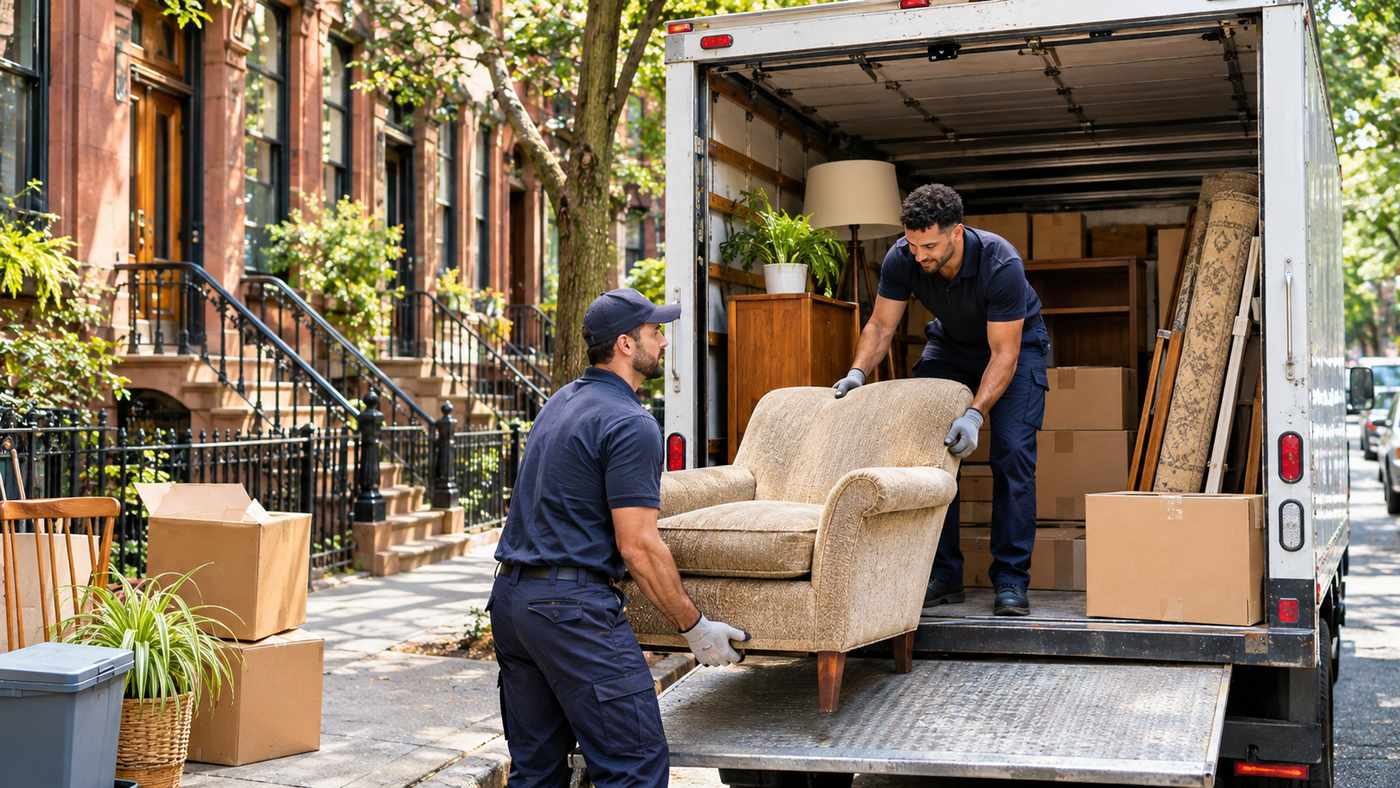
Living in New York City means making the most of limited space. Whether you live in a Manhattan apartment, manage a Brooklyn rental property, or operate a small business in Queens, unwanted furniture, broken appliances, and accumulated household items can quickly become difficult to manage.
Removing these belongings is not always as simple as placing them outside. Narrow staircases, apartment building regulations, limited parking, and city disposal requirements can complicate the process. Hiring professional help may be the most practical option when dealing with heavy furniture or large quantities of unwanted items.
Finding affordable junk hauling in NYC involves more than selecting the company advertising the lowest price. Homeowners, renters, landlords, and business owners should compare services, understand pricing structures, and confirm that their belongings will be handled responsibly.
A reliable junk removal service can simplify property cleanouts, furniture disposal, and moving preparations while helping customers avoid unexpected charges.
This guide explains the most common junk removal services, factors affecting cost, seven ways to save money, and important considerations when hiring professional junk haulers in New York City.
What Is Professional Junk Hauling?
Professional junk hauling is a service that involves collecting, loading, transporting, and arranging appropriate disposal of unwanted belongings.
Instead of requiring customers to transport items themselves, removal crews typically handle much of the physical work.
Services may include furniture removal, appliance pickup, household cleanouts, and removal of suitable non-hazardous materials.
The exact scope depends on the company and local disposal regulations.
How Junk Removal Works
A typical service begins with a customer describing the unwanted items.
The company may request photographs, an approximate volume, or information about access conditions.
After reviewing the details, the provider gives an estimate or explains how the final price will be calculated.
On the scheduled day, the crew collects the approved items, loads them into a vehicle, and transports them to suitable disposal, recycling, or donation facilities.
A full-service provider may also offer basic cleanup of the immediate work area.
However, customers should confirm exactly which activities are included.
Why NYC Properties Have Unique Challenges
New York City’s density creates practical difficulties that may not exist in suburban environments.
Many apartment buildings have narrow hallways, walk-up staircases, and limited loading space.
Co-op and condominium buildings may require proof of insurance before allowing contractors to work on the property.
Some buildings also restrict moving or hauling activities to designated hours.
Street parking and loading arrangements can create additional complications.
Professional crews familiar with these requirements can help coordinate a smoother removal process.
Seven Smart Ways to Save Money on Junk Hauling
A little preparation can make a significant difference when arranging a property cleanout.
1. Sort Items Before Requesting a Quote
Start by identifying exactly what needs to be removed.
Separate unwanted belongings from items that will be kept, sold, donated, or recycled.
This reduces uncertainty when explaining the job to a hauling company.
A clear inventory can also prevent accidental removal of valuable belongings.
When possible, group smaller items together so the company can estimate the required truck space more accurately.
2. Compare Complete Quotes
Different junk removal companies use different pricing methods.
Some charge according to the volume occupied in their trucks.
Others may consider labor, weight, travel distance, or special handling requirements.
Ask whether the estimate includes loading, transportation, disposal charges, stairs, and other potential fees.
When comparing affordable junk hauling in NYC, focus on the complete price rather than a promotional starting rate.
A slightly higher estimate may offer better value when it includes services that another provider charges separately.
3. Consider Free Municipal Bulk Collection
New York City’s Department of Sanitation provides free curbside collection of qualifying large household items for residents.
This can be a cost-effective alternative when the items meet collection rules and residents can safely place them at the curb.
However, special requirements apply to certain appliances, electronics, mattresses, and other materials.
Municipal collection also does not generally include entering a home to carry furniture downstairs.
Professional hauling may therefore be more appropriate when heavy lifting or removal from inside the property is required.
4. Schedule Multiple Items Together
Hiring a removal company for several small appointments can be more expensive than arranging one coordinated pickup.
If you are clearing a storage room, renovating a property, or preparing to move, consider gathering the unwanted items before scheduling.
A single appointment may reduce repeated transportation and minimum service charges.
However, do not delay the removal of unsafe materials or objects creating immediate hazards.
5. Donate Usable Furniture
Furniture in good condition may be suitable for donation.
Chairs, tables, shelving, and other household belongings can sometimes find new owners through charitable organizations or reuse networks.
Donation availability depends on item condition and the receiving organization’s policies.
Check whether the organization accepts the items before arranging transportation.
Selling or donating usable belongings can reduce the volume requiring paid hauling.
6. Provide Accurate Access Information
Building access is an important part of junk removal planning.
Tell the company whether the property has an elevator, narrow staircases, limited parking, or special management requirements.
If a freight elevator must be reserved, arrange it in advance.
Providing accurate details helps the crew prepare suitable equipment and staffing.
It also reduces the likelihood of delays or misunderstandings.
7. Ask About Scheduling Flexibility
Some companies offer flexible appointment windows or availability for urgent removals.
If your schedule allows, ask which appointment options are available.
A provider may be able to coordinate several jobs within the same general area.
However, do not assume that every company offers discounted off-peak service.
Confirm the final price and appointment conditions before booking.
Common Junk Removal Services in New York City
Professional hauling companies may offer several services depending on their equipment, staffing, and disposal arrangements.
Furniture Removal
Large furniture can be difficult to move through apartment buildings.
Common items include sofas, dining tables, bed frames, wardrobes, dressers, and armchairs.
Professional crews may handle lifting, loading, and transportation.
Customers should explain if furniture requires disassembly or must pass through particularly narrow spaces.
Appliance Pickup
Unwanted refrigerators, washing machines, dryers, and other appliances may require special handling.
Certain appliances containing refrigerants are subject to specific disposal requirements.
Refrigerators and freezers should not be treated as ordinary household trash without following applicable rules.
Confirm whether the company accepts the appliance and includes any required handling charges.
Apartment Cleanouts
Apartment cleanouts may be necessary after moving, downsizing, or preparing a rental property for a new tenant.
The work can include removing unwanted furniture, boxes, household clutter, and other approved belongings.
A detailed inventory is especially important when several people are involved in the property transition.
Estate Cleanouts
Estate cleanouts can involve substantial quantities of personal belongings.
Families and property representatives may need help removing furniture and household items after determining which possessions should be retained.
Sensitive documents, valuables, and sentimental belongings should be reviewed before a removal crew begins work.
Office Junk Removal
Businesses may need to remove old office furniture, shelving, equipment, or accumulated materials.
Commercial disposal can involve different regulatory obligations from residential collection.
Companies should verify that the provider has the appropriate authorization for the waste being transported.
Exploring Junk Removal Providers Serving NYC
Choosing an established hauling provider can simplify the process of removing large and unwanted items.
Customers looking for affordable junk hauling in NYC can explore Vector Junk Removal, which advertises junk hauling services across New York City and parts of New Jersey.
According to its published service information, the company handles furniture removal, appliance pickup, property cleanouts, and other suitable junk removal projects.
Vector Junk Removal describes its pricing as volume-based, with the price agreed upon before dispatch.
Its website also states that building certificates of insurance can be provided on request and that stairs and walk-ups are included in its quoted arrangements.
Customers should independently confirm service availability, insurance documentation, applicable authorizations, and the exact terms of their booking.
Understanding Upfront Pricing
A useful pricing process explains the amount customers will pay before work begins.
Vector Junk Removal states that its representatives review the expected truck volume and agree on a price before dispatching a crew.
The company also describes a minimum charge for smaller loads.
Customers should still explain the complete job accurately and confirm whether any unusual materials or access conditions affect acceptance.
Checking Service Coverage
Providers may advertise coverage across Manhattan, Brooklyn, Queens, the Bronx, and Staten Island.
However, actual appointment availability can depend on the location, job size, and scheduling requirements.
Confirm coverage using the specific property address before making arrangements.
What Affects Junk Removal Costs?
Junk hauling expenses vary according to the work involved.
Volume of Unwanted Items
Truck space is a common pricing factor.
A single armchair generally occupies less space than a complete apartment cleanout.
However, unusually heavy or difficult items may involve special requirements.
Labor and Accessibility
Removing furniture from a ground-floor property may be simpler than carrying it down several flights of stairs.
Elevator access, hallway dimensions, and distance to the loading vehicle can influence the work.
Some companies include these conditions in their quoted price, while others calculate them separately.
Disposal Requirements
Different materials may need different disposal methods.
Electronics, refrigerant-containing appliances, construction debris, and other regulated items can have special requirements.
Always disclose these materials before booking.
Job Size and Minimum Charges
A provider may have a minimum charge to cover the crew, vehicle, travel, and disposal expenses.
This means a very small collection may not be priced proportionally to its volume.
Combining suitable items into one appointment can sometimes improve value.
NYC Disposal Rules Homeowners Should Understand
New York City has specific rules for residential bulk collection and commercial waste.
Understanding these requirements can help residents avoid improper disposal.
Residential Bulk Items
The NYC Department of Sanitation allows residents to place up to six qualifying large items at the curb per collection day.
Metal and rigid plastic items generally follow recycling collection schedules.
Other non-recyclable bulk items generally follow trash-only collection schedules.
Rules can differ for certain categories, so residents should check current DSNY guidance.
Mattresses and Box Springs
Mattresses and box springs must follow applicable city disposal requirements.
Residents should check current preparation and wrapping rules before setting them out.
Improperly prepared items may not be collected.
Electronics
Electronic waste is subject to special handling rules.
Items such as televisions and certain computers should not simply be placed with regular household trash.
Approved recycling or collection options may be available.
Construction and Renovation Debris
Major renovation waste often requires private disposal arrangements.
Residents should not assume that regular municipal collection will accept substantial quantities of construction debris.
Contractors may be responsible for arranging appropriate removal.
Commercial Waste
New York City businesses generally have separate requirements for commercial waste collection.
The city’s Business Integrity Commission oversees licensing and registration in the private carting industry.
Commercial customers should verify that their provider is appropriately authorized for the proposed service.
Eco-Friendly Junk Removal Practices
Responsible junk removal can help reduce the amount of usable material sent to disposal facilities.
Prioritizing Reuse
Furniture and household belongings in suitable condition may be reused.
Donation, resale, and community exchange programs can extend the useful life of these items.
Recycling Appropriate Materials
Certain metals, rigid plastics, paper products, and other materials may be suitable for recycling.
However, recycling rules differ by material and collection program.
Haulers should follow the requirements of approved facilities.
Handling Electronics Responsibly
Electronic equipment may contain components requiring specialized processing.
Using appropriate recycling channels can reduce improper disposal risks.
Avoiding Unsupported Environmental Claims
Customers should be cautious of companies claiming that all collected junk is recycled.
Not every material can be reused or recycled.
A trustworthy provider should explain its practices without making unrealistic guarantees.
Preparing for a Junk Hauling Appointment
Good preparation helps make a removal appointment more efficient.
Create an Item Inventory
List the items to be removed and identify any large or unusual objects.
Photographs can help communicate the job’s size.
Separate Valuables
Check furniture, drawers, boxes, and storage containers for personal belongings.
Remove important documents, jewelry, electronics, and sentimental items before the crew arrives.
Clear Safe Access Routes
Remove small obstacles from hallways where practical.
Do not attempt to move extremely heavy furniture without appropriate assistance.
Confirm Building Requirements
Apartment buildings may require elevator reservations, management approval, or insurance documents.
Complete these arrangements before the scheduled appointment.
Review the Final Quote
Confirm the agreed price, accepted items, appointment time, and payment arrangements.
Keep a copy of the booking confirmation.
Common Mistakes When Hiring Junk Haulers
One frequent mistake is failing to disclose all the items requiring removal.
An incomplete inventory can lead to inaccurate estimates or delays.
Another mistake is choosing a provider without confirming what the quote includes.
Customers should understand whether labor, loading, transportation, and disposal are included.
It is also important not to assume that every junk removal company can transport hazardous or regulated materials.
Finally, avoid handing over personal belongings without checking them carefully.
Once items enter the disposal process, recovering them may be impossible.
When Should You Hire a Professional Junk Removal Service?
Professional hauling is especially useful when unwanted items are too large or heavy to move safely.
It can also be appropriate when a property needs to be cleared within a limited timeframe.
Landlords may require assistance preparing apartments between tenants.
Businesses may need coordinated removal of office furniture.
Families managing estate cleanouts may benefit from additional labor and transportation.
However, paid hauling is not always necessary.
For residents who can safely manage eligible curbside items, municipal bulk collection may offer a no-cost alternative.
The best decision depends on the volume, accessibility, disposal requirements, and available time.
Frequently Asked Questions
How much does junk hauling cost in NYC?
Costs depend on item volume, labor requirements, access conditions, disposal needs, and the provider’s pricing structure. Request a written or clearly documented quote for the actual job.
Does NYC offer free furniture pickup?
The NYC Department of Sanitation provides free curbside collection of qualifying large household items for residents, subject to its collection rules. It does not provide the same in-home lifting service as a full-service private hauler.
Can junk removal companies collect items from walk-up apartments?
Many full-service companies handle walk-up properties. Customers should confirm staircase access, staffing, building rules, and whether the quoted price includes carrying items downstairs.
Can I schedule same-day junk removal?
Some companies advertise same-day availability, but appointments depend on location, crew capacity, and job requirements. Contact the provider to confirm availability.
Conclusion
Removing unwanted furniture, appliances, and household clutter can be challenging in New York City, where building access, limited space, and disposal regulations create additional complications.
Finding affordable junk hauling in NYC requires comparing complete service quotes, understanding the items being removed, and choosing a provider that communicates clearly.
Homeowners and renters may be able to reduce costs by using free municipal bulk collection for qualifying items, donating usable belongings, and combining several removal tasks into one appointment.
When professional hauling is necessary, accurate estimates, appropriate waste-handling practices, and reliable scheduling are important considerations.
By preparing carefully and selecting a suitable service, New Yorkers can reclaim valuable space without unnecessary stress or unexpected expenses.
