
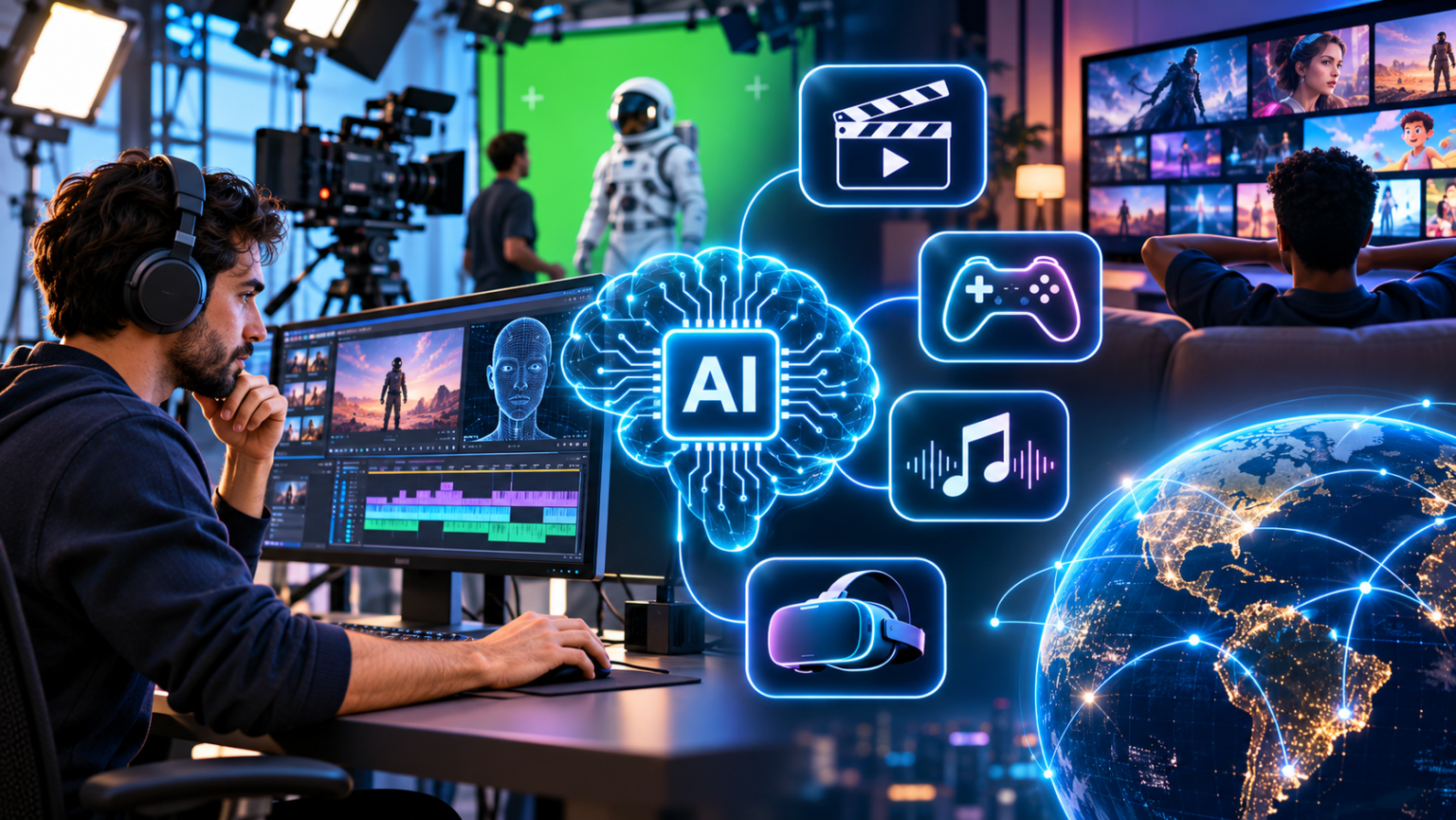
The digital entertainment landscape is undergoing the most profound transformation since the transition from celluloid film to high-definition digital streaming. Algorithms, cloud computing, and real-time data pipelines have become as central to modern storytelling as cameras, lighting, and scriptwriting. Viewers today do not simply consume media; they interact with dynamic platforms that learn their preferences, personalize their catalogs, and deliver uninterrupted high-resolution video across devices.
Behind this digital revolution lies the power of enterprise machine learning and computer vision. For media conglomerates, streaming networks, and production houses aiming to stay ahead of changing viewer habits, integrating cutting-edge ai development services has become the decisive factor in driving operational efficiency, maximizing monetization, and expanding global market share.
At the intersection of this technological surge is the massive international appeal of regional serialized storytelling—most notably the worldwide phenomenon of the pakistani drama. As regional narratives capture millions of international viewers across the Middle East, South Asia, North America, and Europe, artificial intelligence serves as the bridge enabling these emotionally rich stories to scale across languages, cultural boundaries, and high-concurrency streaming ecosystems.
The Media & Entertainment Paradigm Shift
Traditional broadcasting followed a linear, one-way trajectory: networks scheduled programming blocks, distributed content via cable or satellite, and relied on broad, sample-based Nielsen-style ratings to evaluate viewer interest. This legacy model created massive inefficiencies. Marketing campaigns were generic, localization was time-consuming and expensive, and viewer churn was difficult to predict before substantial advertising revenue had already been lost.
The advent of Over-The-Top (OTT) streaming challenged these assumptions, and artificial intelligence is now solidifying that shift. Modern entertainment technology leverages predictive modeling, natural language processing (NLP), and deep neural networks to optimize every layer of the media supply chain:
- Pre-Production & Script Analytics: Evaluating narrative pacing, predicting audience demographics, and forecasting production budget viability.
- Post-Production Optimization: Automating video editing, dialogue clean-up, automated color grading, and dynamic scene tagging.
- Distribution & Delivery: Implementing adaptive bitrate encoding driven by machine learning to reduce bandwidth costs while preserving 4K/HDR fidelity.
- Viewer Retention & Personalization: Delivering hyper-personalized recommendation grids that keep viewers engaged through tailored watchlists and targeted promotions.
The Global Phenomenon of Serialized Television
To understand how technology amplifies storytelling, one must look at the meteoric rise of serialized cultural content. Over the past decade, South Asian television—specifically narrative series originating from Pakistan—has established a dominant footprint on global digital platforms.
Characterized by sophisticated scriptwriting, complex socio-cultural themes, character-driven subplots, and soul-stirring soundtracks (OSTs), these series avoid the endless, multi-year pacing common in Western soap operas. Instead, they deliver tight, 25-to-35-episode narrative arcs that resolve with emotional depth and artistic intention.
Historically, the distribution of regional content outside its home market faced major hurdles: manual translation bottlenecks, lack of localization funds, and fragmented licensing deals. Today, intelligent digital solutions dismantle these barriers entirely, allowing emotional narratives produced in Karachi or Lahore to trend simultaneously in Dubai, London, Toronto, and Dallas.
Technical Pillars: How AI Powers Contemporary Media Platforms
Deploying AI within a streaming or entertainment environment involves several discrete technological subsystems working in concert.
1. Neural Machine Translation (NMT) and Automated Subtitling
For serialized dramas, cultural nuance is everything. A literal, word-for-word translation often strips dialogue of poetic rhythm, cultural proverbs, and emotional gravity.
Modern transformer-based neural translation models are trained on domain-specific cultural corpora. These models do not just transcribe spoken Urdu or Hindi into English or Arabic; they recognize context, idiomatic phrasing, and emotional intensity. Automated subtitle synchronization aligns text perfectly with speech waveforms, cutting post-production localization timelines from weeks to mere hours and making regional content immediately accessible to diaspora and non-native audiences worldwide.
2. Computer Vision for Automated Metadata and Scene Indexing
Managing thousands of hours of episodic video is a massive logistical challenge. Computer vision algorithms inspect video streams frame by frame to identify:
- Facial Recognition: Tagging leading actors and recurring ensemble cast members automatically.
- Scene Categorization: Labeling scenes by emotional tone (dramatic, romantic, suspenseful, comedic) or environment (indoor, outdoor, wedding, corporate).
- Automated Thumbnail Generation: Evaluating facial expressions, contrast, and focal clarity to select the most visually captivating freeze-frame for platform carousels.
This rich layer of automated metadata feeds directly into recommendation algorithms, ensuring that a viewer who prefers intense family drama sees relevant scenes highlighted on their home screen.
3. Server-Side Dynamic Ad Insertion (SSAI) & Ad Targeting
Monetizing media across global audiences requires balancing user experience with commercial returns. Intrusive, repetitive, or mistimed advertisements drive viewers away from platforms.
Machine learning models analyze video streams in real time to detect natural narrative pauses—such as scene transitions or background music fades—identifying optimal ad insertion markers that do not disrupt emotional climaxes. Furthermore, AI-driven programmatic bidding serves targeted, localized advertisements based on user geography, viewing history, and device type, maximizing the Cost Per Mille (CPM) for publishers while ensuring relevant advertising for viewers.
Comparative Analysis: Traditional Media Pipeline vs. AI-Driven Streaming Architecture
| Dimension | Legacy Broadcasting Pipeline | AI-Powered Entertainment Ecosystem |
|---|---|---|
| Content Discovery | Static program guides, uniform scheduled broadcasts. | Dynamic, algorithmic recommendation carousels based on individual behavioral affinity. |
| Localization & Subtitling | Manual human transcription; costly and slow turnaround (weeks per season). | Neural machine translation with automated timestamp alignment and multi-language support (hours per season). |
| Video Delivery & CDN | Fixed bitrate streaming; causes buffering and pixelation during peak hours. | Context-aware encoding and predictive edge caching; minimizes latency and optimizes bandwidth usage. |
| Viewer Analytics | Delayed, broad sample estimates (e.g., periodic survey ratings). | Real-time granularity tracking drop-offs, replay rates, scene shares, and churn indicators. |
| Monetization Architecture | Blanket commercial breaks with broad demographic appeal. | Dynamic Server-Side Ad Insertion (SSAI) personalized to individual user profiles and content sentiment. |
AI-Driven Viral Marketing and Social Clipping
The modern success of serialized television depends heavily on social discovery. Viewers rarely discover a new show simply by browsing a catalog; they encounter a 30-second dramatic confrontation, a poignant dialogue clip, or a musical montage on TikTok, Instagram Reels, or YouTube Shorts.
Historically, identifying viral-worthy moments required human video editors to review 45-minute episodes manually, cut clips, export them into vertical formats (9:16), and craft social captions.
Today, automated video processing pipelines scan audio tracks for sudden shifts in vocal decibels (indicating dramatic arguments or emotional crescendos) and cross-reference them with musical soundtrack peaks. The software then automatically clips the sequence, reframes the camera focus to keep the primary speaker centered in a vertical crop, generates synchronized animated subtitles, and prepares social-ready teasers for distribution. This automated funnel converts casual social media scrollers into long-term streaming subscribers.
Preserving Artistic Integrity in an Algorithmic World
While the operational and commercial advantages of artificial intelligence in entertainment are indisputable, the creative industry continues to navigate the boundary between algorithmic optimization and authentic human storytelling.
Algorithms excel at recognizing patterns, identifying emotional peaks, and scaling infrastructure. However, the core elements that make serialized television resonate—the warmth of traditional relationships, the exploration of societal expectations, the chemistry between talented actors, and the subtle subtext of a well-crafted script—remain inherently human.
The most successful media enterprises do not view technology as a replacement for writers, directors, or actors. Instead, they utilize enterprise AI solutions as an operational engine: handling laborious post-production workflows, optimizing streaming bitrates, protecting intellectual property with automated digital rights management (DRM), and expanding international distribution.
By letting technology handle the complexities of data ingestion, delivery, and localization, creative visionaries are liberated to focus on what they do best: telling deeply moving human stories that transcend borders and bring global audiences together.
