
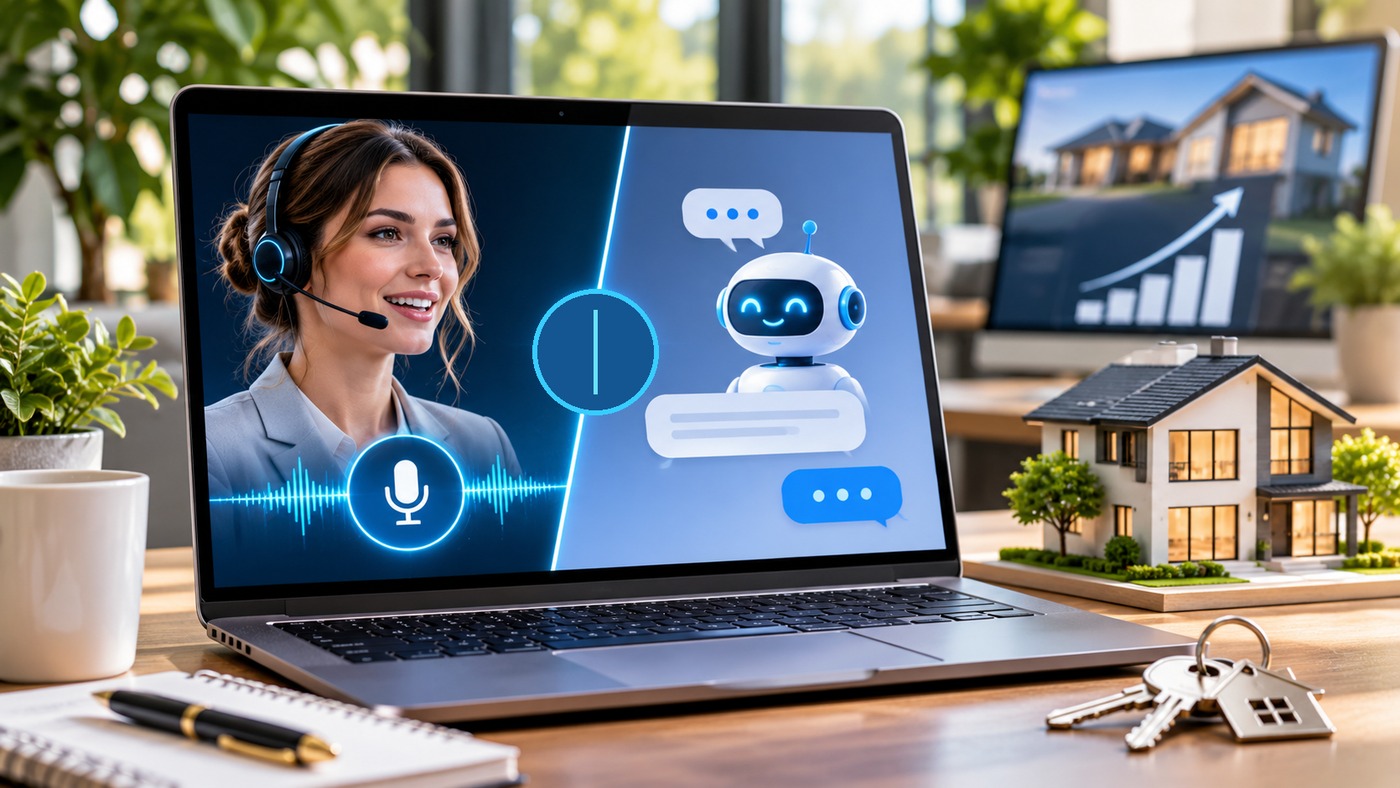
US real estate teams have more AI follow-up options than ever. Website chatbots greet visitors, AI texting tools reply to new leads, and AI voice agents now place actual phone calls. They all promise the same thing: no lead left waiting. They are not interchangeable, though, and choosing the wrong one can leave a team with fast replies but few appointments.
Here is how the three main approaches compare, and when each makes sense.
Website chatbots: good for capture, weak for conversion
Chatbots sit on a team’s website and engage visitors while they browse listings. They answer basic questions, collect contact details and sometimes book appointments.
Strengths: they work 24/7, they catch visitors who would otherwise leave, and they are cheap to run.
Limits: they only reach people who are on your website at that moment. Most leads, especially from portals like Zillow and Realtor.com, arrive through other channels. Chatbot conversations are also easy for visitors to ignore or close.
Best for: capturing website traffic and answering simple questions.
AI texting: fast and familiar
AI texting tools reply to new leads by SMS within seconds, ask questions and keep the conversation going over days or weeks.
Strengths: many buyers prefer texting. Zillow’s consumer research published in December 2025 found that half of buyers who used an agent preferred texting or messaging apps. Texts are non-intrusive and easy to answer later.
Limits: texts are easy to ignore, and a back-and-forth by message can take hours or days to reach a booked appointment. Generic automated texts also feel impersonal, and some buyers distrust them.
Best for: long-term nurture, buyers who prefer messaging, and follow-up after a call.
AI voice agents: the closest thing to a person
AI voice agents call new leads, usually within a minute of the inquiry. They hold a natural conversation, ask qualifying questions, handle interruptions and book a showing or a call with an agent.
Strengths: a live conversation qualifies a lead in minutes instead of days. Speed matters here. The same Zillow research found that 47% of buyers hired the first agent they spoke with, and a call is the fastest way to actually speak with someone. Voice also feels more personal than a text from an unknown number.
Limits: some people do not answer unknown numbers, so voice works best paired with text follow-up. Voice agents also need careful setup: clear disclosure that the caller is an AI, consent and opt-out handling under US calling rules, and a clean handoff to agents.
Best for: new leads where speed decides who wins the client, especially paid portal leads and after-hours inquiries.
Side by side
| Chatbot | AI texting | AI voice agent | |
| Reaches leads off your website | No | Yes | Yes |
| Typical time to first contact | Instant (if on site) | Seconds | Under a minute |
| Time to booked appointment | Varies | Hours to days | Often during the first call |
| Feels personal | Low | Medium | High |
| Best use | Website capture | Nurture | First contact on new leads |
Why the channel matters for portal leads
Portal leads are where the differences show most clearly. A buyer who inquires through Zillow is often contacting several agents at once. Programs like Zillow Preferred, which absorbed the former Flex program, also track how agents perform and route more connections to those meeting their standards.
That makes the first conversation especially important. Teams working pay-at-closing portal leads often combine instant calls with text follow-up. This guide to Zillow Flex lead follow-up covers what those programs expect and how teams organize their response.
Choosing the right mix
For most US teams, the answer is not one tool but a sequence:
1. Call first: an AI voice agent calls every new lead within a minute, day or night.
2. Text second: if the lead does not answer, a short personal text follows, and the conversation continues by message if they prefer.
3. Hand off to a person: as soon as there is real interest, an agent takes over with full context.
4. Nurture the rest: leads who are not ready yet get light, periodic follow-up.
5. Chatbot on the website: to capture visitors who never fill in a form.
If you are comparing providers for the voice part, this roundup of the best AI ISA for real estate lays out the main options, their pricing and which CRMs they support.
Final thoughts
Chatbots, AI texting and AI voice agents each solve part of the follow-up problem. Chatbots capture, texting nurtures, and voice converts. Teams that match each tool to the job it does best, and keep agents focused on real conversations, are the ones turning more of their lead spend into closings.
